
Choosing a field recorder with dual card recording is about more than channel count. It is about protecting takes, keeping workflows smooth, and choosing the right balance of portability, inputs, and recording quality.
Below, we focus on standout options for filmmakers, podcasters, and on-location audio work, with an emphasis on dependable backup recording and practical real-world use.
Best 10 Field Recorder with Dual Card Recording Picks for 2026
Pro multitrack backup recorder
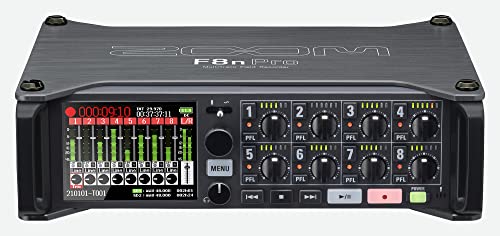
- 8 inputs and 10 tracks with 32-bit float
- Dual SD slots for redundant recording
- 0.2ppm timecode and strong preamps
Best For: Film crews needing reliable multitrack capture and card redundancy
Starter recorder bundle

- 32-bit float recording with no level adjustments
- Includes lav mic, card, batteries, and windscreen
- Compact handheld with onboard X/Y mics
Best For: New users who want an all-in-one portable recording kit
Compact timecode recorder
TASCAM FR-AV2 for Videographers

- 32-bit float with dual ADCs for no-clip audio
- Built-in timecode generation and TCXO sync
- Two XLR/TRS combo inputs plus 3.5 mm input
Best For: Videographers wanting a compact recorder with integrated timecode
Portable creator recorder

- 32-bit float stereo recording
- USB-C mic mode for calls and streaming
- Lightweight handheld with X/Y mics
Best For: Creators who want a small recorder for speech, video, and travel
DSLR-Rig Friendly Pick
TASCAM DR-60DmkII 4-Channel Recorder

- Fits under a DSLR rig for camera-based recording
- Up to 4 channels at 96kHz/24-bit WAV
- Two XLR + two 3.5mm inputs
Best For: Videographers who need a compact, rig-mounted multichannel recorder
Clip-Free Creator Option
Zoom H4 Essential Handy Recorder

- 32-bit float recording helps prevent clipped audio
- Built-in stereo mics plus 2 XLR/TRS inputs
- USB-C recording while also saving to SD card
Best For: Creators who want a simple handheld recorder with backup recording
Professional Float Recorder
Zoom F3 2-Channel Field Recorder

- 32-bit float with dual A/D converters
- Two locking XLR/TRS inputs with phantom power
- Records to microSD and supports USB-C use
Best For: Professionals who want a compact recorder with distortion-resistant capture
Portable 4-Channel Float Recorder
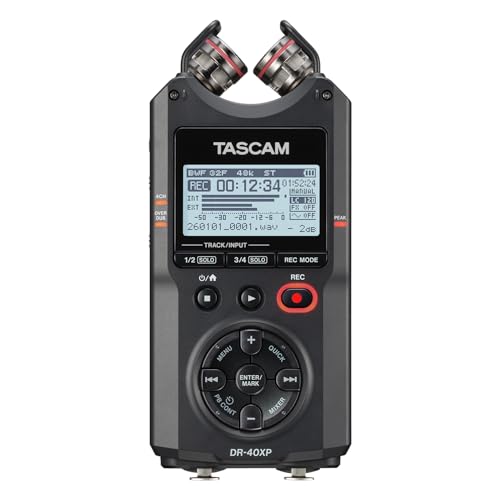
- 4-channel recording with built-in mics and external inputs
- 32-bit float plus 24-bit and 16-bit WAV support
- USB-C interface for computer or mobile workflows
Best For: Musicians, creators, and interview recordists
Compact XLR Recorder

- 32-bit/96kHz recording for clean capture
- Two locking XLR/TRS inputs for flexible setups
- OLED waveform display for level monitoring
Best For: Filmmakers, podcasters, and simple location recording
Pro Field Recorder

- 32-bit float capture with dual A/D converters
- Two locking XLR inputs for secure field rigs
- Flexible power options for long shoot days
Best For: Run-and-gun filmmakers and professional field recordists
Pro multitrack backup recorder – Zoom F8n Pro for Filmmakers
If you need a field recorder with dual card recording for film or location work, the Zoom F8n Pro is built for no-compromise capture. Its 32-bit float workflow, dual AD converters, and redundant dual SD card slots are aimed at keeping takes safe and clip-free while you move between set and field.
Best For: Filmmakers and location sound recordists who want redundant card recording, accurate timecode, and flexible multitrack capture.
Pros:
- 8 inputs and 10 tracks with 32-bit float recording for clip-free capture
- Dual SD card slots support redundant recording for added backup
- 75dB gain and -127dBu EIN preamps help with quiet or dynamic sources
- 0.2ppm TCXO timecode accuracy supports reliable sync
Cons:
- Bulkier than compact handheld recorders
- May be more recorder than needed for simple interviews or casual content
Overall, the F8n Pro is the most production-ready option here if your priority is dependable multitrack recording and backup-safe media. It’s especially strong when you need field recorder with dual card recording, timecode, and interface functionality in one unit.
Starter recorder bundle – Zoom H1essential Bundle Kit
The Zoom H1essential bundle is a practical entry point if you want simple 32-bit float recording without extra setup. It’s a compact handheld recorder with onboard X/Y mics, and the included lavalier, microSD card, batteries, and windscreen make it easier to start recording right away.
Best For: Beginners, podcasters, and content creators who want a ready-to-use recorder bundle for portable audio capture.
Pros:
- 32-bit float recording means you do not have to adjust levels
- Bundle includes a lavalier mic, 32GB card, batteries, and windscreen
- Onboard X/Y microphones capture clean audio up to 120 dB SPL
- Useful features include overdubbing, pre-record, auto record, and playback speed adjustment
Cons:
- No dual card recording or redundant backup media
- Limited to a simpler handheld format compared with pro field units
This bundle is best when convenience matters more than a full production rig. It won’t replace a dedicated field recorder with dual card recording, but it does lower the barrier to getting clean, usable audio quickly.
Compact timecode recorder – TASCAM FR-AV2 for Videographers
The TASCAM FR-AV2 is a compact option for videographers who want 32-bit float capture plus built-in timecode generation. It focuses on efficient setup, clean no-clip audio, and simple integration with timecode workflows, making it a strong choice for small productions that need more control than a basic handheld recorder.
Best For: Videographers and small crews that need a compact recorder with timecode generation and dual input flexibility.
Pros:
- 32-bit float recording and dual ADCs support worry-free capture
- Built-in timecode generation and TCXO sync help streamline video workflows
- 2 XLR/TRS combo inputs plus a 3.5 mm input add flexibility
- Optional Bluetooth monitoring is available with the AK-BT2 adapter
Cons:
- Does not list dual SD card recording
- Bluetooth monitoring requires the optional adapter
For compact production work, the FR-AV2 stands out for timecode support and no-clip recording in a small body. If backup media is your top priority, a field recorder with dual card recording may be a better fit, but this model is very workflow-friendly for video.
Portable creator recorder – Zoom H1 Essential for Content
The Zoom H1 Essential is a small, easy-to-carry recorder built for creators who want cleaner audio than a phone or camera can usually provide. With 32-bit float recording, X/Y stereo mics, and USB-C mic mode, it works well for field notes, interviews, voiceovers, and quick content capture on the go.
Best For: Podcasters, creators, and mobile users who need a compact stereo recorder for everyday recording tasks.
Pros:
- 32-bit float recording helps avoid clipping without level adjustments
- X/Y stereo microphones capture polished audio for a wide range of content
- USB-C microphone mode supports streaming, calls, and desktop/mobile use
- Very light and compact for travel, interviews, and quick field recording
Cons:
- Does not offer dual card recording or redundant media backup
- Designed for stereo capture rather than multitrack production workflows
This is a straightforward choice for portable everyday audio, especially if you value simplicity and size. It is not a field recorder with dual card recording, but it delivers an easy 32-bit float setup for creators who move fast.
DSLR-Rig Friendly Pick – TASCAM DR-60DmkII 4-Channel Recorder
If you want a field recorder with dual card recording-style workflow for camera setups, the TASCAM DR-60DmkII is built for videographers who need compact, reliable audio capture under a DSLR rig. It records up to 4 channels to SD card at up to 96kHz/24-bit WAV, and its mix of XLR/TRS and 3.5mm inputs makes it easy to combine boom, lav, and wireless sources.
Best For: DSLR and mirrorless shooters who need a compact recorder that fits under a camera rig and handles multiple mics.
Pros:
- Fits neatly under a DSLR camera rig instead of adding bulky gear.
- Records up to 4 channels to SD card at up to 96kHz/24-bit WAV.
- Two locking XLR inputs with 48V phantom power plus two 3.5mm inputs for wireless and lav mics.
- Upgraded HDDA preamps offer up to 64dB of gain with low noise.
Cons:
- Uses 4 AA batteries, so you will need to manage battery life on longer shoots.
- Primary storage is SD-card based rather than built-in high-capacity memory.
- Designed around camera work, so it is less portable than pocket-style field recorders.
Overall, the DR-60DmkII is a practical choice when your recording setup needs to stay camera-friendly without giving up professional input flexibility. It is especially appealing for videographers who want clean multichannel capture in a rig-ready format.
Clip-Free Creator Option – Zoom H4 Essential Handy Recorder
The Zoom H4 Essential is a strong field recorder with dual card recording convenience for creators who want backup-friendly workflow and easier operation. It records 4 tracks, includes built-in stereo mics, and lets you use two XLR/TRS inputs for external mics or instruments while also saving to SD card as you record to your device over USB-C.
Best For: Musicians, podcasters, filmmakers, and interviewers who want a simple recorder with built-in mics and USB-C backup recording.
Pros:
- 32-bit float recording helps avoid clipped or distorted takes.
- Built-in stereo mics plus two XLR/TRS inputs cover many recording setups.
- Records to your phone, tablet, or computer over USB-C while also saving to SD card.
- Spoken menu guidance can make it easier to navigate for more users.
Cons:
- Runs on 2 AA batteries, so power planning matters for long sessions.
- Built-in mics are useful, but external mics are still needed for more advanced setups.
- Its handheld form factor is less suited to rig-mounted camera workflows.
In practice, the H4 Essential is a flexible grab-and-go recorder for people who want cleaner results without worrying as much about distorted audio. The USB-C plus SD card workflow makes it especially handy when you need an easy backup path.
Professional Float Recorder – Zoom F3 2-Channel Field Recorder
Zoom F3 32-Bit Float Field Recorder Bundle | For Field Recording & Production | Battery Powered
Check Price On AmazonThe Zoom F3 is a focused field recorder with dual card recording-style reliability for professionals who want clean capture without riding gain. Its 32-bit float recording and dual A/D converters are designed to avoid clipping, while the two locking XLR/TRS inputs and microSD storage make it straightforward for interviews, field work, and live events.
Best For: Filmmakers, journalists, and sound designers who need a compact 2-channel recorder with distortion-resistant recording.
Pros:
- 32-bit float recording with dual A/D converters helps prevent clipping and distortion.
- Two locking XLR/TRS inputs with switchable 48V phantom power support pro microphones and line-level sources.
- Records directly to microSDHC/microSDXC cards up to 1TB.
- Can run on AA batteries, USB-C battery packs, or an adapter for flexible powering.
Cons:
- Only two channels, so it is not ideal if you need larger multitrack setups.
- Mono or stereo recording focus is more specialized than general-purpose handheld models.
- The bundle adds accessories, but the recorder itself remains a straightforward two-input unit.
The F3 is best viewed as a no-nonsense professional recorder for situations where clean audio matters more than extra features. If you want dependable capture with minimal gain-setting hassle, it is one of the most focused options here.
Portable 4-Channel Float Recorder – TASCAM DR-40XP
If you want a field recorder with dual card recording-style flexibility for music, video, or interviews, the TASCAM DR-40XP stands out for its 4-channel workflow and 32-bit float capture. It combines adjustable built-in mics, two XLR/TRS inputs, and a USB-C interface, so it can serve as both a portable recorder and a simple computer audio interface.
Best For: Musicians, video creators, and interviewers who want a versatile handheld recorder with built-in mics and external input options.
Pros:
- 4-channel recording lets you capture built-in mics and external inputs at the same time.
- 32-bit float, 24-bit, and 16-bit WAV support gives you recording format flexibility.
- Adjustable A-B or X-Y condenser mics are rated up to 125 dB SPL.
- USB-C 2-in/2-out audio interface adds direct computer or mobile workflow support.
Cons:
- microSD card is not included.
- Batteries are not included.
The DR-40XP is a practical pick if you need a compact recorder that can handle multiple recording scenarios without much setup. It is especially useful when you want built-in stereo mics plus external inputs in one handheld unit.
Compact XLR Recorder – Zoom H1 XLR
The Zoom H1 XLR is a straightforward field recorder with dual card recording-style practicality for people who need clean audio without a complicated setup. Its 32-bit/96kHz recording, two locking XLR/TRS inputs, and 3.5mm input/output make it a flexible option for interviews, podcasts, and simple location recording.
Best For: Filmmakers, podcasters, and musicians who want a compact recorder with locking inputs and easy level monitoring.
Pros:
- 32-bit / 96kHz recording supports detailed, clip-free capture.
- Two locking XLR/TRS combo inputs handle a variety of sources.
- OLED waveform display helps you monitor levels at a glance.
- 3.5mm stereo input and headphone output add monitoring and connection flexibility.
Cons:
- It is a 2-channel recorder, so it is less expansive than multi-track models.
- Uses two AA batteries rather than a built-in rechargeable pack.
For users who value simplicity and secure input connections, the H1 XLR is easy to recommend. It focuses on reliable 2-channel recording and monitoring tools rather than advanced production features.
Pro Field Recorder – Zoom F3
If you need a field recorder with dual card recording priorities focused on reliability, the Zoom F3 is built for demanding production work. It pairs 32-bit float recording with dual A/D converters and two locking XLR/TRS inputs, making it a strong choice when you need to capture unpredictable audio without stopping to ride levels.
Best For: Run-and-gun filmmakers and field recordists who need secure inputs and worry-free 32-bit float capture.
Pros:
- 32-bit float recording helps capture quiet dialogue and sudden peaks without level adjustment.
- Dual A/D converters are designed for dependable professional recording.
- Two locking XLR inputs keep connections secure in larger or mounted rigs.
- Flexible power options support long days on set or on location.
Cons:
- It is a 2-channel recorder, so it is not aimed at larger multi-track sessions.
- Best suited to users who already have a clear external mic workflow.
The F3 is the most specialized of the three for professional field capture, especially when conditions are unpredictable. Its strength is clean, secure, no-fuss recording rather than extra onboard features.
How We Picked the Best Field Recorder with Dual Card Recording
We looked for models that make backup recording practical, whether through true dual-card slots, strong redundancy-focused design, or workflow features that reduce the risk of missed takes. We also weighed input flexibility, 32-bit float support, timecode options, portability, battery life, and how easily each recorder fits into common production setups.
Quick Comparison
Think in terms of use case first: compact handheld recorders are best for run-and-gun work, two-channel units suit interviews and field capture, while multi-input mixers/recorders are better for productions that need more sources and more control. A Field Recorder with Dual Card Recording is especially valuable when the audio cannot be recreated, such as live events, documentary work, and critical interviews.
Key Buying Factors for Field Recorder with Dual Card Recording
Redundancy and Media Support
Dual card recording matters most when you need an immediate backup. Check whether the recorder can write simultaneously to two cards, mirror files, or support a workflow that is easy to verify on location. Also consider card type, capacity, and transfer speed so your backup strategy does not slow the shoot.
Inputs, Phantom Power, and Routing
Match the recorder to the number and type of microphones you actually use. Combo XLR/TRS inputs are the most flexible for production audio, while built-in mics are useful for scratch audio, ambience, and quick captures. Phantom power, limiters, and high-pass filters can make a big difference in field conditions.
32-Bit Float and Timecode
32-bit float recording can prevent clipping in fast-changing environments, which is especially helpful for filmmakers and documentary crews. If you are syncing multiple devices, timecode support can save significant time in post-production and reduce syncing errors.
Portability and Power
Smaller handheld recorders are easier to carry and deploy, while larger units often offer better control and connectivity. Battery options, USB power, and mounting flexibility should all factor into your decision if you work long days away from outlets.
Who Should Buy Which Field Recorder with Dual Card Recording?
Choose a compact handheld if you want the easiest grab-and-go setup for interviews, content creation, or ambient recording. Pick a two-input or four-input model if you need a dependable Field Recorder with Dual Card Recording for production work, especially when backup safety is a priority. Go with a higher-end multi-input recorder if you are managing several microphones, need more routing control, or work on sets where audio loss is not an option.
For most buyers, the best choice is the recorder that fits the most demanding part of your workflow, not just the simplest one.