
Choosing a vocal processor with microphone preamp can make a big difference in how polished your voice sounds on stage, on stream, or in the studio. The right unit can improve gain, control feedback, and add useful effects without complicating your setup.
In this roundup, we focus on practical features, sound quality, and ease of use so you can find the best match for your mic, performance style, and budget.
Best 10 Vocal Processor with Microphone Preamp Picks for 2026
Studio Channel Strip
dbx 286s Mic Preamp & Processor

- Mic preamp with compressor, de-esser, enhancer, and gate
- XLR mic input plus 1/4" line input and loop-out insert
- 1U rack unit with metering LEDs for level checking
Best For: Home studios and live vocal chains needing one rack unit for preamp and cleanup
Streaming Vocal FX

- 16 vocal effects with up to three-part harmonies
- Built-in enhancer, compression, reverb, and delay controls
- USB recording plus battery-powered portability
Best For: Streamers and performers wanting real-time vocal effects with easy USB recording
Low-Noise Booster

- -120dB EIN update for lower-noise signal boosting
- 19~66dB gain range with Type-C power
- 1MΩ instrument input for better DI-style use
Best For: Budget creators needing a compact low-noise mic booster for vocals and instruments
All-in-One Vocal FX

- Pitch correction, harmony, echo, and reverb in one unit
- 48V phantom power plus 3-level anti-feedback control
- USB-C OTG recording with phrase looping and overdubs
Best For: Live singers and home creators wanting auto-pitch, harmony, and feedback control
Compact Recording Interface
Focusrite Scarlett Solo 3rd Gen
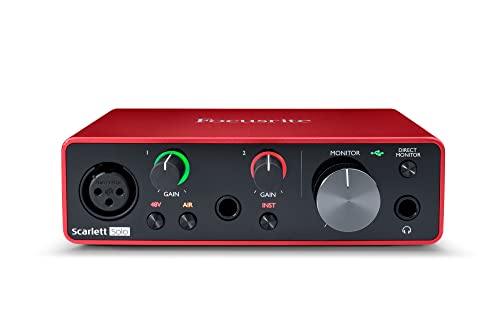
- 1 XLR mic preamp for vocal recording
- Air mode adds extra clarity
- 24-bit/192kHz conversion with low-noise outputs
Best For: Solo singers and podcasters wanting a clean mic preamp
Pitch-Correction Vocal Pedal

- Pitch correction plus vocal effects in one pedal
- Warm, Bright, and Normal tone modes
- Optional 48V phantom power for condenser mics
Best For: Live singers and streamers needing vocal correction
DSP Karaoke Vocal Processor
Digital Mixer with Mic Priority

- DSP vocal processing with feedback suppression
- One-touch vocal enhancement and mic priority
- Bluetooth, USB, optical, coaxial, and AUX inputs
Best For: Karaoke setups and hosts needing flexible vocal control
Editor’s Pick
HeadRush VX5 Vocal Effects AutoTune Pedal

- Antares Auto-Tune with hands-on Retune Speed and Humanize control
- Premium XLR mic preamp with +48V phantom power
- USB audio interface, harmonies, and onboard FX
Best For: Live vocalists who want Auto-Tune and a mic preamp in one pedal
Karaoke Value
Digital Pre-Stage Vocal Processor Mixer

- 4-level FBX suppression helps reduce feedback fast
- DSP engine and mic tone controls support clearer vocals
- Bluetooth, USB, Optical, and XLR outputs for easy setup
Best For: Karaoke and home audio setups needing mic processing and anti-howling
Stage Performer

- 39 effect types with harmony, doubling, and auto pitch
- Dual XLR outputs and 99 user memories
- Compact, battery-powered design for live use
Best For: Singers who want portable stage effects and pitch correction
Studio Channel Strip – dbx 286s Mic Preamp & Processor
If you want a vocal processor with microphone preamp that feels closer to a compact studio channel strip, the dbx 286s is built for that job. It combines mic preamp duties with compression, de-essing, enhancement, and gating, so you can shape vocals before they reach your recorder, interface, or mixer.
Best For: Home studios, live vocal chains, and users who want one rack unit to handle preamp and basic vocal cleanup.
Pros:
- Includes compression, de-esser, enhancer, and expander/gate in one unit.
- Floating balanced XLR mic input plus 1/4" TRS line input for flexible routing.
- Loop-out insert lets you add external processors between stages.
- Rack-mountable 1U design with metering LEDs for easy level monitoring.
Cons:
- Single-channel design, so it only handles one source at a time.
- Rack-based setup is less portable than compact tabletop units.
- Best suited to analog-style workflow rather than simple plug-and-play vocal effects.
The dbx 286s is a strong pick if you want practical vocal shaping and preamp control in one box. It is especially useful when you need clearer, more forward vocals without building a large effects chain.
Streaming Vocal FX – Zoom V3 Vocal Processor
The Zoom V3 is a vocal processor with microphone preamp features aimed at creators who want fast results for streaming, recording, or live performance. It offers 16 vocal effects, three-part harmonies, built-in enhancement, and dedicated controls for compression, reverb, and delay, making it easy to dial in a polished vocal sound.
Best For: Streamers, podcasters, and performers who want real-time vocal effects with USB recording.
Pros:
- 16 voice effects plus up to three-part harmonies for creative vocal processing.
- Built-in enhancer and 48V phantom power support condenser mic use.
- USB connectivity records up to 32-bit/44.1kHz for direct computer or mobile use.
- Runs on 4 AA batteries for portable sessions and performances.
Cons:
- USB audio is limited to 44.1kHz based on the supplied specs.
- Single-channel design keeps it focused on vocals rather than multi-input production.
- Best for effect-based workflow, not for a traditional rack-style channel strip.
If your priority is live vocal styling and simple USB capture, the V3 offers a lot of tools in a compact format. It is a good fit when you want vocal processing that works quickly without a complicated setup.
Low-Noise Booster – RO03 Mic Preamp
For buyers comparing a vocal processor with microphone preamp on a budget, the RO03 is built around low-noise gain boosting and practical connectivity. Its updated design emphasizes reduced EIN, a wider usable gain range, and improved instrument input impedance, which makes it suitable for vocals, dynamic or condenser mics, and some instrument recording needs.
Best For: Budget-conscious creators who want a compact low-noise mic booster for vocals and simple recording setups.
Pros:
- Updated to -120dB EIN for improved low-noise performance.
- Gain range of 19~66dB is described as fully achievable in real-world use.
- 1MΩ instrument input improves compatibility for instrument recording.
- Type-C power makes it easier to use in portable recording setups.
Cons:
- The two input ports cannot work simultaneously.
- Best noise performance depends on using the recommended TRS line input connection.
- More of a clean booster than a full vocal effects processor.
The RO03 makes sense when your main goal is cleaner gain and simple signal boosting rather than creative vocal effects. It is a practical option for users who want a compact preamp solution with straightforward setup guidance.
All-in-One Vocal FX – AVE-100 Vocal Processor
The AVE-100 is a vocal processor with microphone preamp functions designed for singers, streamers, and home studio users who want effects and control in one box. It combines pitch correction, harmony, echo, reverb, anti-feedback, and OTG recording features, while also supporting 48V phantom power for compatible mics.
Best For: Live singers and home creators who want auto-pitch, harmony, and feedback control in a compact unit.
Pros:
- Auto pitch correction, harmony, echo, and reverb cover core vocal effect needs.
- Supports 48V phantom power for compatible microphones.
- Smart anti-feedback includes 3 levels of suppression for stable output.
- USB-C OTG recording and phrase looping add value for streaming and practice.
Cons:
- Built around effect processing, so it is less focused on traditional channel-strip duties.
- Works through a 5-pin XLR hardware interface, which may not suit every setup.
- Some features, like VocalErase, depend on the supplied usage method and source playback.
The AVE-100 is best when you want vocal enhancement, feedback management, and recording convenience in a single compact processor. It should appeal most to users who need performance-ready effects more than a standalone mic preamp.
Compact Recording Interface – Focusrite Scarlett Solo 3rd Gen
If you want a vocal processor with microphone preamp behavior focused on clean capture rather than heavy onboard effects, the Focusrite Scarlett Solo 3rd Gen is a straightforward choice. It gives vocalists a single high-performance XLR mic preamp, Air mode for extra clarity, and studio-grade conversion for recording voice with minimal fuss.
Best For: Solo singers, podcasters, and home recordists who want a clean microphone preamp with simple vocal recording support.
Pros:
- 1 XLR mic preamp with high-performance gain staging
- Air mode adds extra clarity for vocal and acoustic recordings
- 24-bit/192kHz converters support studio-quality capture
- Low-noise balanced outputs and headphone monitoring for playback
Cons:
- Only one mic preamp, so it is not built for multi-mic setups
- Not a dedicated vocal effects processor with onboard pitch or reverb controls
For buyers who prioritize preamp quality and clean recording over effect-heavy vocal processing, this interface covers the essentials well. It is best treated as a recording foundation for vocals, instruments, and podcast work.
Pitch-Correction Vocal Pedal – FLAMMA FV01 Voice Stompbox
The FLAMMA FV01 is a vocal processor with microphone preamp-style utility for performers who want pitch correction and live vocal shaping in one compact pedal. It is designed around microphone input, includes warm/bright/normal tone options, and can also work as a microphone amplifier or traditional stompbox.
Best For: Singers, streamers, and live performers who want a compact pitch-correction vocal pedal with mic input support.
Pros:
- Pitch-correction vocal processing for live singing and recording
- Warm, Bright, and Normal modes for tone shaping
- Can function as a microphone amplifier or stompbox
- Optional 48V phantom power for condenser microphones
Cons:
- Designed around vocal effects, so it is more specialized than a full mixer or interface
- Single compact pedal format may be limiting for larger setups
If you need an all-in-one pedal for vocal correction and simple mic handling, the FV01 is the most performance-oriented option here. Its appeal is in quick hands-on control rather than studio routing depth.
DSP Karaoke Vocal Processor – Digital Mixer with Mic Priority
This digital karaoke mixer is a vocal processor with microphone preamp features built for bigger playback and performance setups. With DSP processing, mic priority, feedback suppression, and multiple digital inputs, it is aimed at users who want cleaner vocals and easy control across karaoke, hosting, or live streaming scenarios.
Best For: Home karaoke users, hosts, and small venues needing DSP vocal processing with flexible mic and source control.
Pros:
- DSP processing for cleaner vocals and reduced noise
- One-touch vocal enhancement, mic priority, and FBX suppression
- 13-band EQ and echo/reverb controls for vocal shaping
- Multiple inputs including Bluetooth, USB, Optical, Coaxial, and AUX
Cons:
- Larger unit that is less portable than a pedal-style processor
- Focused on karaoke and system processing rather than a simple standalone mic preamp
For users who want vocal processing plus broader system integration, this model offers the most control of the three. It makes more sense as the center of a karaoke or host setup than as a minimalist recording tool.
Editor’s Pick – HeadRush VX5 Vocal Effects AutoTune Pedal
If you want a vocal processor with microphone preamp that can move from subtle correction to the classic Antares Auto-Tune sound, the HeadRush VX5 is built for live singers and producers who want hands-on control. It combines real-time vocal processing, harmonies, and a full set of usable effects in a compact pedal format.
Best For: Singers who want Auto-Tune, vocal harmony, and a mic preamp in one live-ready unit.
Pros:
- Premium XLR mic preamp with switchable +48V phantom power.
- Antares Auto-Tune engine with Retune Speed and Humanize knobs.
- Onboard compressor, reverb, delay, chorus, and flavor FX.
- USB audio interface plus USB MIDI for recording and automation.
Cons:
- Best suited to users who want a dedicated pedal-style workflow.
- More advanced feature set may be more than casual karaoke users need.
The VX5 stands out if you need flexible vocal shaping, preset control, and direct mic connectivity without relying on a computer. It is a strong choice for performers who want a polished vocal chain and microphone preamp support in a single device.
Karaoke Value – Digital Pre-Stage Vocal Processor Mixer
This karaoke processor is a practical vocal processor with microphone preamp features for home entertainment, PA setups, and singing systems that need clearer vocals and feedback control. Its DSP engine, FBX suppression, and flexible input options make it geared toward simple system integration and straightforward vocal tuning.
Best For: Karaoke users and home audio setups that need mic processing, EQ, and anti-howling control.
Pros:
- 4-level FBX feedback suppression for anti-howling performance.
- DSP processing for clearer vocals and richer music detail.
- Multiple inputs including Bluetooth, USB, Optical, Coaxial, and AUX.
- XLR outputs, RCA stereo out, and SUB OUT for flexible system hookup.
Cons:
- More focused on karaoke and home audio than stage performance effects.
- Feature set is broader on connectivity than on creative vocal effects.
If your priority is clean microphone processing and easy source switching rather than deep performance effects, this unit fits well. It is especially useful where feedback suppression and simple control matter most.
Stage Performer – BOSS VE-22 Vocal Performer
The BOSS VE-22 is a compact vocal processor with microphone preamp-style stage utility for singers who want polished effects, harmony tools, and dependable live operation. It covers everything from basic enhancement to dramatic voice changes, with automatic pitch correction and dual XLR outputs for performance-ready routing.
Best For: Singers who want a portable live vocal processor with harmony, doubling, and pitch correction.
Pros:
- 39 effect types with harmony, doubling, and auto pitch options.
- Includes compressor, EQ, delay, echo, reverb, and specialty effects.
- Portable design with dual XLR outputs for stage use.
- 50 presets plus 99 user memories for quick recall.
Cons:
- Runs on battery power, so long sessions may require planning.
- Less focused on microphone preamp features than on vocal effects processing.
For performers who want a compact all-in-one vocal toolkit, the VE-22 offers a strong mix of creative and practical processing. It is a versatile choice when you need stage-ready effects, harmonies, and pitch correction in one box.
How We Picked the Best Vocal Processor with Microphone Preamp
We prioritized units that combine clean mic preamp performance with genuinely useful vocal tools, such as compression, pitch correction, harmony, de-essing, reverb, and feedback control. We also looked at connectivity, because a Vocal Processor with Microphone Preamp should work smoothly with mixers, interfaces, PA systems, streaming rigs, and home recording setups.
We favored products that offer a sensible learning curve, reliable hardware, and clear use cases for singers, streamers, karaoke users, and creators who need fast setup and dependable sound shaping.
Quick Comparison
Some options are built mainly for live vocal effects and stage control, while others are more interface-focused for recording and streaming. If you want hands-on performance effects, a stompbox-style processor may be the best fit. If you need a simpler signal path for vocals into a computer, an audio interface or preamp-heavy channel strip may be the smarter choice.
Another important distinction is whether you need one-channel vocal enhancement, a full channel strip, or a more complete karaoke-style processor with anti-feedback and EQ tools. The best choice depends on whether your priority is clean amplification, real-time effects, or room correction.
Key Buying Factors for a Vocal Processor with Microphone Preamp
Preamp Quality and Noise Floor
A good preamp should add clean gain without introducing hiss or harshness. Look for enough headroom for dynamic, condenser, or ribbon microphones if you use multiple mic types.
Effects and Vocal Control
Useful features include compression for level control, de-essing for harsh sibilance, pitch correction for modern live vocals, harmony for fuller arrangements, and reverb or delay for space. Choose features you will actually use rather than buying for the longest spec sheet.
Connectivity and Workflow
Check XLR, TRS, USB, and interface support based on your setup. Streaming and recording users often benefit from direct USB connectivity, while live performers may care more about pedal control, loop-through options, or easy routing to a mixer.
Feedback Reduction and Room Control
If you perform in small venues or karaoke settings, anti-feedback, gate, and EQ features can matter as much as the vocal effects themselves. These tools help keep the signal clean in reflective or high-volume spaces.
Who Should Buy Which Vocal Processor with Microphone Preamp?
Choose a channel-strip style unit if you want clean vocal shaping and utility processing in one box. Pick a dedicated vocal effects processor if your goal is stage performance, harmony, and real-time pitch control. For streamers and home recordists, a compact interface or USB-ready Vocal Processor with Microphone Preamp can be the most flexible option.
If you mainly sing karaoke or perform in challenging rooms, prioritize anti-howling and feedback control. If you want the most natural vocal sound, focus on low-noise gain, straightforward controls, and subtle processing that enhances your voice without making it sound artificial.