
A good sub can transform a small studio, but only if it adds depth without overwhelming the room. For a studio monitor subwoofer for small room setups, size, tuning, and placement matter just as much as output.
This roundup focuses on compact, practical options that help you hear low frequencies more clearly, making mix decisions easier and playback more balanced.
Best 10 Studio Monitor Subwoofer for Small Room Picks for 2026
Studio-Ready Depth
JBL LSR310S 10-inch Powered Subwoofer
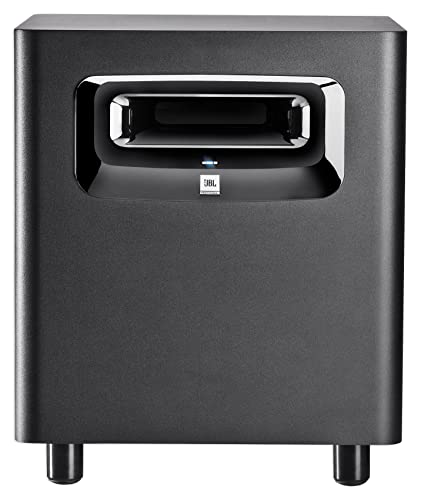
- 10-inch driver reaches into the 20 Hz region
- Balanced XLR and TRS connections for studio systems
- XLF mode adds club-style bass tuning
Best For: Small studios that want deep, controlled bass and balanced pro connections
Compact Wireless Pick
PreSonus Eris Sub 8BT 8-inch Bluetooth Subwoofer

- Compact 8-inch front-firing design suits small rooms
- Bluetooth 5.0 plus TRS, RCA, and aux inputs
- Highpass and lowpass controls help match your monitors
Best For: Small rooms that need compact bass reinforcement with wireless and wired flexibility
Classic Yamaha Control

- 8-inch bass-reflex design with 22 Hz to 150 Hz response
- Low-cut, high-cut, and phase controls for tuning
- 150W amplifier supports powered low-end output
Best For: Small studios that want a simple, adjustable wired subwoofer
Affordable All-Rounder
Samson MediaOne 10S Active Studio Subwoofer

- 10-inch copolymer woofer with 100 watts of power
- Down-firing port supports easier placement
- Speaker-level and RCA connections add flexibility
Best For: Small rooms that want flexible bass support for studio and everyday listening
Compact Room Bass Pick

- 8-inch woofer suits compact spaces
- Twisted flare port for tight bass
- 100W powered design
Best For: Small rooms and simple, space-conscious bass support
Studio Reference Bass Pick

- 300W reference-class output
- 10-inch woofer with glass fiber cone
- Low-pass and phase controls
Best For: Small studios needing stronger bass and monitor crossover control
Ultra-Compact Calibration Pick
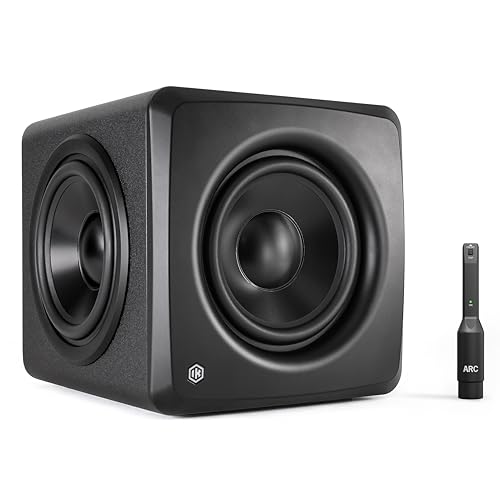
- Compact footprint for small studios
- ARC X auto calibration for monitors
- 25 Hz bass with flexible inputs
Best For: Desktop and small studios that want automatic room correction
Compact Bass Upgrade
Edifier T5s Powered Subwoofer for Small Rooms
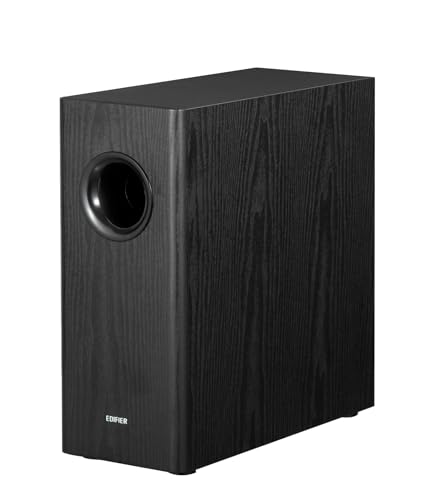
- 8-inch woofer with 35Hz bass extension
- Low-pass filter and phase switch for setup matching
- Slim MDF cabinet with built-in amp and auto-standby
Best For: Small-room listening and desktop studio setups needing deeper bass
Full Reference Bundle
Yamaha HS5 + HS8S 2.1 Monitoring System
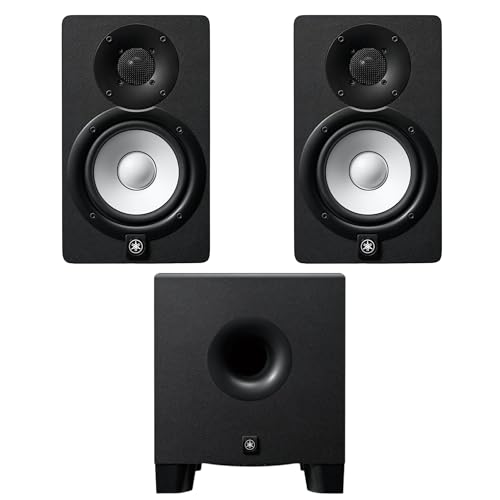
- Two HS5 monitors plus an HS8S powered subwoofer
- Adjustable crossover, phase, ROOM CONTROL, and HIGH TRIM
- Balanced XLR/TRS connectivity for studio gear
Best For: Mixing and home recording setups needing a complete 2.1 system
Desktop Stereo Pick
Edifier R1280DBs Bookshelf Speakers with Sub Out
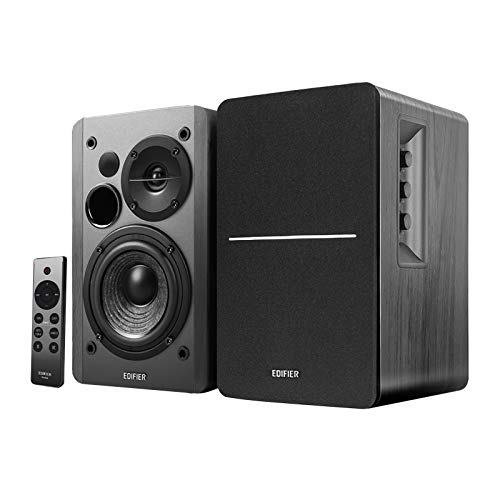
- Sub out with auto crossover detection
- Bluetooth, optical, coaxial, and RCA inputs
- Compact 42W bookshelf speakers with remote
Best For: Small rooms needing compact powered speakers with subwoofer expansion
Studio-Ready Depth – JBL LSR310S 10-inch Powered Subwoofer
If you need a studio monitor subwoofer for small room use, the JBL LSR310S offers serious low-end extension without changing your whole monitoring chain. Its 10-inch down-firing driver, patented port design, and balanced XLR/TRS connectivity make it a practical add-on for studio systems that need deeper bass for mixing, editing, or LFE work.
Best For: Small studios that want deep, controlled bass and balanced pro connections
Pros:
- 10-inch driver reaches into the 20 Hz region for deep bass
- XLF setting adds a club-style low-end option for dance production
- Balanced XLR and 1/4-inch TRS inputs/outputs fit pro setups
- -10dBV/+4 dBu switch improves compatibility with different sources
Cons:
- 10-inch cabinet may be more sub than some very tight rooms need
- Designed for wired studio systems, not wireless convenience
For small-room monitoring, the LSR310S stands out when you want authoritative bass and proper studio connectivity rather than a consumer-style boom. It is a strong fit if your priority is hearing the bottom octave clearly while keeping your setup professional.
Compact Wireless Pick – PreSonus Eris Sub 8BT 8-inch Bluetooth Subwoofer
The PreSonus Eris Sub 8BT is a compact studio monitor subwoofer for small room setups where accurate bass matters more than sheer size. Its front-firing 8-inch design, adjustable crossover controls, and Bluetooth 5.0 support make it flexible for music production, casual listening, and multimedia monitoring.
Best For: Small rooms that need compact bass reinforcement with wireless and wired flexibility
Pros:
- Compact 8-inch front-firing design suits smaller monitoring spaces
- Bluetooth 5.0 plus TRS, RCA, and front aux inputs add flexibility
- Highpass and lowpass controls help match the sub to main monitors
- Reaches down to 30 Hz with a 100-watt output
Cons:
- 8-inch design is more compact than full-size studio subs
- Best results depend on careful tuning for your room and monitors
This is a smart choice if you want a small-room sub that is easy to integrate and easy to live with. The tuning controls and connection options make it especially practical when your space also doubles for production, gaming, or general listening.
Classic Yamaha Control – Yamaha HS8 Studio Subwoofer
The Yamaha HS8 is a straightforward studio monitor subwoofer for small room users who want simple, wired low-end support with familiar studio controls. With an 8-inch bass-reflex design, 150W amplifier, and adjustable low-cut, high-cut, and phase settings, it gives you the tools to blend bass into an existing monitoring setup.
Best For: Small studios that want a simple, adjustable wired subwoofer
Pros:
- 8-inch bass-reflex powered subwoofer with 22 Hz to 150 Hz response
- Low-cut and high-cut controls let you tune the crossover range
- Phase switch helps align the sub with your monitors
- 150W amplifier provides solid powered output
Cons:
- No wireless or Bluetooth features
- Control set is functional, but not as feature-rich as some rivals
For small rooms, the HS8 is appealing because it keeps the setup focused on basic studio alignment rather than extra extras. If you prefer a traditional wired sub with practical crossover and phase adjustment, it fits that brief well.
Affordable All-Rounder – Samson MediaOne 10S Active Studio Subwoofer
The Samson MediaOne 10S is a practical studio monitor subwoofer for small room setups that need added bass without a complicated install. Its 10-inch copolymer woofer, down-firing bass reflex port, and speaker-level inputs and outputs make it a versatile choice for home studio, gaming, and entertainment use.
Best For: Small rooms that want flexible bass support for studio and everyday listening
Pros:
- 10-inch copolymer woofer with 100 watts of power
- Down-firing tuned bass reflex port supports room-friendly placement
- Variable low-pass control helps dial in the crossover
- Speaker-level inputs and outputs simplify stereo system connections
Cons:
- RCA-focused wired connectivity is less pro-oriented than balanced studio options
- Designed for general use, so it is less specialized than high-end studio subs
The MediaOne 10S makes sense when you want a straightforward sub that can support both studio work and everyday media. It is a flexible option for small rooms where simplicity, value, and easy hookup matter more than advanced studio features.
Compact Room Bass Pick – Yamaha NS-SW050BL
If you need a studio monitor subwoofer for small room use, the Yamaha NS-SW050BL is a straightforward way to add tighter low end without overwhelming a compact setup. Its 8-inch cone woofer, twisted flare port, and Advanced YST II design are aimed at clear, controlled bass rather than heavy-handed output.
Best For: Small rooms, desktop or modest studio setups, and listeners who want clean bass from a compact powered subwoofer.
Pros:
- 8-inch woofer keeps the footprint relatively compact for smaller spaces
- Twisted flare port is designed to help deliver clear, tight bass
- Advanced YST II supports more controlled low-frequency performance
- 100W dynamic power is suitable for modest rooms
Cons:
- Not built around studio calibration features or monitor-specific controls
- Lower power than larger studio-oriented subs in this roundup
- More of a compact powered sub than a dedicated pro mixing tool
Overall, this is the simplest option here for adding bass in a small room when you want a clean, room-friendly subwoofer rather than a feature-heavy studio model. It should appeal most to users prioritizing size and straightforward performance.
Studio Reference Bass Pick – Behringer NEKKST K10S
Behringer NEKKST K10S Audiophile 10" Studio Subwoofer with High Excursion Woofer
Check Price On AmazonThe Behringer NEKKST K10S is a studio monitor subwoofer for small room setups that need more output and low-end control. With a 10-inch high-excursion woofer, 300-watt reference-class amplification, and variable low-pass filter plus phase switch, it is built to integrate with stereo monitor systems.
Best For: Small studios that want a more powerful subwoofer with crossover and phase controls for monitor integration.
Pros:
- 300-watt reference-class design offers strong low-frequency output
- 10-inch high-excursion woofer with deformation-resistant glass fiber cone
- Variable low-pass filter helps with crossover alignment
- Phase switch adds setup flexibility with stereo monitor systems
Cons:
- 10-inch size and 38.4-pound weight may be less convenient in very tight spaces
- More demanding than ultra-compact desktop-friendly sub options
- Best results likely depend on careful placement and setup
For users who want a more serious studio low-end upgrade, the K10S brings the kind of controls and power that can help a small room system feel more complete. It is the most overtly monitor-focused sub in this group.
Ultra-Compact Calibration Pick – IK Multimedia iLoud Sub
For a studio monitor subwoofer for small room setups, the IK Multimedia iLoud Sub stands out for its compact footprint and automatic tuning features. It reaches down to 25 Hz, uses a 6.5-inch driver with dual passive radiators, and includes ARC X auto calibration to adjust the subwoofer and connected monitors.
Best For: Small studios, desktop monitor systems, and users who want automatic calibration with minimal manual setup.
Pros:
- Compact design fits easily into small studio spaces
- ARC X auto calibration корректs the sub and connected monitors for balanced sound
- 25 Hz response supports deep low-end extension
- XLR/RCA I/O, USB audio, and Bluetooth add flexible connectivity
Cons:
- 6.5-inch driver is smaller than the other subs in this roundup
- May be better suited to nearfield and desktop use than larger rooms
- Advanced calibration features may be more than some buyers need
This is the most space-efficient and setup-friendly option here, especially if you want the system to self-correct instead of relying on manual tuning. It is a strong fit for compact studios where precision and convenience matter equally.
Compact Bass Upgrade – Edifier T5s Powered Subwoofer for Small Rooms
If you want a studio monitor subwoofer for small room setups without adding a bulky box, the Edifier T5s is built for compact spaces and clean low-end support. Its 8-inch long-throw woofer, 70W RMS output, and 35Hz bass extension make it a practical add-on for desktop speakers or active monitor setups that need more depth.
Best For: Small-room listening and desktop studio setups that need deeper bass in a space-saving design.
Pros:
- 8-inch woofer with 35Hz low-end extension for deeper bass
- Low-pass filter and 0°/180° phase control for easier system matching
- Compact MDF cabinet with front-firing driver and right-firing port
- Built-in amp, auto-standby, and included RCA/3.5mm cables for simple setup
Cons:
- RCA-based wiring only, so it suits compatible systems best
- Not wireless and not designed for water resistance
The T5s makes sense if your room is tight and you want controlled bass rather than oversized output. It is especially appealing for home and studio audio users who want straightforward integration and a slim cabinet that blends into a desk or corner placement.
Full Reference Bundle – Yamaha HS5 + HS8S 2.1 Monitoring System
For a studio monitor subwoofer for small room workflows, this Yamaha 2.1 bundle is aimed at accurate nearfield monitoring rather than casual bass boost. The HS5 pair and HS8S subwoofer give you a full-range reference system with adjustable crossover and phase controls, which can help you shape bass response more carefully in a compact mixing space.
Best For: Mixing, mastering, and home recording setups that need a complete 2.1 monitoring system.
Pros:
- Includes two HS5 monitors plus an HS8S powered subwoofer
- HS8S reaches down to 22Hz and offers adjustable crossover and phase controls
- HS5 speakers include ROOM CONTROL and HIGH TRIM switches for room tuning
- Balanced XLR and TRS connections support interface, mixer, or monitor controller use
Cons:
- It is a full bundle, so it takes more space than a single-sub solution
- Designed for critical monitoring, not for compact casual listening first
This bundle is the most complete option here if you need an accurate low-end reference in a small studio, but it is also the largest and most involved setup. The room controls and crossover options make it more adaptable than a simple plug-in subwoofer, especially when placement is tight.
Desktop Stereo Pick – Edifier R1280DBs Bookshelf Speakers with Sub Out
If you are shopping for a studio monitor subwoofer for small room use, the Edifier R1280DBs is a flexible starting point because it already includes a subwoofer output. The 42W active bookshelf speakers add Bluetooth, optical, coaxial, and RCA inputs, so they work well as a compact stereo hub with the option to add a separate sub later.
Best For: Small rooms that need compact powered speakers with an easy path to add a subwoofer.
Pros:
- Built-in sub out with auto crossover detection for expansion
- Bluetooth 5.0 plus optical, coaxial, and RCA inputs
- On-speaker bass, treble, and volume controls with remote control
- Compact bookshelf design for desk or shelf placement
Cons:
- It is a 2.0 speaker pair, so the subwoofer is not included
- 4-inch drivers are compact, which limits deep bass on their own
This is a practical choice if you want everyday speakers now and the option to expand bass later in a small room. The sub out and multiple wired inputs make it easy to build a simple desktop system without overcomplicating the setup.
How We Picked the Best Studio Monitor Subwoofer for Small Room
We focused on subwoofers that make sense for compact rooms: manageable cabinet sizes, usable low-end extension, flexible connectivity, and controls that help reduce boominess. For a Studio Monitor Subwoofer for Small Room setup, we also favored models with straightforward phase, crossover, and level adjustments.
Quick Comparison
In a small space, the best choice is usually the sub that integrates cleanly with your monitors rather than the one with the most output. 8-inch models often offer easier placement and smoother control, while 10-inch options can provide more headroom if the room is treated and the sub is properly dialed in. Wireless features can be convenient, but wired connections are still the safer bet for monitoring accuracy.
Key Buying Factors for a Studio Monitor Subwoofer for Small Room
Driver Size and Output
An 8-inch sub is often enough for nearfield monitoring and tighter rooms. A 10-inch sub can go lower and louder, but it may also excite room modes more easily. Choose based on room size and how much bass extension you truly need.
Crossover, Phase, and Level Control
These controls are essential for blending the sub with your monitors. A variable crossover helps prevent overlap, phase adjustment improves timing, and level control keeps bass from masking details in the mids.
Placement Flexibility
Front-firing designs are generally easier to position, while down-firing subs can work well but may be more sensitive to floor interaction. In small rooms, placement often matters more than raw power.
Room and Workflow
If you mix, record, or produce in a compact space, prioritize accuracy over heavy bass. If the room doubles as a listening space, Bluetooth and consumer-friendly extras may be useful, but they should not come at the expense of monitoring performance.
Who Should Buy Which Studio Monitor Subwoofer for Small Room?
Producers and mix engineers should lean toward the most controllable, accurate options. Bedroom studio owners should look for compact 8-inch subs with easy integration. If you want a fuller 2.1 setup for music playback and casual creation, a bundled system may be the simplest path. For the most challenging small rooms, choose the sub with the best calibration or the most precise controls, even if it is not the largest model.
Ultimately, the right Studio Monitor Subwoofer for Small Room use is the one that improves clarity without forcing you to fight the room.