
The best budget telephone audio interfaces make it easier to connect microphones, instruments, and playback devices to a computer or mobile setup without paying for unnecessary studio features.
This roundup compares 10 affordable options across simple USB sound cards, mobile guitar interfaces, streaming tools, and more capable 2×2 recording interfaces. Focus on your connection type, input needs, monitoring features, and required sound quality before choosing.
Best 10 Budget Telephone Audio Interfaces Picks for 2026
Best Budget Studio Starter

- 24-bit/192kHz recording
- 48V phantom power
- Low-latency, plug-and-play setup
Best For: Beginners recording vocals, guitar, podcasts, or streams
Best Ultra-Portable Guitar Pick

- Only 23 g
- One-channel instrument input
- Works with iOS, Android, Mac, and PC
Best For: Mobile guitar and bass recording
Best Direct Mobile Mic
IK Multimedia iRig Mic Cast HD

- 24-bit/96kHz audio
- Front, rear, and bidirectional modes
- Includes Lightning, Micro-USB, and USB-C cables
Best For: Mobile podcasts, interviews, music, and video
Best Mobile Streaming Adapter
Bolanle DAC222 USB-C Interface
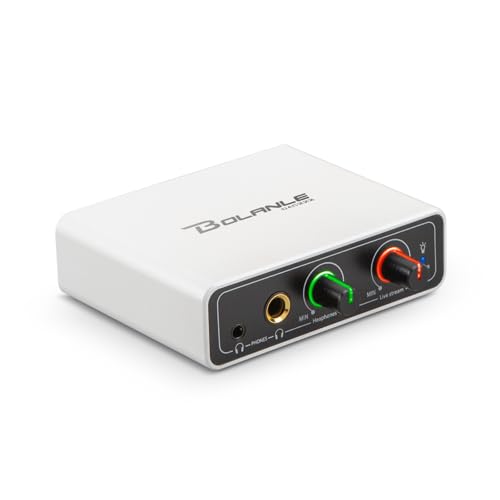
- Routes mixer audio to mobile devices
- Dual headphone outputs
- Separate monitor and stream controls
Best For: Livestreamers using mixers, DJ controllers, or interfaces
Best Budget Pick

- 24-bit/192kHz recording support
- 48V phantom power and two combo inputs
- Plug-and-play Windows and Mac compatibility
Best For: Beginners, podcasters, musicians, and home creators
Best Build Quality
Audient iD4 MKII USB-C Interface

- Class-A console microphone preamp
- Durable all-metal desktop housing
- USB-C and two headphone outputs
Best For: Home recordists and mobile creators seeking sturdy construction
Best Converter Performance

- ESS Sabre32 Ultra DAC technology
- 120 dB output dynamic range
- Includes XLR-XLR cable bundle
Best For: Recordists prioritizing converter and headphone performance
Best Value Recording Interface

- 24-bit/192kHz recording support
- Two combo inputs with 48V phantom power
- Zero-latency monitoring for beginners
Best For: Home recording, podcasting, streaming, and guitar or vocal projects
Best for Vinyl Transfers
Behringer UFO202 USB Interface

- Phono input connects a turntable
- USB transfer for records and tapes
- Includes Audacity and restoration tools
Best For: Digitizing vinyl records and cassette tapes
Best Compact Starter Pick
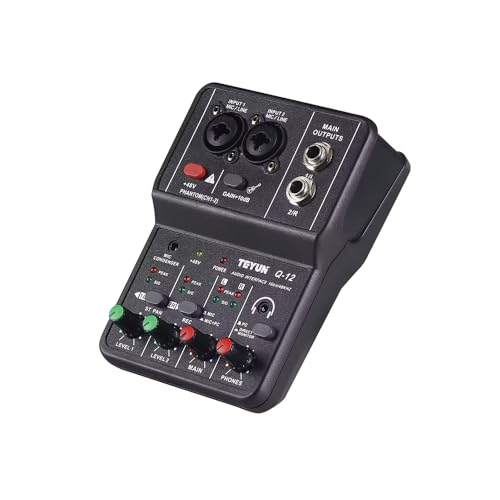
- XLR and 3.5mm microphone inputs
- Supports guitar and bass recording
- 48V phantom power with level indicators
Best For: Beginner computer recording and simple vocal or instrument projects
Best Budget Studio Starter – Kmise USB Audio Interface
For shoppers comparing budget telephone audio interfaces, the Kmise USB Audio Interface is a versatile choice for connecting microphones, instruments, headphones, and speakers to a computer or mobile device. It supports 24-bit/192kHz recording, low-latency monitoring, and plug-and-play setup.
Best For: Beginner vocalists, guitarists, podcasters, streamers, and voice actors who need a compact all-in-one interface.
Pros:
- 24-bit/192kHz recording supports detailed vocal and instrument capture.
- 48V phantom power supports compatible condenser microphones.
- Low-latency monitoring is designed for real-time recording.
- Combines microphone, instrument, headphone, and speaker connections.
Cons:
- The supplied notes do not specify the exact number of input channels or controls.
- Mobile compatibility is stated broadly, so device-specific requirements may vary.
The Kmise stands out among budget telephone audio interfaces for buyers who want a conventional recording interface with broad connections and phantom power, rather than a single-purpose mobile adapter.
Best Ultra-Portable Guitar Pick – TC Helicon GO GUITAR
If your version of budget telephone audio interfaces needs to fit in a pocket, the TC Helicon GO GUITAR is a streamlined option for recording electric guitar, bass, or other line-level instruments directly to a mobile device or computer. Its single 1/4-inch input keeps the setup simple.
Best For: Guitarists and bassists who want a lightweight interface for practice, mobile recording, and app-based music creation.
Pros:
- Weighs only 23 g for highly portable use.
- Works with iOS, Android, Mac, and PC devices.
- Supports popular third-party apps and TC Helicon mobile apps.
- Includes a 1/4-inch instrument input and 1/8-inch TRRS connector.
Cons:
- Provides one channel, limiting multi-source recording.
- It is designed for instrument input rather than microphone recording with phantom power.
The GO GUITAR is a focused, travel-friendly pick rather than a full studio hub. Choose it when easy guitar-to-phone recording matters more than multiple inputs and advanced routing.
Best Direct Mobile Mic – IK Multimedia iRig Mic Cast HD
For creators comparing budget telephone audio interfaces who prefer an integrated microphone, the IK Multimedia iRig Mic Cast HD offers a compact phone-focused recording solution. It captures 24-bit/96kHz audio, includes multiple device cables, and supports front, rear, and bidirectional recording.
Best For: Mobile podcasters, interviewers, musicians, and video creators recording directly with phones or tablets.
Pros:
- Compatible with iPhone, iPad, Android, and popular apps.
- Includes Lightning, Micro-USB, and USB-C cables.
- Front, rear, and bidirectional modes support flexible placement.
- Headphone output enables monitoring of incoming and processed signals.
Cons:
- This is a microphone rather than a traditional multi-input interface.
- Its bidirectional design may capture unwanted sound in less controlled spaces.
The iRig Mic Cast HD is a practical alternative when you want fewer separate components. Its built-in microphone and device-specific cables make mobile recording straightforward, while the magnetic mount helps position it on a compatible device.
Best Mobile Streaming Adapter – Bolanle DAC222 USB-C Interface
The Bolanle DAC222 is a strong fit for budget telephone audio interfaces when the goal is sending sound from an existing mixer, DJ controller, or audio interface to a phone. Its stereo USB-C OTG output, dual headphone connections, and separate level controls target live streaming rather than traditional recording.
Best For: Mobile DJs, musicians, podcasters, and livestreamers routing line-level audio to iPhone, iPad, or Android devices.
Pros:
- Connects existing mixers and audio gear to mobile streaming platforms.
- Provides 3.5mm and 6.35mm headphone outputs for monitoring.
- Separate monitor and live-stream volume controls simplify level balancing.
- Supports USB-C OTG, bus power, or external DC 5V power.
Cons:
- It accepts a 3.5mm AUX source rather than replacing a full microphone interface.
- USB-C is the primary connection; older iPhones may require a Lightning adapter.
The DAC222 is best viewed as a mobile streaming bridge. It makes sense for buyers who already own audio equipment and need convenient monitoring and level control while broadcasting from a phone.
Best Budget Pick – KA2 2×2 USB Audio Interface
For shoppers comparing budget telephone audio interfaces, the KA2 offers a straightforward 2×2 USB setup for recording vocals, instruments, podcasts, and livestreams. Its 24-bit/192kHz support, two combo inputs, and plug-and-play Windows and Mac compatibility make it practical for a home studio.
Best For: Beginners, podcasters, musicians, and home creators who need flexible inputs and 48V phantom power.
Pros:
- Supports high-resolution 24-bit/192kHz recording.
- Includes 48V phantom power for condenser microphones.
- Two combo XLR/TRS inputs and independent monitor outputs provide useful flexibility.
- Works with Windows and Mac without additional drivers.
Cons:
- The listed manufacturer warranty is only 90 days.
- At 0.81 kg, it is less travel-friendly than the lightest compact interfaces.
The KA2 is a sensible low-cost starting point when you want broad compatibility, two inputs, and microphone phantom power without a complicated setup.
Best Build Quality – Audient iD4 MKII USB-C Interface
The Audient iD4 MKII is a compact option for budget telephone audio interfaces when durable construction and a quality microphone preamp matter. It combines a Class-A console microphone preamp with USB-C connectivity, monitor controls, and two headphone outputs.
Best For: Home recordists and mobile creators who prioritize an all-metal enclosure, USB-C connectivity, and a Class-A preamp.
Pros:
- Uses a Class-A microphone preamplifier based on Audient’s ASP8024 console.
- High-speed USB-C connection improves power delivery and cable convenience.
- All-metal desktop housing is designed for stability and durability.
- Offers two headphone outputs plus monitor mix and panning functions.
Cons:
- Its maximum sample rate is 96kHz, below the 192kHz specification of some alternatives.
- The supplied compatibility details are narrower than the KA2’s, listing iOS and macOS.
Choose the iD4 MKII if a sturdy, portable enclosure and refined preamp design are more important to you than the highest listed sample rate or a larger input layout.
Best Converter Performance – MOTU M2 2×2 USB-C Interface
The MOTU M2 is a strong contender among budget telephone audio interfaces for users focused on measured output and headphone performance. This 2×2 USB-C interface uses ESS Sabre32 Ultra DAC technology, with a listed 120 dB output dynamic range and -129 dBu EIN on its microphone inputs.
Best For: Recordists who want a compact 2×2 interface with high-spec conversion and an ESS-driven headphone output.
Pros:
- ESS Sabre32 Ultra DAC technology is specified for detailed analog sound.
- Listed output dynamic range reaches 120 dB.
- Microphone inputs are rated at -129 dBu EIN.
- Includes an XLR-XLR cable bundle and supports sample rates up to 192kHz.
Cons:
- The supplied operating-system details list Windows only.
- The interface weighs 1.46 kg, making it heavier than the Audient iD4 MKII.
- The supplied notes do not mention 48V phantom power or additional input details.
The M2 makes the most sense for buyers who value published converter and noise-performance specifications, while those needing clearly documented phantom power should compare the feature lists carefully.
Best Value Recording Interface – 24-Bit USB Audio Interface
For shoppers comparing budget telephone audio interfaces, this two-channel model offers a practical setup for recording vocals, guitar, podcasts, and streams. It combines 24-bit/192kHz recording, two combo inputs, phantom power, and zero-latency headphone monitoring in a beginner-friendly USB design.
Best For: Beginners recording vocals, instruments, podcasts, or livestream audio on Mac or Windows computers.
Pros:
- Supports recording and mixing up to 24-bit/192kHz.
- Two XLR/line combo inputs with up to 60 dB of gain.
- Includes 48V phantom power, Hi-Z selection, and zero-latency monitoring.
- Plug-and-play compatibility with Mac and Windows 7 or later.
Cons:
- Mac use may require reformatting according to the listing.
- The product notes do not specify mobile-device recording steps.
This is a versatile budget pick when you want higher-resolution recording and two inputs without a complicated setup. Its combination of instrument support, condenser-microphone power, and independent headphone control makes it suitable for a range of entry-level audio projects.
Best for Vinyl Transfers – Behringer UFO202 USB Interface
Among budget telephone audio interfaces, the Behringer UFO202 is a specialized option for digitizing records and tapes. Its switchable phono/line input connects a turntable or cassette source to a computer over USB, and the included software bundle supports editing and restoration.
Best For: Users transferring vinyl records or cassette tapes to a Windows or macOS computer.
Pros:
- Connects turntables and cassette equipment to a computer by USB.
- Switchable phono input accommodates line-level sources.
- Includes Audacity for recording, editing, noise reduction, and vinyl restoration.
- Comes with podcasting software and more than 150 virtual instruments and effects plug-ins.
Cons:
- Maximum sample rate is 48kHz.
- Its feature set is focused on vinyl and tape transfers rather than microphone recording.
- The listing specifies compatibility with personal computers only.
The UFO202 makes the most sense when preservation and basic editing are your priorities. It is less of an all-purpose studio interface, but its phono switching and bundled restoration tools give it a clear role for inexpensive media conversion.
Best Compact Starter Pick – Q-12 USB Audio Interface
This Q-12 is a straightforward choice for shoppers seeking budget telephone audio interfaces for basic computer recording. It provides an XLR microphone input, an additional 3.5mm microphone jack, guitar and bass support, independent channel controls, and plug-and-play USB operation.
Best For: Beginners recording vocals, guitar, bass, or simple music projects on a computer.
Pros:
- Supports XLR microphones and an additional 3.5mm microphone connection.
- Offers guitar and bass insertion with independent channel volume controls.
- Includes 48V phantom power and an ultra-low-noise design.
- Gain halo meters help identify overly high recording levels.
Cons:
- Recording resolution is limited to 16-bit/48kHz.
- The listing describes compatibility generally as a computer operating system.
- Its two-channel feature set is aimed at basic rather than expansive studio setups.
The Q-12 is best viewed as an accessible starter interface with useful input flexibility. Its level indicators and separate controls can help new users manage recording levels, while phantom power expands microphone compatibility.
How We Picked These Budget Telephone Audio Interfaces
We selected these models for their mix of price, connectivity, recording quality, and practical use cases. The lineup includes compact interfaces for calls and streaming, mobile-focused options, instrument adapters, USB recording boxes, and higher-quality desktop interfaces. We also considered features that matter in real setups: microphone compatibility, phantom power, direct monitoring, low-latency operation, portability, and support for computers or mobile devices.
Because product specifications and included accessories can vary, verify the current listing before buying—especially connector types, cable requirements, and whether a microphone or instrument cable is included.
Quick Comparison
- Simple voice and streaming setups: Choose a compact USB sound card or basic interface with the inputs you need.
- Guitar or mobile recording: The TC Helicon and IK Multimedia options are designed for portable use.
- Microphones requiring phantom power: Look for an interface with switchable 48V power and an XLR input.
- Two-source recording: A 2×2 interface is more flexible for recording a microphone and instrument together.
- Higher-quality monitoring: Audient and MOTU models offer more refined preamps, controls, and desktop workflow features.
Key Buying Factors for Budget Telephone Audio Interfaces
Connections and Compatibility
Check whether you need USB-A, USB-C, 3.5mm, XLR, or 1/4-inch inputs. A phone or tablet may also require an adapter. Confirm operating-system compatibility and whether the interface is bus-powered or needs external power.
Inputs and Phantom Power
One input may be enough for calls or solo voice recording, while two inputs are better for interviews, stereo sources, or simultaneous guitar and microphone recording. Condenser microphones often require 48V phantom power; never assume a compact adapter provides it.
Monitoring and Latency
Direct monitoring lets you hear your live signal with little or no delay, which is especially useful for calls, singing, and instrument practice. A headphone output with an independent volume control is another practical advantage.
Resolution and Real-World Sound
24-bit recording and higher sample-rate support can provide useful headroom, but microphone quality, room acoustics, gain control, and software often matter more than headline specifications. Prioritize clean preamps and easy controls over maximum numbers alone.
Who Should Buy Which Budget Telephone Audio Interfaces?
Choose a basic USB interface if you need an inexpensive connection for voice calls, streaming, or occasional recording. Choose a mobile interface if portability and phone or tablet compatibility are central to your setup. Choose a 2×2 model if you plan to connect multiple sources or want room to expand. Choose Audient or MOTU if you record frequently and value stronger preamps, better monitoring controls, and a more durable desktop workflow. For vinyl transfer, the Behringer UFO202 is the specialized choice, while general-purpose interfaces are better for microphones and instruments.