
Jolgoo 2×2 USB Audio Interface review: this is a compact recording interface aimed at creators who want simple inputs, phantom power, and direct monitoring.
If you need a straightforward desktop unit for vocals, podcasts, or small home-studio sessions, it is easy to understand what it is trying to be.
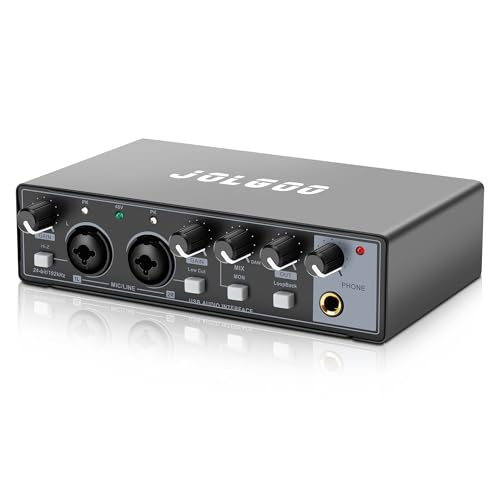
Jolgoo 2×2 USB Audio Interface Review Summary
The Jolgoo 2×2 USB Audio Interface makes the most sense for beginners and practical home-studio buyers who care more about getting recording done than chasing a complicated feature set.
Based on the listing, it combines 24-bit/192kHz conversion, two combo inputs, +48V phantom power, direct monitoring, and USB-powered operation in a small metal box, which is a sensible package for a compact creator setup.
Verdict: if you want an affordable-feeling, low-friction interface for a mic, instrument, or podcast workflow, this looks like a solid utility buy.
Skip it if you need advanced routing, many channels, or a studio interface with clearly documented professional ecosystem support.
Review Scorecard
| Category | Score | Rationale |
|---|---|---|
| Sound format support | 8/10 | Listing claims 24-bit/192kHz conversion, which is a strong spec for a compact interface. |
| Input flexibility | 8/10 | Dual XLR/line combo inputs make it useful for vocals, guitars, or small two-source sessions. |
| Monitoring workflow | 9/10 | Direct monitoring is a major plus for low-latency tracking and simple setups. |
| Mic compatibility | 8/10 | +48V phantom power supports condenser microphones used in podcasting and home recording. |
| Portability and simplicity | 9/10 | USB-powered operation and driver-free positioning favor quick setup and travel use. |
| Build and desk fit | 7/10 | The metal housing and compact footprint sound practical, but there is little evidence of premium refinement. |
Key Features and Specifications of Jolgoo 2×2 USB Audio Interface
The core appeal here is clarity of purpose.
Jolgoo positions this as a compact interface with two inputs, studio-oriented conversion, and enough monitoring and connectivity to cover the most common solo or two-person recording tasks.
The listing highlights:
- 24-bit/192kHz audio support for higher-resolution recording and playback.
- Two XLR/line combo inputs with independent gain control.
- +48V phantom power for condenser microphones.
- Direct monitoring to hear input without distracting delay.
- USB-powered operation with no wall outlet required.
- Compatibility with Windows, macOS, iOS, and Android according to the listing.
- Plug-and-play use with mainstream DAWs such as Audacity, Ableton, and Pro Tools, as claimed.
- A metal housing, headphone monitoring, stereo line-outs, and both USB-C and USB-A cables.
That combination tells you the intended buyer immediately: someone building a simple recording desk, not a sprawling multi-channel production rig.
The 2×2 layout also keeps the device approachable, because there is less to configure and fewer ways to get lost in routing options.
The practical value of the spec sheet is in the mix of modern convenience and basic studio control.
Phantom power matters if you use a condenser mic.
Direct monitoring matters if you record voice or instruments and want to avoid software latency.
Two combo inputs matter if you want to record a second source, such as guitar plus vocal, or host a two-person podcast.
Pros and Cons of Jolgoo 2×2 USB Audio Interface
Pros
- Simple, focused feature set. The listing avoids clutter and centers on the features most buyers actually need.
- Useful for condenser mics. +48V phantom power opens the door to common podcasting and vocal recording setups.
- Low-latency monitoring workflow. Direct monitor switching is a real convenience for tracking.
- Compact and USB-powered. This is easier to place on a desk and easier to move between setups.
- Two-input flexibility. The combo inputs make the unit more versatile than a single-mic interface.
Cons
- Limited evidence of advanced features. There is no sign of deeper routing, software control, or expansion options.
- Two-channel ceiling. If you want to grow into band recording or multi-source sessions, you will outgrow it quickly.
- Listing language is marketing-heavy. The core specs are clear, but there is not much detail beyond the basic use case.
- No strong proof of ecosystem polish. Compatibility is claimed broadly, but the listing does not show the kind of documentation detail power users look for.
The balance is straightforward: it looks practical and accessible, but not especially ambitious.
That is not a flaw if your goal is to get a mic and instrument into a computer without complexity.
Who Should Buy Jolgoo 2×2 USB Audio Interface?
This interface is a reasonable fit for new podcasters, solo creators, home musicians, and anyone building a compact recording desk.
It should also appeal to buyers who want a small USB interface with phantom power and direct monitoring without paying for features they will never use.
It is especially sensible if your workflow is:
- One condenser microphone for voice recording.
- One mic plus one instrument.
- A simple two-person podcast setup.
- Occasional mobile recording where a wall-powered interface would be inconvenient.
You should probably skip it if you need:
- More than two simultaneous inputs.
- Detailed software control or a known pro-audio ecosystem.
- A serious band-recording interface.
- Deeply documented drivers, bundled software, or advanced DSP features.
For the right buyer, the question is not whether it does everything.
It is whether it does the important things cleanly.
On the listing evidence, the answer is yes.
Recording Workflow With Jolgoo 2×2 USB Audio Interface
Direct Monitoring Matters Here
Direct monitoring is one of the most useful features for a small interface because it reduces friction immediately.
For vocal tracking, voiceover, and simple instrument recording, hearing yourself without software delay can make a modest setup feel much more professional.
Phantom Power Expands Mic Choice
The +48V phantom power support is important because it means the interface is not limited to dynamic microphones.
If your plan includes a condenser mic for cleaner vocal capture, this feature is part of what makes the unit relevant instead of merely basic.
Two Inputs Fit Real Creator Workflows
The dual combo inputs are enough for common creator tasks without overwhelming the user.
That is a meaningful design choice: many buyers do not need a 4-input or 8-input interface, and a tighter two-input layout can be easier to learn and faster to use.
Metal Build and Desktop Practicality
The metal housing and compact form suggest a product meant to sit on a desk, survive casual movement, and stay out of the way.
That is not a glamorous selling point, but in a home-studio context it matters because the interface is one piece of gear you touch every session.
Alternatives to Jolgoo 2×2 USB Audio Interface
If you want a more established ecosystem or broader market familiarity, consider these common Amazon search alternatives:
These are the kinds of interfaces buyers often compare when they want two inputs, phantom power, and an easy desktop workflow.
The best alternative depends on whether you value brand familiarity, bundled software, or simply a similar spec sheet from a more established audio company.
Is Jolgoo 2×2 USB Audio Interface Worth It?
Yes, if your needs are basic, practical, and centered on two-input recording. The listing shows a sensible combination of 24-bit/192kHz support, phantom power, direct monitoring, USB power, and compact construction, which is exactly what many home-studio buyers want.
It is not the safest choice for advanced routing, larger sessions, or buyers who want the reassurance of a long-established pro-audio brand.
But for a simple recording interface that appears built for fast setup and everyday creator use, it looks worth considering.
If your goal is to record cleanly without overcomplicating your desk, this is the kind of interface that can make sense.