
The right wide-angle lens can make a studio feel more spacious, keep full sets in frame, and give video, product, and portrait work a polished perspective. But focal length, sensor format, distortion, autofocus, and light-gathering ability all affect the result.
We selected 10 wide-angle options spanning full-frame and APS-C cameras, including fast primes, practical zooms, and specialty fisheye-style adapters. Use the guide below to match the lens to your camera system, studio size, and production workflow.
Best 10 Wide-Angle Camera Lenses for Studio Production Picks for 2026
Extreme-Wide Precision

- 130.4-degree ultra-wide view
- Close-to-zero distortion
- Compact autofocus full-frame Sony FE design
Best For: Expansive full-frame studio scenes and architectural-style shots
Flexible APS-C Framing

- Versatile 10-22mm zoom range
- Fast USM autofocus with manual override
- 9.5-inch close-focusing distance
Best For: Canon EOS DSLR studio setups needing framing flexibility
Stabilized Budget Zoom

- 10-18mm ultra-wide zoom range
- Optical image stabilization
- STM autofocus for quieter video
Best For: Canon EOS wide-angle video and studio coverage
Compact Fisheye Option
37mm 0.3X Fisheye Camcorder Lens

- 180-degree listed viewing angle
- Reflection-reducing black matte design
- Requires a compatible 37mm camcorder thread
Best For: Dramatic fisheye shots with compatible camcorders
Flexible APS-C Zoom
Sigma 10-20mm f/4-5.6 EX DC HSM

- 10-20mm ultra-wide zoom range
- Ultrasonic autofocus with full-time manual focus
- Designed for APS-C cameras
Best For: Flexible wide-angle framing on compatible Canon APS-C DSLRs
Fast Manual Prime
Rokinon 14mm f/2.8 Ultra Wide Lens
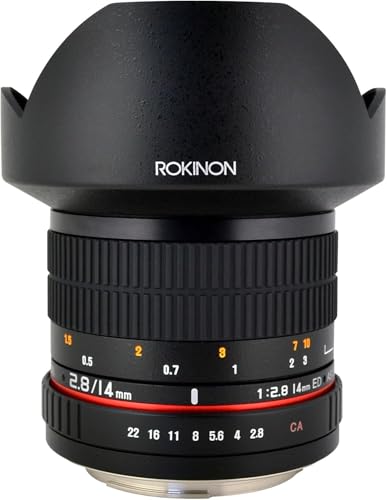
- 115.7-degree ultra-wide perspective
- Fast f/2.8 aperture
- Manual-focus Canon EF prime
Best For: Controlled ultra-wide studio and low-light setups
Studio Wide View

- 10-20mm super-wide zoom range
- Constant f/3.5 maximum aperture
- Autofocus/manual-focus operation
Best For: Canon APS-C studios, interiors, and group scenes
Professional Full-Frame Flexibility

- 17-40mm ultra-wide zoom range
- Ring-type USM autofocus
- Weather- and dust-resistant construction
Best For: Canon SLR studios, weddings, nature, and full-frame work
Low-Light Perspective

- Fixed 14mm ultra-wide perspective
- Bright f/2.8 maximum aperture
- Built-in AE chip for Canon DSLR metering
Best For: Canon productions using manual focus and fixed ultra-wide framing
Extreme-Wide Precision – Laowa 10mm f/2.8 Zero-D
Laowa 10mm f/2.8 Zero-D Full-Frame Lens with Ultra Wide-Angle View with Auto Focus (for Sony FE)
Check Price On AmazonFor studio production that needs an expansive perspective, the Laowa 10mm f/2.8 is one of the most dramatic wide-angle camera lenses for studio production. Its 130.4-degree view, close-to-zero distortion, and autofocus make it suitable for architectural sets, immersive scenes, and creative foreground work.
Best For: Full-frame Sony FE photographers and videographers who need maximum width with controlled straight lines.
Pros:
- 130.4-degree angle of view captures exceptionally broad scenes.
- Zero-D optical design helps preserve horizontal and vertical lines.
- Compact 7cm design weighs about 0.93 lb and focuses as close as 12cm.
- 15-element, 9-group optical design includes aspherical and ED glass.
Cons:
- No image stabilization.
- Designed for Sony E full-frame cameras rather than a broad range of mounts.
The Laowa is a strong choice when width and geometric control matter more than stabilization. Its close focusing distance also supports distinctive wide-angle shots with prominent foreground subjects.
Flexible APS-C Framing – Canon EF-S 10-22mm USM
The Canon EF-S 10-22mm gives studio creators framing flexibility in a single zoom. As wide-angle camera lenses for studio production go, it combines a 10mm starting point for broad set views with a 22mm end for tighter compositions on compatible Canon EOS digital SLR cameras.
Best For: Canon EOS digital SLR users who want a versatile ultra-wide zoom for changing studio compositions.
Pros:
- 10-22mm zoom range adapts from expansive to moderately tighter framing.
- USM autofocus offers fast AF performance and full-time manual focus.
- Focuses as close as 9.5 inches for near-subject compositions.
- Circular aperture design produces natural-looking highlights.
Cons:
- Maximum aperture varies from f/3.5 to f/4.5.
- Supplied notes identify it primarily for Canon EOS digital SLR cameras.
- No optical image stabilization is specified in the supplied details.
This lens is a practical production zoom when repositioning the camera is less convenient than adjusting focal length. Its close focus and full-time manual override add useful control for staged setups.
Low-Light APS-C Performer – Sony E 11mm F1.8
The Sony E 11mm F1.8 pairs an ultra-wide perspective with a bright aperture, making it a compelling option among wide-angle camera lenses for studio production. Its compact APS-C/Super35 design, quiet autofocus, and focus-breathing controls are especially useful for video creators.
Best For: Sony APS-C and Super35 creators filming video, vlogs, and wide studio scenes in available or controlled low light.
Pros:
- Bright f/1.8 aperture supports low-light work and background separation.
- Compact, lightweight design suits APS-C and Super35 E-mount cameras.
- Two linear motors provide fast, precise, quiet autofocus and tracking.
- Reduced focus breathing and angle-of-view shifts benefit movie footage.
Cons:
- 11mm prime design does not provide zoom flexibility.
- Compatible with Sony APS-C E-mount cameras rather than full-frame systems as specified.
- No separate in-lens image stabilization is identified in the supplied details.
For video-first studio work, this Sony is more specialized than a general-purpose zoom. Its wide view, bright aperture, constant physical length during focusing, and quiet AF support controlled handheld or camera-mounted production.
Stabilized Budget Zoom – Canon EF-S 10-18mm STM
The Canon EF-S 10-18mm f/4.5-5.6 IS STM is a practical zoom for creators who need wide coverage without changing lenses. It fits the wide-angle camera lenses for studio production category with optical image stabilization and a stepping-motor autofocus system designed for quieter video shooting.
Best For: Canon EOS users seeking an affordable, stabilized ultra-wide zoom for studio video and landscape-style set views.
Pros:
- 10-18mm range covers broad studio and landscape compositions.
- Optical image stabilization helps support steadier shooting.
- STM stepping motor is intended for noise-free video focusing.
- Focuses as close as 0.72 feet, or 0.22 meter.
Cons:
- Relatively modest f/4.5-5.6 maximum aperture.
- Shorter 10-18mm range offers less reach than the 10-22mm Canon zoom.
- Supplied details specify compatibility with Canon EOS EF/EF-S systems.
This lens emphasizes ease of use and steadier operation rather than maximum brightness. It is a sensible fit for wide video coverage where stabilization and quieter autofocus are more important than a fast aperture.
Compact Fisheye Option – 37mm 0.3X Fisheye Camcorder Lens
For studio creators using a compatible camcorder, this 37mm fisheye adapter offers an extremely broad perspective for wide-angle camera lenses for studio production. Its 180-degree listed angle of view can help create immersive, exaggerated compositions, while the black matte finish is designed to reduce reflections.
Best For: Camcorder users who want a dramatic fisheye perspective and have a 37mm filter thread.
Pros:
- Listed 180-degree real angle of view for highly expansive framing.
- Black matte satin finish and black-rimmed glass help reduce unwanted reflections.
- Supports 4K video capture formats when used with a compatible camcorder.
Cons:
- Compatible only with camcorders using a 37mm lens thread.
- Fixed-focus design with no image stabilization.
- Fisheye distortion may not suit natural-looking studio footage.
This is a specialized adapter rather than a general-purpose wide-angle lens. Confirm the camcorder’s filter diameter before buying, and choose it when the fisheye effect is part of the intended production style.
Flexible APS-C Zoom – Sigma 10-20mm f/4-5.6 EX DC HSM
The Sigma 10-20mm gives studio shooters flexible wide-angle framing without changing lenses. Its zoom range is useful for adjusting composition in confined spaces, while the ring-type ultrasonic autofocus motor and full-time manual focusing support practical DSLR production workflows.
Best For: Canon APS-C DSLR users who need a versatile ultra-wide zoom for studio sets, interiors, or group scenes.
Pros:
- 10-20mm zoom range provides broad framing flexibility.
- Ring-type ultrasonic autofocus with full-time manual focus control.
- 0.24m minimum focus distance and support for 77mm filters.
- Available in several camera-mount versions, including Canon EF.
Cons:
- This listed version is for Canon EF-S/APS-C cameras.
- Variable f/4-5.6 aperture is less suited to low-light work than faster lenses.
- Vignetting can occur on sensors larger than APS-C or 35mm SLR cameras.
For compatible Canon APS-C systems, this lens balances broad coverage with useful zoom flexibility. Check sensor and mount compatibility carefully, especially if your studio camera is full-frame.
Fast Manual Prime – Rokinon 14mm f/2.8 Ultra Wide Lens
The Rokinon 14mm f/2.8 is a fast ultra-wide prime for Canon EF cameras, making it a strong candidate among wide-angle camera lenses for studio production. Its 115.7-degree angle of view can cover expansive sets, while the f/2.8 aperture offers more low-light flexibility than slower zoom designs.
Best For: Canon EF photographers and video creators who want a fixed ultra-wide perspective and hands-on manual focus control.
Pros:
- 14mm focal length and 115.7-degree angle of view capture expansive scenes.
- Fast f/2.8 maximum aperture supports low-light shooting.
- Manual focus allows deliberate focus adjustments for controlled production setups.
- Aspherical elements and a 14-element, 10-group design target sharp, clear images.
Cons:
- Manual-focus operation may be slower for moving subjects.
- No image stabilization.
- Fixed 14mm focal length offers less framing flexibility than a zoom.
This lens is a compelling fit when you value a fast aperture and consistent ultra-wide coverage over autofocus or zoom convenience. Its built-in petal hood and durable 900g construction also suit deliberate, controlled setups.
Studio Wide View – Sigma 10-20mm f/3.5 for Canon
Sigma 10-20mm f/3.5 EX DC HSM ELD SLD Aspherical Super Wide Angle Lens for Canon Digital SLR Cameras
Check Price On AmazonFor creators comparing wide-angle camera lenses for studio production, the Sigma 10-20mm offers a flexible super-wide zoom for Canon EF cameras. Its constant f/3.5 maximum aperture supports consistent exposure throughout the zoom range, while the 10mm setting provides an expansive 102.4-degree angle of view.
Best For: Canon APS-C studio setups, interiors, group scenes, and productions needing an adjustable ultra-wide perspective.
Pros:
- 10-20mm zoom range provides flexible framing.
- Constant f/3.5 maximum aperture across the zoom range.
- Autofocus and manual-focus operation are supported.
- Includes a petal-type hood and front and rear lens caps.
Cons:
- No image stabilization.
- Designed for Canon EF mount cameras, limiting compatibility with other systems.
- Not water resistant.
The Sigma is a practical choice when studio work calls for broad coverage without committing to a single focal length. Its constant aperture and compact 520 g weight make it a versatile option for controlled Canon-based production environments.
Professional Full-Frame Flexibility – Canon EF 17-40mm f/4L
The Canon EF 17-40mm f/4L is a strong candidate among wide-angle camera lenses for studio production when you need a broader-to-standard zoom range. It combines a 104-degree maximum diagonal angle of view with Canon L-series construction, ring-type USM autofocus, and weather-resistant protection.
Best For: Canon SLR productions, wedding and nature work, full-frame wide-angle coverage, and setups that benefit from a 17-40mm framing range.
Pros:
- 17-40mm zoom range supports varied compositions.
- Aspherical elements and Super UD glass are designed for strong optical performance.
- Fast, silent autofocus from the ring-type USM motor.
- Weather- and dust-resistant construction.
Cons:
- Constant maximum aperture is f/4, slower than the other listed options.
- No optical image stabilization is specified in the supplied details.
- Canon EF mount limits system compatibility.
Choose this lens when build quality, autofocus behavior, and full-frame compatibility matter more than a very wide 10mm perspective. Its 11-inch minimum focusing distance also adds useful flexibility for closer studio compositions.
Low-Light Perspective – Rokinon 14mm f/2.8 for Canon
Rokinon AE14M-C 14mm f/2.8-22 Ultra Wide Angle Lens with Built-in AE Chip for Canon EF Digital SLR
Check Price On AmazonThe Rokinon AE14M-C provides a fixed 14mm perspective for wide-angle camera lenses for studio production, with a bright f/2.8 maximum aperture. Its built-in AE chip supports automatic metering with Canon DSLR cameras, while the manual-focus design gives operators direct control over focus placement.
Best For: Canon full-frame or APS-C productions needing a fixed ultra-wide view, close studio compositions, or a brighter aperture than an f/4 zoom.
Pros:
- Bright f/2.8 maximum aperture.
- Compatible with full-frame and APS-C cameras.
- Built-in AE chip supports automatic metering with Canon DSLRs.
- Focuses as close as 10.8 inches.
Cons:
- Manual focus only.
- Fixed 14mm focal length offers no zoom flexibility.
- Not water resistant.
This Rokinon suits controlled studio workflows where a consistent ultra-wide composition is desirable and manual focusing is acceptable. The 14mm prime design and f/2.8 aperture make it a straightforward option for expansive scenes and close-range perspective.
How We Picked the Best Wide-Angle Camera Lenses for Studio Production
We focused on lenses that can solve common studio problems: fitting large sets into confined spaces, covering group scenes, maintaining useful perspective, and supporting controlled video or stills workflows. The selection includes full-frame and APS-C-compatible models, primes and zooms, autofocus and manual-focus designs, and options across several Canon and Sony mounts.
We also considered maximum aperture, focal-length flexibility, optical distortion, focusing behavior, construction, and the practical limits of older lenses. Always verify the exact mount and sensor compatibility before buying, especially when comparing EF, EF-S, Sony E, and adapted video accessories.
Quick Comparison
| Lens type | Best suited to | Main advantage | Watch for |
|---|---|---|---|
| Ultra-wide prime | Full-frame sets and dramatic video | Wide perspective and often strong low-light performance | Less framing flexibility |
| Wide zoom | Run-and-gun studio coverage | Quick composition changes without moving the camera | Maximum aperture may be modest |
| APS-C ultra-wide | Crop-sensor cameras and smaller studios | Useful field of view in compact systems | Not generally suitable for full-frame bodies |
| Fisheye or adapter lens | Creative effects and specialty shots | Very broad, distinctive perspective | Pronounced distortion and variable image quality |
Key Buying Factors for Wide-Angle Camera Lenses for Studio Production
Focal Length and Sensor Size
A 10mm lens on APS-C does not provide the same view as a 10mm lens on full frame. Ultra-wide focal lengths are useful for tight studios, overhead shots, interiors, and large groups, while a range such as 10–20mm or 17–40mm makes it easier to adjust framing from a fixed position.
Distortion and Perspective
Wide lenses can exaggerate foreground size and stretch faces near the edges. For people, products, or architectural lines, look for low-distortion optical designs and keep important subjects away from the extreme borders. Fisheye options are best treated as creative tools rather than neutral studio lenses.
Aperture, Focus, and Video Handling
A wider maximum aperture helps in dim studios and can provide more control over depth of field, but studio lighting often reduces the need for extreme speed. Autofocus, quiet focusing, focus breathing, filter support, and manual-focus feel matter more for video than they do for occasional still photography.
Mount, Coverage, and Workflow
Confirm the camera mount, electronic communication, autofocus support, and whether the lens covers full frame or only APS-C. Also check minimum focus distance, flare resistance, front-element protection, and the ability to use filters or matte-box accessories.
Who Should Buy Which Wide-Angle Camera Lenses for Studio Production?
Choose a fast ultra-wide prime if you shoot in a compact studio, need strong low-light performance, or want a consistent cinematic perspective. A wide zoom is the better all-purpose choice for interviews, product demonstrations, and productions where camera placement changes frequently. APS-C users should prioritize native crop-sensor compatibility, while full-frame owners should select lenses designed to cover the entire sensor.
For controlled architectural or product work, prioritize low distortion and edge sharpness. For creative music videos, action shots, or unusual establishing images, a fisheye adapter can be worthwhile despite its pronounced curvature. Finally, match the lens to your support and lighting setup: a very wide view reveals more of the studio, so clutter, stands, and uneven backgrounds become part of the composition.