
Faulty cables can waste valuable workshop time, especially when a problem looks like a bad connector, patch point, or piece of equipment. The right tester helps isolate continuity, wiring, and connection issues before they become larger troubleshooting jobs.
This roundup compares 10 audio cable testers for workshops, from compact continuity checkers to more versatile tools that also support lighting, network, video, speaker, or coaxial connections.
Best 10 Audio Cable Testers for Workshops Picks for 2026
Workshop Multi-Cable Pick
MFL 15-Plug Audio Cable Tester

- Tests up to 13 cables at once
- LED conductor indicators
- Metal casing and broad connector support
Best For: Busy audio repair workshops testing many cable types
Rugged Pro Choice
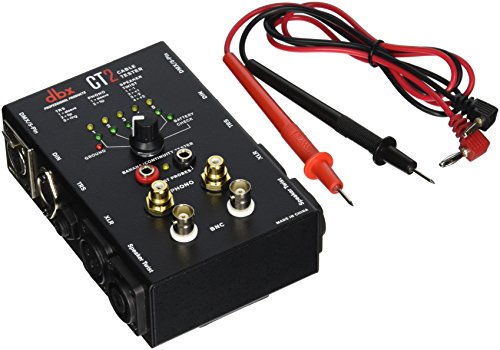
- Six-position pin-testing selector
- LEDs, beeper, and battery check
- Dedicated XLR and speaker-twist connectors
Best For: Professional audio and live-sound service benches
Simple Bench Tester

- Five-way pin-verification switch
- Manual probes and LED readout
- Steel chassis for workshop durability
Best For: Routine live-sound and studio cable checks
Broad-Format Option
Hosa CBT-500 Audio Cable Tester
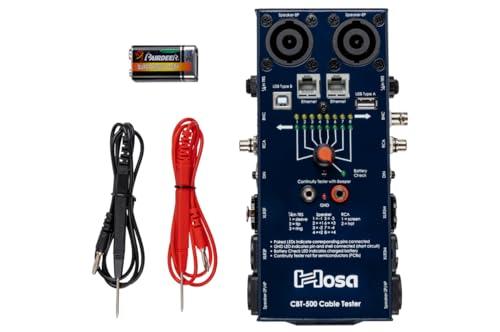
- Tests XLR, BNC, Ethernet, and SpeakON
- Ohmmeter-style continuity testing
- Limited lifetime warranty listed
Best For: Workshops handling mixed audio and data cable formats
Versatile Workshop Pick
dbx CT-3 Advanced Cable Tester

- Tests cables with up to eight pins
- Two-piece chassis supports installed-cable testing
- Works with audio, network, DMX, and other connectors
Best For: Mixed-format repair benches and installation work
Heavy-Duty Through-Wall Tester
Cable Guy Multi-Function Cable Tester
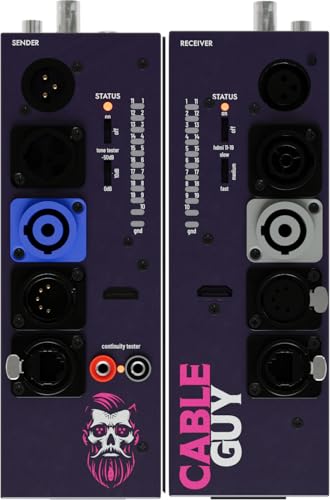
- Covers XLR, HDMI, RJ45, powerCON, TRS, RCA, and BNC
- Separate sender and receiver support through-wall tests
- Steel housing and LED continuity indicators
Best For: Professional audio, lighting, and installation workshops
Speaker-Cable Specialist
Elite Core OSP CT-04C Cable Tester

- Supports 2-, 4-, and 8-pole Speakons
- Tests common audio, MIDI, DMX, and CAT5e connections
- Provides ohmmeter and continuity testing
Best For: Speaker-system service and live-audio repair benches
Workshop-Ready Versatility
Detachable 15-in-1 Cable Tester

- Splits into sender and receiver units
- Tests numerous audio and signal connectors
- LED indicators and rugged metal casing
Best For: Mixed-format cable testing, including long or preinstalled runs
Fast Pass/Fail Checks
Galaxy Audio JIB/CT Cable Tester

- Tests six common audio cable types
- Checks for intermittent problems rapidly
- Uses a straightforward pass/fail indicator
Best For: Routine live-sound and music cable checks
Workshop Multi-Cable Pick – MFL 15-Plug Audio Cable Tester
For workshops handling varied recording and live-performance connections, this audio cable tester for workshops offers a broad testing setup in one compact metal unit. Its LED indicators and 10-way selector help identify continuity problems across compatible cable types.
Best For: Repair benches and audio setups that regularly test multiple connector formats, including TRS, XLR, RCA, DIN, and Speakon.
Pros:
- Supports testing for up to 13 cables at the same time.
- LED indicators help confirm individual conductor connections.
- Strong metal casing is suited to repeated workshop use.
- Accepts a wide range of audio connector types.
Cons:
- Requires a 9-volt battery, which is not included.
- At 1.5 pounds, it is less convenient for lightweight mobile kits.
The MFL is a practical choice when connector variety and higher-volume cable checking matter most. Its broad compatibility makes it especially useful for a shared workshop tester.
Rugged Pro Choice – dbx CT-2 Cable Tester
The dbx CT-2 is a straightforward audio cable tester for workshops that need selectable pin checks and dedicated connectors for common audio wiring. Its rugged construction, LED displays, beeper, and battery-life check support routine bench diagnostics.
Best For: Professional audio workshops and live-sound technicians checking XLR, speaker-twist, banana, BNC, DIN, phono, TRS, and TS connections.
Pros:
- Six-position rotary selector supports individual pin testing.
- LEDs show up to five pins and include an internal battery check.
- Beeper and LED provide two continuity indications through the banana connector.
- Includes male and female XLR connectors plus two speaker-twist connectors.
Cons:
- Its connector set is more specialized than a basic continuity tester.
- Battery-powered operation requires keeping a battery available.
The CT-2 emphasizes durable construction and clear, hands-on testing controls. It is a strong fit for technicians who value dedicated XLR and speaker connections alongside broader connector compatibility.
Simple Bench Tester – Mackie 5-Way Cable Tester
For everyday diagnostics, the Mackie 5-Way Cable Tester provides a focused audio cable tester for workshops with a simple selector, LED readout, and supplied probes. It is designed around common live-sound and studio connector types.
Best For: Audio repair benches that need quick checks for TRS, TS, XLR, RCA, Speakon, 3.5mm TRS, MIDI, and banana-jack connections.
Pros:
- Five-way switch helps verify each pin quickly.
- Supplied probes allow manual continuity checks.
- LED readout provides a clear visual indication.
- Steel chassis is built for durable workshop use.
Cons:
- Uses a single 9-volt battery, which is not included in the supplied details.
- Five-way switching is less extensive than some multi-position alternatives.
The Mackie is a sensible middle-ground option: durable, easy to operate, and equipped for many common audio connectors. Choose it when a compact manual tester is more important than maximum cable capacity.
Broad-Format Option – Hosa CBT-500 Audio Cable Tester
The Hosa CBT-500 is a practical audio cable tester for workshops working across several cable formats. Its supplied specifications identify support for XLR, 75-ohm BNC, Ethernet, and SpeakON connections, making it useful where a single tester needs to cover more than standard audio leads.
Best For: Repair and maintenance areas that handle audio cables alongside BNC, Ethernet, and SpeakON connections.
Pros:
- Supports XLR, 75-ohm BNC, Ethernet, and SpeakON cables.
- Uses ohmmeter-style testing for continuity checks.
- Battery-powered design is suitable for bench use without a mains connection.
- Includes a limited lifetime warranty according to the supplied details.
Cons:
- The supplied notes provide fewer details about switches, indicators, or probe operation.
- At 2 pounds, it is the heaviest tester in this selection.
- Requires a 9-volt battery.
The CBT-500 stands out for format coverage beyond conventional audio connectors. It is worth considering when workshop inventory includes BNC and Ethernet cables as well as XLR and SpeakON leads.
Versatile Workshop Pick – dbx CT-3 Advanced Cable Tester
For workshops handling varied audio and connector types, the dbx CT-3 is a flexible choice among audio cable testers for workshops. It tests cables with up to eight pins, includes a tone generator, and its two-piece chassis supports testing installed cables.
Best For: Repair benches and installers working with audio, video, networking, and lighting connectors.
Pros:
- Supports BNC, DIN, DMX, MIDI, RCA, RJ11, RJ45, TRS, TS, XLR, banana, and speaker-twist connectors.
- Two-piece design helps test cables that are already installed.
- Built-in test tone generator and compatibility with cables up to eight pins.
Cons:
- Uses a corded electric power source with a minimum operating voltage of 9 volts.
- At 2.2 pounds, it is heavier than some compact testers.
The CT-3 stands out when connector variety matters. Its broad format support and installed-cable testing capability make it a practical all-around workshop instrument.
Heavy-Duty Through-Wall Tester – Cable Guy Multi-Function Cable Tester
The Cable Guy Multi-Function Cable Tester is designed for demanding shop and professional environments. As one of the audio cable testers for workshops, it combines LED continuity feedback with separated sender and receiver units for through-wall testing.
Best For: Audio, lighting, networking, and permanent-installation work involving varied modern connectors.
Pros:
- Tests 3-pin and 5-pin XLR, HDMI, RJ45, powerCON, powerCON TRUE1, TRS, RCA, and BNC cables.
- Separated sender and receiver enable through-wall testing.
- Durable steel housing is suited to heavy professional use.
- Matching LED indicators provide quick continuity feedback.
Cons:
- Requires two 9V batteries, which are not included.
- Its 1.06 kg weight may be less convenient for portable kits.
Choose this model when installation testing and rugged construction are priorities. Its extensive connector coverage is particularly useful for shops serving both pro-audio and lighting clients.
Speaker-Cable Specialist – Elite Core OSP CT-04C Cable Tester
The Elite Core OSP CT-04C focuses on the connector mix commonly found in audio and speaker work. It is a useful option among audio cable testers for workshops, with continuity or ohmmeter testing across speaker, XLR, MIDI, network, DMX, and other connections.
Best For: Speaker-system service, live-audio shops, and technicians testing Speakon and common audio connectors.
Pros:
- Supports 2-, 4-, and 8-pole Speakons for speaker-cable checks.
- Tests 1/4-inch TRS, XLR, RCA, MIDI, DIN, mini stereo, RJ45 CAT5e, and 3- or 5-pin DMX.
- Offers both ohmmeter and continuity-tester measurement types.
Cons:
- Its listed compatibility is focused on audio, speaker, network, and DMX connectors rather than broader formats.
- Battery power requires maintaining a suitable battery supply.
The CT-04C is a focused choice for audio technicians who frequently handle speaker cables. Its support for multiple Speakon pole configurations gives it particular value on speaker-focused benches.
Workshop-Ready Versatility – Detachable 15-in-1 Cable Tester
For workshops handling mixed audio and installation jobs, this detachable tester is a versatile choice among audio cable testers for workshops. Its sender-and-receiver design supports long or preinstalled cable runs, while LED indicators help identify conductor faults.
Best For: Workshops testing installed, long, and mixed-format audio or signal cables.
Pros:
- Splits into sender and receiver units for testing preinstalled and long cables.
- Supports a broad range of connections, including XLR, RCA, Speakon, BNC, DIN, TRS, DMX, RJ45, RJ11, HDMI, and Banana.
- Ten-way switch selects the connection type, and LEDs show conductor continuity.
- Strong metal casing is designed for long-term workshop use.
Cons:
- Battery is required but not included.
- At 1.14 kg, it is less portable than a pocket tester.
This is the most flexible option here for a busy bench that sees many connector types. Choose it when detachable operation and broad cable coverage matter more than minimum size.
Fast Pass/Fail Checks – Galaxy Audio JIB/CT Cable Tester
The Galaxy Audio JIB/CT keeps routine bench checks straightforward, making it a practical option among audio cable testers for workshops. It tests six common cable types and uses a rapid microprocessor check to help reveal intermittent problems.
Best For: Musicians, contractors, schools, churches, and live-sound workshops needing quick cable checks.
Pros:
- Tests XLR, 1/4-inch, RCA, 1/8-inch, Speakon, and DIN/MIDI cables.
- Provides a simple pass/fail indicator.
- Microprocessor checks a cable up to 200 times per second for intermittent issues.
- Designed for quick and simple operation.
Cons:
- Covers six cable types, fewer than the 15-in-1 alternative.
- The supplied notes do not specify a detachable sender-and-receiver design for installed cables.
Its strength is speed and simplicity rather than broad-format coverage. It is a sensible workshop pick when the main workload involves common live-sound and music cables.
Pocket Coax Tracing – Audible Coax Cable Tester
For workshops that also service TV, modem, satellite, or RV installations, this compact tracer adds coax coverage to a set of audio cable testers for workshops. Its audible beep and LED indicate a connected cable, while the toner can trace runs through walls, ceilings, and floors.
Best For: Identifying and tracing coaxial cables in rooms, attics, walls, and narrow spaces.
Pros:
- Combines continuity testing with audible and LED indications.
- Can trace coaxial cables through ceilings, floors, and interior walls.
- Pocket-sized design and right-angle connector suit tight work areas.
- Includes a detachable tone detector, female push-on connector, and right-angle barrel connector.
Cons:
- Designed for coaxial cables rather than the broad connector range of the other testers.
- AAA battery is required but not included.
This is a focused tool rather than a general audio-cable checker. Select it when cable identification and tracing through building obstacles are central to the job.
How We Picked These Audio Cable Testers for Workshops
We focused on testers that can help technicians identify open circuits, shorts, crossed conductors, and incorrect pin-to-pin wiring. We also considered connector coverage, portability, switch layouts, visual or audible indicators, battery operation, and the kind of workshop each tester suits.
Because workshop needs vary, the selection includes straightforward audio-focused models as well as multifunction testers. A compact unit may be ideal for routine cable checks, while a broader tester can reduce the need for separate tools when a workspace handles lighting, networking, video, or power connections.
Quick Comparison
- Basic audio testing: Choose a simple tester with clear LED indicators and support for the connectors used most often in your shop.
- Multiple connector types: Multifunction models can test combinations such as XLR, TRS, RCA, RJ45, HDMI, speaker, or power connectors.
- Portable troubleshooting: Pocket-sized testers are useful for mobile technicians, live-event crews, and quick checks at a rack or workbench.
- Cable tracing: Models with tone functions, audible alerts, or remote ends can make it easier to identify cables in dense installations.
Key Buying Factors for Audio Cable Testers for Workshops
Connector Compatibility
Start with the cables you actually repair. Confirm that the tester supports the connector types and wiring standards in your inventory. XLR, TRS, TS, RCA, speaker, and MIDI connections may require different testing contacts, while mixed-use shops may benefit from a multifunction design.
Testing Functions
Continuity testing is the essential feature, but sequential pin checks, remote-end testing, tone generation, and audible alerts can speed up diagnosis. LED indicators should be easy to read in both bright work areas and darker equipment rooms.
Build and Controls
A tester used daily should have a practical switch layout, a secure battery compartment, and a housing that can withstand transport. Detachable or separated sender and receiver sections can be useful for longer cables and installed runs.
Power and Portability
Check the required battery type and whether the tester includes automatic shutoff or a battery-status indication. Compact models are convenient, but larger units may offer more connection options and easier operation on a bench.
Who Should Buy Which Audio Cable Testers for Workshops?
Choose a basic audio tester if your workshop mainly handles microphone, instrument, patch, and speaker cables and you want fast go/no-go checks.
Choose an advanced or multifunction tester if you work across pro audio, lighting, installation, networking, or video. Broader compatibility can justify the added size and cost when it replaces several specialized tools.
Choose a pocket cable tracer if you frequently troubleshoot installed or bundled cables and need audible identification as well as continuity testing. For a dedicated repair bench, prioritize connector coverage, readable indicators, and durable controls over the smallest possible design.