
Two wireless microphones can make a duet, panel discussion, or live event easier to run—but the right system depends on more than sound quality. Your speaker or mixer inputs, local wireless conditions, and preferred microphone style all matter.
These 10 options span simple party-ready sets and configurable vocal systems. Use the buying guide to narrow down the features that fit your venue and setup.
Best 10 Dual Wireless Microphone System Picks for 2026
Best for Crowded RF Environments

- Auto scan and frequency lock
- 100 UHF frequencies per channel
- Up to 328 ft line of sight
Best For: Events needing flexible RF selection
Best for PartyBox Karaoke

- Two rechargeable handheld mics
- Pop filters and shock mounts
- 30 m dongle connection
Best For: Simple two-person PartyBox karaoke
Best for Straightforward UHF Setup

- Automatic pairing within seconds
- 30 tunable frequency groups
- Two XLR and one mixed output
Best For: Fast setup with frequency flexibility
Best for Simple PA Karaoke

- 15 frequencies per mic
- Separate mic volume controls
- Metal handheld mics
Best For: Karaoke with an existing PA
Long-Running Live Vocals

- Two PG58 handheld vocal mics
- Up to 300-foot operating range
- Up to 14 hours per transmitter
Best For: Long events with two vocalists
Party-Ready Plug-and-Play
JBL Wireless Two Microphone System
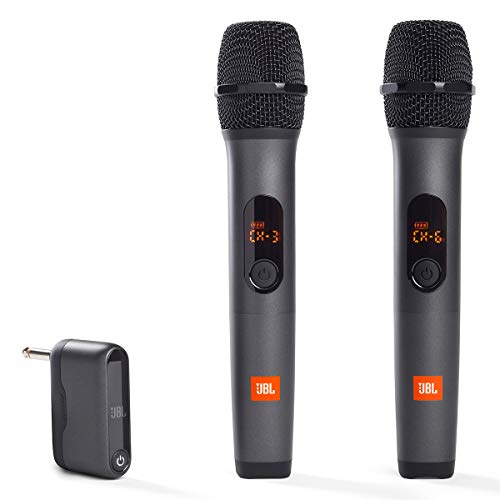
- Two microphones and dual-channel receiver
- Up to six hours of receiver playback
- Simple power-on setup
Best For: Karaoke with a compatible JBL PartyBox
Classic SM58 Vocals

- Two cardioid SM58 vocal capsules
- Up to 300-foot line-of-sight range
- Up to 14 hours per transmitter
Best For: Live vocals and presentations needing SM58 capsules
Best for Larger Stages

- True-diversity dual UHF receiver
- Auto scan and quick IR sync
- Up to 328 ft line of sight
Best For: Two handheld users at larger events
Easiest Setup

- One-button scan and sync
- Two dynamic cardioid handhelds
- Internal receiver antennas
Best For: Singers and presenters prioritizing quick setup
Most Versatile Mic Options

- Handheld plus bodypack transmitter
- Lapel and headset mics included
- Auto scan and frequency lock
Best For: One handheld user and one hands-free user
Best for Crowded RF Environments – Phenyx Pro PTU-71-2H
If nearby wireless gear makes frequency planning difficult, this dual wireless microphone system gives you auto scan and 100 selectable UHF frequencies per channel. Its two metal handheld mics suit events where both speakers need room to move.
Best For: Churches, weddings, and DJs who need flexible frequency selection for two handheld mics.
Pros:
- Auto scan finds a less-interfered frequency; frequency lock helps prevent accidental changes.
- Up to 328 feet of line-of-sight operating range.
- Metal receiver and microphones, with individual channel outputs via XLR.
Cons:
- The stated range assumes line of sight.
- Handheld mics run on AA batteries rather than built-in rechargeables.
Choose this model when interference management matters more than a minimal plug-and-sing setup. Its IR synchronization and broad frequency selection offer useful control for recurring events.
Best for PartyBox Karaoke – JBL PartyBox Wireless Mic
For a JBL PartyBox owner, this dual wireless microphone system keeps karaoke setup simple: plug in the included digital wireless dongle and start singing. Both handheld mics are rechargeable, with cardioid pickup designed for clear vocals.
Best For: PartyBox owners who want two easy-to-use rechargeable karaoke microphones.
Pros:
- Compatible with all JBL PartyBox speakers.
- Built-in pop filters and shock mounts help reduce breath and handling noise.
- Up to 20 hours of mic play time, or up to 12 hours when using the digital wireless dongle.
Cons:
- The stated wireless range is 30 meters when using the dongle, shorter than the open-space claims of some UHF systems here.
- The listed play time drops when using the dongle.
This is the convenient pick if you already use a PartyBox and prefer charging over swapping AA batteries. Its 2.4GHz dongle favors quick karaoke setup over the adjustable UHF frequency controls offered by the Phenyx systems.
Best for Straightforward UHF Setup – Phenyx Pro PTU-52-2H
This dual wireless microphone system pairs its two handheld mics with the receiver automatically within seconds, while still letting you change frequencies when needed. It is a practical fit for speakers and performers using a mixer, PA speaker, or amplifier.
Best For: Karaoke, church services, and live events that need quick pairing plus basic frequency flexibility.
Pros:
- 30 tunable frequency groups and support for up to three units operating at once.
- Up to 200 feet of open-space, line-of-sight range.
- Metal mics and receiver; two XLR outputs plus a mixed 1/4-inch output.
Cons:
- Its stated range is shorter than the PTU-71-2H’s line-of-sight claim.
- Supports fewer simultaneous units than the PTU-71-2H’s stated multiset capacity.
The PTU-52-2H strikes a useful middle ground: automatic pairing for fast starts, with selectable frequencies and separate XLR outputs when your setup calls for more control.
Best for Simple PA Karaoke – TONOR TW-820
If you already have a PA speaker, mixer, or amplifier with a microphone input, this dual wireless microphone system offers two metal handheld mics that pair automatically when switched on. Separate receiver volume controls help balance two singers or speakers.
Best For: Home karaoke, parties, and meetings using an existing PA or amplifier.
Pros:
- 15 adjustable UHF frequencies per mic and a stated 60-meter open-space range.
- All-metal handheld mics with steel mesh grilles.
- Separate volume control for each mic and XLR or 6.35 mm connections.
Cons:
- Requires an external speaker, mixer, or amplifier with a compatible mic input; it does not work as a standalone speaker.
- Each mic needs two AA batteries, which are not included.
The TW-820 makes sense for a straightforward two-person setup when compatible sound equipment is already on hand. Check your input connections and have four AA batteries ready before the event.
Long-Running Live Vocals – Shure BLX288/PG58
The Shure BLX288/PG58 is a dual wireless microphone system for two vocalists who need room to move. Its two PG58 handheld microphones pair with a dual-channel receiver, with up to 300 feet of operating range and up to 14 hours per transmitter on AA batteries.
Best For: Bands, karaoke hosts, and presenters who want two handheld vocal mics for longer events.
Pros:
- Includes two PG58 handheld transmitters and a BLX88 dual-channel receiver.
- Up to 300 feet of operating range gives performers space to move.
- Up to 14 hours of transmitter battery life on a pair of AA batteries each.
Cons:
- The H10 frequency band must be checked for suitability in your area before purchase.
- Transmitters use replaceable AA batteries rather than built-in rechargeable batteries.
This is a practical choice when battery endurance and stage coverage matter. Check the H10 band with Shure’s frequency finder before ordering.
This JBL dual wireless microphone system keeps two-person karaoke straightforward: turn on the microphones and rechargeable dual-channel receiver to send both voices to a compatible speaker. The receiver offers up to six hours of playback, while the microphones use replaceable AA batteries.
Best For: Karaoke and party hosts using a compatible JBL PartyBox speaker.
Pros:
- Two wireless microphones can be heard together through the dual-channel receiver.
- Plug-and-play setup requires turning on the receiver and microphones.
- Rechargeable receiver provides up to six hours of playback.
Cons:
- Receiver playback is rated for up to six hours, so longer events may require a recharge.
- Microphones still need replaceable AA batteries.
Choose this for a simple two-singer setup, especially if you already have a listed compatible JBL PartyBox. Check your speaker model before buying.
The Shure BLX288/SM58 is a dual wireless microphone system built around two SM58 handheld vocal capsules. Its BLX88 receiver, QuickScan frequency selection, up to 300-foot line-of-sight range, and up to 14 hours of AA-powered operation per transmitter suit live performances and presentations.
Best For: Two-person live vocals or speaking events where SM58 sound and flexible stage movement are priorities.
Pros:
- Two cardioid SM58 capsules are designed for clear vocals and speech while helping reduce background noise.
- Up to 300 feet of line-of-sight transmission range.
- QuickScan frequency selection helps speed setup.
- Includes the receiver, handheld transmitters, clips, power supply, and batteries.
Cons:
- The H10 (542–572 MHz) band requires a local frequency and compliance check before ordering.
- Each transmitter uses AA batteries rather than built-in rechargeable power.
This is the stronger fit of the two Shure options here if you specifically want SM58 capsules. Confirm that H10 frequencies are authorized and workable where you will use it.
Best for Larger Stages – Phenyx Pro PTU-2U-2H
This dual wireless microphone system pairs two handheld mics with a true-diversity UHF receiver. Its auto scan, quick IR synchronization, and selectable frequencies make it a practical option when you need to set up in a busy RF environment.
Best For: Two singers or speakers working in mid-to-large venues, churches, or outdoor events.
Pros:
- True-diversity circuitry and auto scan help manage interference.
- Up to 328 feet of line-of-sight operating range.
- Metal receiver and handheld mics, with batteries and an audio cable included.
Cons:
- Includes handheld microphones only; no headset or lavalier option is listed.
- The stated maximum range requires line of sight.
Choose this set if range, frequency flexibility, and a sturdy two-handheld setup matter more than hands-free microphone options.
Easiest Setup – Sennheiser XSW 1-835 Dual
If you want a dual wireless microphone system with straightforward controls, the Sennheiser XSW 1-835 Dual is worth a look. One-button scanning and synchronization simplify setup, while icon-based indicators make the receiver easy to read.
Best For: Singers, presenters, and speakers who want two handheld mics with minimal setup fuss.
Pros:
- One-button scanning and synchronization.
- Two handheld transmitters with dynamic cardioid 835 capsules.
- Internal receiver antennas keep the setup visually simple.
Cons:
- No headset or lavalier microphone is included.
- The supplied notes do not specify an operating range.
This is the uncomplicated pick for two handheld users, especially when quick setup and clear receiver indicators are priorities.
Most Versatile Mic Options – Phenyx Pro PTU-71-1H1B
This dual wireless microphone system offers a different mix from two-handheld sets: one handheld mic and one bodypack that works with the included lapel or headset microphone. Auto scan and IR synchronization help you find and set a usable UHF frequency.
Best For: Events that need one handheld user and one hands-free speaker or performer.
Pros:
- Includes handheld, lapel, and headset microphone options.
- Auto scan, frequency lock, and selectable UHF frequencies help with setup.
- Up to 328 feet of line-of-sight operating range.
Cons:
- Only one handheld transmitter is included.
- The lapel and headset share the included bodypack rather than working as separate simultaneous channels.
Pick this configuration when hands-free flexibility matters; choose a two-handheld kit instead if both users need to hold a microphone.
How We Picked the Best Dual Wireless Microphone System
We focused on systems that support two wireless microphones or transmitters through a compatible receiver, then considered the distinctions that matter when buying: handheld versus bodypack options, UHF versus 2.4 GHz operation, frequency controls, receiver outputs, and setup complexity. The list covers straightforward karaoke choices alongside systems intended for more configurable live-sound setups. Published features are a starting point, not a guarantee of performance in every venue; local interference and your connected equipment can change the experience.
Quick Comparison: Match the System to the Job
For a party speaker or casual karaoke setup, the JBL options prioritize a simple two-mic arrangement; check the specific receiver connection and speaker compatibility before ordering. For speeches and singing through a mixer or PA, handheld UHF systems from Phenyx Pro, TONOR, Shure, and Sennheiser offer alternatives at different levels of control and complexity. If you need both a handheld mic and a wearable microphone, the Phenyx Pro PTU-71-1H1B is the mixed-transmitter option in this selection. For a more configurable UHF setup, compare the tuning and receiver features of the Phenyx Pro models rather than choosing by microphone count alone.
Key Buying Factors for a Dual Wireless Microphone System
Connections and Channel Control
Start at your speaker or mixer. Confirm that the receiver has an output you can connect, and check whether it provides separate outputs for each microphone or only a combined mix. Separate channels are useful when two performers need different levels or processing. Also verify whether the package includes everything your setup needs, such as a compatible cable or adapter.
Frequency Planning and Interference
UHF systems may offer selectable frequencies, scanning, or diversity reception, depending on the model. These features can help you find a usable channel in a busy location, but you still need to confirm that the exact frequency band is permitted where you will use it; Shure’s H10 designation is especially important to check before purchase. A 2.4 GHz system avoids choosing a UHF band, but shares spectrum with Wi-Fi and other devices. Whichever type you choose, test both microphones in the actual venue before the event.
Microphone Style and Power
Handheld dynamic microphones suit karaoke, announcements, and passing a mic between speakers. A bodypack can free up a presenter’s hands, but check which lavalier or headset microphone is included and how it connects. Compare battery type, expected operating time, and how you will charge or replace batteries during a long event. Range claims are less useful than a clear, reliable signal at the distances and sightlines you actually need.
Who Should Buy Which Dual Wireless Microphone System?
Choose a simple two-handheld set for occasional duets or home karaoke, provided its receiver works with your speaker. Choose a tunable or auto-scan UHF system if you regularly work in different venues and want more frequency options. Consider established live-vocal systems from Shure or Sennheiser if they fit your budget and the correct band is available in your region. For presentations that need one handheld and one hands-free mic, pick a handheld-and-bodypack package rather than buying two handhelds and hoping to adapt one later. Before checkout, confirm the exact bundle, outputs, power requirements, and regional frequency compatibility.