
The right wireless setup depends on more than the microphone. You also need the right number of channels, a transmitter that suits how you perform, and a frequency band you can use where you work.
These 10 Shure BLX configurations cover handheld vocals, dual-mic events, lavalier presentations, and headset use. Here’s how to narrow them down without paying for the wrong setup.
Best 10 Shure Wireless Microphone System Picks for 2026
Best Dual SM58 Setup
Shure BLX288/SM58 Dual Wireless Vocal System

- Two SM58 handhelds and dual-channel receiver
- Up to 300 ft line-of-sight range
- Up to 14 hours per handheld
Best For: Two-person vocals and presentations
Best Rack-Mount Pick
Shure BLX24R/SM58 Wireless System

- Rack-mount BLX4R receiver and hardware
- One SM58 handheld microphone
- Up to 14 hours on two AA batteries
Best For: Rack-based solo vocal or speech setups
Best Dual PG58 Setup
Shure BLX288/PG58 Dual Wireless Vocal System

- Two PG58 handhelds with BLX88 receiver
- Up to 300 ft operating range
- Up to 14 hours per transmitter
Best For: Duets, karaoke, and two-voice events
Best Single SM58 Setup
Shure BLX24/SM58 Wireless Microphone System

- One SM58 handheld and BLX4 receiver
- Up to 300 ft operating range
- Up to 14 hours on two AA batteries
Best For: Solo vocals and single-mic presentations
Discreet Speech Pick
Shure BLX14/CVL Lavalier System
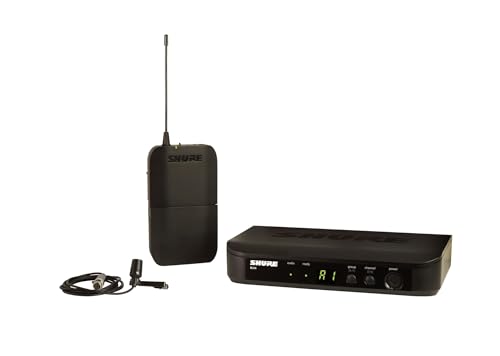
- Clip-on cardioid CVL lavalier
- Up to approximately 300 ft line-of-sight range
- Up to 14 hours on two AA batteries
Best For: Discreet presentations and spoken-word events
Two-Vocalist Pick
Shure BLX288/PG58 Dual Vocal System

- Two PG58 cardioid handheld mics
- Dual-channel receiver with QuickScan
- Up to 14 hours per transmitter
Best For: Two-person live vocals or speaking
Hands-Free Movement Pick
Shure BLX14/P31 Headset System

- PGA31 cardioid headset mic
- Up to approximately 300 ft line-of-sight range
- Up to 14 hours on two AA batteries
Best For: Active, hands-free presentations and instruction
H9 Band Pick
Shure BLX24/PG58 (512–542 MHz)

- H9 UHF band; verify local authorization
- PG58 handheld and BLX4 receiver included
- Up to 14 hours on two AA batteries
Best For: Single-mic vocals or speech where H9 is authorized
H10 Band Pick
Shure BLX24/PG58 (542–572 MHz)
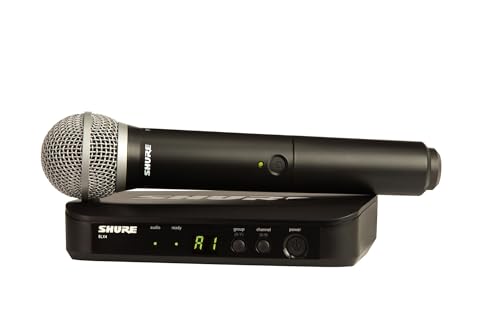
- H10 UHF band; check local authorization
- PG58 cardioid handheld for vocals and speech
- XLR and 1/4-inch receiver outputs
Best For: Single-mic performances where H10 is authorized
J11 Band Pick
Shure BLX24/PG58 (596–620 MHz)
- J11 UHF band; verify local authorization
- PG58 handheld and BLX4 receiver included
- QuickScan and up to 14-hour battery life
Best For: Single-mic live use where J11 is authorized
Best Dual SM58 Setup – Shure BLX288/SM58 Dual Wireless Vocal System
If two singers or presenters need to share a stage, this Shure wireless microphone system pairs two SM58 handhelds with a BLX88 dual-channel receiver. Its H10 band operates at 542–572 MHz, so check local frequency authorization before buying.
Best For: Two-person vocal performances and presentations that call for SM58 microphones.
Pros:
- Two cardioid SM58 capsules help keep vocals clear while reducing background sound.
- Up to 300 feet of line-of-sight range and up to 14 hours per transmitter on AA batteries.
- QuickScan helps select a frequency during setup.
Cons:
- H10 frequency availability must be verified for your location.
- Both handhelds require AA batteries.
Choose this package when you need two SM58 wireless channels in one purchase; if you only need one microphone, a single-channel system is a better fit.
Best Rack-Mount Pick – Shure BLX24R/SM58 Wireless System
For a rack-based sound setup, this Shure wireless microphone system includes a BLX4R receiver, mounting hardware, antennas, and one SM58 handheld. It uses the H9 band at 512–542 MHz; confirm that band is authorized where you will use it.
Best For: Solo vocalists or speakers who want a rack-mounted receiver.
Pros:
- Rack hardware and antennas are included for installing the BLX4R receiver.
- The cardioid SM58 capsule is designed for clear vocals and speech.
- Offers up to 300 feet of line-of-sight range and up to 14 hours on two AA batteries.
Cons:
- Includes only one microphone channel.
- H9 band suitability depends on local frequency rules.
The rack-ready receiver is the reason to pick this model over a standard BLX24 kit; both provide a single SM58 handheld.
Best Dual PG58 Setup – Shure BLX288/PG58 Dual Wireless Vocal System
This Shure wireless microphone system supplies two PG58 handheld transmitters and a BLX88 dual-channel receiver for performances with two voices. It is the H10-band version, so verify that its frequency band works in your area before ordering.
Best For: Duets, karaoke, and events needing two PG58 wireless handhelds.
Pros:
- Includes both handhelds, the dual-channel receiver, mic clips, and AA batteries.
- Operates at up to 300 feet of range under suitable conditions.
- Each transmitter offers up to 14 hours of battery life on two AA batteries.
Cons:
- H10 band compatibility needs a local check.
- The receiver and microphones need a power supply and AA batteries, respectively.
If you need two wireless vocals, this complete PG58 package avoids assembling separate channels. Choose the dual-SM58 kit instead if those specific capsules are your priority.
Best Single SM58 Setup – Shure BLX24/SM58 Wireless Microphone System
If you need one wireless vocal mic rather than a dual-channel package, this Shure wireless microphone system includes an SM58 handheld and BLX4 single-channel receiver. This H9-band model should be checked against local frequency availability before purchase.
Best For: Solo singers, speakers, and simple one-microphone setups.
Pros:
- Includes the receiver, SM58 handheld, mic clip, power supply, and AA batteries.
- Offers up to 300 feet of operating range.
- Runs for up to 14 hours on a pair of AA batteries.
Cons:
- One receiver channel does not accommodate two simultaneous handhelds.
- H9 band use must be appropriate for your location.
This is the straightforward SM58 choice for one performer. If the receiver must go in an equipment rack, consider the BLX24R/SM58 instead.
Discreet Speech Pick – Shure BLX14/CVL Lavalier System
If you need a shure wireless microphone system for presentations without holding a mic, the BLX14/CVL pairs a clip-on CVL cardioid lavalier with a bodypack transmitter and single-channel receiver. Its H10 band operates at 542–572 MHz, so check local frequency rules before ordering.
Best For: Presenters, classrooms, conferences, and worship spaces that need a discreet speech mic.
Pros:
- CVL cardioid lavalier focuses on speech while helping reduce surrounding noise.
- Up to approximately 300 ft line-of-sight range.
- Bodypack runs up to 14 hours on two AA batteries, which are included.
Cons:
- Single-channel receiver accommodates one microphone at a time.
- H10 frequency use depends on local authorization.
Choose this setup when low-profile mic placement matters more than a handheld or headset format. Confirm the H10 band is suitable for your location before purchase.
Two-Vocalist Pick – Shure BLX288/PG58 Dual Vocal System
For two people who each need a handheld mic, this shure wireless microphone system includes two PG58-equipped transmitters and a BLX88 dual-channel receiver. QuickScan helps with frequency selection, while the H9 band spans 512–542 MHz; verify that those frequencies are authorized locally.
Best For: Two vocalists, hosts, or speakers sharing a live-performance setup.
Pros:
- Two cardioid PG58 handheld mics support simultaneous performers.
- QuickScan simplifies frequency selection during setup.
- Up to 300 ft line-of-sight range and up to 14 hours per transmitter on two AA batteries.
Cons:
- Handheld format does not leave performers’ hands free.
- H9 band suitability must be checked for your location.
This is the practical choice among these three when you need two separate vocal microphones rather than a single wearable mic. Check local spectrum rules before committing to the H9 version.
Hands-Free Movement Pick – Shure BLX14/P31 Headset System
If you need a shure wireless microphone system that stays in place while you move, the BLX14/P31 combines a PGA31 cardioid headset with a bodypack and single-channel receiver. It operates on the H10 band at 542–572 MHz, subject to local frequency authorization.
Best For: Instructors, presenters, and performers who need hands-free speech pickup while moving.
Pros:
- Headset format keeps the microphone positioned without occupying a hand.
- Cardioid pickup is designed to focus on speech.
- Up to approximately 300 ft line-of-sight range and up to 14 hours on two AA batteries.
Cons:
- Single-channel receiver supports one microphone at a time.
- H10 frequency use requires a local compliance check.
Compared with a clip-on lavalier, this headset is the more purpose-built option for active speaking. Make sure its H10 frequency range is appropriate where you plan to use it.
H9 Band Pick – Shure BLX24/PG58 (512–542 MHz)
If you need a shure wireless microphone system for live vocals or speech, this H9 version pairs a PG58 cardioid handheld mic with a BLX4 single-channel receiver. Check that its 512–542 MHz band is authorized where you will use it before ordering.
Best For: Performers and presenters who can use the H9 band and want a complete, single-mic setup.
Pros:
- QuickScan helps find a usable frequency during setup.
- Up to approximately 300 ft line-of-sight range and up to 14 hours on two AA batteries.
- Includes the receiver, handheld transmitter, mic clip, power supply, and batteries.
Cons:
- H9 band availability and authorization must be verified locally.
- The included receiver has one channel.
The practical choice here hinges on frequency compatibility: if H9 works in your area, the package covers the essentials for one wireless vocal mic.
H10 Band Pick – Shure BLX24/PG58 (542–572 MHz)
This shure wireless microphone system uses the H10 542–572 MHz band and comes with a PG58 cardioid handheld mic and BLX4 receiver. It is a straightforward option for stage vocals and events, provided the band is authorized at your location.
Best For: Singers and speakers needing a single handheld wireless mic on the H10 band.
Pros:
- PG58 cardioid capsule is designed to focus on vocals and speech while reducing background pickup.
- Up to approximately 300 ft line-of-sight range and up to 14 hours of transmitter operation.
- QuickScan aids setup; the receiver offers XLR and 1/4-inch outputs.
Cons:
- Check local authorization for 542–572 MHz before buying.
- Single-channel receiver supports one mic in this package.
Choose this version for its H10 frequency band rather than expecting a different core setup from the other BLX24/PG58 band variants.
J11 Band Pick – Shure BLX24/PG58 (596–620 MHz)
For buyers considering a shure wireless microphone system in the J11 596–620 MHz band, this kit includes a PG58 handheld transmitter and BLX4 single-channel receiver. Verify that the band is authorized where you plan to operate it.
Best For: Live vocalists or presenters who need a complete handheld setup and can legally use J11 frequencies.
Pros:
- PG58 cardioid capsule is designed for clear vocals and speech with less background pickup.
- Up to approximately 300 ft line-of-sight range and up to 14 hours on two AA batteries.
- QuickScan simplifies setup; the kit includes a mic clip, power supply, and batteries.
Cons:
- J11 frequency authorization needs careful local verification.
- One-channel receiver limits the included setup to one mic.
The included hardware makes this a ready-to-assemble single-mic system; whether J11 is suitable in your area is the deciding buying check.
How We Picked the Best Shure Wireless Microphone System
We organized these 10 BLX configurations around the decisions that matter most: one microphone or two, handheld or hands-free operation, rack-mount or tabletop receiver, and the available frequency-band options. Several listings share the same basic setup but use different bands. Treat those as compatibility choices, not as meaningful upgrades to microphone sound or features.
Quick Comparison
For two handheld singers or speakers, the BLX288 packages provide two wireless channels: choose the SM58 version or a PG58 version in a suitable band. For one handheld, the BLX24 packages are the simpler choice; SM58 and PG58 microphone options are represented, with the BLX24R/SM58 adding a rack-mount receiver. The BLX14/CVL is for a clipped-on lavalier, while the BLX14/P31 uses a headset for more consistent mic placement as the wearer moves.
Key Buying Factors for a Shure Wireless Microphone System
Choose the Microphone Style First
A handheld mic gives singers and event hosts direct control over distance and technique. The SM58 is a familiar choice for vocals; the PG58 is another handheld option if the package and price better fit your needs. A CVL lavalier keeps hands free and is discreet for presentations, but clothing placement and movement can affect results. A P31 headset stays near the mouth for instructors, fitness leaders, and active presenters.
Match Channels and Receiver Format to the Event
Buy a dual BLX288 system when two people need to speak or sing at the same time. A single BLX24 or BLX14 package serves one wireless mic; don’t assume two separate single-channel purchases will automatically make a convenient coordinated setup. If your equipment lives in a rack, consider the BLX24R/SM58. Otherwise, check that you have a practical place to set the receiver and connect it to your mixer or PA.
Verify the Frequency Band Before Ordering
H9, H10, and J11 identify different tuning ranges; they are not interchangeable labels. Confirm that the exact band is permitted and usable in your location, then check local RF conditions and any wireless systems already in use. When running multiple channels, verify compatible frequencies for the specific systems and venue rather than assuming that buying matching or different band labels will prevent interference.
Plan for the Complete Setup
Check what the listing actually includes: receiver, transmitter, microphone or headset, power supply, and any required accessories. Budget for receiver-to-mixer cables, mic stands or mounting hardware where relevant, and fresh transmitter batteries. Quoted battery-life and range figures are useful planning guides, not guarantees in every venue.
Who Should Buy Which Shure Wireless Microphone System?
Choose the BLX288/SM58 for a two-person handheld setup centered on SM58 vocal mics; consider a BLX288/PG58 when that microphone option or an available band is a better fit. For one singer or host, look at the BLX24/SM58 or a BLX24/PG58 in a suitable band. Pick the BLX24R/SM58 for a single handheld system destined for a rack. Presenters who want a discreet clip-on mic should consider the BLX14/CVL; energetic speakers and instructors should consider the BLX14/P31. In every case, settle frequency suitability before choosing among otherwise similar packages.