
As you gear up for your next filmmaking project, choosing the right cinema zoom lens can make all the difference. With advancements in technology, some lenses stand out for their optical performance and versatility. From the sharp SIRUI 28-85mm T3.2 to the lightweight Sony FE PZ 16-35mm F4 G, each option offers unique features. But which lens truly aligns with your creative vision? Let’s explore these top contenders and find out.
SIRUI 28-85mm T3.2 Full-Frame Parfocal Zoom Cine Lens (EF Mount)

If you’re a filmmaker seeking versatility without compromising on quality, the SIRUI 28-85mm T3.2 Full-Frame Parfocal Zoom Cine Lens is an excellent choice. This lens boasts a 3X zoom ratio, covering wide-angle to medium telephoto ranges, perfect for diverse shooting scenarios. You’ll appreciate its sharp 8K image quality and minimal focus breathing, ensuring smooth shifts. With a manual focus method and a long focus throw of 259°, precise adjustments become effortless. The durable all-metal construction and included hard case protect your investment. Weighing 2.5kg, it’s robust yet manageable for extended shoots, making it a reliable companion in filmmaking.
Best For: Filmmakers looking for a versatile and high-quality zoom lens that excels in various shooting environments.
Pros:
- High-quality 8K resolution images with minimal focus breathing for smooth transitions.
- Durable all-metal construction with a protective hard case for safe transportation.
- Long focus throw of 259° allows for precise and accurate focus adjustments.
Cons:
- Manual focusing may not be ideal for all users, especially beginners.
- Weighs 2.5kg, which might be considered heavy for extended handheld shooting.
- Limited aperture range (T3.2 to T22) may not suit all lighting conditions without additional equipment.
Sony FE PZ 16-35mm F4 G Wide-Angle Power Zoom Lens
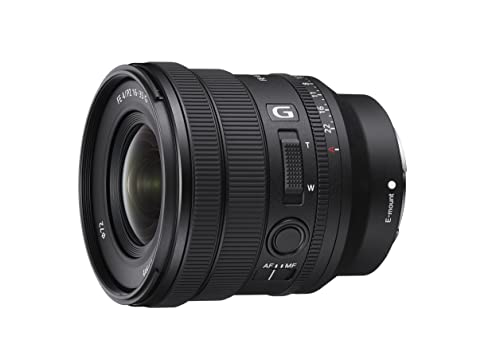
The Sony FE PZ 16-35mm F4 G Wide-Angle Power Zoom Lens is an ideal choice for filmmakers and content creators seeking a lightweight, versatile lens that excels in dynamic shooting environments. Weighing in as the world’s lightest full-frame F4 wide-angle power zoom lens, this model features a power zoom system powered by four XD Linear Motors for smooth, immediate control. With independent zoom, focus, and aperture rings, you can easily adjust settings. Plus, its quiet operation minimizes noise during recording, ensuring high-quality footage. Remote control capabilities make it perfect for gimbal shots, enhancing your creative flexibility on set.
Best For: Filmmakers and content creators looking for a lightweight, versatile lens that offers smooth zoom and quiet operation for high-quality video recording.
Pros:
- Lightweight design makes it easy to handle during long shoots.
- Smooth power zoom system allows for precise control and immediate response.
- Quiet operation minimizes noise, ensuring professional audio quality during filming.
Cons:
- F4 aperture may limit low-light performance compared to faster lenses.
- Price point may be on the higher side for amateur filmmakers.
- Limited zoom range may not suit all shooting scenarios compared to other lenses.
Sony – FE 24-105mm F4 G OSS Standard Zoom Lens (SEL24105G/2), Black

For filmmakers seeking versatility without compromising on quality, the Sony FE 24-105mm F4 G OSS Standard Zoom Lens (SEL24105G/2) stands out as an ideal choice. This lens features a 35 mm full-frame format with a focal length range of 24-105 mm, allowing for dynamic framing options. Its G-lens design, equipped with 4 aspherical and 3 ED glass elements, guarantees exceptional image clarity across the zoom range. The constant F4 aperture maintains consistent exposure, while the 9-blade circular aperture creates beautiful bokeh. With a minimum focusing distance of 1.25 feet and an advanced DDSM focusing system, you’ll achieve precise, quiet adjustments effortlessly.
Best For: Filmmakers and photographers seeking a versatile zoom lens that delivers high image quality across various shooting conditions.
Pros:
- Exceptional image clarity throughout the zoom range due to advanced optical design.
- Constant F4 aperture allows for consistent exposure and depth of field control.
- Quiet and precise focusing with the DDSM system, making it ideal for video shooting.
Cons:
- Weight may be a concern for some users, as it is not the lightest option available.
- Price point may be higher compared to entry-level zoom lenses.
- Limited low-light performance compared to lenses with wider maximum apertures.
Sony E PZ 10-20mm F4 G APS-C Constant-Aperture Power Zoom G Lens

Designed for aspiring filmmakers and vloggers, the Sony E PZ 10-20mm F4 G APS-C Constant-Aperture Power Zoom G Lens stands out with its ultra-wide-angle perspective and compact size. Weighing in as the world’s smallest and lightest in its category, it offers outstanding portability. Its internal zoom and focus maintain a stable center of gravity, perfect for gimbal work. With fast, quiet autofocus powered by dual motors, you’ll capture smooth subject tracking effortlessly. Plus, this lens excels in 4K and 8K video, minimizing focus breathing for high-quality footage. It’s truly a game-changer for creative storytelling.
Best For: Aspiring filmmakers and vloggers looking for a compact, high-quality ultra-wide-angle lens for their creative projects.
Pros:
- Outstanding portability as the world’s smallest and lightest ultra-wide-angle lens, making it ideal for travel and on-the-go shooting.
- Fast and quiet autofocus with dual motors ensures smooth subject tracking, perfect for both video and photography.
- Excellent performance in 4K and 8K video, minimizing focus breathing for high-quality, professional-looking footage.
Cons:
- Limited zoom range may not suit those looking for more versatility in focal lengths.
- Constant F4 aperture might not be ideal for low-light situations compared to faster lenses.
- Higher price point compared to other standard zoom lenses in the market, which may not fit every budget.
DZOFILM Catta Ace 35-80mm T2.9 Cine Lens for PL Mount and Canon EF, Black

Filmmakers seeking versatility and exceptional image quality will find the DZOFILM Catta Ace 35-80mm T2.9 Cine Lens an invaluable addition to their toolkit. With its PL and Canon EF mounts, this lens offers a 2.3X magnification ratio, perfect for diverse shot compositions. The parfocal design minimizes focus breathing, ensuring your focus remains sharp during zooms. Its T2.9 aperture and 16-blade diaphragm deliver stunning bokeh and authentic color reproduction, making skin tones pop. Weighing 5.46 pounds and measuring just 7 inches, it’s built for durability yet remains lightweight for easy handling in demanding environments.
Best For: Filmmakers looking for a versatile and high-quality zoom lens that delivers exceptional image performance and durability.
Pros:
- Parfocal design minimizes focus breathing, maintaining sharp focus during zooms.
- T2.9 aperture with a 16-blade diaphragm produces beautiful bokeh and natural skin tones.
- Lightweight and durable construction suitable for demanding shooting environments.
Cons:
- Weighs 5.46 pounds, which may be heavy for some users over extended periods.
- Limited to a focal length range of 35-80mm, which may not cover all shooting needs.
- Higher price point compared to entry-level lenses may deter budget-conscious filmmakers.
Canon EF 75-300mm f/4-5.6 III Telephoto Zoom Lens for Canon SLR Cameras

The Canon EF 75-300mm f/4-5.6 III Telephoto Zoom Lens stands out as an excellent choice for photographers seeking versatility in their work. With a focal length of 75-300mm, it’s perfect for capturing portraits, wildlife, and nature shots. Weighing just 16.8 ounces, it’s lightweight and easy to handle. The improved zoom mechanism guarantees smooth operation, while the closest focusing distance of 4.9 feet lets you capture detailed shots, even at 300mm. Although it lacks image stabilization, its performance remains impressive, earning a solid 4.7-star rating from customers. This lens is a reliable companion for your Canon SLR camera adventures.
Best For: Photographers looking for a lightweight and versatile telephoto lens for capturing portraits, wildlife, and nature shots.
Pros:
- Improved zoom mechanism for smoother operation during usage.
- Close-focusing capability allows for detailed shots at a distance.
- High customer satisfaction with a 4.7-star rating from over 5,700 reviews.
Cons:
- No image stabilization, which may affect performance in low-light situations.
- Autofocus is powered by a DC motor rather than a USM, potentially leading to slower focus speeds.
- Limited to Canon SLR cameras, restricting compatibility with other brands.
Sony Full-Frame Cinema Lens FE C 16-35mm T3.1 G

If you’re looking for a versatile lens that excels in low-light environments, the Sony Full-Frame Cinema Lens FE C 16-35mm T3.1 G is an ideal choice. This superb wide-angle zoom lens features a constant T3.1 max aperture, ensuring beautiful bokeh and excellent low-light performance. You’ll appreciate the precise, responsive mechanical manual focus and fast, quiet autofocus thanks to its two Direct Drive SSM systems. Plus, the detachable servo zoom offers fingertip control for seamless adjustments. With its advanced ED glass and multi-coating, chromatic aberration is minimized, making your shots crisp and clear in any setting.
Best For: Filmmakers and photographers seeking a reliable wide-angle lens that delivers exceptional performance in low-light conditions.
Pros:
- High-quality constant T3.1 aperture for enhanced low-light capability and attractive bokeh.
- Fast and quiet autofocus with dual Direct Drive SSM systems for precise focusing.
- Detachable servo zoom allows for easy and intuitive control during filming.
Cons:
- Weighs 5 pounds, which may be cumbersome for handheld shooting.
- Customer rating of 3.9 out of 5 stars indicates mixed feedback on performance.
- Higher price point compared to standard lenses, which might not suit all budgets.
OM SYSTEM Olympus M.Zuiko Digital 40-150mm Zoom Lens for Micro Four Thirds Camera

Looking for a versatile zoom lens that excels in both portrait and sports photography? The OM SYSTEM Olympus M.Zuiko Digital 40-150mm is your go-to option for Micro Four Thirds cameras. With a focal length equivalent to 80-300mm, it provides a 3.75x zoom range, making it perfect for capturing distant subjects. Its lightweight design guarantees portability, and the nearly silent autofocus keeps your shooting discreet. Plus, with a macro focus range of 90 centimeters, you can explore detailed close-ups too. This lens enhances your photography experience, whether you’re shooting dynamic sports or stunning portraits.
Best For: Photographers seeking a lightweight and versatile zoom lens suitable for both portrait and sports photography.
Pros:
- Lightweight and portable design makes it easy to carry for extended shoots.
- Nearly silent autofocus allows for discreet shooting, perfect for capturing candid moments.
- Macro capabilities enable detailed close-up photography, expanding creative possibilities.
Cons:
- Limited maximum aperture range (F4.0-5.6) may affect low-light performance.
- Macro focus range of 90 centimeters can be limiting for extreme close-ups.
- As a second lens, it may not replace higher-end prime lenses for professional use.
SIRUI Aurora 85mm F1.4 Auto Focus Lens for E Mount Cameras

For filmmakers seeking a lightweight and versatile telephoto lens, the SIRUI Aurora 85mm F1.4 Auto Focus Lens stands out as an exceptional choice for E Mount cameras. Weighing just 540g, it’s 17% lighter than similar lenses, making it perfect for on-the-go shooting. Its f/1.4 aperture delivers outstanding sharpness and beautiful bokeh, ideal for dreamy portraits. The fast and precise autofocus, featuring eye AF and object tracking, guarantees you capture every moment effortlessly. With professional controls and authentic color rendering, this lens is a reliable companion for filmmakers looking to elevate their craft without the burden of heavy gear.
Best For: Filmmakers and photographers seeking a lightweight, versatile telephoto lens for E Mount cameras that delivers excellent image quality and fast autofocus.
Pros:
- Exceptional sharpness and beautiful bokeh with an ultra-fast f/1.4 aperture.
- Lightweight design (540g) makes it ideal for on-the-go shooting.
- Fast and precise autofocus with eye AF and object tracking features.
Cons:
- Limited to E Mount cameras, which may not suit all users.
- As a prime lens, it lacks zoom capability, requiring more movement to frame shots.
- Professional controls may have a learning curve for novice users.
SmallRig Wireless Follow Focus Kit (Lite) with Handwheel Controller

The SmallRig Wireless Follow Focus Kit (Lite) with Handwheel Controller is an essential tool for filmmakers seeking precise control over their focus with cinema and zoom lenses. This compact kit offers low-latency focusing and is compatible with popular lenses like the ZEISS CP.3 and Canon CN-R35. With a peak torque of 4.3 kgf.cm and a 35% increase in response efficiency, you’ll enjoy quick adjustments. The handwheel’s 1400mAh battery lasts about 21 hours, and intuitive features like A/B dotting make it user-friendly. Plus, its compact design guarantees it won’t weigh you down during shoots, making it a must-have accessory.
Best For: Filmmakers and videographers looking for precise and efficient focus control with a variety of cinema and zoom lenses.
Pros:
- Compact design ensures portability without adding excessive weight.
- Long battery life of approximately 21 hours allows for extended shooting sessions.
- User-friendly features like A/B dotting and memory storage make it accessible for beginners.
Cons:
- Compatibility may be limited for non-cinema lenses.
- Requires careful handling of the provided power cord or USB cable to avoid torque issues.
- Customer rating of 4.1 out of 5 stars suggests mixed experiences among users.
Factors to Consider When Choosing a Cinema Zoom Lens
When you’re choosing a cinema zoom lens, you need to contemplate several key factors. The focal length range, aperture performance, and build quality can greatly impact your shots. Additionally, the focus mechanism and lens compatibility will play an essential role in how well the lens fits into your overall setup.
Focal Length Range
Choosing the right focal length range for your cinema zoom lens can make a significant difference in your filmmaking. The range dictates the versatility of your shots, impacting how you capture both wide-angle and telephoto perspectives. For example, a lens with a 28-85mm range offers excellent coverage for various situations. If you’re looking to shoot expansive landscapes or tight interiors, consider lenses with wider focal lengths like 16-35mm. On the other hand, longer ranges like 75-300mm are perfect for distant subjects. Pay attention to the zoom ratio, too; a 3X zoom allows for smooth shifts between perspectives. Ultimately, selecting the right focal length enhances your creative storytelling, providing diverse framing options and composition flexibility.
Aperture Performance
In filmmaking, aperture performance plays an essential role in achieving your desired look and feel. The maximum aperture of your cinema zoom lens greatly impacts low-light performance; wider apertures like T2.9 or T3.1 let in more light, ensuring better exposure in darker settings. A constant maximum aperture throughout the zoom range helps maintain consistent exposure and depth of field, which is vital for a professional finish. Consider the number of aperture blades as well—more blades, like 11 or 16, create smoother, more pleasing bokeh. Additionally, a lower minimum aperture value, such as T22, grants you greater control over depth of field. Finally, opt for step-less aperture control for smooth, silent adjustments during your video shoots.
Build Quality
Build quality is a vital factor to evaluate in cinema zoom lenses, as it directly influences durability and performance in various shooting conditions. Look for lenses with all-metal bodies, as they tend to withstand demanding environments better. Protective features like weather-sealing can guard against temperature changes, water, and dust exposure, ensuring your lens remains functional. Additionally, heavier lenses, typically around 2.5 kg (5.59 lbs) or more, often indicate sturdier components that enhance stability during use. Pay attention to the robustness of the focus and zoom rings; smooth operation and precise control are essential for professional filming. Finally, consider the overall dimensions and balance, as compact designs make it easier to mount on gimbals or handheld rigs.
Focus Mechanism
While evaluating cinema zoom lenses, the focus mechanism plays an essential role in achieving the cinematic effect you desire. Manual focusing offers precise control for important adjustments, allowing you to craft your shots with intention. Look for lenses with a long focus throw—some provide up to 259° of rotation—enabling smooth focus pulls during changes. Dual scale markings on the focus rings, in both feet and meters, enhance usability across various shooting environments. Consider parfocal designs that maintain focus throughout the zoom range, minimizing focus breathing and keeping your subject sharp. Finally, high-quality focus motors can greatly improve autofocus performance, allowing for quicker and quieter adjustments in dynamic scenarios, ensuring you capture every moment effortlessly.
Lens Compatibility
When choosing a cinema zoom lens, considering lens compatibility is vital to guarantee peak performance with your camera setup. First, confirm the lens mount type matches your camera body for proper functionality. Next, think about your camera’s sensor size; full-frame lenses work best with full-frame cameras, while APS-C lenses will crop the image on full-frame bodies. Also, check the lens’s minimum focusing distance, as this impacts your ability to capture close-up shots, significant for certain cinematic effects. Don’t forget to verify if the lens supports autofocus or manual focus, depending on your shooting style. Finally, look for compatibility with follow focus systems and other accessories to enhance your filming capabilities and control over focus adjustments.