In 2026, choosing the right digital mixer can greatly influence your podcast’s production quality. Whether you’re a seasoned creator or just starting out, the variety of Zoom mixers offers something for everyone. From portability to advanced features, there’s a lot to reflect on. In this review, we’ll break down the top 10 Zoom digital mixers to help you make an informed choice. What unique features could elevate your podcasting experience?
Zoom LiveTrak L-8 Recorder/Mixer for Musicians & Podcasters

The Zoom LiveTrak L-8 Recorder/Mixer is the perfect choice for both musicians and podcasters seeking versatility and ease of use. With eight channels and the ability to record 12 tracks simultaneously, you’ll easily capture every nuance of your performance or discussion. The mix-minus function eliminates audio feedback, ensuring a professional sound. You also get six assignable sound pads for added flair. Powered by four AA batteries or USB, it’s portable and ideal for on-the-go recording. Plus, with four headphone outputs and a phone input, you’ll have everything you need for an exceptional audio experience.
Best For: Musicians and podcasters looking for a portable, multi-channel recording solution with professional sound quality.
Pros:
- Versatile with 8 channels and 12-track simultaneous recording capabilities.
- Mix-minus function effectively prevents audio feedback during recordings.
- Battery operated for convenience and portability, making it ideal for on-the-go use.
Cons:
- Limited to 10-track playback, which may not be sufficient for larger projects.
- Requires four AA batteries for portable use, which can be an added expense.
- Some users may find the learning curve steep for fully utilizing all features.
Zoom PodTrak P8 Podcast Recorder

If you’re a podcaster looking to elevate your production quality, the Zoom PodTrak P8 Podcast Recorder stands out with its six high-quality XLR microphone inputs. You’ll appreciate the six headphone outputs with individual volume control, ensuring everyone hears perfectly. With nine programmable sound pads, you can easily incorporate effects and jingles into your episodes. The onboard editing features let you trim, split, and fade your recordings, streamlining your workflow. Plus, the automatic mix-minus function simplifies remote interviews. Lightweight and battery-powered, the P8 is perfect for both studio and on-the-go recording, making it a versatile tool for any podcaster.
Best For: The Zoom PodTrak P8 Podcast Recorder is best for podcasters seeking high-quality recording capabilities and versatile features for both studio and remote interviews.
Pros:
- High-quality microphone inputs with phantom power for superior sound.
- Individual headphone outputs allow customized listening experiences for each participant.
- Onboard editing features streamline post-production, saving time and effort.
Cons:
- The device may have a learning curve for new users unfamiliar with podcasting equipment.
- Limited battery life may restrict usage during extended recording sessions.
- The price point may be higher compared to basic podcast recorders, which could be a consideration for budget-conscious creators.
Zoom LiveTrak L-12 12-channel Digital Mixer/Recorder

For podcasters seeking versatility and ease of use, the Zoom LiveTrak L-12 12-channel Digital Mixer/Recorder stands out with its ability to mix, record, and monitor all from one device. With 12 discrete channels, you can effortlessly manage multiple audio sources. Its five individual headphone mixes allow for tailored listening experiences, perfect for interviews or discussions. The USB connectivity guarantees seamless integration with your computer, while its compact design makes it portable for on-the-go recording. Weighing just 5.65 pounds, it’s easy to transport without sacrificing quality. Plus, with a solid 4.5-star rating, you know you’re getting a reliable tool for your podcasting needs.
Best For: Podcasters and musicians looking for a versatile, all-in-one solution for mixing, recording, and monitoring audio.
Pros:
- Compact and portable design, making it easy to transport for on-the-go recording.
- Offers five individual headphone mixes, allowing for customized listening experiences.
- USB connectivity enables seamless integration with computers for easy recording and mixing.
Cons:
- Limited to 12 channels, which may not suffice for larger productions.
- Requires a corded electric power source, restricting mobility.
- May have a learning curve for users unfamiliar with digital mixers.
Zoom LiveTrak L-20 20-channel Digital Mixer/Recorder
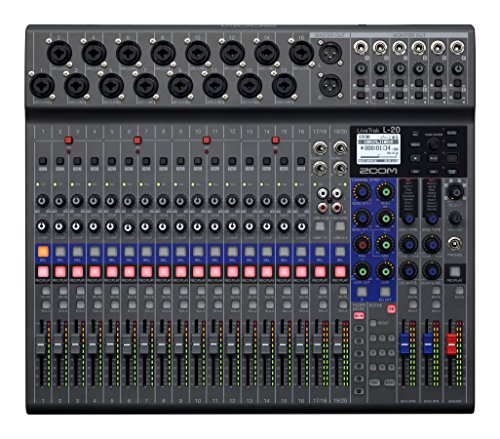
Designed with podcasters in mind, the Zoom LiveTrak L-20 offers 20 discrete audio channels that make it perfect for intricate productions involving multiple speakers or sound sources. You’ll appreciate the ability to record 22 tracks simultaneously, ensuring you capture every detail. Plus, with six individual custom monitor mixes, everyone can hear exactly what they need. The built-in USB audio interface allows for easy streaming and recording, while wireless control via a free iOS app adds to the convenience. Weighing just 0.61 pounds, it’s portable enough for on-the-go setups, making it an excellent choice for any podcasting endeavor.
Best For: The Zoom LiveTrak L-20 is best for podcasters and content creators looking for a versatile mixer/recorder that can handle multiple audio sources.
Pros:
- 20 discrete audio channels allow for complex mixing and multi-speaker setups.
- Simultaneous recording of 22 tracks ensures that every sound detail is captured.
- Wireless control via a free iOS app adds convenience for remote operation.
Cons:
- Corded electric power source may limit portability in some situations.
- Weight of 0.61 pounds could still be cumbersome for some users who prefer ultra-light gear.
- Limited USB output options (22-in/4-out) may not meet all users’ needs for extensive studio setups.
Zoom PodTrak P4 Podcast Recorder

The Zoom PodTrak P4 Podcast Recorder stands out as an ideal choice for podcasters seeking a compact and versatile solution to enhance their production quality. With 4 XLR mic inputs and headphone outputs, you can easily connect multiple guests. Plus, the Automatic Mix-Minus feature simplifies remote interviews, ensuring clear audio. Its multi-track recording capabilities let you mix and edit each input separately. You’ll appreciate the portability, as it operates for up to 3.5 hours on just 2 AA batteries, making it perfect for on-the-go recording sessions. With sound pads for sound effects, your podcasting experience becomes even more dynamic.
Best For: Podcasters looking for a portable and easy-to-use solution for high-quality recordings with multiple guests.
Pros:
- Versatile Inputs: Offers 4 XLR mic inputs and headphone outputs for connecting multiple guests.
- Remote Interview Capabilities: Features Automatic Mix-Minus for clear audio during phone interviews and remote sessions.
- Portable Design: Runs on 2 AA batteries for up to 3.5 hours, making it convenient for on-the-go recording.
Cons:
- Limited Battery Life: While portable, the 3.5-hour battery life may not be sufficient for longer recording sessions.
- No Built-in Storage: Requires external SD cards for recording, which adds an extra cost and step.
- Learning Curve: Some users may need time to familiarize themselves with the multi-track recording features.
Zoom LiveTrak L6 Mixer/Recorder

If you’re a podcaster seeking a versatile solution for both recording and mixing, the Zoom LiveTrak L6 Mixer/Recorder stands out with its impressive 10 channels and 12 tracks of recording. It features 2 XLR/TRS combo inputs and 4 stereo inputs, allowing for diverse connectivity. You’ll love its 32-bit float multi-track recording capability to a micro SD card. Plus, it works as a 10-in/4-out USB audio interface, making streaming and recording a breeze. Battery-powered for portability, it’s perfect for live performances or remote sessions. Compatible with PC, Mac, and iOS, it seamlessly integrates with your favorite devices and software.
Best For: Podcasters, musicians, and synth players looking for a versatile and portable recording and mixing solution.
Pros:
- Versatile Connectivity: Offers multiple input options with 2 XLR/TRS combo inputs and 4 stereo inputs.
- High-Quality Recording: Supports 32-bit float multi-track recording directly to micro SD card for superior audio quality.
- Portability: Battery-powered design makes it ideal for live performances and remote recording sessions.
Cons:
- Learning Curve: May require time to fully understand all features and functionalities for new users.
- Limited Built-in Effects: Lacks extensive built-in effects compared to some competitors, which may limit creative options.
- Price Point: Higher price compared to basic mixers, which may not be suitable for budget-conscious users.
Zoom PodTrak P4 Podcast Recorder

For podcasters seeking a versatile and portable solution, the Zoom PodTrak P4 Podcast Recorder stands out with its four XLR mic inputs and individual headphone outputs. You’ll appreciate its multitrack recording, allowing you to capture high-quality audio for up to four participants and a call-in guest. The built-in AI noise reduction enhances sound quality, ensuring clarity. With a 2TB storage capacity and 8.5 hours of battery life, you can record without interruptions. Weighing just 0.66 pounds, it’s easy to take on the go. Plus, the user-friendly interface makes it perfect for both beginners and seasoned podcasters.
Best For: Podcasters looking for a portable, high-quality recording solution that accommodates multiple speakers and call-in guests.
Pros:
- Versatile recording capabilities with multitrack support for up to four microphones and a call-in guest.
- High-quality audio features including AI noise reduction and built-in audio tools for enhanced sound clarity.
- Portable design with a lightweight build and long battery life, making it ideal for on-the-go recording.
Cons:
- Limited digital recording time of 510 minutes may not be sufficient for longer sessions without recharging or storage management.
- Weight of 0.66 pounds might be heavier compared to other ultra-portable recording options.
- Potential learning curve for beginners unfamiliar with multitrack recording and audio setup.
Zoom LiveTrak L-8 Portable Digital Mixer and Multitrack Recorder Podcasting Bundle

Ideal for podcasters looking to streamline their setup, the Zoom LiveTrak L-8 Portable Digital Mixer and Multitrack Recorder Podcasting Bundle offers an impressive combination of features. You’ll enjoy multiple independent headphone outputs, allowing both you and your guests to adjust levels easily. With the ability to record up to 10 discrete tracks at 24-bit/96 kHz, your audio quality will shine. Plus, its flexible power options, including battery and AC power, make it perfect for remote locations. Included accessories, like the ZDM-1 Podcast Mic Pack and cables, guarantee you’ve got everything you need for successful recording sessions.
Best For: Podcasters and musicians seeking a versatile, portable mixer and multitrack recorder for high-quality audio recording in various settings.
Pros:
- Multiple independent headphone outputs for personalized monitoring levels for hosts and guests.
- High-quality recording capability with up to 10 discrete tracks at 24-bit/96 kHz for professional audio fidelity.
- Flexible power options allow for use in remote locations with battery operation or AC power.
Cons:
- Limited battery life when using alkaline batteries (only up to 2 hours).
- May be overkill for simple podcasting setups without multiple guests or instruments.
- Some users may find the interface complex if they are not familiar with digital mixers.
Zoom LiveTrak L-20 Digital Mixer and Multitrack Recorder Bundle

The Zoom LiveTrak L-20 Digital Mixer and Multitrack Recorder Bundle is a powerhouse designed for podcasters and audio professionals who demand versatility and high-quality sound. With 20 discrete channels and built-in effects, you can shape your audio like a pro. Its 22-track recording capability guarantees you capture every detail in stunning 24-bit/96kHz quality. The bundle includes essential accessories like a carrying bag, Bluetooth adapter, and XLR cables, making it perfect for both live and studio setups. Plus, with multiple monitor mixes and dedicated headphone outputs, you’ll have complete control over your sound environment during recordings.
Best For: The Zoom LiveTrak L-20 Digital Mixer and Multitrack Recorder Bundle is best for podcasters and audio professionals seeking high-quality sound and versatile audio control.
Pros:
- Versatile audio control with 20 discrete channels and customizable effects.
- High-quality recording capabilities with 24-bit/96kHz audio resolution.
- Comprehensive bundle includes essential accessories for both live and studio applications.
Cons:
- Learning curve may be steep for beginners unfamiliar with digital mixers.
- Limited portability due to size and weight compared to simpler devices.
- Price point may be higher than entry-level options for casual users.
Zoom LiveTrak L-8 Portable Digital Mixer and Multitrack Recorder Bundle
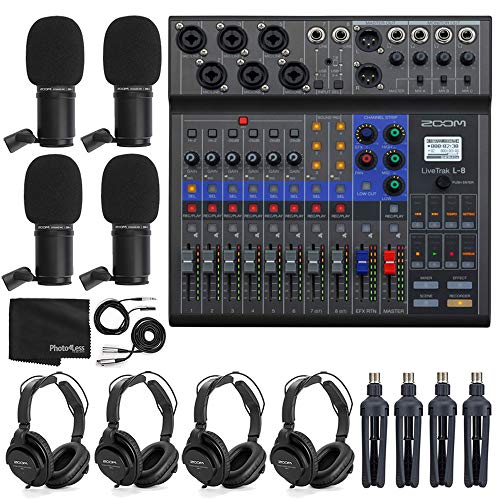
With its 8-channel capability and multitrack recording features, the Zoom LiveTrak L-8 Portable Digital Mixer and Multitrack Recorder Bundle is perfect for aspiring podcasters and music producers alike. It includes four Zoom ZDM-1 microphones, headphones, windscreens, and tabletop stands, providing everything you need to get started. You can record in stunning 24-bit/96 kHz quality directly to an SD card or use it as a USB audio interface. Plus, with independent headphone outputs and Hi-Z inputs for instruments, you’ll have flexibility in your setup. Battery-powered options guarantee you can take your production anywhere, making it a versatile choice.
Best For: The Zoom LiveTrak L-8 Portable Digital Mixer and Multitrack Recorder Bundle is best for aspiring podcasters and musicians looking for a comprehensive and portable recording solution.
Pros:
- High-Quality Recording: Supports 24-bit/96 kHz recording directly to SD card for exceptional audio quality.
- All-in-One Bundle: Comes with essential accessories including microphones, headphones, and stands, making it a complete package for beginners.
- Versatile Power Options: Can be powered by batteries or AC, allowing for use in various locations and situations.
Cons:
- Battery Life Limitations: Limited recording time when using alkaline batteries, which may require frequent battery changes in outdoor settings.
- No Included Batteries: Does not come with batteries, necessitating an additional purchase before use.
- Size and Portability: While portable, it may still be bulkier than some compact recording solutions, which could impact ease of transport.
Factors to Consider When Choosing a Zoom Digital Mixer for Podcast Production
When choosing a Zoom digital mixer for your podcast, you’ll want to contemplate several key factors. Think about the number of channels you need, the audio quality you’re aiming for, and the recording features that will enhance your production. Don’t forget to evaluate portability, power options, and the variety of input/output connections available.
Number of Channels
Choosing the right number of channels in a Zoom digital mixer can greatly impact your podcast production. The number of channels determines how many audio sources you can record or mix simultaneously, which is essential for multi-person interviews. Opting for mixers with 8, 12, or even 20 channels provides flexibility for accommodating multiple guests, instruments, or sound effects during your sessions. Each channel typically has dedicated controls for volume, EQ, and effects, allowing you to tailor sound management effectively. Additionally, having individual headphone outputs for each channel lets hosts and guests monitor their audio levels independently. Consider future growth; selecting a model with extra channels can offer more versatility as your podcast evolves or expands its format.
Audio Quality Requirements
The number of channels in your Zoom digital mixer sets the stage for your podcast’s success, but audio quality requirements play an equally important role in achieving professional sound. Look for mixers that support high-resolution audio recording, ideally 24-bit/96 kHz, to guarantee superior sound quality. Multiple discrete recording tracks are essential for maintaining audio clarity and flexibility during post-production. Consider mixers with built-in effects and processing capabilities, like compression and EQ adjustments, to enhance your audio. Features such as phantom power are vital for high-quality condenser mics, while low-noise preamps minimize background noise, guaranteeing clean audio capture. These elements combine to elevate your podcast’s overall audio quality, making it more engaging for your audience.
Recording Features
To guarantee your podcast sounds professional, you’ll want to focus on recording features that enhance your production capabilities. Look for mixers that support multi-track recording, allowing you to capture each input separately for greater editing flexibility. High-quality recording formats, like 24-bit/96 kHz, are vital for achieving professional sound quality. Consider models with programmable sound pads to trigger effects or pre-recorded content seamlessly during your podcast. It’s also important to confirm the mixer includes a mix-minus function, which helps prevent audio feedback during remote interviews and call-ins. Finally, verify the number of simultaneous recording tracks available; more tracks allow for better management of multiple audio sources, making your recordings cleaner and more manageable.
Portability and Power
Portability plays an essential role in podcast production, enabling you to capture content in various settings, from home studios to bustling events. When choosing a Zoom digital mixer, consider models that offer battery-powered options, allowing you to record for several hours without needing a power outlet. Many Zoom mixers can run on lithium batteries, lasting up to 6.5 hours, perfect for on-the-go recording. Compact dimensions and lightweight designs make it easy to transport your equipment to different venues. Additionally, features like USB connectivity simplify integration with computers and mobile devices, ensuring you can record and transfer content seamlessly wherever you are. Prioritizing portability and power will enhance your podcasting experience, making it more flexible and efficient.
Input/Output Options
When selecting a Zoom digital mixer for podcast production, it’s vital to evaluate the input and output options available. Start by considering the number of XLR microphone inputs to accommodate multiple hosts and guests effectively. Dedicated headphone outputs for each input are significant, allowing individual volume control for everyone during recording. Look for additional input options, like USB and phone inputs, to facilitate remote interviews and connect various audio sources. It’s also important to verify the mixer supports multiple output types, such as XLR and TRS, for seamless connections to different audio equipment. Finally, features like mix-minus functionality can help eliminate audio feedback during call-in interviews, enhancing your podcast’s overall sound quality.
User-Friendly Interface
A user-friendly interface is crucial for a smooth podcast production experience, especially when managing multiple audio sources. Look for mixers with intuitive controls and visual displays that let you navigate settings easily. Clear labeling of channels and functions can cut down your setup time, enhancing your overall recording experience. A touch-sensitive or well-organized layout allows for quick adjustments to levels, effects, and routing, making it simpler to handle various audio inputs. Features like assignable sound pads and dedicated headphone outputs with individual volume control provide quick access to essential tools. Additionally, onboard editing functionalities, such as trimming and fading, streamline your workflow, enabling immediate adjustments without the need for external software.
Built-in Effects and Tools
Built-in effects and tools play an essential role in elevating your podcast’s audio quality. They offer options like compression, EQ adjustments, and reverb, ensuring your recordings sound professional. With programmable sound pads, you can access preset sounds or jingles quickly, adding excitement to your production.
Some mixers even feature advanced audio tools, such as AI noise reduction and tone enhancement, which deliver clearer, more balanced sound. Onboard editing capabilities let you trim, split, and fade audio tracks right on the device, simplifying your post-production workflow. By choosing a mixer with customizable effects and processing tools, you’ll save time and reduce reliance on extensive editing software, helping you focus on creating engaging content for your audience.