
If you’re serious about elevating your video production, a high-quality 3-axis camera stabilizer is a must-have. These devices guarantee your shots stay steady, even during dynamic movements. Whether you’re capturing vlogs or cinematic scenes, the right stabilizer can make all the difference. Let’s explore the best options available today and find out which one suits your needs best. You might be surprised by what these stabilizers can offer.
DJI RS 3 Mini 3-Axis Gimbal Stabilizer for Cameras
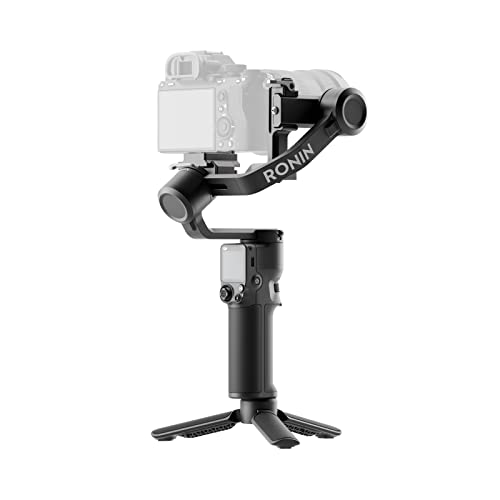
If you’re a content creator looking for a lightweight and portable solution to elevate your videography, the DJI RS 3 Mini 3-Axis Gimbal Stabilizer is an ideal choice. Weighing just 795g, it’s easy to handle during long shooting sessions. Its ultra-compact design makes it perfect for travel, fitting seamlessly into your gear. This gimbal supports a payload of up to 2 kg, accommodating a variety of camera and lens setups. Plus, its advanced stabilization algorithm guarantees smooth footage, while features like Bluetooth shutter control and native vertical shooting make capturing stunning content effortless. Get ready to enhance your videography!
Best For: Content creators seeking a lightweight and portable gimbal for smooth videography and photography.
Pros:
- Ultra-compact design makes it easy to travel with and store.
- Lightweight at 795g, allowing for comfortable handling during extended shooting sessions.
- Advanced stabilization algorithm ensures professional-level image quality.
Cons:
- Limited payload capacity of 2 kg may not support heavier camera setups.
- Bluetooth shutter control may require initial pairing, which can be inconvenient for quick setups.
- May lack advanced features found in higher-end gimbals, limiting versatility for some users.
DJI RS 4 Combo 3-Axis Gimbal Stabilizer for Cameras

The DJI RS 4 Combo 3-Axis Gimbal Stabilizer is perfect for videographers and photographers using DSLR or mirrorless cameras who demand exceptional stability and versatility in their shoots. With a 3kg payload capacity and enhanced balancing features, it guarantees smooth footage even with various camera setups. The joystick mode switch allows quick toggling between PF, PTF, and FPV modes for precision shooting. Plus, the optional BG70 battery grip extends runtime to an impressive 29.5 hours while powering your camera and accessories. This gimbal also includes essential accessories like a Focus Pro Motor, making it an all-inclusive package for any creative project.
Best For: The DJI RS 4 Combo 3-Axis Gimbal Stabilizer is best for videographers and photographers who require exceptional stability and versatility with DSLR or mirrorless cameras.
Pros:
- Excellent 3kg payload capacity allows for various camera and lens combinations.
- Joystick mode switch enables quick and easy toggling between shooting modes for precision.
- Optional BG70 battery grip extends runtime significantly, providing additional power to the camera and accessories.
Cons:
- The DJI Ronin app is not available on Google Play, requiring users to download it from the official website.
- Some users may find the setup process complex, especially if they are new to gimbals.
- The weight of the gimbal may be cumbersome for extended handheld use without a supporting rig.
Xtra Muse Vlogging Camera with 4K/120fps Videos

For content creators seeking unparalleled video quality, the Xtra Muse Vlogging Camera delivers 4K resolution at an impressive 120fps. This camera features a 1-inch CMOS sensor and true 10-bit X-Log color modes, providing you with breathtaking visuals that showcase up to one billion colors. Its advanced 3-axis gimbal stabilizer guarantees ultra-steady shooting, perfect for capturing dynamic activities like dancing or hiking. You’ll appreciate the expansive 2-inch touchscreen for easy framing and the Master Follow feature that keeps your subject sharp and centered. Plus, the included accessories make it a versatile choice for on-the-go inspiration.
Best For: Content creators and vloggers looking for high-quality video production and stabilization for dynamic activities.
Pros:
- Exceptional video quality with 4K resolution at 120fps and true 10-bit X-Log color modes.
- Advanced stabilization thanks to the 3-axis gimbal, perfect for action-packed shooting.
- User-friendly interface with a 2-inch touchscreen and Master Follow feature for easy tracking of subjects.
Cons:
- Size and weight may be less portable compared to smaller vlogging cameras.
- Learning curve for utilizing advanced features like X-Log color modes and gimbal settings.
- Price point may be higher than entry-level vlogging cameras.
hohem iSteady X3 SE Plus Gimbal Stabilizer for iPhone

Creators on the go will find the hohem iSteady X3 SE Plus Gimbal Stabilizer for iPhone an ideal companion for capturing smooth, professional-quality footage. This 3-axis gimbal features a detachable remote controller for shots up to 32 feet away, making it perfect for solo creators. With advanced iSteady 8.0 technology, you’ll enjoy ultra-smooth footage, even during action-packed moments. The built-in extendable rod allows for versatile angles, and its compact, foldable design guarantees easy portability. Plus, with an impressive 11-hour battery life, you can film continuously without worry. The Hohem Joy App adds creativity with AI tracking and gesture control, making filming a breeze.
Best For: The hohem iSteady X3 SE Plus Gimbal Stabilizer is best for solo creators and vloggers looking to capture smooth and professional-quality footage with ease.
Pros:
- Detachable remote controller allows for easy shot control from up to 32 feet away.
- Advanced stabilization technology ensures ultra-smooth footage during fast-paced filming.
- Compact and foldable design makes it highly portable, perfect for creators on the go.
Cons:
- Limited payload capacity of 0.66 lbs may not support larger smartphones or accessories.
- The battery life, while impressive, may not suffice for all-day filming without a recharge.
- Some users may find the learning curve of the Hohem Joy App slightly challenging at first.
FeiyuTech SCORP Mini 3 Pro Kit 3-Axis Camera Stabilizer

Offering advanced AI Tracking 4.0, the FeiyuTech SCORP Mini 3 Pro Kit 3-Axis Camera Stabilizer is perfect for content creators looking to enhance their dynamic shots. With ultra-fast 0.003s response and gesture control, you can easily start and stop tracking with simple hand movements. Its universal compatibility means you can use it with mirrorless cameras, action cameras, and smartphones. The ergonomic design allows for quick horizontal or vertical switching without rebalancing. Plus, the 14-hour battery life and rapid charging keep you filming longer. Enjoy precise control with the HD touchscreen and detachable remote for seamless creativity.
Best For: Content creators, vloggers, and filmmakers seeking a versatile and easy-to-use stabilizer for dynamic shots.
Pros:
- Advanced AI Tracking 4.0 with ultra-fast response for seamless action shots.
- Universal compatibility allows use with various cameras and smartphones, catering to different creative needs.
- Long battery life and rapid charging ensure extended filming sessions without interruption.
Cons:
- Weight limit of 2kg may restrict use with heavier camera setups.
- Touchscreen interface might require some learning for optimal use and adjustments.
- Detachable remote could be easily misplaced during shoots.
DJI Osmo Mobile 7P Gimbal Stabilizer for iPhone and Android

The DJI Osmo Mobile 7P Gimbal Stabilizer is ideal for mobile filmmakers seeking high-quality stabilization and intuitive features. Its robust 3-axis stabilization guarantees smooth, lossless footage, while intelligent dual-lens tracking keeps your subject in sharp focus, even during fast action. With the DJI Mimo app, you can take advantage of ShotGuides and One-Tap Edit for seamless filming and editing. The built-in extension rod and tripod enhance versatility, and with a 10-hour battery life, you won’t miss a moment. Just unfold the gimbal to power it on, and the magnetic design makes mounting your smartphone effortless.
Best For: Mobile filmmakers seeking high-quality stabilization and intuitive features for their video projects.
Pros:
- Robust 3-axis stabilization ensures smooth and lossless footage, enhancing video quality.
- Intelligent dual-lens tracking keeps subjects in sharp focus, even during fast-paced action.
- Built-in extension rod and tripod add versatility for various shooting angles and situations.
Cons:
- DJI Mimo app is not available on Google Play, requiring users to visit the official website for the latest version.
- Magnetic design may require careful handling to prevent accidental detachment of the smartphone.
- 10-hour battery life may not be sufficient for extended filming sessions without recharging.
hohem iSteady X3 SE Gimbal Stabilizer for iPhone

For those passionate about travel vlogging, the hohem iSteady X3 SE Gimbal Stabilizer for iPhone stands out with its advanced iSteady 8.0 Technology, guaranteeing ultra-smooth footage even during dynamic movement. Weighing only 0.79 lbs, it’s compact and portable, fitting easily in your pocket. The detachable magnetic remote lets you capture selfies from up to 32.81 feet away, while the 11-hour battery life guarantees you won’t miss any moments. With user-friendly features and compatibility with larger smartphones, this gimbal is perfect for both beginners and seasoned creators. Plus, the Hohem Joy App offers exciting shooting modes for creative expression.
Best For: Travel vloggers and content creators looking for a portable and user-friendly gimbal stabilizer to capture smooth footage on the go.
Pros:
- Advanced iSteady 8.0 Technology ensures ultra-smooth footage, even during dynamic movements.
- Detachable magnetic remote allows for easy selfies and group shots from a distance of up to 32.81 feet.
- Long battery life of 11 hours on a 2-hour charge supports extended shooting sessions without interruptions.
Cons:
- Payload capacity of 0.66 lbs may limit compatibility with some larger smartphone models.
- May require learning curve for first-time gimbal users to fully utilize all features and settings.
- Limited to smartphone use, which may not cater to users looking for a versatile gimbal for cameras.
GoPro Fluid Pro AI 3-Axis Gimbal Stabilizer for Cameras and Smartphones

Designed with versatility in mind, the GoPro Fluid Pro AI 3-Axis Gimbal Stabilizer is perfect for content creators who demand stability and control in their footage. It’s compatible with GoPro cameras and smartphones, featuring AI subject tracking that locks onto faces or bodies for precise movement. With professional 3-axis stabilization, interchangeable mounts, and an integrated fill light, you’ll capture stunning shots effortlessly. The package includes everything you need, from mounting brackets to a zippered case, ensuring portability. Whether you’re vlogging or producing professional videos, this gimbal enhances your camera movements and lighting for truly impressive results.
Best For: Content creators, vloggers, and professional filmmakers looking for stable and controlled footage.
Pros:
- Professional 3-axis stabilization ensures smooth and steady shots, eliminating unwanted camera shake.
- AI subject tracking allows for precise focus on subjects, making it easier to capture dynamic movements.
- Includes a variety of accessories such as mounting brackets and a zippered case for enhanced portability and convenience.
Cons:
- May require a learning curve for beginners unfamiliar with gimbal operation.
- Limited compatibility with certain compact cameras, potentially restricting use for some users.
- The integrated fill light may not suffice for all lighting conditions, requiring additional lighting equipment in low-light situations.
FeiyuTech SCORP Mini-3-Pro Gimbal Stabilizer for Cameras

Content creators seeking a versatile stabilizer will find the FeiyuTech SCORP Mini-3-Pro Gimbal ideal, as it accommodates a variety of devices including mirrorless cameras, smartphones, and action cameras. With AI Tracking 4.0, it reacts in just 0.003 seconds and tracks up to 18 meters, ensuring seamless filming. The lightweight design and integrated grip enhance comfort, while the detachable handle doubles as a remote, perfect for solo shoots. Supporting payloads up to 2kg and utilizing advanced stabilization technology, this gimbal delivers shake-free, cinematic-quality footage, making it a reliable choice for any creative project.
Best For: Content creators looking for a versatile and lightweight gimbal stabilizer for various camera types, including mirrorless, smartphones, and action cameras.
Pros:
- AI Tracking 4.0 provides instant tracking with a 0.003s reaction time and a maximum tracking distance of 18 meters.
- Lightweight and Ergonomic design with an integrated grip and detachable handle for added comfort and flexibility during shoots.
- High Payload Capacity supports devices up to 2kg, making it compatible with a wide range of camera setups.
Cons:
- The detachable handle may require additional setup time and could be prone to misplacement.
- While it supports a variety of devices, some heavier setups may exceed the 2kg limit, limiting compatibility.
- Advanced features like AI Tracking might have a learning curve for users unfamiliar with gimbal technology.
ZHIYUN CINEPEER Weebill 3E Gimbal Stabilizer for DSLR & Mirrorless Cameras

If you’re a filmmaker or photographer using DSLR or mirrorless cameras, the ZHIYUN CINEPEER Weebill 3E Gimbal Stabilizer stands out with its lightweight design and impressive payload capacity of 3 kg (6.6 lbs). Weighing just 1.05 kg and sized like an A4 sheet, it’s easy to handle for extended shoots. Enjoy native vertical shooting with its quick-release plate and reduce fatigue in low angles using the optional 2.5 Sling Mode. With up to 16 hours of battery life and Bluetooth control for remote operation, this stabilizer combines efficiency and versatility, making it a great choice for your filming needs.
Best For: Filmmakers and photographers using DSLR or mirrorless cameras who require a lightweight, versatile gimbal stabilizer for extended shooting sessions.
Pros:
- Lightweight design at just 1.05 kg, making it easy to handle for long shoots.
- Impressive battery life of up to 16 hours, ensuring all-day filming without interruptions.
- Native vertical shooting capability and optional 2.5 Sling Mode for reduced fatigue during low-angle shots.
Cons:
- Sling grip and wrist rest are sold separately, which may increase overall cost.
- Additional cables are required for brands other than Panasonic, complicating connectivity.
- Payload capacity of 3 kg may limit compatibility with heavier camera setups.
Factors to Consider When Choosing a 3 Axis Camera Stabilizer
When you’re choosing a 3-axis camera stabilizer, several factors can impact your decision. You’ll want to contemplate the payload capacity, compatibility with your camera, and the type of stabilization technology it offers. Don’t forget to think about battery life, portability, and design features that suit your shooting style.
Payload Capacity Considerations
Choosing the right payload capacity for your 3-axis camera stabilizer is vital, especially since exceeding the maximum weight can compromise stability and lead to performance issues. Most consumer gimbals support payloads ranging from 0.66 lbs for smartphones to 6.6 lbs for DSLR and mirrorless setups. It’s important to evaluate the combined weight of your camera and lens when selecting a gimbal. If you plan to use additional accessories like microphones or lights, factor their weight into the total payload as well. Gimbals with higher payload capacities typically feature stronger motors and advanced stabilization technology, better accommodating larger equipment. By carefully reviewing your needs, you can guarantee smooth operation and professional-looking footage.
Compatibility With Camera Models
Compatibility with camera models is an essential factor to take into account for anyone looking to purchase a 3-axis camera stabilizer. You need to ascertain the gimbal supports your specific camera brand and model, as compatibility varies widely. Check the payload capacity; it must support your camera body and any attached lenses or accessories. If you’re creating content for social media, look for features like native vertical shooting support. Also, consider how easily you can balance the gimbal with your setup; some models offer extended tilt axes or quick-release plates for better efficiency. Finally, verify if the stabilizer includes necessary cables or adapters for remote camera control, as this can greatly enhance usability with your camera.
Stabilization Technology Used
Understanding the stabilization technology used in a 3-axis camera stabilizer is essential for achieving smooth, professional-looking footage. The effectiveness of a stabilizer hinges on its technology, which can range from basic mechanical systems to advanced digital algorithms. Modern stabilizers often utilize algorithms like the 3rd-Gen RS Stabilization Algorithm, enhancing image stability by compensating for unwanted movements. Look for models with low-latency response systems, such as AI Tracking 4.0, which allows real-time adjustments to keep your subject in focus during dynamic shoots. The payload capacity also matters; heavier setups typically require more robust stabilization technologies. Additionally, features like Teflon-coated axis arms can reduce friction, further improving movement smoothness and overall footage quality.
Battery Life and Runtime
When you’re in the market for a 3-axis camera stabilizer, battery life and runtime are vital factors that can make or break your shooting experience. A stabilizer with a runtime between 10 to 29.5 hours allows you to shoot for extended periods without interruption. Look for models featuring high-capacity battery grips, which can not only boost battery life but also power your camera and accessories. Fast charging capabilities are important, too, as they minimize downtime and help you get back to shooting quickly. However, keep in mind that a battery’s weight and size can affect overall portability. Balancing battery life with the stabilizer’s design guarantees you get the best of both worlds for your filming needs.
Portability and Design Features
Choosing a 3-axis camera stabilizer means considering its portability and design features, as these elements can greatly impact your shooting experience. Look for a lightweight structure, ideally under 1 kg, to minimize fatigue during long sessions. An ultra-compact design is essential, guaranteeing your stabilizer fits easily into bags or carry-on luggage. Foldable designs enhance portability, making it simpler to transport and store. Features like detachable remote controls and extendable rods add versatility without compromising on size. Aim for dimensions comparable to A4 paper, allowing for easy handling and transportation. These considerations will help ensure your stabilizer is not just effective but also convenient, making your filming adventures more enjoyable and hassle-free.
User Control Options
Selecting the right user control options can greatly enhance your experience with a 3-axis camera stabilizer. Look for gimbals that offer Bluetooth shutter control, letting you capture photos and videos remotely without touching the camera. An intuitive user interface, like touchscreen controls, makes accessing settings and adjustments in real-time a breeze. Consider models with detachable remotes for added convenience, allowing you to control the stabilizer from a distance during shoots. Also, check for compatibility with smartphone apps that provide advanced features such as AI tracking and gesture control for hands-free operation. These features can streamline your workflow and improve your filming efficiency, ultimately resulting in smoother and more professional-looking footage.
Shooting Modes Available
Many stabilizers come with a variety of shooting modes tailored to different filming styles, enhancing your creative options. For instance, you can choose Pan Follow (PF) for smooth horizontal panning or Pan and Tilt Follow (PTF) for more dynamic movements. If you’re creating content for social media, the Native Vertical Shooting mode allows for quick shifts between horizontal and vertical orientations. Some models even support low-angle shooting and flashlight modes, making your shots more versatile. With advanced stabilization algorithms like the 3rd-Gen RS Stabilization Algorithm, you can achieve professional-level stability across all modes. Plus, gesture control in certain gimbals lets you start or stop recording hands-free, streamlining your shooting experience, especially as a solo creator.
Price and Value Assessment
When considering the price and value of a 3-axis camera stabilizer, it’s essential to focus on key factors that can impact your investment. First, look at the payload capacity; higher-capacity models might cost more but offer versatility for various camera setups. Typically, consumer-grade stabilizers range from $100 to $600, with pricier options featuring advanced stabilization tech and longer battery life. Next, evaluate included accessories and features—like remote controls or additional mounts—as these can enhance value without extra costs. Don’t overlook warranty and customer support; a longer warranty often indicates product durability. Finally, research user reviews to gauge real-world performance, helping you determine if the price aligns with the stabilizer’s true value based on actual experiences.