
A 7.2-channel AV receiver can power seven speakers and connect two subwoofers, making it a flexible hub for a surround-sound system. The right choice depends on your room, speakers, TV, and the devices you connect.
These 10 receivers span straightforward home-theater upgrades and feature-rich options for gaming and streaming. Here’s what to check before choosing one.
Best 10 72 Channel Av Receiver Picks for 2026
THX-Certified Pick

- THX Select certified
- 5.2.2 Dolby Atmos and DTS:X
- Three 8K HDMI 2.1 inputs
Best For: THX-certified 5.2.2 theaters with 8K sources
Wireless Surround Pick

- 5.2.2 Atmos and DTS:X
- MusicCast wireless-surround option
- Five 4K HDR HDMI inputs
Best For: MusicCast streaming and flexible 4K surround setups
Easy-Setup Pick

- On-screen setup guide
- Three 8K HDMI inputs
- HEOS multi-room streaming
Best For: Guided setup with immersive audio and 8K connectivity
MusicCast and HDMI Pick

- Seven HDMI inputs
- 8K/60Hz and 4K/120Hz support
- MusicCast and YPAO R.S.C.
Best For: Multi-source theaters with MusicCast streaming
Best for Multi-Room Music
Denon AVR-S970H 7.2-Channel Receiver

- 7.2 or 5.2.2 speaker layouts
- Three 8K HDMI inputs with gaming features
- HEOS, Wi-Fi, Bluetooth, and phono input
Best For: Surround sound plus wireless music throughout the home
Best for Compact Shelves
Pioneer VSX-935 7.2-Channel Receiver
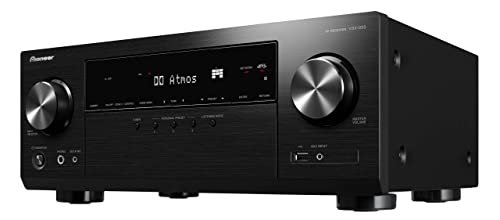
- 6.81-inch listed chassis height
- Dolby Atmos and DTS:X support
- 80 W/ch listed FTC two-channel rating
Best For: Immersive audio in a lower-profile receiver
Best for Flexible Streaming
Yamaha RX500A 7.2-Channel Receiver

- 7.2 or 5.2.2 speaker layouts
- 4K/120Hz and 8K/60Hz video support
- Multiple streaming options and room optimization
Best For: Streaming-focused theaters with up to five HDMI connections
Gaming Pick

- 4K/120Hz HDR pass-through
- VRR, ALLM, and Quick Frame Transport
- Four HDMI ports and eARC
Best For: Gaming-focused 7.2-channel setups
Connectivity Pick

- Seven HDMI inputs, three outputs
- All inputs support 8K/60 and 4K/120
- YPAO R.S.C. with 3D measurement
Best For: Multi-source theaters with several display connections
Balanced Yamaha Pick

- Seven HDMI inputs, one output
- Three inputs support 8K/60B and 4K/120AB
- YPAO R.S.C. multipoint calibration
Best For: Single-display setups with multiple sources
THX-Certified Pick – Onkyo TX-NR6100
The Onkyo TX-NR6100 is a 72 channel av receiver for buyers who want THX Select certification alongside modern video connections. Its seven amplified channels support a 5.2.2 Dolby Atmos or DTS:X setup, while three HDMI 2.1 inputs offer 8K support at up to 40Gbps.
Best For: A 5.2.2 home theater that needs THX certification and 8K-ready inputs.
Pros:
- THX Select certified.
- Supports Dolby Atmos and DTS:X in a 5.2.2 configuration.
- Three HDMI 2.1 inputs support 8K at up to 40Gbps.
- Includes Wi-Fi, Bluetooth, and discrete Zone 2 audio and video.
Cons:
- Seven amplified channels limit height-speaker layouts to 5.2.2.
- Only three inputs are specified as 8K-capable HDMI 2.1 connections.
Choose this model if THX certification and its three high-bandwidth HDMI inputs matter more than expanding beyond a seven-channel speaker layout.
Wireless Surround Pick – Yamaha AVENTAGE RX-A780
The Yamaha AVENTAGE RX-A780 is a 72 channel av receiver worth considering if music streaming and flexible surrounds are priorities. It pairs 5.2.2 Dolby Atmos and DTS:X playback with MusicCast multi-room audio, and it can use two MusicCast 20 speakers as wireless surrounds in a 5.1 setup.
Best For: Buyers who want MusicCast streaming, a phono input, and the option of wireless surrounds.
Pros:
- Supports 5.2.2 Dolby Atmos and DTS:X, plus Zone 2.
- MusicCast can add compatible wireless surrounds to a 5.1 setup.
- YPAO R.S.C. multipoint sound optimization helps with setup.
- Five HDMI inputs support 4K HDR10 and Dolby Vision.
Cons:
- Video support is listed at 4K rather than 8K.
- Wireless surrounds require separate MusicCast 20 speakers and are specified for a 5.1 setup.
This is the stronger fit when MusicCast flexibility and 4K home theater matter more than 8K video connectivity.
Easy-Setup Pick – Denon AVR-X1700H
The Denon AVR-X1700H is a 72 channel av receiver that makes sense for buyers balancing immersive audio, current video formats, and straightforward setup. Its seven-channel amplifier is rated at 80 watts per channel, and its on-screen guide and color-coded connections help you get started.
Best For: Buyers who want guided setup, HEOS multi-room streaming, and 8K-capable HDMI inputs.
Pros:
- Supports Dolby Atmos, DTS:X, and virtual height effects.
- Three dedicated 8K HDMI inputs support 8K/60Hz and 4K/120Hz pass-through.
- HEOS enables multi-room, multi-source streaming.
- Includes a phono input and two subwoofer pre-outs.
Cons:
- Its seven amplified channels do not accommodate more than seven speakers at once.
- Only three of its six HDMI inputs are specified as dedicated 8K inputs.
If you are building a seven-channel system and value a guided first-time setup, this Denon offers a useful mix of audio formats, streaming, and video connectivity.
MusicCast and HDMI Pick – Yamaha RX-V6A
The Yamaha RX-V6A is a 72 channel av receiver for households with several HDMI sources and a mix of movie and music listening. It offers seven HDMI inputs, Dolby Atmos and DTS:X support, and MusicCast multi-room playback.
Best For: Setups that need seven HDMI inputs, MusicCast, and room calibration.
Pros:
- Seven HDMI inputs and one eARC output.
- Lists 8K/60Hz and 4K/120Hz HDMI support.
- Supports Dolby Atmos, Atmos Height Virtualization, and DTS:X.
- Offers YPAO R.S.C. multipoint calibration and MusicCast streaming.
Cons:
- Only three inputs are identified as 8K-capable.
- A seven-channel layout limits the number of speakers you can run simultaneously.
This Yamaha is a practical choice when numerous source connections and MusicCast matter; check which of your devices need its three 8K-capable inputs before wiring everything up.
Best for Multi-Room Music – Denon AVR-S970H 7.2-Channel Receiver
The Denon AVR-S970H is a 72 channel av receiver option for medium-size rooms, with seven amplified channels for a 7.2 or 5.2.2 speaker layout. Its combination of 8K video support, gaming features, and HEOS streaming makes it a versatile choice for movies and music.
Best For: Buyers who want surround sound in one room and wireless music playback around the house.
Pros:
- Supports Dolby Atmos and DTS:X with a 5.2.2 height-speaker option.
- Offers three 8K HDMI inputs, 8K/60Hz pass-through, VRR, QFT, and ALLM.
- Includes HEOS multi-room streaming, Wi-Fi, Bluetooth, and a phono input.
Cons:
- Seven amplified channels limit Atmos layouts to 5.2.2 rather than larger height-speaker setups.
- HEOS multi-room playback requires compatible speakers for other rooms.
Choose this Denon if you plan to use its mix of home-theater connections and HEOS features; its seven-channel layout is the main boundary to keep in mind.
Best for Compact Shelves – Pioneer VSX-935 7.2-Channel Receiver
The Pioneer VSX-935 is a 72 channel av receiver worth considering when cabinet height matters: its listed chassis height is 6.81 inches. It provides seven amplified channels, Dolby Atmos and DTS:X support, and Wi-Fi and Bluetooth connectivity.
Best For: Buyers seeking immersive-audio support in a comparatively low-profile receiver.
Pros:
- Supports Dolby Atmos, DTS:X, and their listed upmixing modes.
- Its 6.81-inch listed height can suit spaces where a taller receiver would not fit.
- Provides Wi-Fi, Bluetooth, and HDMI connectivity.
Cons:
- The supplied notes do not specify 8K pass-through or HDMI gaming features.
- The advertised 170 W/ch figure is measured with one channel driven at 10% THD; the listed two-channel FTC rating is 80 W/ch.
The VSX-935 makes sense if its dimensions and surround formats fit your setup. Check the video specifications separately if high-refresh-rate gaming or 8K switching is a priority.
Best for Flexible Streaming – Yamaha RX500A 7.2-Channel Receiver
The Yamaha RX500A is a 72 channel av receiver option for households that use several music services and wireless playback methods. It supports 7.2 or 5.2.2 speakers, 4K/120Hz and 8K/60Hz video, and room optimization using the included setup microphone.
Best For: Buyers who want Atmos sound, current video features, and a broad selection of streaming options.
Pros:
- Supports Dolby Atmos and DTS:X, with a 5.2.2 height-speaker layout.
- Handles 4K/120Hz and 8K/60Hz video, plus ALLM, VRR, and eARC.
- Offers Spotify Connect, Google Cast, AirPlay 2, TIDAL Connect, Qobuz Connect, and Bluetooth Multipoint.
- Includes a setup microphone for automatic room optimization.
Cons:
- Its five listed HDMI ports may be limiting for setups with many video sources.
- Seven amplified channels do not accommodate an Atmos layout larger than 5.2.2.
This Yamaha stands out for streaming choice and setup assistance. Count your HDMI devices before buying, especially if you expect to expand the system.
Gaming Pick – Onkyo TX-NR5100
If you’re shopping for a 72 channel av receiver—typically written as a 7.2-channel AV receiver—the Onkyo TX-NR5100 is a practical choice for a gaming-focused setup. Its HDMI 2.1 features include 4K/120Hz HDR pass-through, VRR, ALLM, and Quick Frame Transport.
Best For: Gamers who want 7.2-channel surround sound and low-latency video features.
Pros:
- Supports 4K/120Hz HDR pass-through for compatible gaming sources.
- VRR, ALLM, and Quick Frame Transport target smoother, more responsive play.
- eARC supports high-bitrate formats including Dolby Atmos and DTS:X.
Cons:
- Four HDMI ports offer less connection room than the two Yamaha models here.
- Lists Bluetooth but not Wi-Fi among its wireless technologies.
The TX-NR5100 makes the most sense when gaming features matter more than having the largest HDMI selection or built-in Wi-Fi.
Connectivity Pick – Yamaha RX-A4A AVENTAGE
For buyers comparing a 72 channel av receiver—more commonly called a 7.2-channel AV receiver—the Yamaha RX-A4A stands out for its connections. It provides seven HDMI inputs and three outputs, with all inputs listed as supporting 8K/60 and 4K/120 at 40 Gbps.
Best For: Home theaters with several video sources and more than one display connection.
Pros:
- Seven HDMI inputs and three outputs provide flexible source and display hookups.
- Supports Dolby Atmos, DTS:X, and Auro-3D.
- YPAO R.S.C. includes 3D and multipoint measurement, precision EQ, and a low-frequency mode.
- Wi-Fi, Bluetooth, AirPlay 2, and MusicCast provide multiple wireless options.
Cons:
- Its 17.38-inch depth and 7.5-inch height call for cabinet space.
- Works with Sonos requires a separately sold Sonos Port.
Choose the RX-A4A if you can use its extensive HDMI layout and calibration features; simpler systems may not need all those connections.
Balanced Yamaha Pick – Yamaha RX-A2A AVENTAGE
If your search for a 72 channel av receiver means a 7.2-channel model, the Yamaha RX-A2A offers a capable middle ground for a single-display setup. It has seven HDMI inputs, one output, eARC, and support for Dolby Atmos and DTS:X.
Best For: Single-display home theaters that need several HDMI inputs and Yamaha’s streaming features.
Pros:
- Seven HDMI inputs accommodate multiple connected sources.
- Three inputs support the listed 8K/60B and 4K/120AB modes; all inputs support 4K/60.
- YPAO R.S.C. includes multipoint room measurement.
- Wi-Fi, Bluetooth, AirPlay 2, and MusicCast expand playback options.
Cons:
- Its single HDMI output is less flexible than the RX-A4A’s three outputs.
- Only three HDMI inputs are listed for 8K/60B and 4K/120AB support.
The RX-A2A is a sensible fit when one display output is enough. Check which sources need its higher-bandwidth HDMI inputs before assigning your connections.
How We Picked the Best 72 Channel Av Receiver
We focused on the listed receivers’ practical differences: seven-channel speaker support, HDMI capabilities, surround-format compatibility, room correction, streaming options, and connections for existing equipment. Specifications and feature availability can vary by model year or firmware version, so verify the exact unit’s inputs and supported formats before ordering. This comparison is a buying framework, not a claim that every receiver was independently bench-tested.
Quick Comparison: Where to Start
If you use a current game console or 8K display, start with the models advertised with 4K/120 or 8K HDMI support, including the Denon AVR-S970H, Onkyo TX-NR5100, and Yamaha RX-A2A or RX-A4A. Check how many HDMI inputs support the video features you need; an 8K label alone does not answer that question.
For music throughout the house, compare the ecosystems you already use: Yamaha MusicCast and Denon HEOS are relevant here, while network and wireless features differ across the other models. If you have a turntable, confirm a dedicated phono input rather than assuming one is included. The Yamaha RX-A780 is listed with phono support, but its older video specifications deserve a closer look if gaming is a priority.
Key Buying Factors for a 7.2-Channel AV Receiver
Speaker Layout and Atmos
Shoppers searching for a “72 Channel Av Receiver” usually mean 7.2-channel: seven powered speaker channels and two subwoofer outputs. You can typically use those seven amplifier channels for either a traditional 7.1/7.2 layout or a 5.1.2 Dolby Atmos layout, where two channels drive height speakers. You cannot run seven ear-level speakers plus two powered heights from seven amplifier channels alone. Also check whether the two subwoofer outputs offer independent adjustment if that matters to your room setup.
HDMI, TV, and Gaming Compatibility
Count your sources before you shop, then confirm the receiver’s HDMI inputs support their required resolution, refresh rate, and HDR formats. Gamers should check 4K/120 support on the specific inputs they will use, plus VRR and ALLM if those features matter to them. For a TV’s built-in apps, eARC can carry higher-bandwidth audio back to the receiver when both devices support it.
Power, Calibration, and Everyday Connections
Wattage figures are not always measured under identical conditions. Speaker sensitivity, listening distance, and room size are often more useful starting points than a small difference in advertised watts per channel. Room-correction systems can help set speaker distances and levels; compare their setup options rather than treating calibration as a substitute for good speaker placement. Check for enough HDMI inputs, a phono stage, wired networking, and the streaming services you actually use.
Who Should Buy Which 72 Channel Av Receiver?
For a straightforward surround-sound upgrade, compare the Denon AVR-X1700H, Pioneer VSX935, and Yamaha RX-V6A against your required connections and budget. For gaming-focused setups, prioritize a receiver whose verified HDMI inputs match your console and display; the AVR-S970H and newer Onkyo and Yamaha options are useful starting points. Buyers building around Yamaha MusicCast can compare the RX-V6A, RX-A2A, and RX-A4A, while HEOS users may prefer the listed Denon models. If you do not plan to add surround-back or height speakers, consider whether a simpler receiver would leave more of your budget for speakers and a subwoofer.