
Clear podcast audio depends on more than a good microphone. Bare walls, hard floors, and reflective furniture can create echo and room coloration that make voices sound distant or harsh.
These acoustic art panels for podcasting combine decorative artwork with sound-absorbing construction, giving creators a practical way to improve recording spaces without making them look like traditional studios. The options below vary in size, coverage, adhesive design, and visual style.
Best 10 Acoustic Art Panels for Podcasting Picks for 2026
Best Value Art Treatment

- Eight decorative polyester panels
- Covers about 10.33 square feet
- Nano-glue installation included
Best For: Compact podcast booths and home studios
Best Gallery-Style Option

- Decorative abstract artwork
- 72-by-48-inch wall display
- Self-adhesive polyester construction
Best For: Modern podcast studios and video sets
Best Rated Sound Absorption

- Lists an NRC 0.95 rating
- Eight-panel 48-by-32-inch display
- Self-adhesive forest artwork
Best For: Performance-focused podcast studios
Artist-Collaboration Pick
Teal Aura Acoustic Wall Panels

- High-density polyester helps absorb unwanted sound
- Artist-curated design adds decorative appeal
- Eight panels cover 84.5 square feet
Best For: Large podcast rooms that need decorative, tool-free acoustic treatment
Studio-Clarity Pick

- 23.6-inch panels offer substantial per-piece coverage
- Designed for mid-to-high-frequency echo reduction
- UL Greenguard Gold certified polyester construction
Best For: Podcasters treating first reflections in a modern home studio
Decorative Flexibility Pick
Art3d Foggy Forest Acoustic Wall Panels
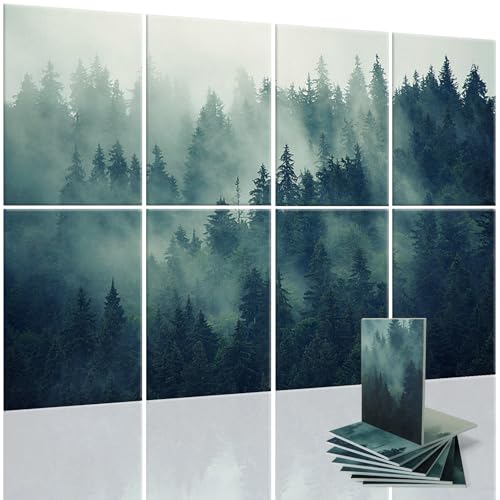
- UV-printed artwork doubles as acoustic wall decor
- Nano Sticker installation requires no tools or extra glue
- Lightweight polyester construction suits multiple rooms
Best For: Styled podcast corners on smooth walls
Retro Music Studio Pick
Jazz Instrument Acoustic Art Panels

- Music-themed illustrations create a camera-ready backdrop.
- Helps reduce mid-to-high-frequency echo and reverberation.
- Lightweight, tool-free installation with included adhesive strips.
Best For: Podcasters and musicians wanting vintage decor with basic acoustic treatment.
Modern Sculptural Pick
Arcadian Vortex Acoustic Wall Panels

- Six large panels form a 60-by-40-inch decorative layout.
- Dense material helps reduce echo, reverb, and reflected sound.
- Non-adhesive mounting supports flexible installation methods.
Best For: Modern podcast studios, streaming spaces, and offices needing broad wall coverage.
Easy Wood-Look Upgrade
Oak Finish Acoustic Wall Panels

- Oak-effect print creates a warm, natural podcast backdrop.
- Six panels cover a stated 70.86-by-47.24-inch area.
- Self-adhesive backing enables quick, tool-free installation.
Best For: Creators wanting broad coverage and wood-inspired decor in a home studio.
Best Value Art Treatment – JaneTech 8-Pack
For creators seeking acoustic art panels for podcasting, the JaneTech 8-pack combines a decorative wall treatment with polyester-fiber sound absorption. The eight 16-by-12-inch panels cover about 10.33 square feet and include nano-glue adhesive for a straightforward installation.
Best For: Home podcast booths, recording studios, offices, conference spaces, home theaters, and gaming rooms.
Pros:
- Decorative alternative to traditional acoustic foam.
- Designed to reduce echo and reverb for recordings, calls, and streams.
- High-density polyester fiber is flame-retardant, wear-resistant, and durable.
- Nano-glue adhesive supports installation on walls, doors, windows, and ceilings.
Cons:
- The included set covers a relatively small focal area compared with larger panel systems.
- At 0.4 inches thick, it may be better suited to echo control than broad room isolation.
The JaneTech set is a practical choice when you want a compact, coordinated art display for a podcasting corner rather than full-room treatment. Its included adhesive and modest coverage make it especially convenient for targeted placement.
Best Gallery-Style Option – JBER Lake of the Sky
The JBER Lake of the Sky panels are acoustic art panels for podcasting that prioritize a finished, gallery-style appearance. Their light blue, gray, white, and gold abstract design can help a recording room feel more like a decorated interior than a treated studio.
Best For: Personal studios, home theaters, offices, living rooms, and podcast spaces with modern or coastal decor.
Pros:
- Combines sound absorption with contemporary abstract wall art.
- Made from odorless, fire-resistant polyester fiber.
- Self-adhesive installation is intended to be manageable without professional help.
- Large 72-by-48-inch format can create a prominent visual feature.
Cons:
- The product information gives the overall size but does not specify the individual panel dimensions or acoustic rating.
- Its prominent coastal artwork may not suit every podcast set or room style.
Choose the JBER option if visual presentation matters as much as echo reduction. It is particularly appealing for video podcasts, guest-facing studios, or multipurpose rooms where conventional foam would look out of place.
Best Textured Backdrop – Timber Interlock Panels
These textured acoustic art panels for podcasting offer a grooved, wood-inspired look without requiring woodworking. Six lightweight polyester-fiber panels measure about 23.6 inches square each, making them useful for building an accent wall or a structured recording backdrop.
Best For: Podcast desk backdrops, home offices, creative studios, accent walls, and rooms where a wood-panel look is desired.
Pros:
- Grooved surface provides a more dimensional appearance than plain foam.
- Six panels can be aligned into continuous lines or arranged creatively.
- Double-sided adhesive dots enable tool-free mounting.
- Odorless polyester fiber is designed for indoor use.
Cons:
- The notes do not provide a specific noise-reduction coefficient or measured acoustic performance.
- The square-panel layout may require careful planning to create a seamless backdrop.
The Timber Interlock set is a strong design-led choice for podcasters who want texture behind the microphone or camera. It offers flexible layout options, though buyers wanting quantified acoustic performance may prefer a product with published testing data.
Best Rated Sound Absorption – Forest Summer
For shoppers comparing acoustic art panels for podcasting by stated performance, the Forest Summer set stands out with a listed NRC 0.95 rating and claims of improved speech clarity. Eight 0.4-inch polyester panels create a 48-by-32-inch forest-themed display with self-adhesive installation.
Best For: Podcast studios, home offices, conference rooms, home theaters, bedrooms, and decorative spaces needing strong stated echo absorption.
Pros:
- Lists an NRC 0.95 rating and absorption of 95% of echoes.
- Reports 34% speech-clarity improvement in conference-room testing.
- Forest artwork creates a biophilic focal point for a studio or office.
- Anti-static surface is designed to repel dust and pet hair, with monthly vacuuming recommended.
Cons:
- The eight-panel display covers a stated 48-by-32-inch artwork area, so it is not a full-room solution.
- The permanent adhesive may be unsuitable for renters or frequently changing layouts.
Forest Summer is the performance-focused pick in this group, especially when the supplied acoustic specifications are important to your buying decision. Its compact gallery format still means placement should be strategic around the microphone and reflective surfaces.
Artist-Collaboration Pick – Teal Aura Acoustic Wall Panels
For shoppers seeking acoustic art panels for podcasting, the Teal Aura set combines high-density polyester sound absorption with a designer-focused appearance. Its large format and peel-and-stick installation can help reduce unwanted noise while giving a recording space a more finished look.
Best For: Podcasters who want broad wall coverage and decorative acoustic treatment in a home studio, office, or media room.
Pros:
- High-density polyester fiber is designed to absorb unwanted sound.
- Artist-curated designs add visual interest beyond standard acoustic foam.
- Eight panels cover a stated 84.5 square feet.
- Includes 50 transparent double-sided sticky dots for tool-free installation.
Cons:
- The supplied notes do not specify frequency-performance data.
- Adhesive installation is intended for a hassle-free setup, but surface compatibility may vary.
The Teal Aura is a strong choice when podcast-room acoustics and wall decor matter equally. Its generous coverage is especially useful for treating larger areas, though shoppers should consider their wall surface and desired placement before installing the adhesive-backed panels.
Studio-Clarity Pick – BUBOS 3D Art Acoustic Panels
These BUBOS panels are aimed at creators who want acoustic art panels for podcasting with a more structured, studio-oriented design. The 23.6-inch panels use a dual-layer composite build, full-surface adhesive, and stated mid-to-high-frequency treatment for reducing slapback and echo.
Best For: Podcasters, gamers, and home-studio users treating first-reflection points or seeking decorative broadband absorption.
Pros:
- Large 23.6-by-23.6-inch panels provide substantial coverage per piece.
- 3D CNC-carved styling offers a modern alternative to conventional foam.
- High-density polyester is UL Greenguard Gold certified, formaldehyde-free, and odorless according to the supplied notes.
- Designed to target mid-to-high frequencies from 150 to 20,000Hz.
Cons:
- The full-surface adhesive is designed for permanent hold, so installation may be less flexible.
- The six-pack covers less total area than some larger eight-panel sets.
- At 2 inches thick, the panels may require more wall planning than thinner decorative treatments.
The BUBOS set stands out for podcasters prioritizing reflection control and a polished 3D appearance. Its stated frequency range is useful for voice-focused spaces, while the permanent adhesive makes careful positioning important.
Decorative Flexibility Pick – Art3d Foggy Forest Acoustic Wall Panels
Art3d Foggy Forest panels suit shoppers who want acoustic art panels for podcasting without giving up room decor. Their UV-printed polyester surfaces are designed to reduce echo and reverberation, while nano-sticker installation offers a quick, clean setup on smooth surfaces.
Best For: Podcasters creating a visually styled recording corner in a bedroom, office, gaming room, or home studio.
Pros:
- UV-printed artwork combines sound-absorbing function with decorative wall treatment.
- Lightweight polyester construction is described as odorless, recyclable, and flame-retardant.
- Nano Sticker backing supports tool-free installation on smooth surfaces.
- Suitable for recording studios, home theaters, offices, and other echo-prone rooms.
Cons:
- Installation is specified for smooth surfaces, which may limit placement options.
- The supplied notes do not provide a coverage figure or frequency range.
- The individual panel dimensions listed are smaller than the stated 48-by-32-inch set highlight, so shoppers should verify the configuration.
The Art3d set is a practical decor-first option for a podcast setup where appearance is a major consideration. Its lightweight, adhesive design makes installation approachable, but buyers should confirm the exact panel layout and available wall coverage for their room.
Retro Music Studio Pick – Jazz Instrument Acoustic Art Panels
These acoustic art panels for podcasting combine mid-century music illustrations with practical sound absorption. The eight lightweight 12-by-16-inch panels are designed to reduce mid-to-high-frequency reflections, helping create a more camera-ready recording background without a clinical studio appearance.
Best For: Podcasters, musicians, and home-studio users who want a vintage music-themed backdrop with simple installation.
Pros:
- Retro artwork features turntables, records, trumpets, microphones, bass guitars, and pianos.
- Helps reduce flutter echo and room reverberation for clearer speech and recordings.
- Lightweight, low-odor panels include nano adhesive strips and require no drilling.
- Eight panels can be arranged in a custom gallery layout.
Cons:
- The 48-by-32-inch overall arrangement may provide less coverage than larger panel sets.
- Designed to absorb mid-to-high frequencies rather than fully soundproof a room.
Choose this set when visual personality matters as much as basic echo control. Its illustrated music theme is especially suitable for podcast video backgrounds, while the modular layout makes it easy to adapt to a home office or studio wall.
Modern Sculptural Pick – Arcadian Vortex Acoustic Wall Panels
For a contemporary take on acoustic art panels for podcasting, this six-pack uses sculptural 3D styling and dense polyester construction to help reduce echo, reverb, and reflected sound. The panels create a 60-by-40-inch layout and can be arranged to suit a recording, streaming, or office setup.
Best For: Podcasters, streamers, and home-office users seeking large modern wall art with flexible placement options.
Pros:
- Large 20-by-20-inch panels provide a substantial decorative treatment area.
- Dense material is intended to improve speech clarity and reduce reflected sound.
- Non-adhesive design allows installation with tape, mounting strips, or suitable spray adhesive.
- 3D sculptural styling works in studios, bedrooms, offices, and media spaces.
Cons:
- Mounting materials are not included, so installation supplies must be selected separately.
- The product details list conflicting panel dimensions, so verify the exact size before planning placement.
- These panels treat reflected sound but are not described as complete soundproofing.
This is a practical choice when you want acoustic treatment to look like contemporary decor. Its larger format can make a strong podcast backdrop, while the non-adhesive installation approach offers more freedom to reposition the panels.
Easy Wood-Look Upgrade – Oak Finish Acoustic Wall Panels
These acoustic art panels for podcasting pair a warm oak wood-effect print with a 0.47-inch 3D felt core. Six self-adhesive panels cover a stated 70.86-by-47.24-inch area, helping reduce echoes while adding a natural focal point to a studio, home office, or video recording wall.
Best For: Podcasters and creators who want broad acoustic wall coverage, quick setup, and a wood-inspired visual backdrop.
Pros:
- Wood-effect UV printing gives the panels a warm, natural appearance.
- High-density polyester fiber core is designed to absorb reverberation.
- Peel-and-stick backing enables tool-free installation without drilling.
- Six 23.62-by-23.62-inch panels can be rotated for different geometric compositions.
Cons:
- The self-adhesive backing may be less convenient if you expect to rearrange panels frequently.
- At 12.82 pounds, the set is heavier than lightweight decorative panel options.
- It reduces echo and reverberation but is not presented as complete room soundproofing.
This set stands out for creators who need a sizable, polished background without a complicated installation. The oak finish can blend more naturally into living spaces than studio-style foam, while the thick felt core adds functional acoustic treatment.
How We Picked the Best Acoustic Art Panels for Podcasting
We focused on panels that balance sound absorption, usable coverage, appearance, and installation practicality. The selection includes compact modular designs for small recording rooms, larger panels for treating broad wall areas, and self-adhesive or included-adhesive options for simpler installation. We also considered whether each design could work behind a camera, beside a microphone, or across common reflection points without overwhelming a home-office setup.
Decorative panels are not a replacement for complete acoustic treatment, bass traps, or professional room measurement. However, strategically placed artwork-style absorbers can reduce mid- and high-frequency reflections that commonly affect spoken-word recordings.
Quick Comparison
| What to Compare | Best For | Why It Matters |
|---|---|---|
| Panel size | Room coverage | Larger panels treat more wall area with fewer seams. |
| Pack count | Modular layouts | Multiple smaller panels are easier to arrange around furniture and equipment. |
| Adhesive method | Easy installation | Self-adhesive or included glue can simplify mounting, but may affect paint or wallpaper. |
| Artwork and color | Visible studio backgrounds | The design should complement lighting, branding, and the camera frame. |
Key Buying Factors for Acoustic Art Panels for Podcasting
Coverage and Placement
Start with the wall behind the microphone and the first reflection points to the sides. Measure the available area before choosing a pack. A large six-panel set may cover a broad backdrop quickly, while smaller squares can fit around shelves, doors, and monitors.
Material and Absorption
Look for dense sound-absorbing cores and a finish designed to let sound reach the absorptive material. These products primarily help with reflections and reverberation, not external noise. If low-frequency buildup is a problem, combine wall panels with thicker treatment in room corners.
Mounting and Wall Safety
Check whether adhesive is supplied, whether the wall must be cleaned or primed, and whether removal could damage paint. For rented spaces or heavy panels, consider removable mounting solutions or mechanical hardware where appropriate.
Visual Consistency
Because podcast panels often appear on camera, choose artwork that supports your set rather than competing with the host. Repeated panels create a cleaner backdrop; bold individual prints can provide a focal point.
Who Should Buy Which Acoustic Art Panels for Podcasting?
Small-room podcasters: Choose compact panels or a flexible multi-pack that can be distributed around a desk and microphone.
Video podcasters and streamers: Prioritize attractive artwork, consistent color, and coverage behind the camera-facing wall.
Creators treating a larger room: Favor larger panels or high-coverage six- and eight-pack configurations to reduce installation time and visible gaps.
Renters: Pay closest attention to adhesive and removal requirements, and test any mounting method in an inconspicuous area first.