
Clear voiceover starts with controlling reflections and room noise, and the door is often one of the weakest points in a recording space.
This roundup of acoustic door panels for voiceover focuses on practical options that help improve isolation and reduce unwanted echo without complicating your setup.
Best 10 Acoustic Door Panels for Voiceover Picks for 2026
Peel-and-stick acoustic foam

- Peel-and-stick installation is quick and discreet.
- High-density foam is made to absorb mid/high frequencies.
- Claimed NRC 0.85 and 30-40 dB noise reduction.
Best For: Voiceover setups that need simple door treatment and echo control.
Premium Echo-Absorbing Wall Panels
TONOR 4-Piece Self-Adhesive Fiberglass Set
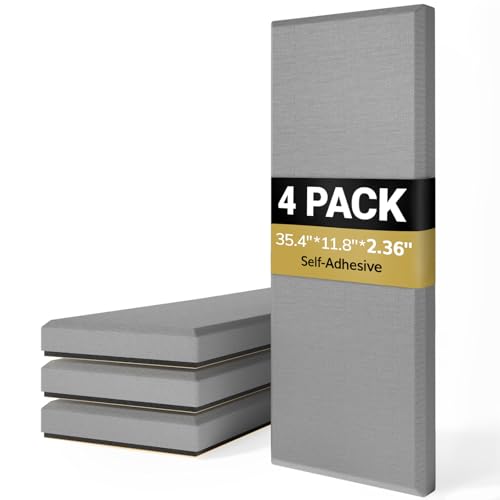
- NRC 0.95 for strong echo absorption
- Large fabric-wrapped fiberglass panels
- Peel-and-stick install on smooth surfaces
Best For: Voiceover booths and home studios needing stronger reflection control
Door-Focused Voice Clarity Kit
Arrowzoom 20-Pack Peel-and-Stick Tiles

- Designed to reduce flutter echo and reverb
- 20 modular self-adhesive 12" x 12" tiles
- Trim-to-fit format works around door hardware
Best For: Home studios and video calls needing simple acoustic door treatment
Budget Echo Control Panels
12-Pack Self-Adhesive Polyester Fiber Tiles
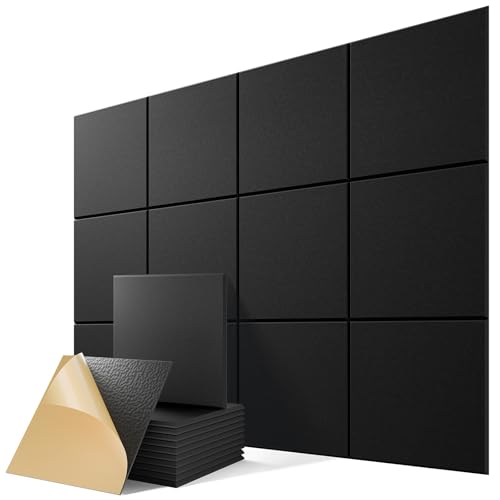
- Reduces echo, reverberation, and standing waves
- Easy peel-and-stick installation on smooth surfaces
- Eco-friendly polyester fiber construction
Best For: Affordable voiceover acoustic treatment with simple DIY installation
Brick-Style Peel-and-Stick Panels
20-Pack Self-Adhesive Brick Acoustic Panels

- Peel-and-stick installation with no extra adhesive needed
- Designed to reduce echoes and reverberation for cleaner audio
- Decorative 3D brick look works in studios and offices
Best For: Fast installs on doors or walls in home voiceover setups
Peel-and-stick acoustic foam – Arrowzoom Door Kit PRO
If you want acoustic door panels for voiceover that focus more on echo control than heavy isolation, this peel-and-stick foam kit is a straightforward option. The high-density panels are designed to absorb mid and high frequencies, helping reduce reflections and reverberation around a door area or recording space.
Best For: Voiceover rooms, studios, offices, or dorm doors where you want easy-installed acoustic treatment and better speech clarity.
Pros:
- Peel-and-stick backing makes installation quick and invisible.
- Made from high-density foam with a claimed NRC of 0.85.
- Targets mid and high frequencies, which helps tame voice reflections.
- Can be mixed and matched in multiple colors for custom door coverage.
Cons:
- Designed for absorption, not true soundproofing.
- Works best when paired with door sealers for stronger results.
- Coverage depends on panel layout and door size.
This is a practical choice if your main issue is a lively door surface that adds room echo to recordings. For voiceover, it can improve the sound inside the room, but it will not block low-frequency noise the way a heavier barrier system would.
Extra-large doorway blanket – Lightweight Doorway Acoustic Blanket
For acoustic door panels for voiceover, this extra-large blanket is a flexible way to cover a doorway and soften reflections around a recording area. It uses high-density PP/PET acoustic fiber and is sized to cover a full doorway, making it useful when you want a renter-friendly treatment that hangs over the door instead of attaching panels to it.
Best For: Voiceover booths, home studios, apartments, and shared spaces where doorway coverage and echo reduction matter.
Pros:
- Extra-large 96″ x 80″ size helps cover a full doorway.
- Lightweight 7.49 lb build is easy for one person to hang.
- Claimed NRC 0.85 for absorbing reflections and softening high-frequency noise.
- Includes grommets, hanging loops, and wall hooks for flexible installation.
Cons:
- Designed for dampening and echo control, not true soundproofing.
- Low-frequency reduction is less noticeable.
- Ships vacuum packed and needs time to fully expand.
If your voiceover setup needs a temporary doorway solution, this blanket is more versatile than fixed panels. It is best viewed as an acoustic improvement tool rather than a full noise-blocking barrier.
Self-adhesive polyester panels – Soundsbay 12-Pack Acoustic Panels
These acoustic door panels for voiceover are a compact, self-adhesive option if you want to reduce reflections on or around a door surface. Built from high-density polyester fiber, they are aimed at improving recording clarity by absorbing both high- and low-frequency noise in small studio or home-theater style spaces.
Best For: Voiceover rooms, home studios, and doors that need a neat, self-adhesive sound-absorbing finish.
Pros:
- High-density polyester fiber construction with a claimed NRC 0.92.
- Self-adhesive backing makes installation simple and tool-free.
- 12-pack covers 11.6 sq. ft., giving targeted door or wall treatment.
- Minimalist vertical-stripe design blends into living spaces and studios.
Cons:
- Thin 0.4-inch profile means it is primarily for acoustic treatment.
- Best for targeted coverage rather than full-door sound blocking.
- Coverage may be limited for larger doors or broader noise issues.
This is a strong pick when appearance and easy application matter as much as sound control. For voiceover, it should help clean up reflections on a door or nearby surface without adding a bulky look.
Wrap-around door blanket – BoxerTools Diamond Stitching Blanket
If you want acoustic door panels for voiceover that behave more like a door cover than a panel set, this wrap-around blanket is built for direct door treatment. It is designed to dampen sound transmission through doors, reduce outside voices and echo, and install quickly with hook-and-loop straps instead of tools or drilling.
Best For: Home studios, vocal booths, bedrooms, and offices where you want a reusable door-mounted acoustic layer.
Pros:
- Full-door coverage design with wrap-around bottom seal to help reduce gaps.
- Hook-and-loop straps allow quick no-tool installation.
- Quilted diamond-stitch construction gives it a professional look.
- Portable and reusable for flexible sound control.
Cons:
- At 80″ x 35″, fit depends on your door size and layout.
- Focuses on dampening rather than full soundproofing.
- Best results still depend on how well the door area is sealed.
This is a practical option if you want a door-centered acoustic solution that is easy to install and remove. For voiceover work, it offers a cleaner, more direct approach to reducing door reflections and some outside noise.
Premium Echo-Absorbing Wall Panels – TONOR 4-Piece Self-Adhesive Fiberglass Set
If you’re comparing acoustic door panels for voiceover, this TONOR set is a practical choice for taming reflections and tightening up spoken-word recordings. Each large panel uses a fiberglass core with a fabric-wrapped finish and a strong peel-and-stick backing, so it’s aimed at quick room treatment rather than a complicated install.
Best For: Voiceover booths, home studios, and other spaces where you want stronger echo absorption on doors or walls.
Pros:
- High NRC rating of 0.95 for strong echo absorption.
- Large 35.4″ x 11.8″ panels cover more surface per piece.
- Self-adhesive backing makes installation fast on smooth surfaces.
- Fabric-wrapped fiberglass construction is flame-resistant, non-toxic, and odorless.
Cons:
- Only four panels are included, so coverage is limited.
- Best on smooth surfaces; not a universal fix for every door or wall type.
Overall, this is a solid option if your priority is clearer voice capture and a cleaner-looking treatment setup. The combination of size, adhesion, and high absorption makes it well suited to targeted acoustic door treatment in a voiceover space.
Door-Focused Voice Clarity Kit – Arrowzoom 20-Pack Peel-and-Stick Tiles
For buyers looking at acoustic door panels for voiceover, this Arrowzoom 20-pack is built around voice clarity and quick DIY treatment. The 12″ x 12″ tiles are designed to absorb mid-to-high frequencies, reduce flutter echoes, and add a cleaner look to doors, walls, or ceilings.
Best For: Home studios, gaming setups, and video conferencing spaces that need simple door and wall reflection control.
Pros:
- Targets mid-to-high frequencies to improve vocal clarity.
- 20 self-adhesive tiles make it easy to cover larger areas.
- Can be trimmed around doorknobs, frames, or irregular spaces.
- Class B1 flame-retardant polyester is formaldehyde-free and odorless.
Cons:
- Thin 0.78″ profile may not suit users seeking heavier treatment.
- Focuses on reflections and sound deadening rather than full soundproofing.
This kit is a sensible pick if you want an easy, modular way to improve voice recordings without major construction. It works best as part of a broader acoustic setup where the goal is reducing reverb on doors and nearby surfaces.
Budget Echo Control Panels – 12-Pack Self-Adhesive Polyester Fiber Tiles
If you’re shopping for acoustic door panels for voiceover on a tighter budget, this 12-pack offers a straightforward way to reduce echo and tighten speech intelligibility. These polyester fiber panels are self-adhesive, lightweight, and meant for quick peel-and-stick installation on smooth surfaces.
Best For: Voiceover booths, home offices, and recording rooms that need affordable echo reduction and easy DIY setup.
Pros:
- Helps absorb noise and reduce echo, reverberation, and standing waves.
- Self-adhesive backing makes installation fast and simple.
- Polyester fiber material is eco-friendly and built for lasting use.
- Can be used on walls, ceilings, doors, and even windows on smooth surfaces.
Cons:
- Thin 0.4″ panels are better for absorption than heavy-duty dampening.
- Coverage is modest with 12 panels, so larger rooms may need more.
For voiceover work, this set is best viewed as an affordable acoustic treatment rather than a full soundproofing solution. It offers a practical balance of easy installation, decent absorption, and flexible placement across different surfaces.
White Square Panels – 12-Pack High-Density Poly-Fiber Acoustic Panels
If you’re shopping for acoustic door panels for voiceover, this 12-pack is a straightforward way to tame echoes and reverb in a small recording space. The high-density polyester build is aimed at sound absorption rather than sound blocking, so it’s a better fit for improving mic clarity than stopping outside noise.
Best For: Voiceover booths, home studios, podcast rooms, and other spaces where reducing reflections matters more than full soundproofing.
Pros:
- High-density polyester panels with an NRC rating claimed up to 0.95
- Helps reduce echoes and reverb in recording and office spaces
- Easy to cut and customize for different layouts
- Non-toxic, odorless, formaldehyde-free, and flame retardant
Cons:
- No adhesive is included, so you’ll need your own mounting method
- Covers only 1 square foot total, so larger setups need multiple sets
- Best for absorption, not for blocking sound through a door or wall
As a voiceover-focused acoustic treatment, this set makes sense when you want a cleaner recording environment without adding bulky gear. The decorative beveled-edge look is a bonus if the panels will stay visible in a studio or office.
Brick-Style Peel-and-Stick Panels – 20-Pack Self-Adhesive Brick Acoustic Panels
For acoustic door panels for voiceover, this self-adhesive set is convenient if you want quick installation and a more finished look. The 3D brick-style design is made to absorb echoes and reverberation, which can help make a voiceover space sound tighter and less reflective.
Best For: Users who want easy peel-and-stick acoustic treatment for a home studio, office, or door area.
Pros:
- Peel-and-stick backing simplifies installation
- High-density material is designed to reduce echo and reverberation
- Claimed NRC above 0.95 for broad noise absorption
- 3D brick design adds a decorative finish to walls or doors
Cons:
- Sound absorption is not the same as true soundproofing
- Only covers about 20 ft² per set, so larger rooms need more panels
- Black finish may not suit every room aesthetic
This is a practical pick when convenience matters and you want to install treatment fast. It’s especially appealing for voiceover setups where the goal is to reduce reflections around the mic rather than fully isolate the room.
Chamfer-Edge Panels – 18-Pack White Acoustic Panels with Built-In Adhesive
If you want acoustic door panels for voiceover with an easy stick-on setup, this 18-pack is built around convenience and cleaner sound. The polyester fiber construction is meant to absorb echoes and background sound, while the 45° chamfered edges are designed to create a tighter, gap-minimized fit.
Best For: Voiceover rooms, home studios, and other spaces where you want simple installation and basic reflection control.
Pros:
- Comes with built-in adhesive for easier mounting
- 45° chamfering is intended to reduce visible gaps
- Polyester fiber material is non-toxic and safe to breathe and touch
- Can be removed with heat and should not damage the wall when done carefully
Cons:
- Absorbs sound rather than blocking it
- Coverage is limited to a single 18-pack set for smaller areas
- Cleaning may require a vacuum or damp cloth rather than simple wiping
This option fits buyers who want a tidy, low-hassle acoustic treatment that supports voice recording. The removable adhesive and clean-edged look make it especially practical for rented spaces or lightweight studio builds.
How We Picked the Best Acoustic Door Panels for Voiceover
We focused on products that make sense for voiceover work in real rooms, not just on paper specs. That means looking at absorption potential, coverage size, mounting ease, and whether the product is better for treating reflections or blocking noise at the door.
Because Acoustic Door Panels for Voiceover are used in different ways, we also favored options that are easy to install, suitable for renters or temporary setups, and available in sizes that can actually cover a door or nearby reflection points.
Quick Comparison
Broadly, the roundup splits into two categories: door blankets and adhesive foam/fiber panels. Door blankets are usually the better choice when your priority is reducing sound leakage through a door. Adhesive panels are more useful when you want to tame flutter echo and nearby reflections around the doorway or in a small vocal booth.
Key Buying Factors for Acoustic Door Panels for Voiceover
Coverage and Fit
Measure your door before buying. A panel kit may add absorption, but a blanket that fully covers the door often does more for isolation. Partial coverage is still useful, but gaps reduce effectiveness quickly.
Material and Density
Foam, polyester fiber, and fiberglass-style panels all behave differently. Thicker, denser materials tend to absorb more midrange energy, which is important for voice. If you are trying to keep outside sound out, heavier blankets usually perform better than thin foam.
Mounting Method
Self-adhesive panels are convenient, but the adhesive needs a clean surface and may not be ideal on every finish. Hanging blankets are easier to remove and reposition, which is helpful for shared spaces and rental studios.
Goal: Absorption Vs Isolation
For voiceover, it helps to separate room treatment from sound blocking. Panels can improve recording clarity by reducing reflections, while blankets are often the better option for a noisy hallway or thin door.
Who Should Buy Which Acoustic Door Panels for Voiceover?
If you record in a bedroom or spare office and need a simple improvement, self-adhesive acoustic panels are a practical starting point. If your biggest issue is hallway noise or sound escaping through the door, choose a door blanket first.
If you want the cleanest result, many buyers will benefit from using both: a blanket on the door for isolation and a few panels nearby for reflection control. That combination is often the most effective approach for Acoustic Door Panels for Voiceover in home studios.