
Choosing the right audio interface for outboard gear can make the difference between a clean, flexible studio and a setup that fights you at every patch point. The best models give you enough line inputs and outputs, stable low-latency performance, and routing options that fit your hardware workflow.
In this roundup, we focus on interfaces that are practical for integrating compressors, preamps, effects, and other external processors without needless complexity.
Best 10 Audio Interface for Outboard Gear Picks for 2026
Integrated Outboard Expansion

- Plugin-based outboard integration
- Adds 4 or 8 I/O to an existing sound card
- Hardware matrix with no added latency
Best For: Hybrid studios that want simple outboard routing and recall
High-Capacity Studio Hub
MOTU 828 28x32 USB3 Audio Interface

- 28 inputs and 32 outputs
- Dedicated send/return inserts on mic channels
- DSP mixer plus Wi-Fi control
Best For: Large studios needing lots of I/O for external processors
Bus-Powered SSL Control Center

- 4 SSL mic preamps with 192 kHz/32-bit conversion
- Up to 4 near-zero-latency foldback mixes
- ADAT and MIDI I/O in a bus-powered design
Best For: Compact studios that need strong monitoring and expansion
Simple Starter Interface
M-AUDIO M-Track Duo USB Audio Interface
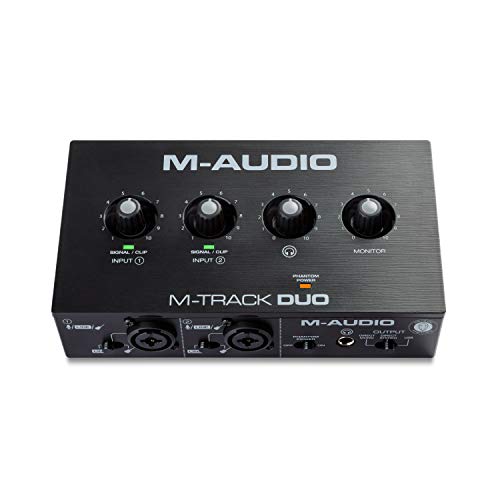
- Two combo XLR/Line/Instrument inputs
- Zero-latency USB/direct monitoring
- Portable design with Crystal Preamps
Best For: Beginners needing a simple two-channel recording interface
Portable 2x2 Recording
Mackie Onyx Producer 2X2 USB Audio Interface with MIDI

- 2-in/2-out design with MIDI I/O
- Two Onyx preamps and phantom power
- Zero-latency monitoring in a bus-powered unit
Best For: Small setups that only need a couple of inputs and MIDI
Hybrid Studio Hub
Fender Quantum LT 16 USB-C Audio Interface

- 16-in/8-out layout with 14 line inputs
- Eight MAX-HD preamps plus MIDI and DC-coupled outputs
- Standalone mixer and 8-channel mic preamp modes
Best For: Hardware-heavy studios with synths, mixers, and lots of line-level gear
Touch-Control Mobile Rack
YAMAHA URX44 USB-C Audio Interface

- 4.3-inch touch LCD with customizable knobs
- Four preamps plus built-in DSP and zero-latency monitoring
- Standalone microSD multitrack recording up to 16 tracks
Best For: Portable sessions and compact rigs that benefit from touchscreen control
Hybrid Mobile Creator Pick

- Dual USB connectivity for computer plus phone/iPad
- 56dB gain with -130dB EIN and ASIO support
- Loopback, mute controls, and ProStudio 2 routing
Best For: Creators needing flexible recording and streaming across mobile and desktop setups
Studio Hub for External Gear

- 4-in/4-out layout with MIDI I/O and four line inputs
- 120dB dynamic range and 24-bit/192kHz recording
- Auto Gain, Clip Safe, and Air mode
Best For: Musicians and producers connecting mics, synths, drum machines, and line gear
Easy Solo Routing Choice
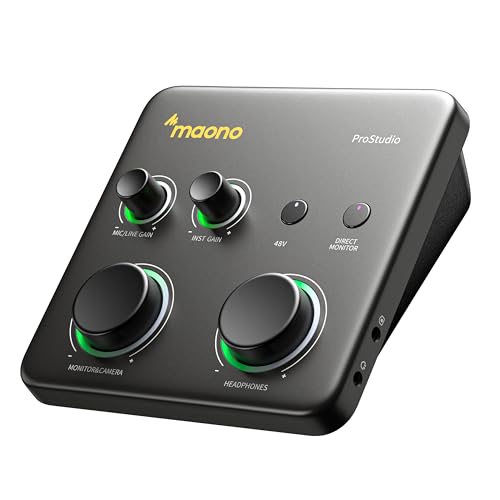
- Up to 70dB gain for demanding dynamic mics
- Auto-Gain, loopback, and independent mute controls
- Dual USB connectivity for computer plus phone/iPad
Best For: Solo creators who want simple routing and strong gain for streaming or mobile recording
Integrated Outboard Expansion – FreqInOut USB Studio Outboard
If you want an audio interface for outboard gear that goes beyond simple I/O, FreqInOut is built to make hardware integration feel plugin-like. It lets you connect outboard equipment, expand your current sound card with 4 or 8 more inputs and outputs, and manage routing through the plugin and built-in hardware matrix without adding latency.
Best For: Producers and engineers who want seamless outboard routing, parallel processing, and easy recall in a DAW-based workflow.
Pros:
- Connects outboard gear through a dedicated plugin workflow with minimal setup.
- Built-in hardware matrix helps reconfigure signal flow without added latency.
- Can expand an existing interface by adding 4 or 8 more I/O.
- Includes M/S mode, Hardware MIX, gain staging tools, and QR-based setting capture.
Cons:
- Its workflow is specialized for outboard integration rather than general-purpose recording.
- Limited to 4 channels in the supplied details.
For studios centered on external processors, FreqInOut is a focused solution that reduces routing friction while keeping hardware insert work inside your DAW workflow. The pro-grade ESS 32-bit converters and 192 kHz support add to its appeal for modern hybrid setups.
High-Capacity Studio Hub – MOTU 828 28×32 USB3 Audio Interface
MOTU 828 28x32 USB3 audio interface for Mac, Windows and iOS with mixing and effects
Check Price On AmazonIf you need an audio interface for outboard gear with plenty of routing headroom, the MOTU 828 is designed for complex studio setups. It offers 28 inputs and 32 outputs, dedicated mic channel inserts for external processing, and a flexible internal mixer with DSP effects for tracking and monitoring.
Best For: Studios that need a high-channel-count interface with dedicated inserts and broad connectivity for external gear.
Pros:
- 28 x 32 USB3 I/O with support for up to 60 simultaneous audio channels.
- Each mic channel includes send/return inserts for outboard processing.
- High-end ESS Sabre32 conversion and support up to 192 kHz.
- DSP mixing, effects, and Wi-Fi control add flexibility in studio workflows.
Cons:
- Its feature set is more elaborate than what a small setup may need.
- Large desktop unit with a 19-inch rack-style footprint.
The 828 is a strong fit when your outboard chain needs multiple I/O paths, inserts, and monitoring control in one box. It combines low-latency performance, digital expansion, and remote management in a way that suits larger hybrid studios.
Bus-Powered SSL Control Center – SSL 12 USB-C Audio Interface
The SSL 12 is a practical audio interface for outboard gear if you want strong conversion, solid monitoring, and a compact bus-powered design. It includes 4 SSL mic preamps, ADAT and MIDI I/O, and up to four near-zero-latency foldback mixes, making it useful for small studios that still want flexible hardware integration.
Best For: Compact studios that want SSL conversion, multiple headphone mixes, and expansion options.
Pros:
- 192 kHz/32-bit converters with over 120 dB of dynamic range.
- 4 SSL mic preamps with 62 dB gain and very low EIN.
- Up to 4 independent near-zero-latency foldback mixes.
- ADAT optical input and MIDI I/O support expansion and peripheral control.
Cons:
- Only 12 inputs and 8 outputs, so it is not aimed at large routing rigs.
- Windows support is listed in the supplied details, which may limit cross-platform buyers depending on their setup.
For smaller rooms that still want serious monitoring and solid conversion, the SSL 12 offers a polished balance of quality and practicality. Its bus-powered design and built-in talkback make it especially appealing for streamlined production spaces.
Simple Starter Interface – M-AUDIO M-Track Duo USB Audio Interface
If you are shopping for an audio interface for outboard gear on a budget, the M-Audio M-Track Duo keeps the essentials straightforward. It gives you two combo XLR/Line/Instrument inputs, zero-latency monitoring via a USB/direct switch, and a portable form factor for recording, streaming, or podcast work.
Best For: Beginners and creators who want an easy two-channel interface for vocals, guitar, and basic monitoring.
Pros:
- Two combo XLR/Line/Instrument inputs with phantom power.
- USB/direct switch supports zero-latency monitoring.
- Compact and lightweight for portable setups.
- Includes transparent Crystal Preamps and MPC Beats software.
Cons:
- 48 kHz maximum sample rate is lower than the other interfaces here.
- Only two channels, so it is not built for complex outboard routing.
The M-Track Duo is a sensible entry point if your outboard needs are limited to simple recording chains and basic monitoring. It is less about advanced hardware integration and more about giving solo users an affordable, reliable way to get started.
Portable 2×2 Recording – Mackie Onyx Producer 2X2 USB Audio Interface with MIDI
Mackie Audio Interface, Onyx Producer 2X2 USB Audio Interface with MIDI (Onyx Producer 2-2)
Check Price On AmazonIf you want an audio interface for outboard gear that stays simple and compact, the Mackie Onyx Producer 2X2 is built around a straightforward 2-in/2-out workflow. It gives you two Onyx mic preamps, combo inputs for mic, line, and Hi-Z sources, plus MIDI I/O for small hybrid setups that still need hardware control.
Best For: Small studios, mobile recording, and musicians who need a compact interface for a couple of external sources and MIDI.
Pros:
- Two boutique-quality Onyx mic preamps with 48V phantom power
- XLR/TRS combo inputs handle mic, line, and Hi-Z instrument signals
- Zero-latency direct monitoring with dedicated monitor outputs
- MIDI I/O and bus-powered USB 2.0 connectivity for portable use
Cons:
- Only 2-in/2-out, so it is not aimed at larger outboard rigs
- Built for basic recording and monitoring rather than expanded hardware routing
The Onyx Producer 2X2 makes the most sense when you need clean front-end recording in a small footprint. It is practical for straightforward tracking, but users with multiple pieces of external gear will likely outgrow the I/O quickly.
Hybrid Studio Hub – Fender Quantum LT 16 USB-C Audio Interface
The Fender Quantum LT 16 is a strong audio interface for outboard gear when your studio depends on lots of external connections. With 16 inputs, 8 outputs, multiple line inputs, MIDI I/O, and selectable +4 dBu / -10 dBV operation on the rear line inputs, it is designed for hardware-heavy tracking and mixing.
Best For: Hybrid studios, synth setups, and hardware-centric rooms that need plenty of line inputs and flexible routing.
Pros:
- 16-in/8-out USB-C interface with eight MAX-HD mic preamps
- 14 line inputs make it easier to integrate outboard gear and synths
- DC-coupled outputs and 5-pin MIDI I/O support modular and keyboard gear
- Standalone modes can turn it into an 8-channel outboard mic preamp or simple mixer
Cons:
- Its size and feature set are more than a basic home setup needs
- Best value depends on having enough external gear to take advantage of the extra I/O
This interface is aimed at users who need breadth, not minimalism. If your workflow includes synths, mixers, drum machines, and other outboard gear, the LT 16 offers the connection count and flexible operation to keep everything in play.
Touch-Control Mobile Rack – YAMAHA URX44 USB-C Audio Interface
The YAMAHA URX44 is an audio interface for outboard gear if you want a compact unit with built-in control and standalone capture. It offers 6-in/4-out USB-C connectivity, four mic preamps, DSP mixing, and a touch LCD that makes it easier to manage a more involved setup without relying entirely on a computer.
Best For: Mobile recording, compact hybrid rigs, and users who want touchscreen control plus standalone multitrack capture.
Pros:
- Four mic preamps with 78 dB gain and high dynamic range
- Built-in DSP and zero-latency monitoring for cleaner tracking
- 4.3-inch touch LCD with customizable knobs for hands-on control
- Standalone microSD recording up to 16 tracks
Cons:
- 4-out design limits larger monitor or hardware routing needs
- Fewer I/O options than bigger studio interfaces built for extensive outboard chains
For users who value control and portability, the URX44 blends interface and recorder functions in one box. It is especially appealing when you need self-contained multitrack capture and latency-free monitoring in a smaller footprint.
Hybrid Mobile Creator Pick – MAONO P2 Dual XLR Interface
If you want an audio interface for outboard gear that also stays flexible for modern content creation, the MAONO P2 is built around hybrid connectivity and simple routing. It can connect to a computer and phone or iPad at the same time, while dual XLR inputs, loopback, and ASIO support make it practical for recording vocals, guitars, and streamed desktop audio without a lot of setup friction.
Best For: Creators who want a compact interface for recording, streaming, and mobile capture with easy routing.
Pros:
- Dual USB ports let you use a computer and phone or iPad in the same workflow.
- 56dB gain, -130dB EIN, and 24-bit/192kHz support suit condenser and dynamic mics.
- Independent mute controls and loopback help manage streaming and recording cleanly.
- ProStudio 2 software adds routing, VST effects, and real-time noise reduction.
Cons:
- More creator-focused than a traditional studio interface for external hardware chains.
- Limited to the included feature set, so advanced outboard routing needs may be more specialized.
The P2 makes sense if your priority is a practical, desk-friendly interface that handles instruments, microphones, and mobile content workflows in one unit. It is especially appealing when you want straightforward monitoring and routing without giving up portability.
Studio Hub for External Gear – Scarlett 4i4 4th Gen
For an audio interface for outboard gear, the Focusrite Scarlett 4i4 4th Gen stands out with its 4-in/4-out design, MIDI I/O, and multiple line connections. It gives musicians room to plug in mics, guitars, synths, and drum machines, while 24-bit/192kHz conversion, Auto Gain, Clip Safe, and Air modes make it easy to capture polished recordings with less guesswork.
Best For: Musicians and producers who need a compact hub for microphones, instruments, MIDI, and line-level hardware.
Pros:
- Two mic preamps, two Hi-Z inputs, four line inputs, four line outputs, and MIDI I/O cover a wide range of gear.
- 120dB dynamic range and Focusrite’s flagship converters support high-fidelity recording.
- Auto Gain and Clip Safe help prevent bad levels while tracking.
- Air mode adds presence and harmonic character to vocals and guitars.
Cons:
- It is geared more toward studio routing than quick mobile capture.
- The feature set is broad, which may be more interface than a simple solo streamer needs.
This is the most rounded option here if your workflow involves external instruments and line devices alongside mics. It feels like a true studio hub, with enough inputs and outputs to grow into more complex sessions.
Easy Solo Routing Choice – MAONO P1 USB Interface
If you need an audio interface for outboard gear that stays simple for solo sessions, the MAONO P1 focuses on easy gain staging and clean routing. It offers dual USB connectivity for computer and phone or iPad use, up to 70dB gain for demanding dynamic mics, and loopback plus routing software for bringing voice, instrument, and desktop audio together without digging through complicated settings.
Best For: Solo podcasters, streamers, and mobile recorders who want straightforward control and strong mic gain.
Pros:
- Up to 70dB gain handles hungry dynamic microphones without an external booster.
- Auto-Gain, independent mute controls, and stream mode simplify live use.
- Built-in loopback and ProStudio2 routing support mixed audio workflows.
- Compact zinc-alloy housing and 15-degree tilt suit desk or mobile setups.
Cons:
- Designed primarily for solo creators rather than larger multi-input studio rigs.
- Less focused on expanded hardware routing than the Scarlett 4i4.
The P1 is a smart pick when you want strong microphone gain and a clean path for streaming or recording without extra hardware. Its value is in simplifying the day-to-day workflow while still giving you modern connectivity and monitoring tools.
How We Picked the Best Audio Interface for Outboard Gear
We prioritized interfaces that are genuinely useful as an Audio Interface for Outboard Gear, not just general-purpose recording boxes. That means enough balanced line I/O, reliable driver performance, solid gain structure, and monitoring or mixer software that makes hardware insert routing easier to manage. We also considered expansion options such as ADAT and MIDI, since those can extend a studio as your rack grows.
Quick Comparison
For simple hardware integration, compact 4-in/4-out models work well when you only need to patch one or two external processors. For larger hybrid setups, 8-out and higher interfaces are better because they make send/return routing, parallel processing, and multiple cue mixes much easier. If your rig includes synths or multiple rack units, look for extra line outputs, loopback, and software mixer control.
Key Buying Factors for an Audio Interface for Outboard Gear
I/O Count and Line-Level Connectivity
Start with the number of hardware inserts you actually need. Outboard gear usually depends on line-level sends and returns, so an interface with too few outputs will bottleneck your workflow fast. Balanced connections help reduce noise, especially with longer cable runs.
Routing and Software Mixer Control
Good routing matters as much as raw specs. Flexible mixer software lets you assign outputs to compressors, reverbs, or amp processors, then bring them back without constant repatching. If you use multiple external chains, clear routing control saves time and reduces mistakes.
Latency and Monitoring
Low-latency drivers are important when tracking through outboard gear, especially if you are recording performers in real time. Direct monitoring, onboard DSP, or hardware monitoring features can keep sessions responsive and reduce delay when hardware is part of the signal path.
Expansion and Studio Growth
If you plan to add more outboard later, choose an interface with ADAT, MIDI, or extra line outputs. That gives you room to expand without replacing the whole unit.
Who Should Buy Which Audio Interface for Outboard Gear?
Choose a compact interface if you are adding a single compressor, preamp, or pedal chain to a small project studio. Go with a midrange 4×4 or 8-output model if you want practical send/return routing for a few rack units. Larger interfaces are best for engineers running several pieces of outboard gear, synthesizers, or complex hybrid mixes. If you need one box that can grow with your studio, prioritize routing flexibility over headline mic-preamp counts.