
Reliable interview audio depends on more than a good microphone. The right interface must match your recording setup, networking standards, input needs, monitoring workflow, and available power.
This roundup compares 10 options spanning Dante and AES67 network adapters, PoE-enabled interfaces, encoders, and conventional USB-C models for studios, field production, and remote interview systems.
Best 10 Audio-Over-IP Interfaces for Interviews Picks for 2026
USB-to-Dante Bridge
Compact Network Interview Interface

- Two-channel USB-to-Dante audio bridging
- 24-bit audio up to 96 kHz
- AES67-compatible with analog I/O
Best For: USB-based interview systems joining a Dante network
Analog IP Encoder

- Converts RCA line audio to IP streams
- MP3 encoding up to 320 kbps
- Supports multiple compressed and PCM formats
Best For: Analog interview feeds routed over Ethernet
Dante Monitoring Station
PoE Headphone and Line Interface

- Dante headphone and line-out monitoring
- Drives high-impedance headphones
- PoE operation with independent controls
Best For: Networked interview monitoring and control-room playback
Analog Dante Encoder

- Two-channel analog-to-Dante/AES67 conversion
- Balanced and unbalanced input support
- Selectable gain with PoE or 12V power
Best For: Analog interview feeds entering a Dante or AES67 network
Best Dante Interview Hub

- 2x2 Dante interface over Ethernet
- Two Red Evolution mic preamps
- Stereo headphone and line outputs
Best For: Two-mic Dante interview setups
Best Reference-Quality Dante Option

- Four-channel Dante interface
- 24-bit/96kHz converters
- Windows and macOS support
Best For: Flexible four-channel Dante workflows
Best USB Interview Production Interface
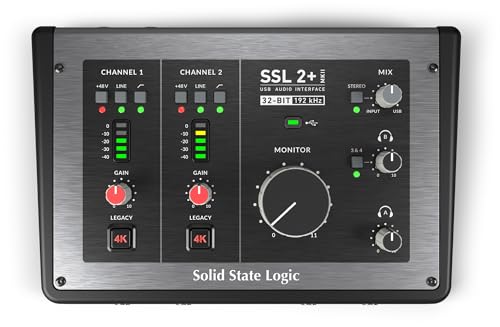
- Two XLR mic preamps
- Two discrete headphone outputs
- Stereo loopback and zero-latency monitoring
Best For: Computer-based two-person interviews
Best Dante Interview Interface

- Four XLR inputs for multi-mic interviews
- Dante and AES67 low-latency transmission
- PoE or USB-C power options
Best For: Dante-based interview and broadcast installations
Best USB-C Interview Interface

- Two combo mic and line inputs
- 24-bit/192 kHz recording capability
- USB-C and zero-latency monitoring
Best For: Two-person podcasts and computer-based interviews
Best Portable Interview Interface
PIYONE Q28 2x2 USB-C Interface

- Two combo XLR/TRS inputs with phantom power
- 24-bit/192 kHz high-resolution recording
- USB-C bus power and loopback monitoring
Best For: Portable two-mic interviews and mobile content creation
USB-to-Dante Bridge – Compact Network Interview Interface
The ToVi Dante USB to Network Audio Adapter is a practical choice among audio-over-IP interfaces for interviews when you need to connect a computer or USB audio source to a Dante network. It supports two-channel, 24-bit audio at 44.1, 48, or 96 kHz, with analog microphone input and speaker output functionality for flexible studio, broadcast, and live-sound setups.
Best For: Interview workflows that need USB connectivity to a Dante or AES67-compatible network.
Pros:
- Bridges USB audio devices with Dante networks in a compact form.
- Supports two-channel, 24-bit audio and sampling rates up to 96 kHz.
- Offers analog microphone input and speaker output support.
- Plug-and-play design with dual power options and a one-year warranty.
Cons:
- Designed for Windows according to the supplied specifications.
- Two-channel capacity may be limiting for larger interview productions.
Choose this adapter when your interview system is centered on USB devices but needs Dante network routing. Its small footprint and AES67 compliance add flexibility, though larger or more platform-diverse setups may require another interface.
Analog IP Encoder – Direct RCA Streaming Encoder
The Instreamer converts analog audio from RCA line inputs into streams carried over an IP network, making it one of the more direct audio-over-IP interfaces for interviews. It supports MP3 encoding up to 192 or 320 kbps, along with G.711, uLaw, aLaw, and 16-bit PCM formats across several sample rates.
Best For: Interview installations that need to place an analog line-level feed onto an Ethernet network.
Pros:
- Encodes RCA analog audio for streaming over IP networks.
- Supports MP3, G.711, uLaw, aLaw, and 16-bit PCM formats.
- Offers both constant and variable bitrate MP3 encoding up to 320 kbps.
- Includes a 10/100 Mbps RJ45 connection with link and activity LEDs.
Cons:
- Uses RCA line inputs rather than a dedicated microphone input.
- Its listed Ethernet interface is 10/100 Mbps.
- Requires the supplied 5V power adapter rather than network power.
The Instreamer fits a straightforward analog-to-network role and provides broad codec and sample-rate support. It is best paired with an existing mixer or preamp that delivers a suitable RCA line-level interview feed.
Dante Monitoring Station – PoE Headphone and Line Interface
The Focusrite RedNet AM2 is a Dante headphone amplifier and line-out interface for monitoring networked interview audio. It provides monitor-quality conversion, independent headphone and line-out controls, a mute switch, and either Power over Ethernet or included power-supply operation.
Best For: Interview studios, control rooms, or stage positions that need Dante monitoring with headphones and line output.
Pros:
- Provides headphone and line-out monitoring for Dante networks.
- Can drive high-impedance headphones at substantial levels.
- Offers independent headphone and line-out volume controls.
- Supports PoE or the included power supply and includes a three-year warranty.
Cons:
- Functions primarily as a monitoring and output interface rather than a microphone input device.
- Requires a Dante-compatible system and supported Focusrite software environment.
For interview workflows where reliable monitoring matters more than direct mic connection, the RedNet AM2 is a strong network endpoint. Its PoE support can simplify placement, while the separate output controls help accommodate headphones and external speakers.
Analog Dante Encoder – Two-Channel PoE Network Input
The ToVi Dante Analog Audio Encoder converts two channels of balanced or unbalanced analog audio into Dante or AES67 streams. For interview systems using a mixer, preamp, or other analog source, its selectable gain settings and 24-bit support help match different signal levels before sending audio across standard Ethernet.
Best For: Two-channel interview feeds that need flexible analog input and Dante/AES67 network distribution.
Pros:
- Converts two-channel analog audio to Dante and AES67 network streams.
- Accepts balanced and unbalanced sources with three selectable gain levels.
- Supports 24-bit audio at 44.1, 48, and 96 kHz.
- Offers single-cable PoE operation or optional 12V DC power.
Cons:
- Provides analog inputs rather than a direct USB interface.
- Limited to two input channels.
- Requires suitable Dante/AES67 network equipment for routing and reception.
This encoder is a flexible fit when interview audio begins as an analog signal and must be distributed digitally. Gain selection and PoE simplify installation, while the two-channel design keeps it focused on compact interview and AV systems.
Best Dante Interview Hub – Focusrite RedNet X2P
The Focusrite RedNet X2P is a focused choice among audio-over-IP interfaces for interviews, combining Dante networking with two microphone preamps. Its Ethernet connection, stereo headphone amplifier, and stereo line output suit interview setups that need networked audio and straightforward monitoring.
Best For: Interview recording and remote production setups needing two XLR inputs, Dante connectivity, and headphone monitoring.
Pros:
- Provides a 2×2 Dante audio interface over Ethernet.
- Includes two Red Evolution microphone preamps for XLR sources.
- Offers a stereo headphone amplifier and stereo line output.
- Supports sample rates up to 96 kHz.
Cons:
- Its two-channel design may be limiting for larger interview panels.
- Windows is the only supported operating system listed in the supplied details.
Choose the RedNet X2P when a compact two-input Dante interface is more important than a larger channel count or broader stated operating-system support.
Best Reference-Quality Dante Option – ESI planet 22c
The ESI planet 22c brings Dante networking and 24-bit/96kHz conversion to interview workflows. With four channels, TRS input support, compatibility with major DAWs, and operation on Windows and macOS, it is a flexible option for audio-over-IP interfaces for interviews.
Best For: Interview, live-sound, recording, and audio-measurement applications that need a four-channel Dante interface.
Pros:
- Uses a Dante IP audio network over Ethernet-based infrastructure.
- Provides four channels with 24-bit/96kHz converters.
- Supports Windows and macOS.
- Works with all major DAWs according to the supplied details.
Cons:
- TRS is the listed audio-input format, so users should verify source and cabling compatibility.
- The supplied notes do not specify microphone preamp features or headphone outputs.
The planet 22c is a strong fit when four-channel Dante connectivity and broad computer compatibility matter more than dedicated microphone-preamp or headphone features.
Best USB Interview Production Interface – SSL 2 MKII Plus
The Solid State Logic 2 MKII Plus is a USB-C interface rather than a Dante unit, but it can suit interview production when a direct computer connection is preferred. It includes two XLR mic preamps, two headphone outputs, loopback, zero-latency monitoring, and MIDI I/O for a capable Mac or Windows workstation setup.
Best For: Producers and podcasters who want a bus-powered, two-mic USB-C interface with separate headphone monitoring and stereo loopback.
Pros:
- Includes two XLR microphone preamps and two 1/4-inch line/Hi-Z inputs.
- Provides two discrete headphone outputs and four 1/4-inch line outputs.
- Offers stereo loopback and zero-latency monitoring.
- Supports 32-bit/192kHz AD/DA conversion and operates with Windows and macOS.
Cons:
- Uses USB-C rather than Dante or another audio-over-IP connection.
- Its two-mic input count may not suit larger interview groups.
Pick the SSL 2 MKII Plus when your interview workflow centers on a local computer, multiple headphone listeners, and loopback rather than networked Dante routing.
Best Dante Interview Interface – Four-Channel XLR Network Box
For audio-over-IP interfaces for interviews, the MAXSQUARE MSQ-3900D is a strong fit when you need to place up to four analog XLR sources directly onto a Dante network. Its uncompressed, low-latency Dante and AES67 support suits professional interview, broadcast, and production setups.
Best For: Multi-microphone interview rooms, networked production spaces, and installations using Dante-enabled equipment.
Pros:
- Four 3-pin XLR inputs accommodate multiple microphones or analog sources.
- Supports 44.1, 48, and 96 kHz sample rates.
- Offers Dante and AES67 RTP transmission for uncompressed, low-latency audio.
- PoE and USB-C power options simplify installation flexibility.
Cons:
- Requires a Dante-compatible network workflow rather than a simple USB connection.
- Its four-input design may be more than needed for a basic two-person interview.
The MSQ-3900D is best when scalable network audio and multiple XLR inputs matter more than portability. Its aluminum housing, certifications, one-year warranty, and lifetime technical support add reassurance for demanding installations.
Best USB-C Interview Interface – M-Audio M-Track Duo HD
Among audio-over-IP interfaces for interviews, the M-Audio M-Track Duo HD is the practical choice for creators recording into a computer or mobile device rather than directly onto a Dante network. Its two combo inputs, USB-C connection, and zero-latency monitoring support straightforward podcast and interview production.
Best For: Two-person podcasts, home interviews, live streams, and creators using a modern computer or iOS/Android device.
Pros:
- Two combo inputs accept microphones, instruments, or line-level sources.
- 24-bit/192 kHz resolution supports detailed recordings.
- USB-C connectivity works with Windows, macOS, iOS, and Android devices.
- Includes a headphone output with independent level control and direct/USB monitoring.
Cons:
- It is a USB audio interface, not a Dante or AES67 network interface.
- Two inputs limit the number of simultaneous interview microphones.
The M-Track Duo HD is a sensible desktop option for interviewers who want a simple two-input recording setup with high-resolution capture. The bundled software also gives new creators tools for podcasting and production.
Best Portable Interview Interface – PIYONE Q28 2×2 USB-C Interface
For creators comparing audio-over-IP interfaces for interviews, the PIYONE Q28 offers a compact USB-C alternative for direct recording to a computer or mobile setup. Its two combo inputs, loopback function, and direct monitoring are useful for interviews, streaming, and portable content creation.
Best For: Mobile interview creators, home studios, and two-microphone recording setups using Mac, PC, or compatible mobile devices.
Pros:
- Two XLR/TRS combo inputs support microphones and other sources.
- 24-bit/192 kHz recording provides high-resolution capture.
- USB-C carries data and bus power, with no drivers required for Mac and PC.
- Direct monitoring, monitor mix, loopback, and a 3.5 mm headphone jack support flexible monitoring.
Cons:
- It connects by USB rather than Dante or another dedicated audio-over-IP protocol.
- Two channels may not cover larger panel interviews.
- The supplied operating-system details specifically identify Windows, so mobile compatibility should be confirmed for your setup.
The Q28 is appealing when portability and simple one-cable operation are priorities. Its phantom power, Hi-Z capability, and loopback features make it versatile for interviews that also include instruments, streaming, or remote-content workflows.
How We Picked the Best Audio-Over-IP Interfaces for Interviews
We focused on connection type, microphone compatibility, channel count, monitoring options, power requirements, and practical deployment. The selection includes dedicated Dante and AES67 devices for networked audio, plus USB interfaces that may suit simpler interview rigs or hybrid workflows.
For interviews, dependable gain control and straightforward monitoring matter as much as headline specifications. We also considered whether each device is best suited to a fixed studio, portable production kit, broadcast network, or computer-based recording setup.
Quick Comparison
| Type | Best suited to | Main advantage |
|---|---|---|
| Dante or AES67 adapter | Existing networked audio systems | Routes audio over Ethernet |
| PoE Dante interface | Studios and broadcast installations | One-cable network connectivity and power |
| Network encoder | Sending analog sources to an IP system | Converts microphones or line sources for network use |
| USB-C interface | Computer and mobile recording | Simple direct connection and broad compatibility |
Key Buying Factors for Audio-Over-IP Interfaces for Interviews
Network Standard and Compatibility
Check whether your mixer, computer, and recording software support Dante, AES67, or another network-audio protocol. Dante devices generally require compatible software or hardware, while AES67 support can be important when integrating different IP-audio ecosystems.
Inputs, Preamps, and Phantom Power
Count the microphones you need to connect, including a host, guest, and backup source. XLR inputs with clean preamps and 48V phantom power are important for condenser microphones and many active direct boxes. Combo inputs add flexibility for line-level and instrument sources.
Monitoring and Latency
Look for headphone outputs, line outputs, direct monitoring, and adjustable routing. Network latency depends on the device, switch, computer, and system configuration, so confirm that the interface supports the timing requirements of live interviews and talkback.
Power, Portability, and Setup
PoE can simplify installations by carrying power and data over one Ethernet cable, but it requires a suitable PoE switch or injector. USB-powered models are often easier for mobile interviews. Also check the enclosure, connectors, mounting options, and whether the device needs a dedicated computer or controller.
Recording Resolution and Software
Higher sample rates and bit depth can be useful, but compatibility and reliable operation are usually more important for spoken word. Confirm driver support, operating-system compatibility, channel routing, and software requirements before buying.
Who Should Buy Which Audio-Over-IP Interfaces for Interviews?
Choose a Dante or AES67 adapter when you already have microphones or analog equipment and need to place those sources on an existing audio network. A dedicated encoder is a strong fit for fixed installations, remote contribution, or sending analog interview feeds to a central mixer.
Choose a PoE-enabled Dante interface when clean cabling and network-based control are priorities in a studio or broadcast environment. Select a USB-C interface when you record directly to a laptop, tablet, or phone and do not need network routing. For two-person interviews, prioritize at least two microphone-capable inputs, independent monitoring, phantom power, and simple gain adjustment.