
A good interview recorder captures clear speech without making you manage settings while someone is talking. The right choice depends on where you record, how you plan to use the audio, and whether you need a transcript afterward.
These 10 options span straightforward pocket recorders, AI-assisted note takers, and a two-channel XLR recorder. Use the guide below to narrow the field by workflow rather than storage claims alone.
Best 10 Audio Recorder for Interviews Picks for 2026
Best for Long Recording Days
Comulytic Note Pro AI Voice Recorder

- 45-hour stated recording life
- Free unlimited basic transcription
- 64GB storage and Wi-Fi transfer
Best For: Long interview days with AI-assisted notes
Best for Mixed Interview Formats
Plaud Note Pro AI Voice Recorder
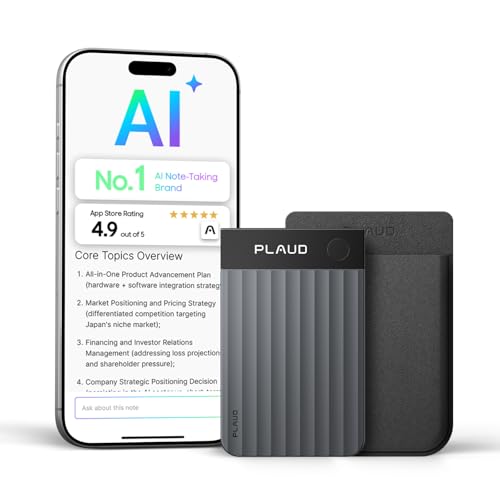
- Records calls and in-person audio
- 112-language transcription
- 300 free transcription minutes monthly
Best For: Interviews across calls, rooms, and online meetings
Best for One-Switch Recording
Tonfarb 64GB Digital Voice Recorder

- Starts recording from power-off
- 64GB TF card included
- MP3 and high-bitrate WAV options
Best For: Simple, subscription-free interview capture
Best for Reviewing Recordings
EVISTR L357 64GB Voice Recorder

- A-B repeat and variable-speed playback
- Seven adjustable gain levels
- Time-stamped files and Type-C transfer
Best For: On-device interview playback and file organization
Best for External Mics

- Two locking XLR/TRS inputs
- 32-bit float recording up to 96 kHz
- OLED waveform display
Best For: Two-source interviews with external microphones
Best for Long Sessions

- 128 GB onboard storage
- Up to 54 hours of continuous recording
- Voice activation and four file folders
Best For: Long interviews with plenty of onboard storage
Best for Simple Controls

- Dedicated REC, STOP, and PLAY buttons
- Built-in mic and speaker
- More than 30 hours of stated recording time
Best For: Quick interviews with easy on-device playback
Best for Mobile Transfers
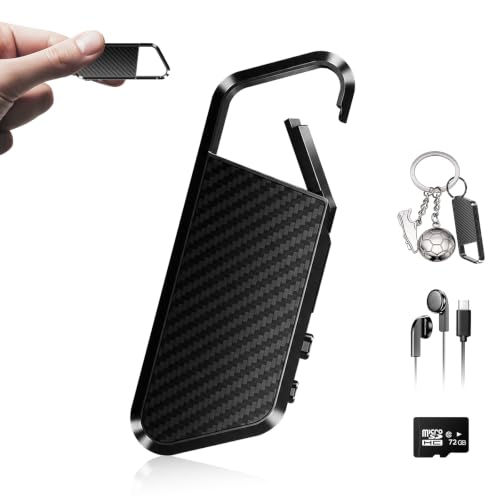
- 72GB built-in storage
- OTG phone and tablet transfers
- Voice activation and playback
Best For: Interviewers transferring recordings to mobile devices
Best for Playback Review

- A-B repeat and speed control
- WAV and MP3 recording
- Up to 20 hours recording
Best For: Interviewers reviewing specific passages
Best for Quick Starts

- One-touch record and save
- Includes a 64GB TF card
- Over 22 hours rated recording
Best For: Interviewers needing fast starts and removable storage
Best for Long Recording Days – Comulytic Note Pro AI Voice Recorder
If you need an audio recorder for interviews that also helps turn conversations into notes, the Comulytic Note Pro pairs one-tap recording with app-based transcription and summaries. Its slim magnetic design makes it easy to keep close at hand.
Best For: Interviewers who want long battery life and AI-assisted notes without a required paid plan for basic transcription.
Pros:
- Free Starter Plan includes unlimited transcription and basic summaries.
- Triple-mic array with AI noise reduction is designed to capture speech within 5 meters.
- Offers 45 hours of continuous recording, 64GB of local storage, and Wi-Fi transfers to the app.
Cons:
- Deep Dive Analysis and the AI assistant require an optional Premium subscription.
- Cloud sync and storage depend on the plan.
The generous stated battery life and included basic transcription suit full days of interviews. Check whether the free features cover your workflow before budgeting for Premium.
Best for Mixed Interview Formats – Plaud Note Pro AI Voice Recorder
The Plaud Note Pro is an audio recorder for interviews that span in-person conversations, phone calls, and online meetings. It combines automatic call/in-person mode switching with app-based transcription, speaker labels, and structured follow-ups.
Best For: Professionals who interview across multiple formats and want recordings organized into actionable notes.
Pros:
- Four MEMS microphones, one VPU microphone, and AI beamforming are designed to capture voices across a room.
- Transcribes in 112 languages with speaker labels and generates action items and summaries.
- Free Starter Plan includes 300 minutes of AI transcription per month; Plaud Desktop covers online meetings without a bot.
Cons:
- The free plan’s 300-minute monthly transcription allowance may be limiting for frequent interviews.
- No headphone jack is listed.
This is a strong fit when interviews move between a room, a call, and a computer. Factor in the monthly transcription allowance, and get participants’ permission before recording.
Best for One-Switch Recording – Tonfarb 64GB Digital Voice Recorder
For an audio recorder for interviews that works without an AI subscription, the Tonfarb focuses on quick capture and local files. Sliding its side control starts recording even when the device is powered off; sliding it back saves the recording.
Best For: Interviewers who prioritize simple controls, long sessions, and direct access to MP3 or WAV files.
Pros:
- One-switch start and save helps with time-sensitive interviews.
- Includes a 64GB TF card and supports up to 48 hours of continuous recording under the stated MP3 setting.
- Offers up to 1536kbps PCM WAV recording, voice activation, password protection, and USB transfer.
Cons:
- No transcription or AI summaries are listed.
- The stated 48-hour recording figure is tied to MP3 at 32kbps, not high-bitrate WAV.
Choose this model if dependable, straightforward capture matters more than automated notes. For longer interviews, check your chosen format and available storage before you begin.
Best for Reviewing Recordings – EVISTR L357 64GB Voice Recorder
The EVISTR L357 is an audio recorder for interviews that balances straightforward capture with useful playback controls. Its dedicated record and save buttons, adjustable recording gain, and time-stamped filenames help you collect and sort conversations.
Best For: Interviewers who expect to review audio on the recorder and transfer organized files to a computer.
Pros:
- Records MP3 or WAV, with up to 1536kbps stereo recording and seven gain levels.
- Supports A-B repeat, rewind, and variable-speed playback for reviewing answers.
- Provides 64GB of storage, time-stamped filenames, and Type-C transfer to Windows or Mac.
Cons:
- No automatic transcription or summaries are listed.
- Voice-activated recording requires sensitivity adjustment and may be less suitable when pauses matter.
The playback tools are especially handy for checking quotes without immediately moving files to a computer. For a complete interview record, use continuous recording rather than voice activation.
Best for External Mics – Zoom H1 XLR
If your audio recorder for interviews needs to work with separate microphones, the Zoom H1 XLR offers two locking XLR/TRS inputs in a compact, 6.4-ounce unit. It records 32-bit float audio at up to 96 kHz and shows waveforms on its OLED display.
Best For: Interviewers who already use external microphones and want two XLR/TRS connections.
Pros:
- Two locking XLR/TRS inputs accommodate separate mic sources.
- 32-bit float recording and an OLED waveform display help with capture and monitoring.
- Headphone output and SDXC support up to 1 TB suit longer sessions.
Cons:
- No built-in microphone is listed, so plan on using an external source.
- Requires two AA batteries.
Choose this for a flexible mic-based interview setup; for quick recording without connecting equipment, a built-in-mic recorder is simpler.
Best for Long Sessions – EVIDA 128GB Voice Recorder
For an audio recorder for interviews that does not require a separate microphone, this EVIDA model pairs a built-in mic with 128 GB of storage. It offers MP3 and WAV recording options, playback, and up to 54 hours of continuous recording on a full battery, according to the supplied specifications.
Best For: Interviewers who want substantial onboard storage and long battery life in a standalone recorder.
Pros:
- 128 GB of storage leaves room for many recordings.
- Voice activation has six adjustable detection levels.
- Four folders, bookmarks, and password protection help manage files.
Cons:
- The listed microphone operation is mono.
- No headphone jack is listed for private monitoring.
This is a practical pick for extended conversations and organized file keeping, though its lack of a listed headphone jack may matter if you need to monitor privately.
Best for Simple Controls – Sunlan 16GB Voice Recorder
If you want an audio recorder for interviews with straightforward controls, this Sunlan model has dedicated REC, STOP, and PLAY buttons, a built-in microphone, and a speaker for playback. Its 16 GB capacity and stated recording time of more than 30 hours cover many everyday sessions.
Best For: Interviewers who prioritize quick recording and playback without connecting an external mic.
Pros:
- Dedicated buttons make recording and playback easy to start.
- Voice activation can pause recording when no sound is detected.
- USB file transfer and a 3.5 mm headphone jack add convenience.
Cons:
- 16 GB of storage is less than the EVIDA recorder’s listed 128 GB.
- The listed microphone operation is mono.
It fits a grab-and-go interview workflow, especially if immediate playback matters more than large storage capacity or external-mic connections.
Best for Mobile Transfers – NekSide 72GB Voice Recorder
If you need an audio recorder for interviews that is easy to carry and can transfer files to a phone or tablet, this NekSide model is worth considering. It combines 72GB of built-in storage with voice activation, playback, and DSP 6.0 noise reduction.
Best For: Interviewers who want generous storage and direct mobile file transfers.
Pros:
- 72GB built-in storage reduces the need to clear files frequently.
- OTG support allows direct transfers to compatible phones or tablets.
- Voice activation and onboard playback help with capture and review.
Cons:
- Records in WAV by default; MP3 requires conversion on a computer.
- Listed microphone operation is mono, not stereo.
Its strongest appeal is a portable, storage-heavy workflow with mobile transfer. Check device compatibility before relying on OTG in the field.
Best for Playback Review – HoTiyan 16GB Voice Recorder
For an audio recorder for interviews that makes it easy to revisit key remarks, the HoTiyan offers A-B repeat, variable playback speed, and timestamped file names. It records in WAV or MP3 and uses a built-in stereo microphone.
Best For: Interviewers who regularly replay specific passages while reviewing recordings.
Pros:
- A-B repeat and adjustable playback speed support focused listening.
- Records in WAV or MP3, with files transferable by the supplied Micro USB cable.
- Rated for up to 20 hours of continuous recording per charge.
Cons:
- Voice activation must be configured before use.
- Storage is limited to 16GB and up to 199 recording files.
This is a practical pick if playback controls matter more to you than maximum storage. Set the voice-activation threshold before an important interview if you plan to use it.
Best for Quick Starts – NekSide One-Touch Recorder
When an interview starts unexpectedly, this audio recorder for interviews emphasizes one-touch recording and saving without first switching on the power. It pairs 8GB of internal storage with an included 64GB TF card and offers USB-C charging.
Best For: Interviewers who prioritize starting a recording quickly and using removable storage.
Pros:
- One-touch controls simplify starting and saving recordings.
- Included 64GB TF card can be removed or exchanged.
- Rated for over 22 hours of continuous recording and supports recording while charging.
Cons:
- Only 8GB of the stated 72GB capacity is internal; the rest comes from the included card.
- Listed recording format is WAV.
Choose this model for fast operation and flexible card-based storage. Its product notes conflict on some specifications, including microphone count, so verify those details if they are critical to your setup.
How We Picked the Best Audio Recorder for Interviews
We organized the selected products by the jobs they are designed to handle: quick voice capture, longer meetings, AI-assisted notes, and recordings made with external microphones. We prioritized practical distinctions visible in the product descriptions, such as playback, voice activation, stated storage capacity, transcription features, and XLR inputs. Those specifications are a starting point, not proof of recording quality. We did not treat advertised recording hours, noise-reduction labels, or AI features as independently verified performance results.
Quick Comparison: Which Type Fits Your Interview?
For convenient notes: Comulytic Note Pro and Plaud Note Pro focus on AI transcription and summaries. Check how each handles audio export, subscriptions, and consent before relying on it for reporting.
For a standalone pocket recorder: Tonfarb, EVISTR, EVIDA, and the listed 16GB and 72GB voice recorders emphasize built-in storage and features such as playback or voice activation. Compare their controls and file-transfer methods, not just capacity.
For an external-microphone setup: The Zoom H1 XLR is the relevant option here if your interview plan calls for XLR microphones. Budget for compatible microphones, cables, and a setup that suits your location.
Key Buying Factors for an Audio Recorder for Interviews
Microphone Setup and Recording Environment
For a quiet, face-to-face conversation, a recorder’s built-in microphones may be sufficient if you can place it close to both speakers. In a noisy room or across a table, microphone position often matters more than a large storage figure. If you need separate or closer microphones, look at input compatibility and the complete kit you will carry.
File Access, Monitoring, and Backup
Check the recording format, how files move to your phone or computer, and whether you can listen during or immediately after a session. Test-record and play back a short clip before every important interview. Confirm the available power source and free storage, then keep a second recording method for high-stakes conversations.
Automation, Transcripts, and Privacy
Voice activation can save space but may miss quiet openings or pause during soft speech; continuous recording is usually safer when every word matters. AI transcripts can speed up note-taking, but names and quotations still need checking against the audio. Review any cloud-processing terms and recording-consent requirements before using these tools with a source.
Who Should Buy Which Audio Recorder for Interviews?
Choose an AI-focused device if searchable notes and summaries are your priority and its processing terms fit your work. Choose a basic digital voice recorder if you want a self-contained device for meetings or casual interviews; favor simple controls and easy file retrieval over the biggest advertised capacity. Choose the Zoom H1 XLR if external microphones are central to your workflow. Whatever you buy, run a full practice session in a similar room before recording an interview you cannot repeat.