
A good audio interface should fit the way you record—not just the space on your desk. Behringer’s range spans simple microphone-and-instrument setups, compact two-channel interfaces, ready-to-use bundles, and expandable multitrack units.
These 10 listings cover several distinct models as well as duplicate and bundled versions. Use the comparisons below to identify the features you need, then check what each listing actually includes.
Best 10 Behringer Audio Interface Picks for 2026
Simple Solo Setup

- Midas-designed mic preamp
- Direct monitoring and USB power
- One combo input plus instrument input
Best For: Solo vocals and instrument recording
Flexible Studio Connections
UMC204HD with Headphone Adapter

- Two Midas-equipped combo inputs
- MIDI ports and processor inserts
- Includes 3.5 mm headphone adapter
Best For: Recording with MIDI gear or outboard processors
Two-Mic Recording Pick

- Two Midas mic preamps
- 24-bit/192 kHz recording
- Metal chassis and direct monitoring
Best For: Two-input home recording
All-in-One Starter Bundle

- Interface, mic and headphones included
- Two-channel USB interface
- Designed for recording and podcasting
Best For: First-time home recording or podcasting
Four-Input Recording Pick
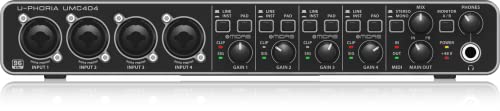
- Four inputs and four outputs
- Four Midas mic preamps
- MIDI I/O; up to 24-bit/192 kHz
Best For: Multi-source recording with MIDI gear
Solo Recording Pick

- Two-channel USB interface
- XENYX mic preamp
- USB-powered with direct monitoring
Best For: Portable solo recording
Audio-and-MIDI Pick
Behringer U-PHORIA UMC404HD Audio/MIDI

- Four Midas-designed mic preamps
- Four-in/four-out audio and MIDI I/O
- Metal chassis; up to 24-bit/192 kHz
Best For: Multi-source audio and MIDI recording
For Multi-Input Recording

- Eight Midas-designed mic preamps
- 18x20 I/O with ADAT and MIDI
- 24-bit/96 kHz recording
Best For: Multi-mic recording setups
For Compact Recording

- Two combination XLR/TRS inputs
- 24-bit/192 kHz converters
- Direct monitoring and headphone control
Best For: Solo or two-source recording
For Mixed-Signal Setups

- Analog, S/PDIF, ADAT, and MIDI
- 18x20 USB audio/MIDI interface
- 24-bit/96 kHz support
Best For: Setups combining analog and digital signals
Simple Solo Setup – Behringer UMC22
If you need a straightforward behringer audio interface for recording yourself, the UMC22 offers a mic/instrument combo input and a separate instrument input in a USB-powered unit. Its Midas-designed mic preamp and direct monitoring cover the basics without a complicated setup.
Best For: Solo musicians recording vocals and an instrument on a Mac or Windows computer.
Pros:
- Midas-designed mic preamp and +48V phantom power for compatible microphones.
- Direct Monitor switch and headphone output help you hear your performance while recording.
- USB-powered design and two 1/4-inch monitor outputs simplify a compact setup.
Cons:
- 48 kHz recording ceiling is lower than the 192 kHz models in this roundup.
- Only one of its two inputs is a mic/instrument combo jack.
Choose the UMC22 when ease of use matters more than higher sample rates or a second mic input.
This behringer audio interface bundle pairs the UMC204HD with an adapter for headphones that have a 3.5 mm plug. Two Midas-equipped combo inputs, 24-bit/192 kHz recording, MIDI ports and insert points make it a practical choice if your setup includes more than microphones.
Best For: Home recordists who want two mic inputs plus connections for MIDI gear or outboard processors.
Pros:
- Two combo inputs with Midas mic preamps and +48V phantom power.
- Direct monitoring lets you hear inputs without software-monitoring delay.
- MIDI In/Out, insert points and an included 1/4-inch-to-3.5 mm headphone adapter add flexibility.
Cons:
- Its extra ports may be unnecessary for a simple vocal-and-instrument setup.
- The included headphone adapter is only useful if your headphones need that plug conversion.
The UMC204HD earns its place when you will use its expanded connectivity; otherwise, a simpler two-input unit may be enough.
For buyers comparing a behringer audio interface with two mic preamps, the UMC202HD offers 24-bit/192 kHz recording in an impact-resistant metal chassis. Phantom power, a headphone level control and selectable direct monitoring round out its recording-focused feature set.
Best For: Recording two microphones or instruments when MIDI and processor inserts are not priorities.
Pros:
- Two Midas mic preamps and support for phantom power.
- Up to 24-bit/192 kHz recording.
- Metal chassis, dedicated headphone level control and Direct Monitor switch.
Cons:
- The supplied features do not list MIDI ports or processor inserts.
- Microphone and headphones are not listed as included accessories.
This is the more focused option if you want two mic-capable inputs and high-resolution recording without shopping for extra routing features.
If you are starting from scratch, this behringer audio interface bundle brings together a USB interface, condenser microphone and studio headphones. It is aimed at home recording and podcasting without requiring you to source those core pieces separately.
Best For: New podcasters and home recordists who need an interface, microphone and headphones together.
Pros:
- Includes a USB audio interface, condenser microphone and studio headphones.
- Two-channel interface supports a small recording setup.
- Supports up to 192 kHz sampling and works with most popular DAWs, according to the supplied details.
Cons:
- The supplied details do not specify the included interface’s input types or mic preamps.
- The listed operating system is Windows; Mac compatibility is not specified.
The bundle’s appeal is convenience. If you need particular ports or confirmed compatibility beyond the listed details, check the package specifications before buying.
Four-Input Recording Pick – Behringer U-PHORIA UMC404HD
Behringer U-PHORIA UMC404HD 4x4 USB Audio Interface, 24-Bit/192kHz, with 4 Midas Mic Preamps
Check Price On AmazonIf you need to record several sources at once, this Behringer audio interface offers four inputs and four outputs, four Midas mic preamps, and up to 24-bit/192 kHz recording. MIDI I/O adds a connection for compatible gear.
Best For: Musicians recording multiple microphones or instruments alongside MIDI equipment.
Pros:
- Four preamps support multi-source sessions.
- Up to 24-bit/192 kHz resolution.
- MIDI I/O expands connection options.
Cons:
- At 2.7 pounds, it is less portable than the UM2 listed here.
- Four inputs may be more than a solo recorder needs.
Choose this model when its extra inputs and MIDI connection will see regular use; otherwise, a smaller interface may be simpler.
Solo Recording Pick – Behringer U-PHORIA UM2
For a compact Behringer audio interface, the UM2 pairs a XENYX mic preamp with USB-powered operation and up to 48 kHz recording. Its direct-monitor switch helps you hear your performance while tracking.
Best For: Solo musicians recording a microphone or instrument on a Mac or Windows computer.
Pros:
- Compact, 9.12-ounce design is easy to move.
- Direct monitoring and a headphone output support tracking.
- USB power avoids a separate power supply.
Cons:
- 48 kHz maximum sample rate is lower than the UMC404HD’s listed 192 kHz.
- Two-channel design offers less room for simultaneous sources than a four-channel model.
The UM2 makes the most sense if portability and straightforward solo recording matter more to you than additional channels.
Audio-and-MIDI Pick – Behringer U-PHORIA UMC404HD Audio/MIDI
This Behringer audio interface combines four inputs and four outputs with MIDI I/O, four Midas-designed mic preamps, and up to 24-bit/192 kHz resolution. Its metal chassis is worth noting if your setup involves moving gear between sessions.
Best For: Musicians who want to record multiple sources and connect MIDI gear through one interface.
Pros:
- Four mic preamps include +48 V phantom power.
- Four-in/four-out audio plus MIDI I/O suits varied setups.
- Impact-resistant metal chassis.
Cons:
- At 2.7 pounds, it is heavier than the UM2 listed here.
- A four-channel setup may be unnecessary for basic solo recording.
Pick this listing when you need its combination of microphone inputs, MIDI connectivity, and metal construction rather than a smaller two-channel setup.
For Multi-Input Recording – Behringer UMC1820 18×20
If you need a behringer audio interface for recording several microphones and instruments, the UMC1820 offers eight Midas-designed mic preamps, 18 inputs, 20 outputs, and ADAT I/O. It supports 24-bit/96 kHz audio and connects to a computer over USB 2.0.
Best For: Recording setups that need multiple mic inputs and room to connect additional digital audio gear.
Pros:
- Eight Midas-designed mic preamps with +48 V phantom power.
- 18×20 I/O with ADAT expansion and MIDI connectivity.
- Compatible with popular recording software, including Pro Tools, Ableton Live, and Cubase.
Cons:
- Its extensive I/O may be unnecessary for a simple one- or two-source setup.
Choose this listing when input count is the priority. Its eight onboard preamps make it a more practical fit for multi-mic sessions than a compact two-input interface.
For Compact Recording – Behringer UMC202HD 2×2
The UMC202HD is a behringer audio interface for recording up to two microphones, instruments, or line-level sources through its combination XLR/TRS inputs. Its Midas-designed preamps, 24-bit/192 kHz converters, and USB 2.0 connection make it a straightforward option for a computer-based setup.
Best For: Solo recording or two-source sessions where simple direct monitoring matters.
Pros:
- Two flexible XLR/TRS inputs with Midas-designed mic preamps.
- Direct-monitor switch lets you hear inputs without computer-monitoring delay.
- Dedicated headphone level control and +48 V phantom power.
Cons:
- Two inputs limit how many sources you can record at once.
Pick the UMC202HD if two inputs cover your sessions. The direct-monitor switch is particularly useful when recording performances while listening through headphones.
For Mixed-Signal Setups – Behringer U-PHORIA UMC1820
This U-PHORIA UMC1820 listing is a behringer audio interface option for setups that combine analog connections with coaxial S/PDIF, optical ADAT, and MIDI. The supplied notes identify it as an 18×20 USB audio/MIDI interface with Midas mic preamps and 24-bit/96 kHz support.
Best For: Computer recording setups that need to use analog, S/PDIF, ADAT, and MIDI connections together.
Pros:
- Supports simultaneous use of analog, S/PDIF, ADAT, and MIDI signals.
- 18×20 interface with 24-bit/96 kHz support.
- Listed as compatible with popular software including Pro Tools, Ableton Live, and Cubase.
Cons:
- Its broad connection options add complexity if you only need a couple of inputs.
- It shares the UMC1820 model number with another listing here, so compare the listings carefully.
The appeal here is connection flexibility rather than a different model: it is another UMC1820 listing. Check the listing details against your planned analog and digital connections before choosing between the two.
How We Picked These Behringer Audio Interfaces
We organized the selected listings by recording needs: a basic voice or instrument setup, two simultaneous sources, four microphone inputs, and larger sessions that may need digital expansion. We also separated core interface choices from bundles and accessory listings. The 10 entries include repeated UMC202HD, UMC404HD, and UMC1820 models, so they do not represent 10 different interfaces. Compare the exact package contents and current specifications before buying.
Quick Comparison
UM2 and UMC22: Compact entry-level options for a simple mic-and-instrument setup. The UM2 lists a XENYX mic preamp; the UMC22 lists a Midas mic preamp. Both are listed at up to 48 kHz.
UMC202HD: A two-input choice for recording two microphones or other sources at once, with listed 24-bit/192 kHz capability. UMC204HD: Another two-input option; check its additional connections against the UMC202HD if MIDI or more flexible monitoring matters to you. One selected listing includes a headphone adapter.
UMC404HD: Four Midas mic preamps make it the more practical pick here for small groups or several microphones. UMC1820: An 18×20 interface with ADAT I/O for larger, expandable setups; verify the supported sample rate in the listing you choose, as the selected titles differ. U-PHORIA STUDIO bundle: A starter package with an interface, microphone, and headphones; confirm the included interface model before comparing it with a standalone unit.
Key Buying Factors for a Behringer Audio Interface
Count Inputs You Can Use at Once
The most useful number is how many sources you can record simultaneously. A solo vocal and guitar may fit a compact interface, while two microphones call for two suitable mic inputs. A four-person conversation generally needs four mic preamps, making the UMC404HD a clearer fit than a two-input model. An 18×20 channel count does not mean 18 microphones plug directly into the chassis; check the physical inputs and any equipment needed for expansion.
Check Connections, Monitoring, and the Package
Match your microphones, instruments, headphones, and speakers to the available jacks. If you use external MIDI gear or plan to add channels through ADAT, confirm those connections on the exact model. Look at direct-monitoring controls and headphone outputs if performers need to hear themselves while recording. Bundle contents and small accessories vary by listing, so do not pay extra for items you already own. Finally, confirm driver and operating-system compatibility with your computer before ordering.
Who Should Buy Which Behringer Audio Interface?
Choose the UM2 or UMC22 for a straightforward first setup; compare their input arrangements if you expect to record two microphones. Pick the UMC202HD for a compact two-mic workflow, or the UMC204HD if its connection options better suit your gear. Move to the UMC404HD for four microphone sources, and consider the UMC1820 for multitrack recording with room to expand. The U-PHORIA STUDIO bundle suits a buyer starting without a microphone or headphones, provided its included interface meets their input needs.