
When you’re looking for exceptional audio quality, boundary microphones can make a significant difference in various settings. Whether for corporate meetings, worship services, or virtual conferences, choosing the right model is essential. Each microphone offers unique features that cater to specific needs. Let’s explore the top contenders that promise crystal clear sound, ensuring you’re well-equipped for any audio challenge that comes your way.
Shure Centraverse CVB Boundary Microphone (CVB-B/O)

If you’re looking for a boundary microphone that excels in capturing clear sound for corporate meetings or worship services, the Shure Centraverse CVB Boundary Microphone (CVB-B/O) is an excellent choice. This omnidirectional condenser microphone features a low-profile design, making it perfect for discreet placement. With a frequency response of 20 kHz and a signal-to-noise ratio of 117 dB, it guarantees outstanding audio clarity. The included 12-foot XLR cable simplifies setup, though you will need phantom power for operation. Users praise its performance in various settings, making it an ideal option for enhancing sound in any professional environment.
Best For: Professionals seeking a reliable boundary microphone for corporate meetings, worship services, or other sound reinforcement applications.
Pros:
- Excellent audio clarity with a frequency response of 20 kHz and a high signal-to-noise ratio of 117 dB.
- Low-profile design allows for discreet placement in various settings.
- Comes with a 12-foot XLR cable for easy setup.
Cons:
- Requires phantom power (48V) for operation, which may not be available in all setups.
- Some users have reported mixed feedback on the quality of the included cable.
- Notable preference among users for detachable cables, which are not included.
Audio-Technica PRO44 Cardioid Condenser Boundary Microphone

The Audio-Technica PRO44 Cardioid Condenser Boundary Microphone stands out as an excellent choice for professionals seeking high-quality audio in settings like conference rooms, theaters, and classrooms. Its low-profile design and rugged construction guarantee durability while remaining unobtrusive. With a half-space unidirectional polar pattern, it captures crisp vocals from up to six feet away. You’ll appreciate the wide-range condenser element and self-contained electronics, eliminating the need for external power. Ideal for various applications, this mic provides exceptional sound quality for around $100, making it a top contender for anyone needing reliable performance without breaking the bank.
Best For: Professionals in need of a reliable and high-quality microphone for conferences, theater productions, and educational settings.
Pros:
- Exceptional sound quality with crisp vocal pickup and high sensitivity.
- Durable low-profile design suitable for various environments.
- Self-contained electronics eliminate the need for external power sources.
Cons:
- Some users prefer a side exit cable design over the rear exit.
- Not suitable for non-musical devices due to specific connection requirements.
- May require EQ adjustments when used in certain applications, like inside pianos.
MXL AC-404 USB Boundary Condenser Conferencing Microphone – Black
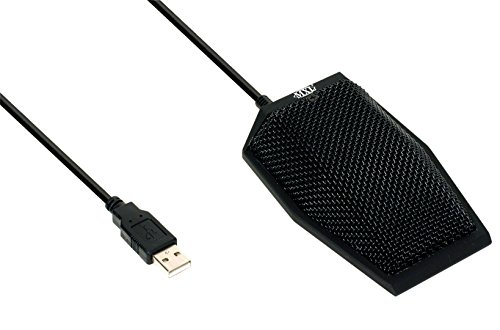
For professionals seeking reliable audio quality during virtual meetings, the MXL AC-404 USB Boundary Condenser Conferencing Microphone stands out. Its outstanding sound quality guarantees clear communication, even in noisy environments, making it ideal for Zoom web conferencing. You’ll appreciate its durable all-metal construction, designed to withstand frequent use. Additionally, the built-in headphone/speaker monitoring jack allows for real-time audio feedback, enhancing your conferencing experience. This microphone can effortlessly turn any location into a conference room, providing versatility for your needs. If you need more product details, they’re available upon request, assuring you’re fully informed before making a decision.
Best For: Professionals seeking reliable audio quality for virtual meetings and conferencing.
Pros:
- Outstanding sound quality even in noisy environments.
- Durable all-metal construction ensures longevity and reliability.
- Built-in headphone/speaker monitoring jack allows for real-time audio feedback.
Cons:
- Limited to USB connectivity, which may not suit all setups.
- May require additional adapters for compatibility with certain devices.
- Not portable for on-the-go use due to its boundary design.
Audio-Technica ATR4697-USB Omnidirectional Condenser Boundary Microphone

Designed with an omnidirectional pickup pattern, the Audio-Technica ATR4697-USB boundary microphone excels in capturing clear sound from all directions, making it an ideal choice for meetings and teleconferencing. Its 1.5 m cable, finished with a USB-C connector, provides easy compatibility with computers, tablets, and smartphones. You’ll appreciate the included USB-C to USB-A adapter, which enhances versatility. With full 360° coverage, you won’t miss a word, no matter where participants are seated. Plus, its rugged construction guarantees long-lasting performance, so you can depend on it for countless sessions without worrying about wear and tear.
Best For: Those seeking a reliable and high-quality microphone for meetings and teleconferencing across various devices.
Pros:
- Omnidirectional pickup pattern provides full 360° sound capture, ensuring clear audio from all directions.
- Versatile connectivity with USB-C and included USB-C to USB-A adapter allows compatibility with a wide range of devices.
- Rugged construction ensures durability and long-lasting performance for frequent use.
Cons:
- Limited cable length of 1.5 m may restrict positioning in larger rooms.
- Omnidirectional pattern may pick up unwanted background noise in noisy environments.
- USB-C connection may require additional adapters for older devices that do not support USB-C.
Shure Centraverse CVB Installed Sound Boundary Microphone (CVB-B/C)
Seeking a reliable microphone for your corporate events or worship services? The Shure Centraverse CVB-B/C boundary microphone might be exactly what you need. This cardioid condenser mic features a low-profile design that blends seamlessly into any setting, measuring just 4 x 2.5 x 6.5 inches. It includes a 12-foot XLR cable and requires phantom power for operation. With a frequency response of 20 kHz and a signal-to-noise ratio of 120 dB, you’ll capture crisp, clear audio. Ideal for podiums or desktops, it effectively minimizes feedback, making it perfect for panel discussions and school plays.
Best For: The Shure Centraverse CVB-B/C boundary microphone is best for corporate facilities, houses of worship, and educational settings needing discreet and effective audio reinforcement.
Pros:
- Excellent audio quality with a wide frequency response and high signal-to-noise ratio.
- Low-profile design allows for discreet placement on desks or podiums.
- Ideal for minimizing feedback in environments like panel discussions and school plays.
Cons:
- Some users have reported that its lightweight design can affect performance on tables.
- Feedback rejection could be improved in certain settings.
- Requires phantom power, which may necessitate additional equipment for some users.
MXL FR-401M Supercardioid Boundary Microphone, Black

The MXL FR-401M Supercardioid Boundary Microphone is an exceptional choice for performers and sound engineers who demand high-quality audio capture in various settings. With its three-capsule array and cardioid polar pattern, it effectively picks up sound from multiple directions while rejecting background noise. You’ll appreciate its impressive frequency response of 40Hz to 16kHz and a pickup range of 20-25 feet, making it ideal for stage performances, interviews, or studio recordings. Plus, the built-in 15-foot XLR cable and lightweight design enhance its portability. Just remember, it requires 48V phantom power for peak performance.
Best For: The MXL FR-401M Supercardioid Boundary Microphone is best for performers, sound engineers, and podcasters seeking high-quality audio capture in live and studio environments.
Pros:
- Excellent sound quality with effective off-axis noise rejection, ideal for capturing clear audio in various settings.
- Versatile applications, suitable for stage performances, interviews, studio recordings, and ambient sound capture.
- Lightweight and portable design with a built-in 15-foot XLR cable for easy setup and use.
Cons:
- Requires 48V phantom power, which may not be readily available for all users.
- Not recommended for beginners due to its specialty design; more suited for those with audio experience.
- Some users have reported issues with functionality and customer service related to returns.
SE Electronics BL8 Cardioid Boundary Microphone

For musicians looking to capture high-quality sound in challenging environments, the SE Electronics BL8 Cardioid Boundary Microphone stands out with its robust all-metal housing and exceptional sE8 capsule. Weighing 798 grams, this durable mic features a dent-proof grille, making it perfect for touring. Its switchable EQ, pre-attenuation pad, and low-cut filter provide versatility for various sound profiles. Ideal for kick drums and high SPL sources, it excels in ambience recording and acoustic piano use. With a signal-to-noise ratio of 72 dB and transformerless circuitry, you’ll enjoy clarity and headroom without distortion. Get ready to elevate your sound!
Best For: Musicians and sound engineers seeking a durable and versatile microphone for high-quality sound capture in live and studio environments.
Pros:
- Exceptional sound quality with renowned sE8 capsule for clarity and detail.
- Durable all-metal housing and dent-proof grille suitable for touring and challenging conditions.
- Versatile features including switchable EQ, pre-attenuation pad, and low-cut filter for tailored sound profiles.
Cons:
- Heavier than some other boundary microphones, which may affect portability.
- Limited to a cardioid pickup pattern, which may not suit all recording scenarios.
- Higher price point compared to entry-level boundary microphones, potentially limiting accessibility for beginners.
TONOR Conference USB Microphone for PC

When you need a reliable microphone for virtual meetings or remote training, the TONOR Conference USB Microphone for PC stands out with its omnidirectional capabilities. It captures subtle sounds from 360°, ensuring everyone’s voice is heard clearly. This microphone is perfect for small to medium meetings on platforms like Zoom and Skype. Plus, with its plug-and-play functionality, you can set it up effortlessly on both Windows and macOS. Its built-in mute button and blue indicator light offer convenient audio control. Designed with a sturdy metal construction, it’s both durable and space-efficient, making it an excellent choice for any setting.
Best For: The TONOR Conference USB Microphone is best for professionals and teams participating in virtual meetings, remote training, and video conferences who require clear audio capture.
Pros:
- Omnidirectional microphone captures sound from all directions, ensuring clear audio from multiple speakers.
- Plug & Play functionality makes it easy to set up without needing additional drivers.
- Durable metal construction with an anti-slip base provides stability and longevity.
Cons:
- Not suitable as a speaker or speakerphone, limiting its functionality to audio capture only.
- Pickup distance is limited to approximately 11.5 ft, which may not suffice for larger meeting spaces.
- Requires selection as the INPUT device in settings if unresponsive, which may be inconvenient for some users.
CM11B Omnidirectional Boundary Microphone, B Stock

Ideal for professionals in boardrooms and conference settings, the CM11B Omnidirectional Boundary Microphone delivers exceptional sound clarity with its 180-degree pickup pattern. Weighing just 6.8 ounces, this compact mic is made of durable plastic and metal, ensuring solid construction. It supports 9-52v phantom power, making it versatile for various setups. Users appreciate its clear audio quality, especially in group discussions and hybrid meetings. While the included 30-foot cable may be lengthy for smaller rooms, it’s perfect for larger spaces. Just keep in mind some feedback regarding cable quality. Overall, it’s a competitive choice for budget-conscious users seeking reliability.
Best For: Professionals in boardrooms and conference settings looking for a reliable and clear audio solution for group discussions and hybrid meetings.
Pros:
- Clear audio quality, ideal for capturing sound in group discussions.
- Solid construction with a compact design, making it easy to integrate into various setups.
- Competitive price point, offering good value for budget-conscious users.
Cons:
- The included 30-foot cable may be too long for smaller conference rooms.
- Some users have reported concerns regarding the quality of the cable.
- Potential for picking up interference in certain environments.
Nady CBM-40X Condenser Boundary Microphone

The Nady CBM-40X Condenser Boundary Microphone stands out for its impressive frequency response of 30Hz to 20kHz, making it a top choice for musicians, presenters, and professionals in various settings. With its cardioid pickup pattern, it captures clear audio while minimizing feedback, ensuring your recordings are pristine. Whether you’re recording choirs, orchestras, or conducting interviews, this mic excels in diverse applications. Its rugged die-cast housing and rubber padding reduce mechanical noise and surface vibrations, enhancing sound quality. Plus, it comes with a 16-foot mini-XLR to XLR cable and requires 48V phantom power, making it easy to integrate into your setup.
Best For: The Nady CBM-40X Condenser Boundary Microphone is best for musicians, presenters, and professionals in settings like choirs, orchestras, and conferences.
Pros:
- Excellent frequency response from 30Hz to 20kHz for high-quality audio.
- Cardioid pickup pattern minimizes feedback and captures clear sound.
- Rugged design with rubber padding reduces mechanical noise and vibrations.
Cons:
- Requires 48V phantom power, which may not be available in all settings.
- Limited to boundary placement, which could restrict positioning options.
- The included cable length (16 feet) may not be sufficient for larger setups.
Factors to Consider When Choosing a Boundary Microphone
When choosing a boundary microphone, you’ll want to take into account several key factors. Think about the polar pattern, frequency response range, and power source requirements that best fit your needs. Additionally, don’t overlook build quality, durability, and available connectivity options to guarantee you make the right choice.
Polar Pattern Selection
Choosing the right polar pattern for your boundary microphone is essential for achieving the best sound quality in your specific setting. If you’re in a situation with multiple audio sources, like a conference or group discussion, an omnidirectional microphone is your best bet. It captures sound equally from all directions, ensuring no voice is left out. On the other hand, if you need sound isolation, a cardioid microphone will serve you better. It focuses on sound from the front while minimizing background noise, making it ideal for live performances or podiums. Remember, your choice of polar pattern can greatly impact audio clarity, so think carefully about your environment and intended application before making a selection.
Frequency Response Range
Selecting the right polar pattern is just the beginning; understanding frequency response range is equally important in choosing a boundary microphone. The frequency response indicates the range of sound frequencies the mic can effectively capture, typically spanning from 30 Hz to 20 kHz. A wider frequency response allows for better reproduction of both low and high frequencies, essential for music recording or nuanced vocal performances. If you’re using the mic for theater or conferences, look for models optimized for clarity and speech intelligibility. Some microphones even emphasize fast transients by maintaining a response close to 20 kHz, making them suitable for dynamic sound sources. Tailored frequency responses can also minimize unwanted ambient noise and feedback, enhancing overall sound quality.
Power Source Requirements
Understanding power source requirements is essential for guaranteeing your boundary microphone operates effectively. Most boundary microphones need phantom power, typically 48V, especially condenser models that rely on an external power source. However, some models come with built-in electronics and don’t require additional power modules, which can simplify your setup. When choosing a microphone, consider whether phantom power is available in your environment, as this can affect your selection. Make certain your audio interface or mixer can provide the necessary power to avoid any performance issues. Additionally, check if the microphone operates on corded electric power, batteries, or USB connectivity to guarantee it fits your intended use. Properly evaluating these factors will enhance your overall experience.
Build Quality and Durability
When it comes to boundary microphones, build quality and durability play a crucial role in ensuring long-term performance. You should look for models made from robust materials like metal or alloy steel, as these enhance durability and can withstand rigorous use. Features such as dent-proof grilles and rugged housing are essential for protecting against physical damage during transport and setup. Consider the weight of the microphone; a heavier design offers stability on surfaces, which minimizes accidental movement. Additionally, choose microphones with features that reduce mechanical coupling and surface vibrations to preserve audio quality. Finally, a good warranty and solid customer support can indicate the manufacturer’s confidence in their product’s durability and build quality.
Connectivity Options Available
After considering the build quality and durability of boundary microphones, it’s important to examine the connectivity options available. Most boundary microphones feature XLR connectors, which are standard in professional audio gear. If you’re looking for simplicity, USB microphones offer plug-and-play functionality, perfect for direct connections to computers without extra equipment. Keep in mind that many XLR microphones require phantom power (typically 48V) to operate, so check your setup’s compatibility. Additionally, consider the length and type of included cables; some models come with detachable cables for easier replacements or customization. Finally, verify your chosen microphone works well with various devices like tablets and smartphones, especially if you’re planning on teleconferencing or remote meetings.
Ideal Use Cases
Choosing the right boundary microphone depends on how and where you plan to use it. If you’re setting up for a conference room, these mics capture sound from multiple participants, ensuring everyone’s voice is heard. In houses of worship, they discreetly record singing and spoken words without blocking sightlines. For theatrical productions, boundary microphones excel by covering wide stages while minimizing background noise. They’re also perfect for teleconferencing, enhancing audio clarity in larger spaces. In educational settings, they allow for clear audio capture during lectures and discussions, which helps reduce feedback. By considering your specific needs, you’ll find the ideal boundary microphone to suit your environment and purpose effectively.
Cable Length Considerations
While selecting a boundary microphone, cable length is an important factor that can greatly affect its performance and placement. Generally, lengths range from 12 to 30 feet, so you’ll need to take into account your space. A longer cable is beneficial in larger areas, allowing flexible positioning without being tethered too close to the audio source. However, be cautious—excessively long cables can lead to signal loss and interference, impacting audio quality. Reflect on your room’s layout and the distance to your audio equipment when choosing a microphone. Some models even feature detachable cables, giving you the flexibility to customize length based on your specific needs. This balance between length and quality is vital for peak performance.