
Choosing camera cranes for beginners can be confusing because the category includes compact jib arms, extension poles, gimbals, clamps, and support accessories. The right option depends on your camera’s weight, the movement you want, and how much setup you are willing to manage.
We selected 10 approachable products that cover basic overhead movement, handheld stabilization, monitoring, mounting, and travel-friendly support. Use the guide below to narrow the list by compatibility, payload, portability, and budget.
Best 10 Camera Cranes for Beginners Picks for 2026
Best Full-Size Jib
KONOVA S1200 SUNJIB Camera Jib Arm
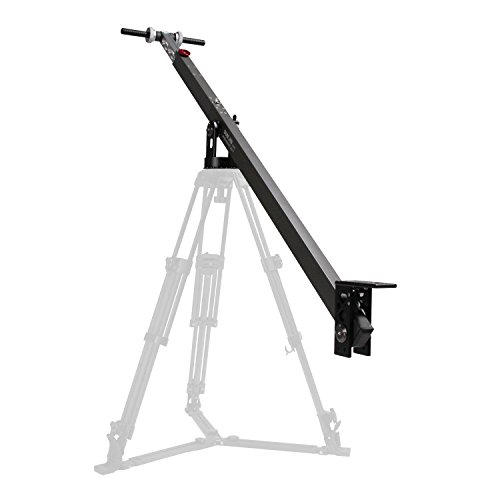
- Internal balancing system
- Flat-base and ball-head compatibility
- 20 kg maximum recommended load
Best For: Controlled crane moves with larger camera setups
Best Compact Aerial Option
Insta360 3m Extended Edition Selfie Stick

- Extends to 3 m
- Lightweight carbon-fiber design
- 800 g maximum recommended load
Best For: Lightweight Insta360 aerial-style shots
Best Stabilizer Accessory
DIGITALFOTO Ares Z-Axis Spring Gimbal

- Spring-based damping design
- Broad gimbal compatibility
- Quick-disassembly aluminum construction
Best For: Two-handed control with compatible gimbals
Best Monitoring Aid
FEELWORLD FW568 6-Inch Camera Monitor

- Full HD 6-inch IPS display
- Focus and exposure monitoring tools
- 4K HDMI input/output support
Best For: Clearer framing and focus during crane or rig shooting
Lightweight Extension Pick

- 13.8-inch fixed carbon-fiber extension pole
- Standard 1/4-inch mounting threads
- Weighs about 0.38 pounds
Best For: Adding height or reach to compatible lightweight gimbals
Accessory-Mounting Handle

- Aluminum-alloy support handle and clamp
- Multiple 1/4-inch and 3/8-inch mounting points
- Includes strap, mini magic arms, and tools
Best For: Crane 2 users adding comfort and accessory mounts
Complete Stabilizer Option

- Compact three-axis gimbal for lightweight cameras
- Built-in 1000-lumen adjustable fill light
- Quick-release plate with dual safety locks
Best For: Run-and-gun beginners with lightweight mirrorless cameras
Beginner Camera Basics
Canon Rebel T3i/EOS 600D Training DVD
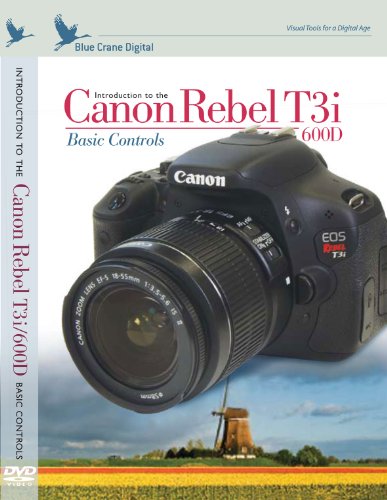
- Explains controls and their purpose
- Covers HD video basics
- Introduces customization and photography skills
Best For: Canon Rebel T3i/EOS 600D owners learning the fundamentals
Portable Camera Support
Acuvar 62-Inch Photography Monopod

- Folds to 16.75 inches for travel
- Rubber foot and outdoor metal spike
- Supports cameras up to 6.6 pounds
Best For: Travel and outdoor shooting with lightweight camera support
Nikon Beginner Training
Nikon D3300 Basic Controls DVD
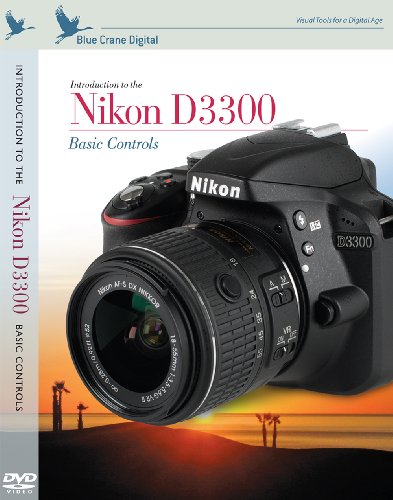
- Covers D3300 controls and functions
- Includes HD video recording basics
- Builds customization and photography skills
Best For: Nikon D3300 owners learning camera operation
Best Full-Size Jib – KONOVA S1200 SUNJIB Camera Jib Arm
KONOVA S1200 SUNJIB Camera Jib Arm Mini Crane Single Arm Pocket Jib DSLR RED Plate Bowl Compatible
Check Price On AmazonFor beginners comparing camera cranes for beginners, the KONOVA S1200 is a substantial jib arm designed for DSLR, RED, and other compatible camera setups. Its built-in balancing system, broad mounting compatibility, and solid construction make it suited to controlled crane-style movements.
Best For: Beginners who want a full-size jib for stable camera moves and can accommodate an 18-pound piece of equipment.
Pros:
- Hidden internal balance bar helps simplify balancing.
- Compatible with both flat-base and ball-head setups.
- Designed for one-touch assembly and disassembly in about four minutes.
- Supports a maximum recommended load of 20 kg.
Cons:
- At 18 pounds, it is considerably heavier than compact camera supports.
- Its full-size design may be more than beginners need for small mobile setups.
The S1200 stands out when stability and capacity matter more than portability. Before buying, confirm that your tripod or support system can handle its weight and intended camera load.
Best Compact Aerial Option – Insta360 3m Extended Edition Selfie Stick
If you are exploring camera cranes for beginners but mainly use an Insta360 action camera, this extended carbon-fiber selfie stick offers a lightweight alternative to a traditional jib. It extends from 36 cm to 3 m and uses a standard 1/4-inch screw for compatible cameras.
Best For: Insta360 owners seeking lightweight elevated or aerial-looking shots without carrying a full camera crane.
Pros:
- Extends to 3 m (9.8 ft) for elevated perspectives.
- Carbon-fiber construction keeps the pole at 365 g.
- Uses a standard 1/4-inch screw.
- Compatible with several Insta360 models, including the X3, X2, ONE X2, and ONE RS.
Cons:
- Its 800 g maximum recommended load limits it to lightweight cameras.
- It is not intended for use while riding, driving, or in other sports scenarios.
- It is not water resistant.
This is not a conventional balanced jib, but its reach and low weight make it approachable for action-camera creators. Use it for controlled handheld positioning rather than heavy-camera crane work.
Best Stabilizer Accessory – DIGITALFOTO Ares Z-Axis Spring Gimbal
For beginners searching for camera cranes for beginners who already own a motorized gimbal, the DIGITALFOTO Ares adds a spring-based dual-handle grip rather than functioning as a standalone crane. It is designed to reduce the effects of shaking and works with many stabilizers using 40–46 mm handle diameters.
Best For: Gimbal users who want a more stable, two-handed shooting setup for moving or shaky scenes.
Pros:
- Spring design is intended to improve stability by 30%.
- Compatible with gimbals including Crane 2, DJI RS2/RS3 Pro, Ronin S/SC, and Moza Air 2.
- Aluminum-alloy construction provides a strong frame.
- Quick-disassembly design supports easier installation.
Cons:
- It requires a compatible gimbal and is not a standalone camera crane.
- Compatibility depends on a 40–46 mm handle diameter.
- Its 1 kg weight adds bulk to an existing setup.
The Ares is a practical upgrade for beginners who already have a supported gimbal and need better handling. Check both your gimbal model and handle diameter before ordering.
Best Monitoring Aid – FEELWORLD FW568 6-Inch Camera Monitor
Although the FEELWORLD FW568 is not a camera crane, it can make camera cranes for beginners easier to operate by giving you a larger view for framing, focus, and exposure. Its 6-inch Full HD display connects through HDMI and includes several monitoring tools for on-set feedback.
Best For: Beginner creators using a crane, tripod, stabilizer, or rig who need clearer framing and focus monitoring.
Pros:
- 6-inch 1920×1080 IPS display provides a larger monitoring view.
- Waveform, vectorscope, histogram, false color, and peaking support exposure and focus checks.
- Supports 4K HDMI input/output up to 4K at 30 Hz.
- Works with NP-F or LP-E6 batteries and offers 8.4V camera power output.
Cons:
- It is a monitoring accessory, not a camera crane or support arm.
- The 450-nit screen and included sunshade may be better suited to controlled lighting than very bright outdoor conditions.
- It requires a compatible HDMI camera and a separate supported battery.
The FW568 is a useful companion for learning precise crane shots because it helps you see focus, exposure, and composition more confidently. Pair it with a compatible camera rig and power setup.
Lightweight Extension Pick – DH10 Carbon Fiber Gimbal Pole
For beginners exploring camera cranes for beginners, the DH10 is a simple way to add height and reach to compatible gimbals. This 13.8-inch carbon-fiber extension pole weighs about 0.38 pounds and uses standard 1/4-inch mounting threads, but it is a fixed-length bar rather than a telescoping crane.
Best For: Beginner creators who want higher or wider angles from a compatible gimbal, tripod, or slider.
Pros:
- Lightweight carbon-fiber construction for easier handheld use.
- Works with several DJI, Insta360, Ronin, Osmo Mobile, and Zhiyun Crane models.
- Bottom 1/4-inch thread supports tripod or slider mounting.
Cons:
- Only the pole is included; the gimbal and camera are not included.
- It is not extendable, with a fixed length of 13.8 inches.
- Its maximum recommended load is limited to about 6.24 ounces.
The DH10 is best viewed as a compact reach accessory rather than a complete camera crane. Check your gimbal’s weight and thread compatibility before buying.
Accessory-Mounting Handle – Mingzhe Crane 2 Clamp
Beginners comparing camera cranes for beginners may appreciate this Mingzhe mounting handle as a support and accessory solution for Crane 2 setups. Its aluminum-alloy construction, shoulder strap, and multiple 1/4-inch and 3/8-inch mounting points are designed to make longer filming sessions more manageable.
Best For: Crane 2 users who need a more comfortable support handle and extra mounting points for filming accessories.
Pros:
- Lightweight aluminum-alloy design balances portability and support.
- Multiple 1/4-inch and 3/8-inch holes accommodate microphones, monitors, and lights.
- Package includes a handle, neck clamp, shoulder strap, mini magic arms, screws, and an L wrench.
- Designed for quick installation without requiring separate magic arms.
Cons:
- It is an accessory handle and clamp, not a complete camera crane or gimbal.
- The supplied details identify Crane 2 as the intended use, so compatibility should be confirmed for other setups.
- Some listing details describe compatible devices inconsistently, so verify fit before purchase.
This kit can improve handling and expand accessory options, but it makes the most sense for a Crane 2 owner rather than someone starting without a compatible stabilizer.
Complete Stabilizer Option – ZHIYUN Crane M2S Gimbal
For newcomers to camera cranes for beginners, the ZHIYUN Crane M2S offers a more complete handheld stabilization starting point than a pole or clamp. This three-axis gimbal weighs about 549–550 grams, supports lightweight mirrorless cameras and other small devices, and includes a built-in fill light and quick-release plate.
Best For: Run-and-gun beginners using lightweight mirrorless cameras, action cameras, or phones who want stabilized handheld video.
Pros:
- Three-axis brushless-motor stabilization in a compact, portable body.
- Built-in 1000-lumen fill light with five brightness levels and four color filters.
- 0.66-inch display shows gimbal status and parameters.
- V-shaped quick-release plate includes dual safety locks.
Cons:
- Not designed for heavy cameras or lenses.
- Camera balance must be set correctly before powering on for best performance.
- It is a handheld gimbal, not a long-reach camera crane.
The Crane M2S is the strongest all-in-one option here for learning stabilized camera movement. Its lightweight payload limitation makes careful camera-and-lens selection essential.
Beginner Camera Basics – Canon Rebel T3i/EOS 600D Training DVD
Blue Crane Digital Introduction to the Canon Rebel T3i/EOS 600D: Basic Controls Training DVD
Check Price On AmazonIf you are researching camera cranes for beginners, this Canon Rebel T3i/EOS 600D training DVD can help you build the camera-control knowledge needed for more confident shooting. It covers the camera’s controls, customization options, HD video basics, and foundational photography concepts.
Best For: Canon Rebel T3i/EOS 600D owners who want structured introductory training.
Pros:
- Explains the camera’s controls and why they matter.
- Introduces HD video controls and acquisition basics.
- Covers customization and essential photography concepts.
Cons:
- Designed specifically for the Canon Rebel T3i/EOS 600D.
- Physical DVD format may be less convenient than online instruction.
This is an educational resource rather than a camera crane or support accessory, but it can be a practical starting point for beginners learning to operate a compatible Canon camera before taking on more advanced shooting setups.
Portable Camera Support – Acuvar 62-Inch Photography Monopod
For beginners comparing camera cranes for beginners, the Acuvar 62-inch monopod offers a simpler, lightweight way to add camera support during travel, outdoor shooting, and location work. Its aluminum design folds down for transport and supports cameras with a standard 1/4-inch mount.
Best For: Travel and outdoor photographers who need portable single-point camera support.
Pros:
- Extends to 62 inches and folds to 16.75 inches.
- Rubber foot and retractable metal spike support different surfaces.
- Lightweight 0.3 kg aluminum construction with a wrist strap.
- Supports compatible cameras up to 6.6 pounds.
Cons:
- A monopod does not provide the multi-axis movement of a camera crane.
- Head is not included.
- Limited to cameras using a compatible 1/4-inch mount and within the weight limit.
This is better viewed as a portable support alternative than a true crane. Its compact folded size, surface options, and stated weight capacity make it useful for beginners who prioritize mobility and basic stabilization.
Nikon Beginner Training – Nikon D3300 Basic Controls DVD
When learning about camera cranes for beginners, mastering the camera itself is an important first step. This Blue Crane Digital DVD introduces Nikon D3300 controls, video recording, customization, and core photography skills in an approximately two-hour beginner-focused lesson.
Best For: Nikon D3300 owners seeking a guided introduction to camera operation.
Pros:
- Targets the Nikon D3300’s controls and functions.
- Explains why the controls matter for better photos.
- Includes HD movie recording basics.
- Addresses customization for different shooting styles.
Cons:
- Specific to the Nikon D3300.
- Physical DVD format may not suit users seeking streaming instruction.
Although it is not a crane accessory, this focused training resource can help new Nikon users become comfortable with their camera before adding more specialized support equipment to a beginner setup.
How We Picked These Camera Cranes for Beginners
We focused on products that help new filmmakers create smoother movement without requiring a complicated studio rig. The selection includes a compact jib arm, lightweight gimbals, extension poles, mounting hardware, a field monitor, and monopod-style support. We also included introductory camera-training DVDs because understanding basic controls can make any support system easier to use.
Our priorities were practical compatibility, manageable weight, straightforward operation, portability, and usefulness for common beginner cameras such as lightweight DSLRs, mirrorless bodies, and action cameras. Always confirm the camera, lens, mounting thread, and stated load limits before purchasing.
Quick Comparison
| Type | Best for | What to check |
|---|---|---|
| Mini jib arm | Controlled elevated or sweeping shots | Payload, balance, tripod compatibility |
| Gimbal | Walking and handheld motion | Camera weight, dimensions, balancing process |
| Extension pole | High, wide, or unusual action-camera angles | Thread size, rigidity, camera weight |
| Clamp or mounting bar | Adding accessories to a rig | Clamp range, hardware, safe load |
| Monitor | Improved framing and focus visibility | Video input, brightness, power requirements |
Key Buying Factors for Camera Cranes for Beginners
Camera and Payload Compatibility
Start with the complete shooting weight: camera body, lens, battery, microphone, and any monitor or cage. A jib or gimbal that is technically compatible with the body may struggle once accessories are attached. Leave a safety margin below the maximum rated load.
Movement Style
A mini crane is designed for deliberate rises, reveals, and sweeping movements from a fixed base. A gimbal is better for walking, tracking, and quick handheld repositioning. Extension poles suit action cameras and compact setups, but they are not a substitute for a balanced jib or tripod.
Balance, Stability, and Setup
Beginner-friendly gear should be easy to balance and secure. Look for adjustable mounting points, dependable locking hardware, comfortable handles, and a stable tripod or support base. Practice movements slowly before recording a full take.
Portability and Workflow
Carbon-fiber poles and compact stabilizers are useful for travel, while larger arms and monitors may be better for controlled indoor shoots. Consider storage, battery charging, transport protection, and the time needed to assemble the system.
Who Should Buy Which Camera Cranes for Beginners?
Choose the KONOVA mini jib if your priority is cinematic elevation and sweeping camera movement from a fixed position. Choose a Zhiyun gimbal or a compatible dual-handle support when you mainly shoot walking footage with a lightweight mirrorless camera. Action-camera users should look toward the Insta360 or DH10 extension poles for elevated perspectives and flexible mounting.
A field monitor is most useful when your camera screen is small or difficult to view in bright conditions. A clamp can expand a compatible rig with an additional mounting point, while a monopod is a simple choice for travel, outdoor shooting, and added vertical support. Finally, the Canon and Nikon training DVDs are best for new owners who need help mastering camera controls before investing in more advanced movement equipment.