
Camera cranes for location shoots can add sweeping movement, elevated angles, and controlled reveals without requiring a full studio setup. The right configuration depends on your camera package, crew size, terrain, and transport limits.
This roundup covers complete jibs as well as the dollies, stands, grips, carts, and track components used to build a practical field-ready system.
Best 10 Camera Cranes for Location Shoots Picks for 2026
Rolling Crane Foundation

- 400 kg / 880 lb load capacity
- Lockable polyurethane wheels
- Folds for location transport
Best For: Mobile or locked support for jibs, cranes, and heavy tripods
Heavy-Duty Crane Support
Grav-ity Mitchell Tripod Stand

- 300 kg / 661 lb payload
- 32.3–47.2-inch height range
- Professional Mitchell mounting platform
Best For: Heavy jibs, cranes, sliders, dollies, and geared heads
Location Logistics

- 1,000 lb / 454 kg payload
- Four pneumatic 10-inch wheels
- Carries C-stands and grip gear
Best For: Moving full camera, lighting, and grip packages on set
Long-Reach Pick

- Supports camera rigs up to 8kg
- Runs at 14ft or 10ft lengths
- 270-degree tilt range and travel bags
Best For: Flexible sweeping crane moves on location
Mobility Support Pick
Proaim Lineo Tripod Floor Dolly
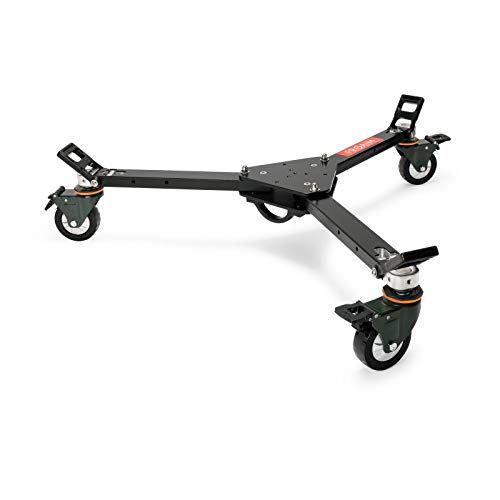
- Supports up to 500kg
- 100mm PU wheels with individual locks
- Folds for transport and ships assembled
Best For: Rolling compatible tripods and jib bases on location
Maximum-Reach Pick

- Reaches up to 18ft from a 19ft height
- Configures at 12ft, 14ft, or 18ft
- Supports rigs up to 8kg with 270-degree tilt
Best For: Large exterior moves requiring maximum crane reach
Heavy-Duty Track Support

- Supports up to 1,000 kg / 2,200 lb
- 16-foot rail for smooth tracking movement
- Collapsible 4-foot sections ease transport
Best For: Heavy dollies and crane systems on professional productions
Long-Reach Jib Versatility

- Supports camera rigs up to 8 kg / 17.6 lb
- Configures at 14 or 10 feet
- Includes a 90 kg-capacity heavy-duty stand
Best For: Elevated arcs, overhead shots, and flexible location setups
Compact Folding Jib

- Supports up to 15 kg / 33 lb
- Switches quickly between overslung and underslung modes
- Folds to about 2.5 feet for transport
Best For: Mobile crews needing compact, flexible jib movement
Rolling Crane Foundation – Portable Tripod Dolly
For camera cranes for location shoots, the PROAIM D-33 provides a heavy-duty rolling base that can also lock in place. Its steel three-leg design supports up to 400 kg and folds for transport, making it suited to production crews moving between setups.
Best For: Jibs, cranes, and tripod-based camera rigs that need a mobile or locked base.
Pros:
- Supports up to 400 kg / 880 lb.
- Three-leg clamping mount accommodates tripod legs up to 48 mm in diameter.
- Polyurethane wheels offer smooth movement, while locks enable static shots.
- Quick fold-down design is practical for on-location transport.
Cons:
- Track wheel adapter is optional and sold separately.
- At 17.11 kg, it is substantial equipment to carry.
- It is not water resistant.
The D-33 is a practical choice when a crane or jib setup needs both mobility and a dependable locked position. Confirm tripod compatibility and plan for its 34-inch footprint before transporting it to a location.
Handheld Crane Control – Aluminum L-Bracket Grip
For camera cranes for location shoots that use a compatible gimbal, this aluminum alloy L-bracket adds a more flexible handheld operating option. It offers multiple mounting threads and a cold shoe for accessories while remaining lightweight for travel and outdoor filming.
Best For: Handheld gimbal operation with Crane 2, Ronin S, and similar compatible setups.
Pros:
- Compatible with Crane 2 and Ronin S gimbals.
- Multiple 1/4-inch and 3/8-inch threads expand mounting options.
- Cold shoe supports accessories such as lights, microphones, and monitors.
- Ergonomic handle can be paired with a second grip for two-handed operation.
Cons:
- Supplied compatibility information specifically names Crane 2 and Ronin S rather than every gimbal.
- It is an accessory grip, not a standalone camera crane.
- The supplied details list compatible devices as a laptop, so buyers should verify their exact rig connection.
This grip is best viewed as a compact control accessory for compatible gimbals rather than a replacement for a full crane system. Check the gimbal mount and accessory clearances before taking it on location.
Heavy-Duty Crane Support – Grav-ity Mitchell Tripod Stand
For camera cranes for location shoots, the PROAIM Grav-ity stand offers a stable Mitchell-based platform for demanding support systems. It adjusts from 32.3 to 47.2 inches and supports up to 300 kg, covering a range of jib, dolly, slider, and geared-head applications.
Best For: Professional crane, jib, slider, dolly, and geared-head setups requiring a Mitchell mount.
Pros:
- Supports up to 300 kg / 661 lb.
- Height adjusts from 32.3 to 47.2 inches.
- Mitchell platform suits a wide range of production equipment.
- Includes a storage bag and carries a one-year warranty.
Cons:
- Its 33-pound weight adds to location-transport requirements.
- Mitchell compatibility may require additional hardware for other mounting standards.
- The listed dimensions indicate a substantial 52-inch footprint.
The Grav-ity is a strong foundation for crews working with heavier camera movement equipment. Its adjustable height and high payload are useful on professional sets, but confirm the footprint and mounting standard for the intended location.
Location Logistics – Vanguard Production Cart
For camera cranes for location shoots, the PROAIM Vanguard helps move the broader production package around the set. Its 1,000-pound capacity, four pneumatic wheels, and storage for C-stands and grip equipment make it a logistics-focused companion for mobile crews.
Best For: Transporting cameras, lighting, grip gear, C-stands, and production accessories between setups.
Pros:
- Supports up to 454 kg / 1,000 lb.
- Four pneumatic wheels with 10-inch casters are designed for maneuverability.
- Organizes multiple C-stands and grip equipment.
- Designed for studio, sound-stage, and outdoor location workflows.
Cons:
- At 99 kg, it is very heavy before equipment is loaded.
- It is a transport cart, not a crane or camera-support platform.
- Its large capacity may be excessive for small crews or compact locations.
The Vanguard is most useful when location work involves substantial grip and lighting logistics alongside the crane package. Its high payload is valuable for full production loads, but transport planning is essential because of the cart’s own weight.
Long-Reach Pick – Proaim 14ft Camera Crane Jib
For camera cranes for location shoots, the Proaim 14ft Camera Crane Jib offers substantial reach without committing to the larger 18ft model. Its modular design supports 14ft or 10ft configurations, making it practical for sweeping exterior moves as well as tighter locations.
Best For: Location crews that need long crane moves, flexible jib length, and support for camera rigs up to 8kg.
Pros:
- Supports cameras, gimbals, pan-tilt heads, and fluid heads up to 8kg.
- Configures for either 14ft or 10ft operation.
- 270-degree camera-platform tilt range supports overhead and creative angles.
- Breaks into sections with carry bags and includes an LCD mounting arm.
Cons:
- At 16kg, it is substantial equipment for a mobile crew.
- Its 14ft reach may be more than needed in compact locations.
- It requires suitable support equipment, such as a stand, for its stated height.
The two-arm construction and thrust roller bearings are useful advantages when extended moves need added stiffness and smoother pan-and-tilt behavior. Choose this model when 10ft and 14ft flexibility matters more than maximum reach.
Mobility Support Pick – Proaim Lineo Tripod Floor Dolly
Among camera cranes for location shoots, the Proaim Lineo Tripod Floor Dolly is a support accessory rather than a crane arm. It gives compatible twin-spiked tripods, jib bases, and camera rigs a rolling platform for moving equipment across even or rough floors.
Best For: Crews using twin-spiked tripods or jib bases that need a foldable rolling base with locking wheels.
Pros:
- Supports a tripod and camera setup rated up to 500kg.
- Three 100mm polyurethane wheels roll without marking surfaces.
- Individual wheel locks help secure static shots.
- Ships assembled and folds for transport.
Cons:
- It is designed for twin-spiked feet, so it is not a universal tripod dolly.
- Its 11.2kg weight adds to location-transport needs.
- It is intended for floor movement rather than lifting a camera for crane shots.
The Lineo makes the most sense when your crane or tripod setup already uses compatible twin-spiked feet. Its folding design and replaceable-wheel option add practical value for crews moving between locations.
Maximum-Reach Pick – Proaim 18ft Camera Crane Jib
For camera cranes for location shoots where height and reach are the priority, the Proaim 18ft Camera Crane Jib provides the largest sweep in this selection. Its five-section design also lets crews configure it at 12ft, 14ft, or 18ft for different shooting environments.
Best For: Large exterior productions, crowd-overhead moves, and crews needing configurable reach with camera rigs up to 8kg.
Pros:
- Reaches up to 18ft from a 19ft height with a 5ft stand.
- Supports DSLR, mirrorless, camcorder, gimbal, and pan-tilt setups up to 8kg.
- Offers 12ft, 14ft, and 18ft configurations.
- 270-degree tilt and thrust roller bearings support versatile, smooth moves.
Cons:
- The longest configuration demands substantial space and setup planning.
- Its 18ft reach can be excessive for smaller locations.
- The modular assembly and 20.5-pound listed weight add handling considerations.
This is the strongest choice when maximum elevation and configurable length are more important than compactness. The shorter configurations help preserve versatility, while the full 18ft setup is suited to expansive shots over obstacles or crowds.
Heavy-Duty Track Support – Proaim Stream 16ft Track
For camera cranes for location shoots that need a stable base for extended movement, the Proaim Stream 16ft Track is built for demanding dolly and crane setups. Its collapsible sections make transport and storage more manageable, while the rigid aluminum rail is designed for high-load production equipment.
Best For: Professional film, television, commercial, and studio crews using heavy camera dollies or crane systems.
Pros:
- Supports up to 1,000 kg / 2,200 lb for substantial production loads.
- Provides 16 feet of track for controlled tracking shots and reveals.
- Works with professional dollies and camera cranes.
- Breaks into manageable 4-foot sections for transport and storage.
Cons:
- At 125.7 pounds, it is a substantial transport load.
- Its 16-foot format may be excessive for compact locations.
- It is not water resistant, so outdoor crews need weather protection.
This is a strong foundation when payload capacity and repeatable movement matter more than minimal kit weight. Confirm the track layout and transport requirements before choosing it for smaller location shoots.
Long-Reach Jib Versatility – PROAIM 14ft Camera Crane
The PROAIM 14ft Camera Crane is a practical choice among camera cranes for location shoots when you need elevated, sweeping movement and adjustable reach. Its modular arm can be configured at 14 or 10 feet, and the included heavy-duty stand provides a stable foundation for compatible camera rigs.
Best For: Crews shooting dramatic arcs, overhead angles, crowd coverage, or elevated reveals with DSLR, mirrorless, gimbal, or fluid-head rigs.
Pros:
- Carries camera rigs up to 8 kg / 17.6 lb.
- Offers 14-foot or 10-foot configurations for different spaces.
- Included stand supports up to 90 kg / 198 lb.
- 270-degree platform tilt enables overhead and creative angles.
Cons:
- Its 39.7-pound weight and multi-section design require planning for setup.
- The maximum camera payload is lower than that of heavier professional crane systems.
- Full extension may be unsuitable for tight interiors or crowded locations.
With its included stand, modular length, and monitor-mounting provision, this jib offers useful location flexibility. It is best matched to crews whose camera package stays within the 8 kg payload limit.
Compact Folding Jib – Proaim Wave Fold 7.2ft Crane
For camera cranes for location shoots where portability and payload flexibility are priorities, the Proaim Wave Fold Jib offers a compact alternative to longer crane arms. Its telescoping reach, quick overslung-to-underslung changeover, and fold-down design help crews adapt the rig to changing setups.
Best For: Mobile production teams needing controlled jib movement, low-angle coverage, or compact transport with cameras and gimbals up to 15 kg.
Pros:
- Extends from 5.2 to 7.2 feet and supports up to 15 kg / 33 lb.
- Switches between overslung and underslung configurations quickly.
- Provides 360-degree pan range with separate pan and tilt locks.
- Folds to approximately 2.5 feet for transport and storage.
Cons:
- The 7.2-foot maximum reach is shorter than a full-size 14-foot jib.
- It weighs 53 pounds, which may still require a two-person handling plan.
- The 100mm bowl adapter is excluded from the stated folded-size measurement.
This jib balances a comparatively compact transport profile with a 15 kg payload rating and flexible camera orientation. It is a compelling fit for location crews that need fast repositioning without the reach of a larger crane.
How We Picked the Best Camera Cranes for Location Shoots
We selected these products based on their usefulness in real production environments, including payload support, portability, mounting compatibility, movement options, and the ability to integrate with gimbals, pan-tilt heads, fluid heads, dollies, and track. The list includes both complete crane setups and supporting equipment because a jib rarely works as a standalone purchase.
We also considered how each item fits different shooting conditions. A compact folding jib may suit documentary work or small crews, while long arms, heavy-duty stands, and track systems are better for controlled commercial, narrative, or live-event productions.
Quick Comparison
| Need | Best-suited options | What to prioritize |
|---|---|---|
| Compact travel setup | 7.2ft Wave Fold Jib | Foldability, manageable weight, and quick setup |
| Long sweeping moves | 14ft or 18ft Jib Arms | Reach, rigidity, counterweight capacity, and safe support |
| Heavy camera packages | Grav-ity Stand and heavy-duty dollies | Payload rating, stability, wheel quality, and locking |
| Tracked movement | Stream 16ft Track with a compatible carriage | Track length, surface preparation, and carriage compatibility |
| Vehicle or set transport | Vanguard Production Cart | Load capacity, maneuverability, and storage space |
Key Buying Factors for Camera Cranes for Location Shoots
Payload and Balance
Check the complete moving load, including the camera, lens, battery, monitor, gimbal, pan-tilt head, and mounting hardware. A crane’s stated capacity does not replace correct balancing and counterweighting. Leave a safety margin rather than operating at the limit.
Reach and Operating Space
Longer arms create more dramatic movement but need more clearance, stronger support, and greater counterweight control. Measure the shooting area, overhead obstacles, travel path, and safe distance from crew and talent before choosing a 14ft or 18ft system.
Base, Wheels, and Terrain
For outdoor work, wheel design and surface contact can matter as much as the jib arm. PU wheels, locking mechanisms, track compatibility, and a rigid tripod or dolly base help maintain smooth movement. Uneven ground may require ramps, mats, leveling, or a different support strategy.
Head and Camera Compatibility
Confirm the mounting standard and whether the crane is intended for a fluid head, pan-tilt head, or gimbal. A handle grip or L-bracket can help with certain handheld or gimbal configurations, but it is not a substitute for a properly rated crane mount.
Transport and Setup
Location production rewards equipment that packs efficiently and can be assembled by the available crew. Account for cases, counterweights, stands, track sections, power, and the time needed to level and test the system.
Who Should Buy Which Camera Cranes for Location Shoots?
Choose the 7.2ft folding jib when portability and fast deployment matter most. Pick a 14ft arm for a balanced combination of reach and practicality, or move to an 18ft arm when large-scale reveals and elevated perspectives justify the additional support and setup demands.
Pair a jib with a heavy-duty stand or tripod dolly when you need a stable rolling base. Select a floor dolly for low-profile movement, a production cart for transporting equipment around set, and track when repeatable linear motion is more important than unrestricted repositioning. For heavy cinema builds, prioritize the stand, carriage, and wheel system before adding length to the crane.