
The best camera cranes for studio production make it easier to create smooth reveals, elevated angles, and controlled moves without committing to a full motion-control system. The right jib depends on your camera package, available floor space, mounting hardware, and crew workflow.
This roundup compares compact carbon-fiber arms, modular overhead rigs, and full-size crane systems across different payload and reach requirements, so you can choose a practical setup for your studio.
Best 10 Camera Cranes for Studio Production Picks for 2026
Best Long-Reach Jib

- Supports rigs up to 8kg/17.6lb
- Configures to 12ft, 14ft, or 18ft
- 270-degree platform tilt
Best For: Large studio crane moves and overhead shots
Best Overhead Platform
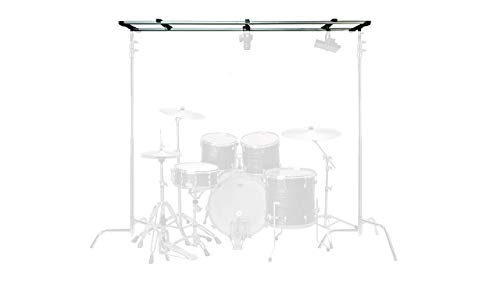
- Adjusts from 4ft to 12ft
- Supports up to 20lb at 4ft
- Mounts cameras, lights, and microphones
Best For: Overhead product and tabletop studio work
Best Motorized Head
Proaim SR 2-Axis Pan-Tilt Head
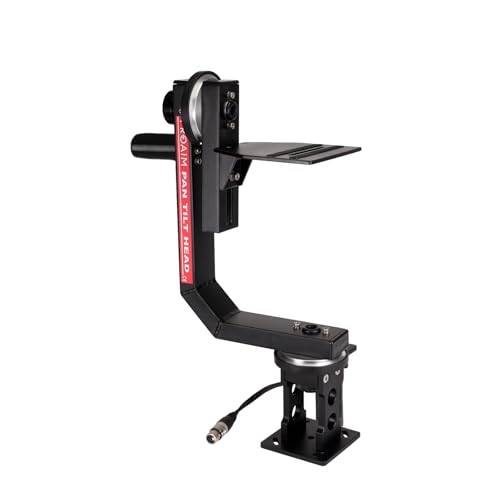
- 360-degree pan and tilt
- Supports up to 7.5kg/16.5lb
- AC or 12V battery operation
Best For: Remote-controlled and repeatable crane movement
Best Compact Jib

- 85-inch carbon-fiber jib arm
- Supports up to 33lb/14.97kg
- Designed for low-angle and upside-down shots
Best For: Compact studios and portable crane setups
Best All-in-One System

- Complete jib, tripod, and dolly package
- Adjustable 6-to-10-foot telescopic arm
- Supports up to 25kg / 55lb
Best For: Crews needing a complete, heavy-duty camera movement system
Best for Maximum Reach

- 14-foot arm reaches up to 15 feet with a 5-foot stand
- Configures at 14 or 10 feet
- Supports rigs up to 8kg / 17.6lb
Best For: Crews shooting elevated, sweeping, and highly creative angles
Best Flexible Jib Arm

- 10-foot jib for sweeping and overhead shots
- Supports up to 25kg per supplied notes
- Includes 100mm bowl and 75mm adapter
Best For: Crews with existing support gear seeking adaptable jib movement
Best Portable 9-Foot Jib

- Supports up to 8kg/17.6lb
- Works with gimbals, pan-tilt heads, and fluid heads
- Two-section aluminum arm with carrying bag
Best For: Portable studio and location setups using lighter camera packages
Best Foldable Heavy-Duty Jib

- Telescopes from 5.2 to 7.2 feet
- Supports up to 15kg/33lb
- Folds to 2.5 feet for transport
Best For: Crews needing high capacity and fast overslung/underslung changes
Best Maximum-Payload Jib

- Supports up to 25kg/55lb
- Dual-rail design for strength and stability
- Compatible with 75mm/100mm heads and gimbals
Best For: Large camera packages and demanding professional production setups
Best Long-Reach Jib – Proaim 18ft Camera Crane
For demanding camera cranes for studio production, the Proaim 18ft Camera Crane offers substantial reach and a modular design. Its five-section arm can be configured at 12, 14, or 18 feet and supports camera rigs weighing up to 8kg.
Best For: Large studio moves, overhead shots, crowd-clearing angles, and productions using DSLR, mirrorless, gimbal, or pan-tilt-head rigs.
Pros:
- Supports camera setups up to 8kg/17.6lb.
- Configurable 12ft, 14ft, or 18ft reach.
- 270-degree platform tilt with manual and automatic modes.
- Includes an LCD mounting arm and storage bag.
Cons:
- Its 18ft size is more demanding to transport and set up than a mini jib.
- Requires a suitable support stand, which is not described as included.
The two-arm structure and thrust roller bearings are aimed at steadier movement when the arm is fully extended. Choose this model when maximum reach and flexible configuration matter more than compactness.
Best Overhead Platform – Glide Gear OH 150 Rig
The Glide Gear OH 150 is a practical option among camera cranes for studio production when the priority is controlled overhead framing. Its modular arm adjusts from 4 to 12 feet and can mount to C-Stands, Junior Stands, or tripods.
Best For: Overhead product videos, tabletop photography, studio lighting setups, and compact crane-style camera placements.
Pros:
- Adjusts from 4 to 12 feet for different shooting spaces.
- Supports up to 20lb at a 4ft setup.
- Offers numerous 1/4-inch and 3/8-inch mounting points.
- Includes stand adapters, spacers, a camera riser, and ball head.
Cons:
- Payload drops to 10lb at the full 12ft length.
- It is designed primarily for overhead positioning rather than long cinematic sweeps.
The click-in modular system helps with setup and storage, while the included accessories make it adaptable for cameras, lights, and microphones. Check the payload at your chosen length before mounting a heavier rig.
Best Motorized Head – Proaim SR 2-Axis Pan-Tilt Head
The Proaim SR adds powered movement to camera cranes for studio production, with 360-degree pan and tilt on both axes. It supports cameras up to 7.5kg and includes a joystick with variable speed, damping, and direction reversal.
Best For: Remote-controlled crane shots, repeatable studio pans and tilts, and productions requiring powered camera movement.
Pros:
- Provides 360-degree pan and tilt.
- Handles camera payloads up to 7.5kg/16.5lb.
- Offers speeds from 6 to 51 degrees per second.
- Runs from AC power or a 12V battery.
Cons:
- It is a pan-tilt head rather than a complete crane arm.
- Requires separate crane, tripod, or other support equipment.
- Its 15-meter control cable may require planning around the studio layout.
The included joystick and long control cable make this head useful when the operator needs to work away from the camera. Pair it with a properly rated jib or crane for a powered studio setup.
Best Compact Jib – IFOOTAGE M1 III Mini Crane
The IFOOTAGE M1 III is a compact choice for camera cranes for studio production, offering an 85-inch reach in a carbon-fiber arm. It supports up to 33lb and includes flexible mounting options for cameras, fluid heads, monitors, and other accessories.
Best For: Smaller studios, low-angle and upside-down shots, portable setups, and productions that need a jib without an 18ft footprint.
Pros:
- Carbon-fiber square tube is designed for rigidity and stability.
- Extends to an 85-inch reach while folding to a more manageable size.
- Supports loads up to 33lb/14.97kg.
- Includes quick-release plates and multiple 1/4-inch and 3/8-inch accessory threads.
Cons:
- Its 85-inch reach is shorter than full-size studio jibs.
- The listed 25-degree platform tilt range is more limited than a 360-degree motorized head.
The integrated pan head, quick-release system, and low-profile mounting options give this mini jib useful flexibility in confined spaces. It is a strong fit when portability and unusual camera angles matter more than maximum reach.
Best All-in-One System – Proaim 10ft Wave-2 Camera Jib
For crews comparing camera cranes for studio production, the Proaim Wave-2 Plus is a complete movement system rather than a jib arm alone. Its adjustable 6-to-10-foot telescopic arm, heavy-duty tripod, and portable dolly create a practical foundation for sweeping, overhead, and rising shots.
Best For: Production teams that want a ready-to-use crane, tripod, and dolly package for studio, broadcast, or film work.
Pros:
- Includes the Wave-2 Plus jib, 100mm two-stage tripod, and portable tripod dolly.
- Adjustable 6-to-10-foot arm supports different shooting spaces and compositions.
- Supports up to 25kg / 55lb, accommodating cameras, gimbals, pan-tilt heads, and accessories.
Cons:
- At 99.2 pounds, the complete system is relatively heavy for transport.
- Its larger support package may be more than small crews need for occasional jib shots.
The Wave-2 Plus is the strongest fit here when stability and included support equipment matter as much as reach. Choose it for a substantial studio setup where the tripod-and-dolly combination can remain part of the workflow.
Best for Maximum Reach – Proaim 14ft Camera Crane Jib
Among camera cranes for studio production, the Proaim 14ft jib stands out for reach and framing flexibility. Its modular arm can run at 14 or 10 feet, while the 270-degree camera-platform tilt range supports dramatic overhead, arcing, and inverted angles.
Best For: Shoots requiring extended reach, elevated perspectives, or creative camera tilts with DSLR, mirrorless, gimbal, or pan-tilt-head rigs.
Pros:
- 14-foot configuration provides up to 15 feet of height when used with a 5-foot stand.
- Four-section modular design allows 14-foot or 10-foot setups.
- Two-arm construction and thrust roller bearings are designed for smooth, stable movement.
- Includes an LCD mounting arm and carry bags for monitor use and transport.
Cons:
- Its maximum payload is 8kg / 17.6lb, lower than the Wave-2 models.
- A suitable stand is needed to achieve the stated 15-foot height.
- The extended configuration requires more operating space than a compact jib.
This jib is the better choice when perspective and reach take priority over heavy payload capacity. Its adjustable length and broad tilt range give experienced crews more options for ambitious studio or location moves.
Best Flexible Jib Arm – Proaim 10ft Wave-2 Jib Crane
For buyers evaluating camera cranes for studio production, the Proaim 10ft Wave-2 offers a flexible jib platform for DSLR, camcorder, gimbal, and pan-tilt-head setups. Its telescopic design and included 100mm bowl with 75mm adapter help crews adapt the arm to different camera-head configurations.
Best For: Studios, event videographers, and content teams seeking a 10-foot jib for overhead, reveal, rising, and sweeping shots.
Pros:
- Designed for smooth rising, lowering, and sweeping camera movements.
- Supports up to 25kg according to the supplied product notes.
- Includes a 100mm bowl mount and 75mm bowl adapter for broader head compatibility.
- Works with cameras, camcorders, DSLRs, and 3-axis gimbals.
Cons:
- The supplied information does not indicate that a tripod or dolly is included.
- Its 10-foot reach is shorter than the 14-foot alternative.
- The product is an arm setup, so crews may need to provide additional support and camera-head equipment.
The Wave-2 is a practical middle ground for crews that already own suitable support gear. It delivers substantial payload capacity and mounting flexibility without committing to the longer 14-foot configuration.
Best Portable 9-Foot Jib – 9ft Camera Crane Jib Arm
For camera cranes for studio production, the Proaim 9ft Camera Crane Jib Arm offers a practical balance of reach, portability, and camera support. Its two-section aluminum construction supports setups up to 8kg/17.6lb and works with compatible gimbals, pan-tilt heads, and fluid heads.
Best For: Studio crews needing elevated reveals, sweeping moves, and a portable jib for DSLR, mirrorless, camcorder, or compact cinema-camera setups.
Pros:
- Supports camera configurations up to 8kg/17.6lb.
- Compatible with 3-axis gimbals, motorized pan-tilt heads, and fluid heads.
- Auto/manual platform tilt control and an integrated LCD monitor mount improve operation.
- Separates into two sections and includes a carrying bag.
Cons:
- Its 8kg payload is lower than the heavier-duty options in this roundup.
- It is not water resistant.
This is a versatile choice when transport and flexible camera-head compatibility matter more than maximum payload. The monitor mount and tilt controls are particularly useful for rear-positioned operators.
Best Foldable Heavy-Duty Jib – 7.2ft Wave Fold Camera Jib
Among camera cranes for studio production, the Proaim 7.2ft Wave Fold stands out for its adjustable reach and high payload. The telescoping arm extends from 5.2 to 7.2 feet, supports up to 15kg/33lb on a 100mm bowl, and folds to 2.5 feet for transport.
Best For: Studio and location productions that need a compact, high-capacity jib with quick overslung or underslung camera changes.
Pros:
- Adjustable 5.2- to 7.2-foot reach suits different shooting spaces.
- Supports cameras and gimbals up to 15kg/33lb.
- Quick dovetail mechanism enables fast overslung/underslung configuration changes.
- Separate pan and tilt locks support controlled 360-degree panning.
Cons:
- The listed arm weight is 53 pounds, so it is not a lightweight option.
- The 100mm bowl adapter is excluded from the stated 2.5-foot folded size.
- It is not water resistant.
This model is a strong fit for productions that value payload and configuration flexibility. Its compact folded length helps with vehicle transport, but the heavy construction should be planned for during setup.
Best Maximum-Payload Jib – 7ft Wave-2 Jib Crane
For demanding camera cranes for studio production, the Proaim 7ft Wave-2 is the payload leader in this selection. Its dual-rail design supports cameras up to 25kg/55lb, while compatibility with 75mm and 100mm fluid heads, pan-tilt heads, and 3-axis gimbals broadens its production use.
Best For: Professional studio or location crews using large camera packages and requiring a stable, high-capacity jib with 360-degree panning.
Pros:
- Supports payloads up to 25kg/55lb.
- Dual-rail construction is designed for strength and stability.
- Compatible with 75mm/100mm fluid heads, remote pan-tilt heads, and 3-axis gimbals.
- Includes a 75mm bowl adapter, storage bag, bubble leveler, and quick setup design.
Cons:
- At 40 pounds, it is considerably heavier than a lightweight portable jib.
- Its 7-foot reach is shorter than the 9-foot option in this roundup.
- It is not water resistant.
The Wave-2 is the logical choice when payload and rigid support take priority. It brings broad head compatibility and a 360-degree pan range, though its heavier build is better suited to crews prepared for substantial rigging and transport.
How We Picked the Best Camera Cranes for Studio Production
We focused on the factors that most affect studio usability: reach, payload capacity, mounting compatibility, portability, construction, and control options. The selection includes compact jibs for small cameras, modular overhead platforms, and longer crane arms designed for gimbals, pan-tilt heads, and heavier production packages.
Because specifications can vary by configuration, verify the manufacturer’s rated payload, mounting requirements, counterbalance needs, and included accessories before ordering. A crane’s usable capacity may also change when you add a camera cage, lens, monitor, wireless transmitter, gimbal, or remote head.
Quick Comparison
| Best For | Look For | Typical Advantage |
|---|---|---|
| Small studios and tabletop work | Compact arm and low weight | Faster setup and easier storage |
| General studio production | 7- to 10-foot reach | Good balance of movement and control |
| Large sets and wide reveals | 14- to 18-foot arm | Greater vertical and horizontal range |
| Remote camera movement | Pan-tilt head compatibility | Repeatable framing from a control position |
| Flexible overhead mounting | Modular platform or stand mounting | Useful placement around sets and subjects |
Key Buying Factors for Camera Cranes for Studio Production
Reach and Studio Footprint
Longer arms create more dramatic movement but need more clearance, counterweight, and operating space. Measure the set, ceiling height, camera path, and storage area before choosing an 14- or 18-foot system. A shorter jib is often more useful when the studio is crowded or frequently reconfigured.
Payload and Balance
Calculate the complete moving load, not just the camera body. Include the lens, cage, battery, monitor, wireless accessories, gimbal, and remote head. Stay comfortably below the maximum rating when possible, and confirm how the arm is balanced and supported during operation.
Mounting and Compatibility
Check whether the crane requires a tripod, dolly, C-stand, 75mm or 100mm fluid head, or another support. A jib that fits your existing support equipment can reduce setup cost, while a heavier arm may require a dedicated base for safe operation.
Movement and Control
For simple programmed-looking moves, a manually operated jib may be enough. If you need precise framing, remote operation, or repeatable pans and tilts, choose a system that supports a compatible pan-tilt head or gimbal. Smooth movement also depends on balanced loads and a stable base.
Portability and Setup Time
Foldable or modular designs are easier to transport and store. For a permanent studio, heavier construction may be worthwhile; for rental work or multi-location shoots, compact sections and included transport accessories can matter more than maximum reach.
Who Should Buy Which Camera Cranes for Studio Production?
Choose a compact mini jib if you work with lightweight cameras, product videos, interviews, or confined studio spaces. Choose a 7- to 10-foot Wave-style jib for versatile everyday studio moves and easier handling. Choose a longer 14- to 18-foot crane when you need sweeping reveals, high-angle shots, or coverage across a larger set.
Choose an overhead platform when your priority is mounting a camera or light above a subject rather than performing long sweeping arcs. Add a pan-tilt head when remote framing and controlled camera orientation are central to your workflow. Regardless of size, use the crane only with a properly rated support, secure counterbalance, and adequate clearance around people and equipment.