
When you’re looking to capture the rich tones of your acoustic guitar, choosing the right condenser microphone is essential. Each microphone on our list offers unique features that can enhance your recordings or live performances. From versatile pickup patterns to exceptional sound quality, you’ll find options that suit your needs. Let’s explore which of these ten mics might be the perfect match for your musical style.
LyxPro SDPC-2 Stereo Pair of Pencil Condenser Microphone Set

If you’re looking for a reliable and versatile microphone setup for recording acoustic guitar, the LyxPro SDPC-2 Stereo Pair of Pencil Condenser Microphones is an excellent choice. These pro-grade mics capture fine audio details, delivering high-quality recordings that faithfully reproduce your sound. With a frequency response of 30Hz-18kHz and a sensitivity of -38dB, you’ll enjoy exceptional clarity. The three interchangeable capsules—Omni, Cardioid, and Super Cardioid—let you customize the pickup pattern, making it perfect for various recording situations. Plus, the included accessories like windscreens and a carrying case add great value to your professional setup.
Best For: Professional audio engineers and musicians seeking high-quality microphones for recording acoustic and woodwind instruments.
Pros:
- Pro-grade audio quality with a wide frequency response of 30Hz-18kHz for clear and accurate sound reproduction.
- Customizable pickup patterns with three interchangeable capsules (Omni, Cardioid, Super Cardioid) to suit various recording environments.
- Included accessories such as windscreens and an aluminum carrying case enhance convenience and portability for professional setups.
Cons:
- May require additional equipment (like preamps) for optimal performance in certain recording situations.
- Pencil condenser microphones can be sensitive to handling noise, requiring careful placement.
- Limited to specific applications; might not be ideal for all types of vocal recordings.
AKG Pro Audio AKG Perception 170 Professional Instrumental Microphone

The AKG Pro Audio P170 is an exceptional choice for musicians and sound engineers looking to capture the intricate details of acoustic guitar performances. With its small-diaphragm design, it excels in studio and live settings, delivering remarkable clarity and transient response across a frequency range of 20 – 20,000 Hz. The cardioid polar pattern focuses on sound while reducing background noise, and the switchable attenuation pad accommodates high SPL applications up to 155 dB. Its durable all-metal body guarantees reliability, making it a great investment for anyone seeking professional sound quality at an affordable price.
Best For: Musicians and sound engineers seeking a high-quality, affordable microphone for capturing detailed acoustic performances.
Pros:
- Exceptional clarity and transient response with a wide frequency range of 20 – 20,000 Hz.
- Cardioid polar pattern effectively reduces background noise for focused sound capture.
- Durable all-metal body ensures reliability for both studio and live applications.
Cons:
- Wired connectivity may limit mobility compared to wireless options.
- Requires phantom power, which may not be available on all devices.
- May not perform as well in high humidity environments, affecting longevity.
Audio-Technica PRO 35 Cardioid Condenser Clip-on Instrument Microphone

For musicians seeking a reliable and high-quality microphone for acoustic guitar, the Audio-Technica PRO 35 Cardioid Condenser Clip-on Instrument Microphone stands out. Its cardioid polar pattern effectively reduces sound pickup from the sides and rear, ensuring your guitar’s true voice shines through. The UniMount clip allows for precise positioning, while providing shock resistance to protect the microphone element during performances. With an extended frequency response, it captures the subtle nuances of your playing. Plus, the permanently attached 6-foot cable offers convenience, making it easy to set up and use. Experience clarity and isolation with the PRO 35 on your next gig.
Best For: Musicians seeking a reliable clip-on microphone that delivers high-quality sound for acoustic instruments.
Pros:
- Captures subtle nuances of performance with its extended frequency response.
- Cardioid polar pattern effectively isolates the sound source while reducing background noise.
- UniMount clip provides secure and accurate positioning, along with shock resistance for durability.
Cons:
- The permanently attached 6-foot cable may limit movement for some performers.
- As a clip-on microphone, it may not be suitable for all types of performances or settings.
- Requires a compatible audio interface or mixer for optimal use, which may add to setup complexity.
happymusic CM2 Pencil Stick Condenser Microphone for Acoustic Instruments

Designed specifically for professional use, the happymusic CM2 Pencil Stick Condenser Microphone excels in capturing the intricate details of acoustic instruments, making it an ideal choice for musicians and sound engineers alike. With interchangeable pickup patterns—omnidirectional, cardioid, and super-cardioid—you can tailor your sound capture. Its low-mass diaphragm offers a frequency response of 20-20kHz, ensuring clarity and detail. The built-in pop filter and metal mesh grille reduce unwanted noise, enhancing performance during live gigs or studio recordings. Packed in a convenient suitcase with accessories, it’s a reliable option that boasts a solid 4.5-star rating from customers.
Best For: Musicians and sound engineers seeking a professional-grade microphone for capturing acoustic instruments with precision and clarity.
Pros:
- Interchangeable pickup patterns allow for versatile sound capture tailored to different recording environments.
- Built-in pop filter and metal mesh grille effectively reduce unwanted noise, enhancing audio quality during recordings.
- Compact and portable design comes with a suitcase and essential accessories, making it easy to transport for live gigs or studio sessions.
Cons:
- Corded electric power source may limit mobility compared to battery-operated microphones.
- Small diaphragm form factor may not be suitable for all types of vocal recordings, particularly for those requiring a larger diaphragm.
- Higher price point compared to entry-level microphones might not be ideal for beginners on a budget.
Behringer CB100 Condenser Gooseneck Microphone for Instrument Applications

Musicians seeking a reliable and lightweight solution for capturing the rich tones of acoustic guitar will find the Behringer CB100 Condenser Gooseneck Microphone an excellent choice. Designed specifically for instrument applications, this microphone features a sturdy stainless steel enclosure and a convenient XLR connector. Weighing just 0.46 pounds, it’s easy to position for ideal sound capture. The CB100’s compact dimensions (15.2 x 12.35 x 4.25 inches) make it a versatile addition to your setup. With a solid 4.6 out of 5 stars rating, it delivers impressive performance without breaking the bank. Enjoy peace of mind with Amazon’s 30-Day Return Guarantee.
Best For: Musicians looking for a lightweight and reliable microphone to capture the rich tones of acoustic guitar.
Pros:
- Lightweight design makes it easy to position without adding extra weight to your setup.
- Sturdy stainless steel enclosure ensures durability and longevity.
- High customer rating of 4.6 out of 5 stars reflects its performance reliability.
Cons:
- Limited to instrument applications, which may not suit those seeking a versatile microphone for vocals and other uses.
- Single channel connectivity may not be ideal for users needing multiple input options.
- XLR connector requirement may necessitate additional equipment for those without compatible interfaces.
TAKSTAR Condenser Microphone (CM-60)
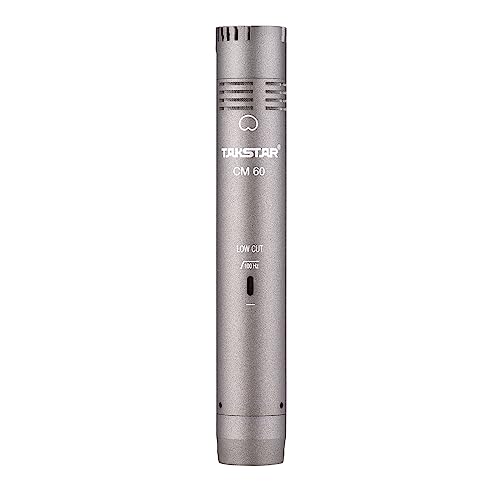
The TAKSTAR CM-60 condenser microphone stands out as an exceptional choice for acoustic guitarists seeking to capture the true essence of their sound. With its gold-plated diaphragm and cardioid design, you’ll enjoy pure audio quality during recordings. The microphone boasts a sensitivity of -38dB and a frequency response of 30Hz to 18kHz, ensuring every note is heard. Its low distortion and high peak SPL of 130dB make it perfect for various applications. Featuring an XLR connector and included windscreen, it minimizes interference, giving you professional-grade recordings. Plus, with a solid 4.7-star rating, you can trust its reliability.
Best For: The TAKSTAR CM-60 is best for acoustic guitarists and vocalists looking for high-quality, professional-grade recordings.
Pros:
- High Sensitivity: With a sensitivity of -38dB, it captures clear and detailed sound.
- Wide Frequency Response: The frequency response range of 30Hz to 18kHz ensures that all audio frequencies are accurately represented.
- Included Windscreen: Reduces unwanted noise and enhances sound quality during recordings.
Cons:
- Corded Power Source: Limited mobility due to the need for a power source.
- Requires XLR Connection: May need additional equipment for compatibility with non-XLR devices.
- Not Ideal for Outdoor Use: Cardioid design might not be suitable in noisy environments without proper setup.
Audio-Technica AT2020 Cardioid Condenser Studio XLR Microphone
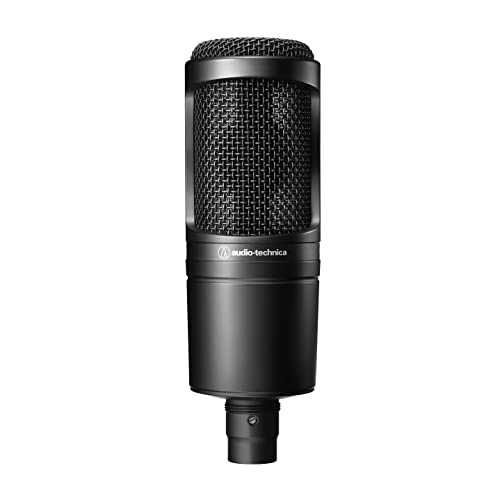
For those seeking a reliable and high-quality microphone for their acoustic guitar recordings, the Audio-Technica AT2020 Cardioid Condenser Studio XLR Microphone stands out as an excellent choice. This microphone is perfect for project and home studio applications, boasting a black design that’s both sleek and professional. It offers a price/performance standard in studio condenser technology, featuring high SPL handling and a wide dynamic range for unmatched versatility. The custom-engineered low mass diaphragm guarantees extended frequency response and superior transient response, while the cardioid polar pattern effectively reduces unwanted noise, isolating your guitar’s sound beautifully.
Best For: Musicians and home studio producers looking for a high-quality, versatile microphone for recording acoustic instruments.
Pros:
- High SPL handling allows for capturing loud sound sources without distortion.
- Cardioid polar pattern effectively isolates the desired sound while minimizing background noise.
- Custom-engineered diaphragm provides an extended frequency response, enhancing audio quality.
Cons:
- Requires an XLR connection, which may necessitate additional equipment for some users.
- Not ideal for capturing ambient sound due to its directional nature.
- May be sensitive to plosive sounds, requiring a pop filter for vocal recordings.
Neewer 2-Pack Pencil Stick Condenser Mic for Acoustic Instruments
When it comes to capturing the rich tones of acoustic guitar, the Neewer 2-Pack Pencil Stick Condenser Mic stands out with its interchangeable capsule system. You’ll appreciate the versatility this mic offers, as it includes cardioid, omni, and super cardioid capsules. Whether you’re recording in the studio or performing live, you can effortlessly switch capsules to suit various environments. It’s perfect for acoustic instruments, orchestras, and even choral groups. Plus, with a durable foam padded case and essential accessories like a mic clip and windscreen, you’ll find it easy to transport and set up for any recording session.
Best For: Musicians and sound engineers looking for a versatile microphone solution for recording acoustic instruments and live performances.
Pros:
- Interchangeable capsules allow for adaptability in various recording situations.
- Durable foam padded case provides protection and ease of transport for mics and accessories.
- Includes essential accessories like a mic clip and windscreen for enhanced recording quality.
Cons:
- May require additional time to switch capsules depending on the recording environment.
- Lacks built-in preamp or phantom power, which may be needed for optimal performance.
- The pencil stick design might not be as user-friendly for all users during setup.
SAMSON C02 Pencil Condenser Microphones

With their small-diaphragm design, SAMSON C02 Pencil Condenser Microphones excel in capturing the nuanced tones of acoustic guitar. This stereo pair is matched within ±0.5dB sensitivity, ensuring consistent quality across recordings. The cardioid pickup pattern effectively reduces background noise, allowing your instrument’s true sound to shine. With a high SPL rating of up to 134dB, these mics can handle loud performances effortlessly. Plus, the included protective carry case, shock-mounted clips, and windscreens make them perfect for professional recording settings. Compact and durable, the SAMSON C02 microphones are an excellent choice for capturing both instruments and vocals with clarity.
Best For: The SAMSON C02 Pencil Condenser Microphones are best for professional musicians and sound engineers seeking high-quality sound capture for instruments and vocals.
Pros:
- Excellent for capturing nuanced tones of acoustic instruments.
- Cardioid pickup pattern minimizes background noise for clearer recordings.
- High SPL rating allows for handling loud performances without distortion.
Cons:
- Small-diaphragm design may not be ideal for all vocal types.
- Requires phantom power to operate, which may limit compatibility with some equipment.
- Stereo pair may be more expensive than single microphones for budget-conscious users.
Shure PGA98H Condenser Gooseneck Microphone

The Shure PGA98H Condenser Gooseneck Microphone is an excellent choice for acoustic guitarists seeking clarity and precision in their sound. With its cardioid pick-up pattern, it captures audio directly from your instrument while rejecting unwanted noise. The tailored microphone cartridge enhances sound reproduction, making it ideal for both guitars and wind instruments. Its flexible gooseneck allows for quick positioning, ensuring you get the best angle every time. Plus, the integrated horn clamp makes mounting a breeze. With a 15′ XLR-XLR cable and an in-line preamplifier providing phantom power, setup is fast and hassle-free. Enjoy seamless audio performance in any setting!
Best For: The Shure PGA98H Condenser Gooseneck Microphone is best for musicians, particularly acoustic guitarists and wind instrument players, who seek clear sound reproduction in live performance settings.
Pros:
- Tailored microphone cartridge enhances sound clarity and precision.
- Flexible gooseneck allows for quick and easy positioning.
- Integrated horn clamp simplifies mounting on instruments.
Cons:
- Requires phantom power, which may not be available in all setups.
- The cardioid pattern may not capture sound from multiple sources effectively.
- Limited to specific applications, primarily for wind instruments and guitars.
Factors to Consider When Choosing a Condenser Microphone for Acoustic Guitar
When choosing a condenser microphone for your acoustic guitar, you’ll want to contemplate several key factors. The type of microphone, polar pattern, frequency response range, sensitivity levels, and build quality can all notably impact your sound. Let’s break down these elements to help you make an informed decision.
Microphone Type Selection
Choosing the right condenser microphone for your acoustic guitar requires careful evaluation of several key factors. Start by deciding between small-diaphragm and large-diaphragm models. Small-diaphragm mics excel at capturing detailed high frequencies, while large-diaphragm options provide warmth and body to your sound. You’ll also want to take into account sensitivity levels; higher sensitivity helps capture subtle nuances, which is essential for acoustic performances. Look for a microphone with a wide frequency response, ideally between 20Hz to 20kHz, to guarantee you capture every note accurately. If versatility is important, contemplate models with interchangeable pickup patterns, allowing you to adapt to various recording environments and preferences. This thoughtful selection will enhance your recordings and bring your acoustic guitar to life.
Polar Pattern Importance
Understanding the polar pattern of a condenser microphone is essential, as it directly influences how well you capture the sound of your acoustic guitar. A cardioid pattern is often the go-to choice, focusing on sound from the front while minimizing noise from the sides and rear. This isolation helps you hone in on the guitar’s nuances. If you’re in a live setting, consider a super cardioid pattern, which offers tighter pickup, allowing some ambient sound without compromising clarity. On the other hand, omnidirectional microphones capture sound from all directions, making them suitable for ensemble recordings but risk picking up unwanted background noise. Selecting the right polar pattern will enhance your recordings’ overall quality and clarity.
Frequency Response Range
The polar pattern you select sets the stage for capturing your acoustic guitar‘s sound, but the frequency response range of the microphone plays an equally important role. This range, measured in Hertz (Hz), indicates the frequencies the mic can effectively capture. For acoustic guitar, aim for a frequency response extending from 20Hz to 20kHz, allowing you to catch both low-end warmth and high-end brilliance. A wider range enhances the microphone’s ability to reproduce your guitar’s natural sound, including harmonics and overtones. Look for options that cover the 80Hz to 12kHz range to guarantee clarity in fundamental tones and resonance. Choosing the right frequency response will help you capture every nuance of your playing.
Sensitivity Levels Consideration
When evaluating condenser microphones for your acoustic guitar, sensitivity levels are essential, as they determine how well the mic captures subtle sounds. Measured in decibels (dB), lower values indicate higher sensitivity. A common sensitivity rating of -38dB means the microphone can effectively pick up fine audio details in quiet environments, making it ideal for acoustic performances. Higher sensitivity microphones excel at capturing the nuances of your playing, enhancing the overall audio quality. However, it’s vital to match the microphone’s sensitivity to your guitar’s sound pressure levels (SPL) to avoid distortion. For various recording scenarios, microphones with around 75 dB sensitivity can handle high SPL, ensuring clear and accurate sound reproduction without losing those delicate tones.
Build Quality and Durability
While you might focus on sound quality and sensitivity when choosing a condenser microphone for your acoustic guitar, build quality and durability are equally important. A robust construction enhances resistance to physical stress during transport and performances. Look for microphones made from materials like stainless steel or heavy-duty metal enclosures; they can withstand the rigors of both live gigs and studio sessions. Shock-resistant designs minimize handling noise and vibrations, ensuring clearer sound capture. Additionally, protective elements such as metal mesh grilles and built-in pop filters help reduce noise and prolong the microphone’s lifespan. Investing in a well-constructed microphone not only boosts long-term performance but also cuts down on maintenance costs, making it a smart choice for recording your acoustic guitar.
Connectivity Options Available
Choosing the right connectivity options for your condenser microphone can greatly impact your acoustic guitar’s sound quality and ease of use. Most condenser mics utilize XLR connectors, which deliver a balanced audio signal and minimize noise interference over long distances. Some models come with built-in preamps, allowing you to connect directly to mixers or audio interfaces without needing external phantom power. If you prefer simplicity, clip-on mics with permanently attached cables can streamline your setup, although they limit your distance from the sound source. Alternatively, wireless options give you the freedom to move during performances while still maintaining audio quality. Just make sure your chosen microphone is compatible with your audio equipment and meets any power requirements.
Accessories and Support Included
Essential accessories can greatly enhance your experience with a condenser microphone for acoustic guitar. When choosing your mic, check if it includes essential items like windscreens and microphone clips; these can improve audio quality and make setup easier. A protective carrying case is also important for safe transport and storage. Some models even offer interchangeable capsules, letting you customize the pickup pattern for different recording environments, which is a fantastic feature for acoustic guitars. Additionally, look for shock mounts in the package, as they minimize unwanted noise from vibrations during performances. Finally, always consider the warranty and return policy; they provide peace of mind in case the product doesn’t meet your expectations.