
Choosing a digital mixing console with touchscreen can make live mixing faster, cleaner, and easier to learn—especially when you need quick access to channels, routing, and effects.
This 2026 roundup highlights ten strong options for venues, bands, houses of worship, studios, and portable rigs, with an eye on usability, connectivity, and value.
Best 10 Digital Mixing Console with Touchscreen Picks for 2026
Best for Channel-Rich Live Mixing
Allen & Heath SQ-5 48-Input Touchscreen Mixer

- 48 input channels for larger live setups
- 7-inch capacitive touchscreen for quick control
- Automatic mic mixing and 32×32 USB audio interface
Best For: Engineers and venues needing a compact touchscreen mixer with lots of channels and modern routing.
Best for Large Channel Counts
Yamaha TF5 32-Channel Digital Mixing Console

- 33 motor faders for fast hands-on control
- 48 input channels and 20 aux buses
- 32 combo inputs for larger live setups
Best For: Churches, schools, and venues that need lots of input capacity and organized digital control.
Best for Compact Live & Hybrid Setups
Allen & Heath CQ-12T Digital Mixer
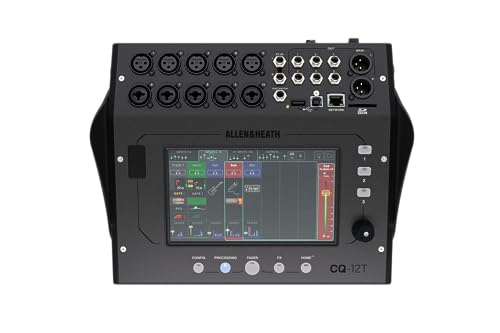
- 7" touchscreen with rotary control for quick setup
- 16x16 USB and SD record/playback for hybrid workflows
- Bluetooth input and 10 mic/line inputs in a compact chassis
Best For: Small bands, solo performers, and creators needing a compact touchscreen mixer with recording support.
Best for Deep Channel Control
Behringer WING 48-Channel Digital Console

- 10" touchscreen and touch-sensitive controls
- 24 motorized faders in configurable sections
- AES50 expansion for large-scale I/O
Best For: Engineers who want a flexible, expandable console for live sound or studio mixing.
Best for Networking
StudioLive SE 24 Digital Console Mixer

- 40 channels with 26 mix buses for larger productions
- Built-in USB, SD recording, and Capture multitracking
- Milan-certified AVB networking for easy system expansion
Best For: Engineers and bands needing a networked console for live sound and recording.
Best for Medium-Sized Rigs
Yamaha TF3 24-Channel Digital Mixing Console

- 24 motor faders for quick, hands-on mixing
- 48 input channels with flexible aux and DCA routing
- Compact design suited to clubs, churches, and portable gigs
Best For: Live sound teams that need a compact touchscreen mixer with serious channel count and routing.
Best for Touchscreen Control
Yamaha MGX12 18ch Digital Mixer
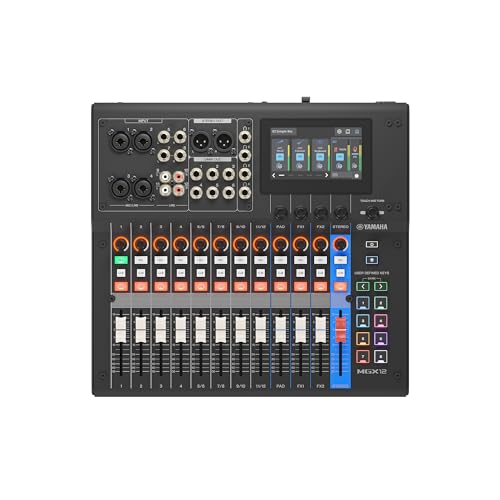
- 4.3" touchscreen plus tactile faders
- 86 dB gain range with Bluetooth and microSD
- Built-in DSP and 4K USB-HDMI capture
Best For: Creators and small venues that want hands-on mixing with touchscreen convenience.
Best Compact Touchscreen Control
Yamaha DM3 Standard 22-Channel Ultracompact Digital Mixer
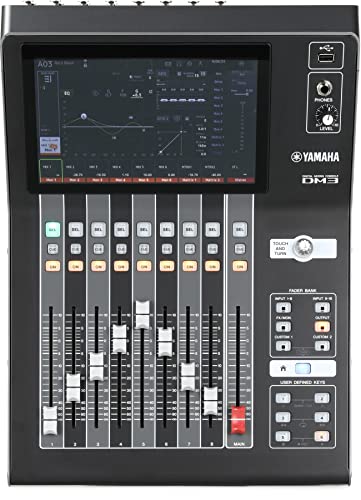
- Ultracompact design for easy transport
- 22 channels for flexible small-to-mid setups
- Touchscreen control streamlines fast mixing
Best For: Engineers and creators who need a compact touchscreen mixer for live, studio, or streaming work.
Best for Touring Protection

- 10.1" touchscreen with motorized faders
- 24 Midas PRO preamps and 40-bit processing
- SKB iSeries case included for transport
Best For: Mobile live-sound teams and touring engineers who need a touchscreen console plus case.
Best for Dante-Ready Compact Rigs
Yamaha DM3-D 22-Channel Digital Mixer

- 9-inch touchscreen speeds up hands-on mixing
- Built-in 16x16 Dante for networked audio
- 96kHz Yamaha engine in an ultracompact chassis
Best For: Engineers and creators who need a compact Dante mixer with touchscreen control.
Best for Channel-Rich Live Mixing – Allen & Heath SQ-5 48-Input Touchscreen Mixer
If you need a digital mixing console with touchscreen that can handle bigger rigs without feeling bulky, the Allen & Heath SQ-5 is a strong fit. It combines 48 input channels, a responsive 7-inch capacitive display, and automatic mic mixing tools in a compact black chassis that works well for live sound, houses of worship, and mobile production.
Best For: Engineers and venues that want a compact but highly capable touchscreen mixer with plenty of channels and modern workflow features.
Pros:
- 48 input channels make it easy to manage full band and event setups.
- 7-inch capacitive touchscreen keeps navigation fast and intuitive.
- Automatic mic mixing is useful for spoken-word and multi-mic applications.
- 32×32 USB audio interface adds solid recording and playback flexibility.
Cons:
- May be more mixer than casual users or small podcast setups need.
- Higher-end feature set comes with a learning curve for beginners.
For buyers comparing a digital mixing console with touchscreen options, the SQ-5 stands out for its balance of channel count, touch control, and practical routing tools. It is especially appealing when you need serious live-mix capability in a format that still travels well.
Best for Large Channel Counts – Yamaha TF5 32-Channel Digital Mixing Console
If you need a digital mixing console with touchscreen-style workflow for bigger live or installed setups, the Yamaha TF5 stands out for its high channel count, motorized faders, and flexible routing. It’s built to handle more inputs than many compact boards, while still keeping hands-on control accessible for fast mixing.
Best For: Churches, schools, small venues, and production teams that need a dependable console with plenty of inputs and easy channel access.
Pros:
- 33 motor faders give you quick access to 32 channels plus master control
- 48 input mixing channels and 20 aux buses offer strong routing flexibility
- 32 XLR/TRS combo inputs handle larger mic and line-heavy setups
- 8 DCA groups help organize complex mixes more efficiently
Cons:
- Larger footprint may be overkill for very small rigs
- Learning curve can be steeper than simpler analog mixers
- No built-in touchscreen details are listed in the product notes
This is a strong pick if your priority is channel capacity and practical live-mix control in a digital mixing console with touchscreen-like workflow benefits. It’s especially appealing when you need to manage multiple sources without sacrificing speed or organization.
Best for Compact Live & Hybrid Setups – Allen & Heath CQ-12T Digital Mixer
The Allen & Heath CQ-12T is a practical digital mixing console with touchscreen for small bands, solo performers, rehearsal spaces, and hybrid recording setups that need modern control without a bulky footprint. Its 7″ capacitive display, built-in Bluetooth, and 16×16 USB/SD recording make it easy to manage mixes and capture sessions from one compact unit.
Best For: Musicians, venues, and creators who want a compact touchscreen mixer with straightforward recording and playback features.
Pros:
- 7″ touchscreen with rotary control makes navigation fast and intuitive
- Bluetooth input plus 16×16 USB and SD record/playback add flexible connectivity
- 10 mic/line inputs give you solid channel count for small to mid-size rigs
- 3 custom SoftKeys help speed up common mixing actions
Cons:
- Not the best choice if you need a large channel count for bigger productions
- Touchscreen workflow may take a little learning for analog-mixer users
Overall, the CQ-12T stands out as a well-rounded digital mixing console with touchscreen control for users who want clean routing, recording flexibility, and an efficient all-in-one format. It’s especially appealing if you value modern features more than a traditional fader-heavy layout.
Best for Deep Channel Control – Behringer WING 48-Channel Digital Console
If you want a digital mixing console with touchscreen that prioritizes flexible routing and hands-on control, the Behringer WING is built for serious live and studio workflows. Its 10″ capacitive display, 24 motorized faders, and configurable surface make it easy to tailor the desk to the way you mix instead of forcing you into a fixed layout.
Best For: Engineers who need a highly configurable console for live sound, recording, or hybrid setups with plenty of I/O expansion.
Pros:
- 10″ touchscreen with a configurable, touch-sensitive control layout
- 24 motorized faders and three customizable surface sections
- Expandability via 3 AES50 ports for large input/output counts
- Includes Midas PRO mic preamps and outputs for pro-grade signal handling
Cons:
- More console than casual users likely need
- Learning curve can be steep if you prefer simpler mixers
- Bundle extras add value, but the desk itself is still a major investment
For buyers who care about routing depth, expandability, and a fast touchscreen workflow, this digital mixing console with touchscreen stands out as a flexible control hub rather than just a basic mixer.
Best for Networking – StudioLive SE 24 Digital Console Mixer
If you need a digital mixing console with touchscreen-friendly control paths and serious routing flexibility, the StudioLive Series III SE 24 is built for larger live rigs, recording, and hybrid studio setups. It combines 40-channel mixing, onboard recording, and deep software integration in a compact 25-fader frame.
Best For: Engineers and bands that need a highly connected console for live sound, multitrack recording, and remote control.
Pros:
- 40 channels, 26 mix buses, and flexible mix layers for complex shows
- Built-in 64×64 USB interface plus SD recording and Capture software
- Milan-certified AVB networking for easy expansion with stage boxes and personal mixers
- Recallable XMAX-R preamps, EQ, and compression on every input and bus
Cons:
- More console than casual users need
- Advanced feature set can take time to learn
As a digital mixing console with touchscreen-style workflow support through software and remote apps, this model stands out for connectivity rather than simplicity. It’s a smart pick if you want one console that can handle live mixing, multitrack capture, and networked expansion without outgrowing it quickly.
Best for Medium-Sized Rigs – Yamaha TF3 24-Channel Digital Mixing Console
The Yamaha TF3 is a practical digital mixing console with touchscreen for live sound teams that need plenty of channels without moving up to a larger, more expensive desk. It combines hands-on fader control with flexible routing, making it a strong fit for churches, clubs, rehearsal spaces, and portable event setups.
Best For: Engineers and venues that want a compact touchscreen mixer with enough I/O and bus routing for serious small-to-midscale productions.
Pros:
- 24 motor faders provide fast, tactile control during mixes
- 48 input mixing channels with 20 aux sends offer solid routing flexibility
- Compact footprint suits spaces where rack-heavy systems are impractical
- Channel layout supports a wide range of live sound applications
Cons:
- Not the smallest or simplest option for basic two-speaker setups
- Limited built-in analog inputs compared with larger installed systems
Overall, the TF3 stands out as a capable digital mixing console with touchscreen for users who want real mixing control, flexible buses, and a manageable size. It is especially appealing if you need a dependable all-rounder rather than a bare-bones beginner board.
Best for Touchscreen Control – Yamaha MGX12 18ch Digital Mixer
If you want a digital mixing console with touchscreen controls that still feels familiar under your fingers, the Yamaha MGX12 is built for that middle ground. It combines tactile faders, a 4.3″ display, built-in DSP, and flexible inputs so you can move quickly in live, streaming, or hybrid setups.
Best For: Creators, small venues, and mobile rigs that need hands-on control plus modern touchscreen workflow.
Pros:
- 4.3″ touchscreen with 5 control knobs for fast navigation and adjustments
- New MGX preamps with 86 dB gain range plus Bluetooth and microSD support
- Built-in DSP and latency-free monitoring for cleaner live control
- USB-HDMI interface with 4K video capture and pass-through for streaming workflows
Cons:
- More feature-rich than a basic analog-style mixer, so setup takes a little learning
- May be more mixer than casual users need for simple two-mic jobs
As a digital mixing console with touchscreen, the MGX12 stands out for blending a hands-on fader layout with useful assistive tools like Auto Gain, Clip Safe, and Scene Recall. It is a strong pick if you want a compact console that can cover live sound, content creation, and quick recall without feeling overly complicated.
Best Compact Touchscreen Control – Yamaha DM3 Standard 22-Channel Ultracompact Digital Mixer
If you want a digital mixing console with touchscreen that stays portable without feeling stripped down, the Yamaha DM3 Standard is a smart middle ground. Its 22-channel layout gives you enough room for small bands, corporate events, streaming setups, and content production, while the ultracompact format makes it easier to fit into tight desks, racks, or mobile rigs.
Best For: Engineers, musicians, and creators who need a compact, touchscreen-driven mixer for versatile live or studio work.
Pros:
- Ultracompact footprint is easy to transport and deploy
- 22-channel configuration suits a wide range of smaller productions
- Touchscreen workflow helps speed up setup and mixing tasks
- Yamaha build quality is a plus for reliable daily use
Cons:
- Not as expansive as larger consoles for bigger shows
- Compact size may feel limiting for complex routing-heavy users
Overall, the DM3 Standard stands out as a practical digital mixing console with touchscreen for buyers who value portability, fast operation, and a professional feature set in a small form factor.
Best for Touring Protection – Behringer WING Compact Bundle
If you want a digital mixing console with touchscreen control that also travels safely, this Behringer WING Compact bundle is a strong fit. It pairs a feature-rich 48-channel, 28-bus stereo console with an SKB iSeries case, making it practical for engineers who need serious capability and reliable protection in one package.
Best For: Mobile FOH and live-sound users who want a touchscreen workflow, plenty of I/O, and a protective travel case.
Pros:
- 10.1″ capacitive touchscreen with 12+1 motorized faders for fast hands-on control
- 24 Midas PRO preamps, 40-bit processing, and 16 stereo effects engines
- Included SKB iSeries case adds real-world transport protection for touring and gigging
- Flexible connectivity with AES50, USB 2.0, and 64×64 expansion support
Cons:
- Bundle may be more than casual users or small church setups need
- Advanced feature set can take time to learn if you’re new to digital consoles
As a digital mixing console with touchscreen control, the WING Compact stands out for blending deep routing, strong sound quality, and live-friendly portability. It is especially appealing if you want one system that can handle demanding shows while staying protected between gigs.
Best for Dante-Ready Compact Rigs – Yamaha DM3-D 22-Channel Digital Mixer
If you need a digital mixing console with touchscreen control for live sound, streaming, or a small studio, the Yamaha DM3-D stands out for packing pro-grade features into a very small footprint. Its 96kHz audio path, 16×16 Dante networking, and 9-inch touch display make it a strong fit when space is tight but quality still matters.
Best For: Engineers, creators, and venues that want a compact, Dante-enabled mixer with fast touchscreen workflow and Yamaha sound quality.
Pros:
- 9-inch touchscreen and touch-and-turn control keep setup fast and intuitive
- 16×16 Dante interface adds flexible networking for live and installed systems
- 96kHz operation and Yamaha preamps deliver clean, professional sound
- Ultra-compact design is easy to move between gigs or use in a studio
Cons:
- Only 8 analog outputs may feel limiting for larger routing setups
- Ultracompact layout means fewer physical controls than bigger consoles
For buyers who want a digital mixing console with touchscreen operation plus Dante connectivity in a travel-friendly form, the DM3-D is one of the most capable compact options in Yamaha’s lineup. It’s especially appealing if you value speed, audio quality, and networking over having a full-size surface.
How We Picked the Best Digital Mixing Console with Touchscreen
We focused on consoles that balance touchscreen workflow, channel capacity, routing flexibility, sound quality, and real-world usability. Because a digital mixer often serves multiple roles, we also looked at onboard processing, multitrack recording options, wireless or network connectivity, and how well each model fits different production needs.
We favored units that are practical for both experienced engineers and teams that need a shorter learning curve. That means clear layouts, responsive screens, and features that reduce setup time and on-the-fly mistakes.
Quick Comparison: What Stands Out
In broad terms, larger consoles like the Yamaha TF5, Yamaha TF3, and Behringer WING models suit users who need more faders, inputs, and routing flexibility. Compact picks such as the Yamaha DM3 series and Allen & Heath CQ-12T are better for smaller venues, mobile rigs, and streamlined setups. Mid-size options like the Allen & Heath SQ-5 and StudioLive SE 24 aim for a balance of control and portability.
If you want a Digital Mixing Console with Touchscreen for fast setup and simple operation, compact models can be easier to deploy. If you need advanced scene control, monitor mixes, or more complex routing, larger surfaces usually provide a better experience.
Key Buying Factors for a Digital Mixing Console with Touchscreen
Channel Count and Bus Layout
Make sure the console has enough input channels and aux or bus outputs for your current setup plus a little room to grow. Bands, churches, and theaters often outgrow small mixers sooner than expected.
Screen Size and Workflow
A larger touchscreen can improve navigation, but software design matters just as much. Look for fast channel access, intuitive routing, and clear meters rather than screen size alone.
Connectivity and Integration
Check for USB audio, Dante, Bluetooth, network control, and recording support if your workflow depends on them. A flexible digital mixer should connect easily to laptops, stage boxes, and playback devices.
Physical Control Surface
Touchscreen control is powerful, but faders and encoders still matter during live shows. A hybrid layout often gives the best mix of speed and precision.
Portability and Durability
If you travel often, weight, footprint, and case compatibility are important. Touring teams and rental users should prioritize sturdy construction and accessories that protect the console in transit.
Who Should Buy Which Digital Mixing Console with Touchscreen?
Choose a compact model if you mix small bands, corporate events, podcasts, or church services and need a fast, portable setup.
Choose a mid-size console if you want a balance of hands-on control, enough channels for most gigs, and a less intimidating learning curve.
Choose a larger surface if you manage multiple monitor mixes, complex routing, or larger productions that benefit from more faders and deeper control.
For most buyers, the best choice comes down to how much control you want at the desk versus how much you want to manage from the touchscreen. The right Digital Mixing Console with Touchscreen should speed up your workflow, not complicate it.