
The right mixer can make a live stream sound cleaner, more consistent, and easier to manage. This roundup compares 10 digital mixing consoles for live streaming, from compact Bluetooth models to larger consoles with USB interfaces and built-in effects.
We focus on practical features that matter on camera and in real time, including input capacity, phantom power, monitoring, computer connectivity, and control flexibility.
Best 10 Digital Mixing Consoles for Live Streaming Picks for 2026
Versatile Digital Hub
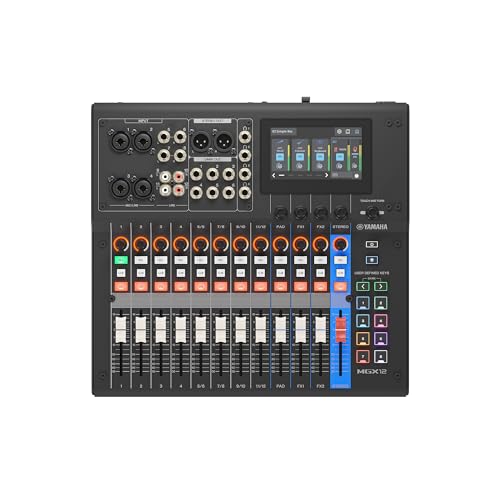
- 18 channels with tactile faders and touchscreen control
- DSP, Auto Gain, Clip Safe, and Scene Recall
- USB-HDMI interface with 4K video capture and pass-through
Best For: Multi-source live streaming and small production setups
Budget Streaming Mixer
FULUODE CT-80S 8-Channel Mixer

- Eight channels with 48V phantom power
- Bluetooth 5.0, USB playback, and recording
- Thin design with LED display and reverb
Best For: Karaoke, conferences, and compact home streaming setups
Video-Ready Control Surface

- 18 channels with touchscreen and tactile faders
- Dual USB-C audio/video interface
- 4K HDMI capture and pass-through with onboard DSP
Best For: Video-centric live streaming and hands-on production control
Compact Effects Mixer

- Four XLR inputs with 48V phantom power
- Bluetooth, USB playback, and recording
- 16 DSP effects plus three-band EQ
Best For: Small streaming, karaoke, and live-performance setups
Feature-Rich Control

- 16 channels with independent EQ, gain, faders, and mutes
- Bluetooth, USB playback, and 99 DSP effects
- 48V phantom power with XLR and 1/4-inch compatibility
Best For: Larger live, karaoke, studio, and small-performance setups
Streaming-Ready Flexibility

- Eight XLR and 1/4-inch input channels
- USB recording, playback, and Bluetooth streaming
- Three-band EQ with reverb, delay, and headphone monitoring
Best For: Streaming, podcasting, meetings, and small live shows
Compact Creator Setup

- Lightweight 5-channel design with XLR, RCA, and 6.35mm inputs
- USB recording, USB-A playback, Bluetooth, and headphone monitoring
- Three XLR inputs with switchable 48V phantom power
Best For: Solo streaming, podcasting, online presentations, and compact setups
Compact Streaming Starter

- Four-channel layout with XLR and 1/4-inch inputs
- Bluetooth, USB, flash, and MP3 playback
- 3-band EQ, 48V phantom power, and headphone output
Best For: Small streaming rigs, karaoke, and portable live setups
Eight-Channel Value Pick

- Eight channels for multiple microphones and sources
- Bluetooth playback plus USB recording and MP3 support
- 3-band EQ, reverb, and 48V phantom power
Best For: Multi-microphone streams, karaoke, and small events
Advanced Effects Choice

- 99 DSP presets and 7-band graphic EQ
- Eight channels with compression and dual AUX sends
- USB, Bluetooth, PAD, and per-channel phantom power
Best For: Detailed live mixes, performances, and effects-focused streams
Versatile Digital Hub – Yamaha MGX12
The Yamaha MGX12 is a strong option among digital mixing consoles for live streaming, combining 18 channels with tactile faders, a touchscreen interface, and a USB-HDMI interface with 4K video capture and pass-through. Its built-in DSP and assistive mixing features can help streamline production for creators handling several audio sources.
Best For: Live streamers and small production teams needing extensive I/O, onboard processing, and video connectivity.
Pros:
- 18-channel configuration with versatile auxiliary, Bluetooth, and USB connectivity
- 4.3-inch touchscreen, five control knobs, and tactile faders
- Built-in DSP supports professional sound and latency-free monitoring
- Includes Auto Gain, Clip Safe, Scene Recall, and a 4K-capable USB-HDMI interface
Cons:
- At 14.7 pounds, it is less portable than smaller mixers
- It requires corded electric power
- The product listing does not specify a software-update date
The MGX12 is suited to more involved streaming setups where hands-on control and multiple connections matter. Its feature set is broader than a basic mixer, though the larger chassis may be excessive for simple, mobile broadcasts.
Budget Streaming Mixer – FULUODE CT-80S 8-Channel Mixer
The FULUODE CT-80S is a compact 8-channel choice for shoppers comparing digital mixing consoles for live streaming on a budget. It combines Bluetooth 5.0, USB playback and recording, reverb, MP3 support, and 48V phantom power in a thin enclosure.
Best For: Home KTV, karaoke, conferences, campus activities, and small live music or streaming setups.
Pros:
- Eight channels support microphones and instruments
- Bluetooth 5.0, USB, MP3 playback, and USB recording are built in
- 48V phantom power supports compatible condenser microphones
- Thin 1.57-inch design and large LED display
Cons:
- The listing identifies USB as the output connector type
- At 3.3 kg, it is not the lightest compact mixer
- The product is specified for 110-volt power with an American plug
The CT-80S offers a practical collection of streaming-friendly features without a large channel count. It is a reasonable fit for straightforward setups, but buyers needing advanced digital routing or a more detailed control surface may want a higher-end console.
Video-Ready Control Surface – Yamaha MGX12V
The Yamaha MGX12V is designed for creators who need digital mixing consoles for live streaming with both audio and video connectivity. Its 18 channels, dual USB-C audio/video interface, 4K capture and pass-through, touchscreen, and built-in DSP give it a flexible role in a more developed streaming workflow.
Best For: Video-focused streamers who want hands-on mixing plus integrated HDMI capture and pass-through.
Pros:
- 18 channels with Bluetooth, auxiliary, HDMI, and USB connectivity
- Dual USB-C audio/video interface with 4K video capture and pass-through
- Touchscreen, five control knobs, and tactile faders support direct operation
- Auto Gain, Clip Safe, Scene Recall, and latency-free monitoring features
Cons:
- The listing does not specify a software-update date
- It requires corded electric power
- Its expanded video and I/O features may be more than basic streams require
Compared with a conventional audio-only mixer, the MGX12V is particularly appealing when video routing is part of the production. Its 9.1-pound weight is more manageable than the MGX12, while the channel count and control features remain substantial.
Compact Effects Mixer – 6-Channel Bluetooth DSP Mixer
This 6-channel mixer is a straightforward option among digital mixing consoles for live streaming, with Bluetooth, USB playback and recording, 48V phantom power, three-band EQ, and 16 DSP effects. Its four XLR inputs and 1/4-inch connections support microphones, instruments, and other audio sources.
Best For: Karaoke, small live gigs, home studios, and simple streaming or recording setups needing effects and wireless playback.
Pros:
- Four XLR inputs with switchable 48V phantom power
- Bluetooth and USB support music playback and recording
- Three-band EQ and 16 built-in DSP effects provide tone-shaping options
- Supports microphones, guitars, instruments, and stereo inputs
Cons:
- Only six channels are available
- The product is a traditional analog mixer rather than a fully digital console
- The listed manufacturer warranty is 90 days
This mixer makes sense for smaller streaming rigs where Bluetooth playback, microphone support, and onboard reverb or delay are more important than advanced digital routing. Its analog design keeps the feature set accessible, but limits the distinction implied by the digital-console keyword.
Feature-Rich Control – 16-Channel Digital Mixer
For shoppers comparing digital mixing consoles for live streaming, this 16-channel model offers substantial input capacity plus hands-on tone and effects control. Bluetooth and USB playback make it practical for adding music, while the channel-level controls support more involved live, karaoke, studio, and small-performance setups.
Best For: Live performers, karaoke hosts, small venues, and users who need many inputs with extensive onboard effects.
Pros:
- 16 channels with independent gain, three-band EQ, fader, and mute controls.
- Includes Bluetooth, U-disk/USB playback, and a digital display player.
- Offers 99 DSP effects plus a seven-band master graphic EQ.
- 48V phantom power supports condenser microphones, along with XLR and 1/4-inch sources.
Cons:
- Its larger 18.9-inch width and 8.26 kg weight may be less convenient for portable streaming rigs.
- The supplied notes do not confirm software-update support.
This is the most expansive option of the three for channel count and sound shaping. Choose it when your streaming or performance setup benefits from numerous connected sources and a broad effects selection rather than a compact footprint.
Streaming-Ready Flexibility – 8-Channel USB Mixer
This 8-channel console is a balanced choice among digital mixing consoles for live streaming, combining multiple microphone inputs with USB connectivity, Bluetooth playback, and recording options. Its channel-by-channel controls and headphone monitoring are useful for streams, podcasts, meetings, and small live shows.
Best For: Streamers, podcasters, small bands, presenters, and creators who want flexible computer and mobile audio connections.
Pros:
- Eight channels accept XLR and unbalanced 1/4-inch connections.
- USB supports computer connection, music playback, mixing, and recording to a flash drive.
- Provides Bluetooth streaming, three-band EQ, gain controls, reverb, and delay.
- PFL/AFL monitoring and a 6.5mm headphone output help with private monitoring.
Cons:
- It has fewer channels than the 16-channel alternative.
- The supplied notes do not specify dimensions or software-update support.
With a one-year warranty and a control layout aimed at accessible live adjustment, this model fits creators who need more than a basic interface without moving to a larger 16-channel board. Its USB recording and monitoring features are particularly relevant to streaming workflows.
Compact Creator Setup – 5-Channel USB Mixer
For compact digital mixing consoles for live streaming, the BOMGE BM-05 focuses on essential connectivity in a lightweight format. It combines three XLR inputs with stereo line inputs, USB recording and playback, Bluetooth, headphone monitoring, and simple echo or delay effects for smaller creator setups.
Best For: Solo streamers, podcasters, online presenters, and small recording or karaoke setups with modest input needs.
Pros:
- Compact 5-channel design weighs 0.78 kg and includes XLR, RCA, and 6.35mm connections.
- USB-B supports computer, phone, or tablet mixing and recording with the appropriate OTG adapter for phones.
- USB-A playback/recording, Bluetooth music input, and a headphone monitor are built in.
- Three XLR inputs provide switchable 48V phantom power.
Cons:
- Bluetooth range is listed as only 1.5 feet.
- USB, Bluetooth, and four/five-channel functions cannot be used simultaneously.
- Its two-band EQ is less extensive than the EQ controls on the larger mixers.
This is the most portable option for a straightforward streaming or podcasting station. Its limitations matter for complex productions, but the low weight and broad basic connectivity make it convenient when only a few sources are required.
Compact Streaming Starter – Pyle PMXU43BT.5
The Pyle PMXU43BT.5 is a compact option among digital mixing consoles for live streaming, combining four channels with Bluetooth, USB, flash-drive, and MP3 playback. Its XLR/1/4-inch inputs, 3-band channel EQ, headphone output, and 48V phantom power cover the essentials for simple vocal, music, karaoke, and streaming setups.
Best For: Small streaming rigs, karaoke, live gigs, and users who want wireless music playback in a compact mixer.
Pros:
- Bluetooth, USB, flash-reader, and MP3 compatibility support flexible playback and recording.
- Four channels include XLR and unbalanced 1/4-inch inputs with 48V phantom power.
- Compact steel chassis with sealed rotary controls is suited to portable use.
- Built-in 3-band EQ, peak indicators, and headphone connectivity aid basic monitoring and shaping.
Cons:
- Four channels provide less expansion room than the eight-channel alternatives.
- The supplied notes do not specify a warranty or software-update support.
Choose this mixer when straightforward controls and multiple playback options matter more than advanced routing. It is a practical entry point for modest digital mixing consoles for live streaming setups.
Eight-Channel Value Pick – AX-80 Digital Mixer
The AX-80 expands the input count to eight channels for creators comparing digital mixing consoles for live streaming with room for several microphones and sources. Bluetooth playback, USB recording, an MP3 player/recorder, 3-band EQ, reverb, and 48V phantom power make it adaptable for podcasts, karaoke, events, and live performances.
Best For: Multi-microphone streams, karaoke, conferences, small events, and users who need eight channels on a budget.
Pros:
- Eight-channel design offers more input capacity than compact four-channel mixers.
- Bluetooth supports wireless playback from phones and tablets with a stated range of up to 33 feet.
- USB recording, MP3/WAV/WMA playback, and an LCD provide convenient media control.
- 3-band EQ, reverb, balanced inputs, and 48V phantom power support varied audio sources.
Cons:
- The notes state that it cannot connect to a MacBook for recording.
- It is designed for 110V power with a standard US plug.
- Its larger footprint and 4.51 kg weight may be less convenient for highly portable setups.
The AX-80 is a strong fit when channel count and built-in playback or recording features are priorities. Verify computer compatibility and power requirements before choosing it for a streaming workflow.
Advanced Effects Choice – CS-8 Live Streaming Mixer
The CS-8 targets creators who want more tone and effects control from digital mixing consoles for live streaming. Its eight channels combine channel compression, dual AUX sends, 99 DSP presets, a 7-band graphic EQ, Bluetooth, USB playback and recording, individual PAD switches, and 48V phantom power.
Best For: Live streamers, performers, and home or professional audio users who want onboard effects, flexible routing, and detailed EQ control.
Pros:
- 99 DSP presets and a 7-band graphic EQ provide extensive sound-shaping options.
- Eight channels include 3-band EQ, dedicated compression controls, and dual AUX sends.
- Individual PAD and 48V phantom-power functions accommodate varied microphones and instruments.
- Bluetooth, USB playback, USB recording, metering, and headphone monitoring support streaming workflows.
Cons:
- The broader control set may require more setup time than a basic mixer.
- The supplied notes do not identify software-update support.
- Its listed power specification is 110V AC.
Pick the CS-8 when onboard effects, routing flexibility, and detailed EQ are more important than keeping the interface minimal. It offers the most extensive processing feature set of these three options for a more hands-on streaming mix.
How We Picked the Best Digital Mixing Consoles for Live Streaming
We selected these mixers based on the features most useful for livestreaming, podcasting, DJ sets, online lessons, and small live productions. Our comparison considers channel count, microphone and instrument support, USB connectivity, Bluetooth and media playback, onboard effects, phantom power, equalization, and overall setup flexibility.
Because product specifications and included software can vary by seller or configuration, confirm the current listing before purchase. A higher channel count does not automatically mean a better fit; the best console is the one that matches your sources and workflow without adding unnecessary complexity.
Quick Comparison
| Best For | Look For | Typical Advantage |
|---|---|---|
| Solo streamers | 4–6 channels, USB, Bluetooth | Compact setup and simple routing |
| Interview or podcast setups | 6–8 channels, multiple mic inputs, phantom power | Room for several speakers and microphones |
| Music livestreams | 8–18 channels, EQ, DSP effects | More instruments and detailed mixing control |
| Computer-based production | USB audio interface and monitoring | Direct connection to streaming software |
Key Buying Factors for Digital Mixing Consoles for Live Streaming
Inputs and Future Expansion
Count the microphones, instruments, playback devices, and guest sources you use now, then leave some headroom. Condenser microphones require 48V phantom power, while stereo music sources may need dedicated line inputs. An 8-channel mixer is often a practical middle ground for growing setups; larger 16- or 18-channel models suit bands and multi-source productions.
USB Connectivity and Monitoring
A USB audio interface can send the mix directly to a computer for streaming or recording. Check whether the mixer provides the input and output routing you need, and look for a headphone output with independent level control. Dual USB-C connections may be useful when separating audio and video workflows, but compatibility with your computer and streaming software still matters.
Effects, EQ, and Wireless Playback
Built-in reverb, echo, delay, DSP presets, and equalization can improve vocals and simplify a live show. Bluetooth and USB media playback are convenient for background music, though wired connections are generally preferable when minimizing latency and maintaining consistent reliability.
Controls and Setup Complexity
Physical knobs and faders are easy to adjust during a broadcast, while digital controls and presets can provide deeper routing options. Choose a layout you can operate quickly without taking attention away from the stream.
Who Should Buy Which Digital Mixing Consoles for Live Streaming?
Choose a compact 4- or 6-channel model if you stream alone, use one or two microphones, or want a straightforward desktop setup. Choose an 8-channel console for interviews, small performances, multiple microphones, and room to expand. Choose a 16- or 18-channel Yamaha-style console when you need more sources, stronger routing flexibility, or a more structured music-production workflow.
For buyers prioritizing ease of use, focus on USB connectivity, clear controls, and reliable monitoring. For musicians and producers, prioritize input headroom, phantom power, EQ, DSP effects, and the ability to connect all instruments without constantly repatching cables.