
Mixing in an untreated room makes every monitoring decision more difficult. Reflections, uneven bass, and limited placement can disguise problems that seem obvious in a treated studio.
The right digital console cannot fix room acoustics, but flexible routing, reliable metering, onboard processing, remote control, and sensible monitoring tools can make your workflow more consistent.
Best 10 Digital Mixing Consoles for Untreated Rooms Picks for 2026
Full-Scale Control

- 40 inputs and 25 buses
- 32 programmable MIDAS preamps
- 25 motorized faders
Best For: Large studio and live mixing setups
Compact Wireless Workflow

- 16 mic or line inputs
- Dual-band Wi-Fi and Bluetooth
- 24x24 USB and SD recording
Best For: Compact studios and mobile live rigs
Ultracompact Precision
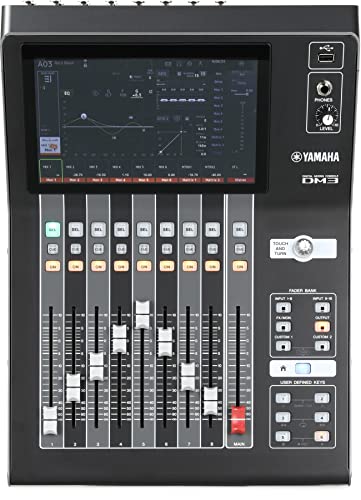
- 22-channel compact design
- 96kHz sample-rate operation
- 9-inch touchscreen and 18x18 USB
Best For: Small studios needing compact high-resolution mixing
Expandable Pro Platform

- Up to 38 inputs and 24 outputs
- 96kHz FPGA processing
- SLink expansion and USB-C multitrack
Best For: Professional live, recording, and installed audio systems
Flagship Routing Power
WING 48-Channel Digital Console

- 48 channels and 28 buses for complex mixes
- 24 motorized faders with configurable sections
- AES50 remote I/O supports up to 144 signals
Best For: Large live, studio, and broadcast setups
Hands-On Recording Hub

- Physical EQ and auxiliary controls reduce menu diving
- Records 24 tracks simultaneously to SD card
- USB interface connects directly to PC or Mac
Best For: Hands-on home-studio and rehearsal recording
Compact Room-Friendly Control

- Touch faders and a 7-inch display enable hands-on mixing
- Built-in EQ, compression, and 16-preset effects
- USB, Bluetooth, app control, and scene recall
Best For: Portable live sound and practice spaces
Flexible Rackmount Control

- 40 inputs and 25 buses for complex routing
- 16 programmable Midas mic preamps
- 32 x 32 USB interface with motorized faders
Best For: Expandable studio and live setups needing hands-on control
Classic Hands-On Workflow

- 16 inputs with 12 physical faders
- Fat Channel processing on channels and buses
- 18-in/16-out USB recording interface
Best For: Small studios and live rigs favoring tactile operation
Compact Wireless Mixing
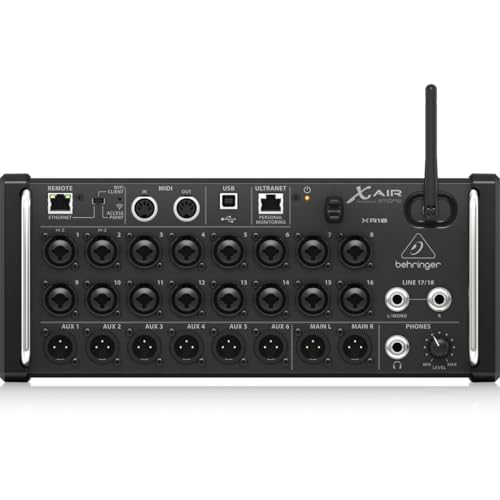
- 18 inputs with 16 programmable Midas preamps
- Built-in Wi-Fi for tablet control
- 18 x 18 bidirectional USB interface
Best For: Compact setups using wireless tablet-based mixing
Full-Scale Control – Behringer X32
For digital mixing consoles for untreated rooms, the Behringer X32 provides a substantial control surface and extensive routing for studio or live applications. Its 40-input design, 32 programmable mic preamps, and motorized faders offer plenty of hands-on control, though its large footprint deserves careful room planning.
Best For: Larger studios, rehearsal spaces, and live setups that need extensive inputs, buses, and physical control.
Pros:
- 40-input, 25-bus architecture supports complex mixes.
- 32 MIDAS-designed programmable mic preamps.
- 25 motorized 100 mm faders support scene management and quick visual control.
- Offers 16 XLR outputs plus additional line inputs/outputs and talkback features.
Cons:
- Large and heavy at approximately 45.4 pounds.
- Its extensive feature set may be more than a compact setup requires.
The X32 is a feature-rich choice when input capacity and tactile workflow matter more than saving desk space. In an untreated room, its routing flexibility can support a carefully organized setup, but its dimensions make placement and monitoring position important.
Compact Wireless Workflow – Allen & Heath CQ-20B
The Allen & Heath CQ-20B is a practical option among digital mixing consoles for untreated rooms when a compact, remotely accessible setup is useful. It combines 16 mic or line inputs with built-in dual-band Wi-Fi, Bluetooth, USB recording, and SD card support in a lightweight stage-box format.
Best For: Small studios, mobile rigs, and compact live setups that prioritize wireless control and recording flexibility.
Pros:
- Provides 16 mic or line inputs, including eight combi inputs.
- Built-in 2.4GHz/5GHz Wi-Fi includes automatic channel selection.
- Supports stereo Bluetooth input and 24×24 USB interfacing.
- Includes 24×24 SD card record/playback functionality.
Cons:
- Has fewer inputs and physical controls than larger consoles.
- Its stage-box format may not suit users wanting a traditional full-size control surface.
The CQ-20B keeps the system portable while providing useful wireless and multitrack capabilities. It is a sensible fit where space is limited and remote operation is more valuable than a large onboard control layout.
Ultracompact Precision – Yamaha DM3 Standard
The Yamaha DM3 Standard offers a compact approach to digital mixing consoles for untreated rooms, with 22 channels, 96kHz processing, and a 9-inch touchscreen. Its relatively small 20-pound chassis can be easier to position in a limited workspace while retaining professional Yamaha preamps and USB audio functions.
Best For: Small studios and production spaces needing high-resolution audio, touchscreen control, and a compact footprint.
Pros:
- Uses a 96kHz sample rate for detailed digital audio processing.
- Provides 22 channels with six mono or three stereo mixes, two matrices, and a stereo bus.
- Includes 16 Yamaha preamps and eight XLR analog outputs.
- Offers a 9-inch touchscreen and 18×18 USB audio interface.
Cons:
- Has less input capacity than larger consoles in this roundup.
- The compact chassis may provide less hands-on control than a large motorized-fader surface.
The DM3 Standard is a strong space-conscious choice for users who want a modern touchscreen workflow and high sample-rate operation. Its compact dimensions can simplify placement in an untreated room, while its channel count suits smaller productions.
Expandable Pro Platform – Allen & Heath Qu-5
The Allen & Heath Qu-5 is a capable choice among digital mixing consoles for untreated rooms when a professional workflow and future expansion are priorities. It combines 38 inputs, 24 outputs, 96kHz FPGA processing, multichannel recording, configurable mixes, and app-based remote control.
Best For: Professional live sound, recording, and installed audio systems that need extensive routing and expansion options.
Pros:
- Supports up to 38 inputs, 12 configurable mixes, and four matrix outputs.
- Provides 16 XLR/TRS combi inputs, 12 XLR outputs, and AES3 digital output.
- Includes a 128×128 SLink expansion port and USB-C 32×32 interface.
- Offers six multi-FX engines, multichannel recording, 17 motorized faders, and remote apps.
Cons:
- Its extensive routing and control features may be unnecessary for smaller setups.
- Requires a more deliberate setup and placement strategy than an ultracompact mixer.
The Qu-5 is built for demanding systems that may grow over time. Its connectivity, recording options, and customizable control surface provide substantial flexibility, while remote apps can help manage a setup where the listening position is not ideal.
Flagship Routing Power – WING 48-Channel Digital Console
For digital mixing consoles for untreated rooms, the Behringer WING offers extensive routing and hands-on control so you can manage complex live, studio, or broadcast setups from one surface. Its large touch display, configurable fader sections, and onboard Midas PRO components provide a substantial control center, though its feature depth may be more than a small room needs.
Best For: Large live-sound, studio-recording, and broadcast setups that need high channel capacity and flexible signal routing.
Pros:
- 48 channels and 28 buses support complex mixes.
- Includes eight Midas PRO mic preamps and eight Midas PRO outputs.
- Twenty-four motorized 100 mm faders are arranged across three configurable sections.
- Three AES50 ports support remote I/O connectivity for up to 144 input and output signals.
Cons:
- The 72.4-pound design is less convenient for portable setups.
- The extensive feature set may be excessive for basic room mixing.
The WING is the most capable option here for complex routing and large input counts. In an untreated room, its flexible control can help organize a demanding setup, but buyers should make sure they actually need its scale before choosing this heavy console.
Hands-On Recording Hub – Tascam Model 24 Mixer
The Tascam Model 24 is a practical choice among digital mixing consoles for untreated rooms when you want familiar physical controls instead of menu-heavy operation. Its analog-style layout, multitrack SD recording, and USB interface make it useful for tracking and mixing, while the supplied notes identify it as a 24-track mixer and recorder.
Best For: Home studios, rehearsal spaces, and mobile setups that need hands-on mixing plus multitrack recording.
Pros:
- Physical EQ and auxiliary controls keep key adjustments accessible.
- Sixteen TASCAM mic preamps provide multiple microphone inputs.
- Records up to 24 tracks simultaneously at 24-bit/48 kHz to an SD card.
- Works as a USB audio interface with a PC or Mac.
Cons:
- It uses an analog mixer design rather than a fully digital control surface.
- The supplied specifications list a relatively limited channel detail, so confirm the exact input configuration before buying.
The Model 24 stands out for straightforward, tactile operation and integrated recording. It will not provide the same digital routing depth as the WING, but its accessible controls can be easier to manage when room acoustics are inconsistent and quick adjustments matter.
Compact Room-Friendly Control – Alto TMD16 Digital Mixer
For digital mixing consoles for untreated rooms, the Alto TMD16 combines tactile controls with onboard processing in a compact chassis. Its 7-inch display, touch-sensitive faders, EQ, compression, and effects provide practical tools for shaping live mixes without requiring a tablet, while Bluetooth and USB add flexible connectivity.
Best For: Small venues, rehearsal spaces, houses of worship, event centers, and mobile live-sound setups.
Pros:
- Ten digital mic preamps support microphone-based live setups.
- 100 mm capacitive touch faders and dedicated encoders provide hands-on control.
- Built-in parametric EQ, compression, and a 16-preset effects engine reduce extra gear needs.
- Four aux sends and four subgroups support monitor mixes and effects loops.
Cons:
- Its 16-channel capacity is smaller than the WING and Tascam options.
- The supplied notes focus on live applications rather than dedicated multitrack recording.
The TMD16 is a balanced option for buyers who want modern digital processing without giving up physical control. Its compact, 5.45 kg design suits portable systems, while scene recall can help maintain consistent setups when room conditions and events change.
Flexible Rackmount Control – X32 Producer
The Behringer X32 Producer is a full-featured option for digital mixing consoles for untreated rooms, especially when you need extensive routing and hands-on control. Its 40-input, 25-bus design, programmable Midas preamps, and automated motorized faders provide plenty of flexibility for studio or live applications.
Best For: Home studios and live setups that need high channel capacity, detailed scene management, and rack-mountable hardware.
Pros:
- 40 inputs and 25 buses offer substantial routing flexibility.
- Includes 16 programmable Midas-designed mic preamps.
- Motorized faders support quick overviews, scene management, and DAW control.
- Provides a 32 x 32 USB audio interface and iPad/iPhone remote control.
Cons:
- At 25.1 pounds, it is less portable than compact digital mixers.
- Its large feature set may be more than a small setup requires.
The X32 Producer is a strong choice when expansion and hands-on operation matter more than simplicity. For untreated rooms, its processing and routing capabilities can support careful setup, but the console does not replace acoustic treatment or room correction.
Classic Hands-On Workflow – StudioLive 16.0.2 USB
The PreSonus StudioLive Classic 16.0.2 USB is a practical pick among digital mixing consoles for untreated rooms when straightforward physical control and built-in processing are priorities. It combines 16 channel inputs, Fat Channel processing, onboard effects, and USB recording in a compact console format.
Best For: Small studios and live rigs that want tactile mixing, built-in dynamics and EQ, and an included software ecosystem.
Pros:
- Offers 16 channel inputs with 12 physical faders.
- Fat Channel processing is available on all channels and buses.
- Includes two digital effects processors and a 31-band graphic EQ on the main bus.
- 18-in/16-out USB recording works at 24-bit/44.1 kHz or 48 kHz.
Cons:
- Its 16-channel capacity is lower than the X32 Producer.
- The console uses 60 mm faders rather than longer 100 mm faders.
- It is limited to four auxiliary buses.
The StudioLive 16.0.2 USB keeps the workflow accessible while providing useful tools for managing inconsistent sources in an untreated space. Its included Studio One Artist, Capture, UC Surface, and QMix-UC software add recording and remote-control options without requiring a separate software package.
Compact Wireless Mixing – X AIR XR18
The Behringer X AIR XR18 is a compact, tablet-controlled option for digital mixing consoles for untreated rooms. It provides 18 inputs, 16 programmable Midas preamps, built-in tri-mode Wi-Fi, and an 18 x 18 bidirectional USB interface in a 7.1-pound chassis.
Best For: Space-conscious studios and live setups that prefer wireless tablet control and multichannel USB recording.
Pros:
- Compact 7.1-pound design is easy to position or transport.
- Includes 16 programmable Midas-designed mic preamps.
- Built-in Wi-Fi supports direct iPad or Android tablet operation.
- 18 x 18 bidirectional USB supports multichannel recording and playback.
Cons:
- It has no physical faders for hands-on mixing.
- Operation depends on iPad or Android tablet control.
- Its 18-input and 12-bus capacity is smaller than the X32 Producer.
The XR18 is a convenient fit when desk space is limited and remote control is desirable. In an untreated room, its compact format and digital workflow leave more space for practical monitoring adjustments, but wireless tablet operation may not suit users who require dedicated console controls.
How We Picked the Best Digital Mixing Consoles for Untreated Rooms
We focused on consoles that offer practical control in less-than-ideal monitoring spaces. Our criteria included metering, EQ and dynamics processing, bus flexibility, scene or preset recall, monitoring connectivity, remote operation, recording features, and ease of setup. We also considered different workflows, from compact tablet-controlled mixers to larger consoles suited to live sound, rehearsal rooms, and project studios.
Because no console compensates for poor acoustics, we favored features that help you verify decisions from multiple angles: dependable headphone monitoring, flexible outputs, clear signal routing, and the ability to compare mixes at sensible listening levels.
Quick Comparison
| Best For | Shortlist Options |
|---|---|
| Full live-sound flexibility | Behringer X32, Behringer WING, Allen & Heath Qu-5 |
| Compact digital control | Allen & Heath CQ-20B, Yamaha DM3, Behringer X AIR XR18 |
| Rack or portable setups | Behringer X32 PRODUCER, XR18, ALTO TMD16 |
| Hands-on recording workflow | Tascam Model 24, PreSonus StudioLive 16.0.2 USB |
Key Buying Factors for Digital Mixing Consoles for Untreated Rooms
Monitoring and Metering
Choose a console with clear meters, useful solo and mute functions, and dependable headphone or control-room outputs. In an untreated room, check important balances at lower volume and on headphones rather than trusting one listening position.
Processing and Routing
Parametric EQ, high-pass filters, compression, gates, effects, and flexible buses help control sources before room reflections become distracting. Multiple outputs are valuable if you need separate monitor, headphone, broadcast, or recording feeds.
Remote Control and Placement
Tablet or computer control lets you operate the mixer away from the room’s strongest reflection point. Wireless control is convenient, but a wired or local fallback is preferable for critical performances.
Recording and Expansion
USB multitrack recording, direct recording, or an integrated recorder can simplify sound checks and allow later mix verification elsewhere. Check channel counts, sample rates, I/O types, and whether expansion requires additional hardware.
Who Should Buy Which Digital Mixing Consoles for Untreated Rooms?
Choose the Behringer X32 or WING if you need extensive routing and live-production control. The Allen & Heath Qu-5 suits users who want a modern, high-resolution mixer with substantial I/O. For compact setups, consider the CQ-20B, Yamaha DM3, or X AIR XR18. The X32 PRODUCER is a sensible rack-oriented choice where space matters.
For hands-on operation and straightforward recording, the Tascam Model 24 is a natural fit, while the PreSonus StudioLive 16.0.2 USB suits smaller established workflows. The ALTO TMD16 is worth considering for basic portable mixing with Bluetooth convenience.
Whichever model you choose, pair it with calibrated monitoring habits, strategic speaker placement, headphones, and reference tracks. Those practices matter as much as console features when working in an untreated room.