
Choosing among the best digital mixing consoles means balancing channel count, workflow, connectivity, processing, and long-term expandability. The right desk can simplify live production while also serving as a capable recording or streaming hub.
This roundup compares 10 models across compact, app-controlled, studio-friendly, and full-size console categories, so you can narrow the field by setup, budget, and operating style.
Best 10 Digital Mixing Consoles Picks for 2026
Large-Format Workhorse

- 40 inputs and 25 buses for complex setups
- 32 programmable MIDAS-designed mic preamps
- Motorized faders and extensive XLR connectivity
Best For: Large live productions and studio workflows
Portable Touch-Control Mixer

- 16 channels with 10 digital mic preamps
- 7-inch display and 100 mm touch faders
- Bluetooth, USB, app control, EQ, compression, and FX
Best For: Small venues, rehearsals, and mobile gigging
Hybrid Production Console
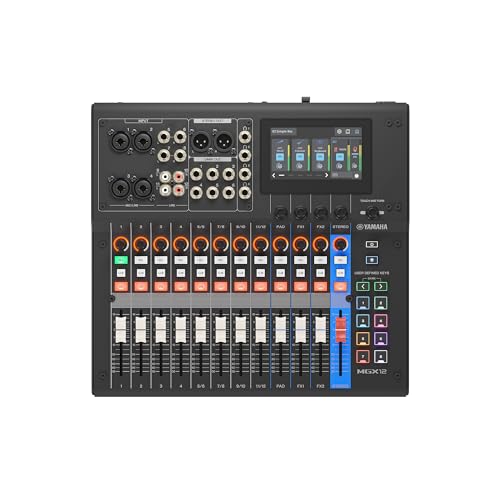
- 18 channels with 86 dB-gain-range MGX preamps
- Touchscreen, Bluetooth, microSD, and dual USB-C audio
- Includes DSP, assistive mixing features, and software bundle
Best For: Live production, recording, streaming, and content creation
Professional High-Resolution Mixer

- 96 kHz processing with low-latency XCVI FPGA architecture
- 38 inputs, 12 configurable mixes, and four matrix outputs
- 32x32 USB-C audio plus SD and multitrack recording support
Best For: Professional live sound, recording, and installed audio
Best Overall
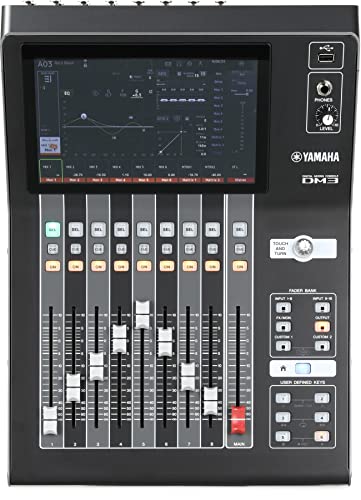
- 22 channels with 96kHz operation
- 16 Yamaha preamps and eight XLR outputs
- 18x18 USB interface and 9-inch touchscreen
Best For: Compact professional live sound and recording setups
Best Tablet-Controlled Value
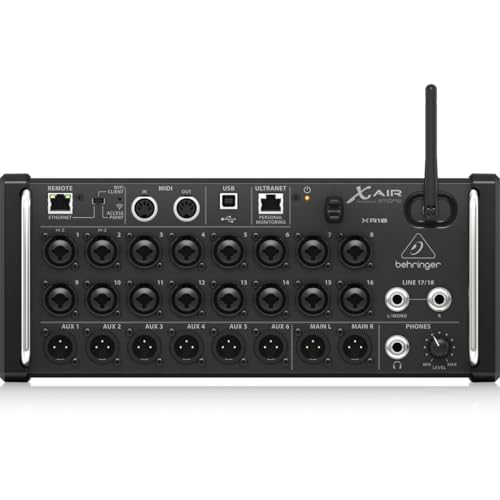
- Tablet control for iPad and Android
- 16 programmable MIDAS-designed preamps
- Built-in Wi-Fi and 18x18 USB interface
Best For: Portable wireless-controlled live and studio mixing
Best for Large-Scale Routing
PreSonus StudioLive Series III SE 16

- 40 channels and 26 mix buses
- Milan-certified AVB networking
- 64x64 USB interface with Capture software
Best For: Networked live production and multitrack recording
Flexible 16-Channel Value Pick

- 16 channels with Bluetooth and USB playback
- 99 DSP effects and 7-band master EQ
- 48V phantom power for condenser microphones
Best For: Karaoke, small venues, rehearsals, and home studios
Classic Recording Workflow Pick

- 16 inputs with 12 XMAX mic preamps
- Fat Channel processing on channels and buses
- 18-in/16-out USB recording interface
Best For: Small live rigs and USB-based recording
Professional Expansion Pick
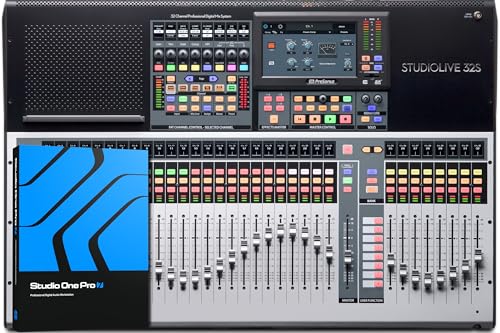
- 40 inputs and 32 recallable mixing channels
- 128-channel USB interface and SD multitrack recorder
- AVB networking with 16 configurable FlexMixes
Best For: Professional live sound, installed systems, and multitrack production
Large-Format Workhorse – Behringer X32
The Behringer X32 is a substantial choice among digital mixing consoles for studios and live productions that need extensive input capacity, flexible routing, and hands-on control. Its 40-input design, 32 programmable mic preamps, and motorized faders support complex setups and fast scene changes.
Best For: Live venues, studios, and production teams managing larger channel counts and detailed mixes.
Pros:
- 40-input, 25-bus architecture supports complex mixes.
- 32 MIDAS-designed programmable mic preamps.
- 25 automated 100 mm motorized faders support scene recall and quick adjustments.
- Offers 16 XLR outputs plus additional line inputs and outputs.
Cons:
- At 45.4 pounds, it is less convenient for frequent transport.
- Its large 40.4-by-25.9-inch footprint may require a dedicated workspace.
The X32 is best suited to buyers who prioritize comprehensive routing and physical control over portability. It is a capable, full-size console for demanding live or studio workflows.
Portable Touch-Control Mixer – ALTO TMD16
The ALTO TMD16 brings accessible control and modern connectivity to digital mixing consoles for small venues, rehearsals, houses of worship, and mobile setups. Its 7-inch display, touch faders, onboard processing, Bluetooth, and USB connectivity make it practical for users who want a complete system without a tablet.
Best For: Gigging musicians, rehearsal spaces, small venues, event centers, and streaming or recording setups.
Pros:
- 10 digital mic preamps and 16-channel mixing provide flexible input options.
- 100 mm capacitive touch faders and a 7-inch color display offer hands-on control.
- Built-in EQ, compression, and 16-preset FX engine reduce the need for extra gear.
- USB, Bluetooth, app control, four aux sends, and four subgroups support versatile routing.
Cons:
- Its 16-channel format may be limiting for larger productions.
- Bluetooth and USB features depend on compatible external devices and workflows.
With a 5.45 kg chassis and compact dimensions, the TMD16 is a practical option when portability and straightforward operation matter as much as mixing flexibility.
Hybrid Production Console – Yamaha MGX12
The Yamaha MGX12 combines tactile mixing with recording, streaming, and media-oriented connectivity. For buyers comparing digital mixing consoles, its 18-channel layout, touchscreen, Bluetooth input, microSD slot, dual USB-C audio interface, and bundled Steinberg software make it a flexible option for live production and content workflows.
Best For: Users who want tactile live mixing alongside computer recording, streaming, and video-related connectivity.
Pros:
- 18-channel configuration with new MGX preamps and an 86 dB gain range.
- 4.3-inch touchscreen and five control knobs complement the tactile faders.
- Bluetooth input and microSD card slot expand playback and recording options.
- Includes DSP processing, latency-free monitoring, and a software bundle.
Cons:
- The supplied notes do not specify the number of motorized faders or detailed output count.
- At 14.7 pounds, it is less lightweight than the most portable compact mixers.
The MGX12 stands out for creators and operators who need a mixer that bridges live audio and computer-based production. Its assistive features, USB-C interface, and included software add convenience beyond basic mixing.
Professional High-Resolution Mixer – Allen & Heath Qu-5
The Allen & Heath Qu-5 is a professional option among digital mixing consoles, pairing 96 kHz XCVI FPGA processing with broad I/O, multitrack recording, and configurable mixing architecture. Its 38-input capacity, 12 configurable mixes, touchscreen, and motorized faders are designed for demanding live, recording, and installed-audio applications.
Best For: Professional live sound, installed audio, and recording environments requiring high-resolution processing and expansion.
Pros:
- 96 kHz processing is designed for high audio quality and low latency.
- Supports up to 38 inputs, 12 configurable mixes, and four matrix outputs.
- Provides 16 XLR/TRS combo inputs, 12 XLR outputs, AES3, and SLink expansion.
- Includes six multi-FX engines, USB-C 32×32 audio, and up to 32-channel SD capture.
Cons:
- Its professional feature set may be more than needed for simple small-room mixing.
- At 27.4 pounds, it is not the lightest choice for mobile operators.
The Qu-5 is a strong fit when resolution, routing depth, recording capability, and expansion are priorities. It offers a broad control and connectivity package for more demanding production systems.
Best Overall – Yamaha DM3 Standard
The Yamaha DM3 Standard is a strong all-around choice among digital mixing consoles when you want professional Yamaha sound, a compact footprint, and substantial recording connectivity. It combines 22 channels, a 96kHz sample rate, a 9-inch touchscreen, and an 18×18 USB audio interface in a 20-pound console.
Best For: Live sound, compact professional setups, and users who need integrated USB recording and playback.
Pros:
- 22-channel design with 16 mono channels and two stereo FX returns.
- 16 professional Yamaha preamps and eight XLR analog outputs.
- 18×18 USB audio interface plus a separate 2×2 USB recorder.
- Large 9-inch touchscreen in an ultracompact console.
Cons:
- At 20 pounds, it is heavier than some compact rack-style mixers.
- Its corded-electric design is intended for fixed power sources.
The DM3 Standard stands out for balancing channel capacity, high-resolution audio, hands-on control, and USB integration. It is a practical premium option for buyers who want a compact Yamaha console without giving up professional I/O.
Best Tablet-Controlled Value – Behringer X AIR XR18
The Behringer X AIR XR18 is a flexible option among digital mixing consoles for studio and live applications, especially if you prefer wireless tablet control. Its 18-input format includes 16 programmable MIDAS-designed mic preamps, built-in tri-mode Wi-Fi, and an 18×18 bidirectional USB interface.
Best For: Tablet-controlled live mixes, recording setups, and users who want a lightweight digital mixer with integrated Wi-Fi.
Pros:
- Controls are designed for iPad and Android tablets.
- 16 programmable MIDAS-designed mic preamps.
- Built-in tri-mode Wi-Fi router reduces the need for an external router.
- 18×18 USB interface supports direct multichannel recording.
Cons:
- It does not include a built-in physical control surface or touchscreen.
- The supplied specifications list 18 channels, fewer than some larger consoles.
At 7.1 pounds, the XR18 is notably portable and keeps its feature set focused on remote operation and USB connectivity. It is a sensible pick when tablet mixing matters more than onboard physical controls.
Best for Large-Scale Routing – PreSonus StudioLive Series III SE 16
StudioLive Series III SE 16 Digital Console Mixer with Fender Studio Pro | Digital Mixer
Check Price On AmazonThe PreSonus StudioLive Series III SE 16 is built for demanding digital mixing consoles workflows, offering 40 channels, 26 mix buses, integrated recording, and extensive networking. Its Milan-certified AVB ecosystem, bidirectional 64×64 USB 2.0 interface, and included software make it suited to connected live production and multitracking.
Best For: Larger live systems, networked PreSonus setups, multitrack recording, and advanced routing requirements.
Pros:
- 40-channel console with 26 mix buses.
- Seven modeled EQ options and eight compressor options on every input and bus.
- Milan-certified AVB networking supports compatible stage boxes and monitor mixers.
- 64×64 USB interface and included PreSonus Capture software with Virtual Soundcheck.
Cons:
- At 32 pounds, it is less portable than smaller digital mixers.
- Its larger dimensions may require more rack or desk space.
- Its advanced networking features may be more than a simple setup needs.
The StudioLive Series III SE 16 is the most expandable choice in this group. Choose it when channel count, mix-bus capacity, AVB networking, and integrated multitrack tools are more important than minimizing size and weight.
Flexible 16-Channel Value Pick – Bluetooth DSP Audio Mixer
This 16-channel option brings practical features to digital mixing consoles for karaoke, rehearsals, small performances, and home studios. Bluetooth and USB playback provide flexible music input, while channel-level EQ, mute controls, 99 DSP effects, and 48V phantom power cover a broad range of basic live and recording needs.
Best For: Live performers, DJs, karaoke setups, and small studios that want built-in playback and effects.
Pros:
- Bluetooth, U-disk, and USB playback support convenient music input.
- Includes 99 DSP effects plus a 7-band master graphic EQ.
- Offers 48V phantom power and compatibility with microphones, instruments, and DI boxes.
- Independent channel mute buttons, 3-band EQ, and faders support hands-on control.
Cons:
- Its feature set is aimed at smaller applications rather than large-scale networked systems.
- The supplied notes do not specify software-update support.
Choose this model when accessible playback features and a large built-in effects selection matter more than advanced networking or multitrack workflow features. Its 16-channel layout and flexible connectivity make it a practical starting point for compact digital mixing setups.
Classic Recording Workflow Pick – PreSonus StudioLive 16.0.2
The PreSonus StudioLive Classic 16.0.2 is a capable choice among digital mixing consoles for users who want hands-on faders alongside integrated recording tools. It combines 16 channel inputs, Fat Channel processing, internal effects, scene recall, and an 18-in/16-out USB interface for recording channels and the main mix.
Best For: Small live rigs and recording setups that need physical controls with USB computer integration.
Pros:
- Provides 16 channel inputs with 60 mm faders and 12 Class A XMAX mic preamps.
- Fat Channel processing includes EQ, compression, downward expansion, and limiting.
- 18-in/16-out USB 2.0 interface records all channels and the main L/R mix.
- Includes Studio One Artist, Capture, UC Surface, and QMix-UC software options.
Cons:
- USB recording is specified at 24-bit/44.1 kHz and 48 kHz rather than higher sample rates.
- At 20 pounds, it is less convenient for highly portable setups than lighter mixers.
This console is a strong fit for buyers who prefer tactile mixing and a defined USB recording workflow. Scene recall, onboard effects, and comprehensive channel processing add useful consistency for repeat performances and sessions.
Professional Expansion Pick – PreSonus StudioLive 32S
PreSonus StudioLive Series III 32S Digital Console Mixer with Studio One Pro Software
Check Price On AmazonFor demanding digital mixing consoles applications, the PreSonus StudioLive Series III 32S combines a 40-input, 32-channel architecture with extensive DSP, networking, recording, and software integration. Its dual-core FLEX DSP Engine, AVB ecosystem, multitrack SD recording, and 128-channel USB interface make it suited to complex installed, mobile, and recording environments.
Best For: Professional live sound, installed systems, mobile production, and multitrack recording workflows.
Pros:
- Dual-core FLEX DSP Engine provides 286 simultaneous processors.
- Built-in AVB networking supports NSB stage boxes, EarMix 16M mixers, and SW5E switches.
- 128-channel USB interface and onboard SD recorder support extensive recording workflows.
- Sixteen FlexMixes can operate as aux mixes, subgroups, or matrix mixes.
Cons:
- Its 37-pound weight makes it a substantial choice for frequent transport.
- The extensive professional feature set may be more than a simple small-room setup requires.
The 32S is the most expandable option in this group, particularly for users building an AVB-connected system or needing high-channel-count recording. Its recallable architecture, FlexMixes, effects processing, and included Studio One Artist and Capture software support more sophisticated production workflows.
How We Picked These Digital Mixing Consoles
We evaluated the selected consoles by looking at practical factors that affect day-to-day use: input and output capacity, preamp quality, built-in processing, recording connectivity, control options, software support, and suitability for live or studio environments. The list includes compact mixers for small venues and mobile rigs, as well as larger consoles for bands, houses of worship, production teams, and commercial-style workflows.
We also considered whether each model offers useful expansion, dependable routing, multitrack recording, wireless or tablet control, and a sensible learning curve. Specifications can vary by revision and package, so confirm current software, accessories, and I/O details before buying.
Quick Comparison
| Best For | What to Prioritize |
|---|---|
| Small gigs and portable rigs | Compact design, app control, built-in effects, and straightforward setup |
| Bands and larger live productions | Higher channel counts, flexible buses, scene recall, and stage connectivity |
| Studio recording | USB or network multitrack audio, stable drivers, and DAW integration |
| Streaming and content creation | Simple USB routing, Bluetooth or playback inputs, and easy monitoring |
| Houses of worship and installed systems | Reliable automation, remote control, expandable I/O, and user permissions |
Key Buying Factors for Digital Mixing Consoles
Inputs, Buses, and Expansion
Count the microphones, instruments, playback sources, monitor mixes, and effects returns you use today, then leave room for growth. Physical input count is only part of the equation; buses, matrix outputs, AES or network options, and compatible stage boxes can determine how flexible a console remains.
Processing and Workflow
Look for the processing you actually need, such as high-pass filters, gates, compressors, parametric EQ, feedback control, and usable reverbs. Scene recall, custom layers, mute groups, and touchscreen or app navigation can save more time than a long feature list.
Connectivity and Recording
USB recording is useful for rehearsals, playback, and simple two-track work, while multitrack interfaces are better for full-band capture and post-production. Check the operating-system compatibility, driver requirements, network stability, and whether wireless control depends on an external router.
Build, Control, and Support
A compact rack mixer may be ideal when the engineer works from a tablet, but a surface with physical faders is often faster in high-pressure live situations. Also consider firmware updates, warranty coverage, replacement parts, and the availability of training resources.
Who Should Buy Which Digital Mixing Consoles?
Choose a compact app-controlled model if portability and remote operation matter most. A mid-sized console is a strong fit for bands, small venues, and users who need a practical mix of physical control, recording, and expansion. Larger Behringer, Allen & Heath, Yamaha, and PreSonus options make more sense for complex productions, multiple monitor mixes, frequent scene changes, or larger input counts.
For studio-focused buyers, prioritize reliable multitrack integration and DAW compatibility over sheer channel capacity. For streaming, presentations, or occasional events, simple USB routing, playback support, and an intuitive interface may matter more than advanced networking. Finally, choose a console your team can operate confidently: the best Digital Mixing Consoles are the ones that match both your signal requirements and your real-world workflow.