
A faulty cable can waste time diagnosing a problem that should take minutes to fix. The best DIY audio cable testers help you identify opens, shorts, miswired conductors, and connector issues before replacing otherwise usable gear.
This roundup compares 10 practical options, from compact XLR and speaker testers to multi-connector kits and tone-tracing tools. Use the buying guide below to match features, connector coverage, portability, and testing depth to your setup.
Best 10 DIY Audio Cable Testers Picks for 2026
Versatile Connector Checker

- Tests many common studio and live-sound connectors
- Five-way pin selector with LED readout
- Includes probes and rugged steel chassis
Best For: Broad connector coverage in studio and live-sound setups
Car Audio Signal Tool
PAC Tone Generator & Polarity Tester
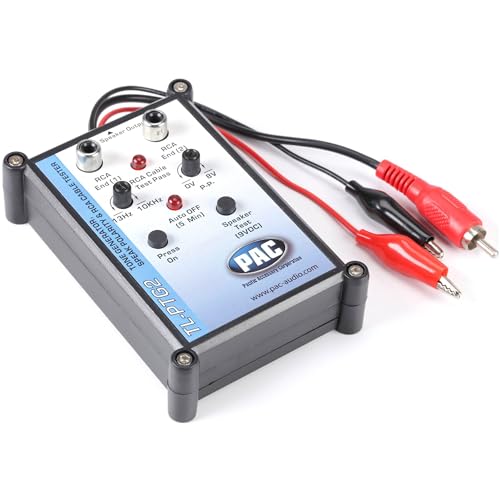
- Generates variable 13–10,000Hz test tones
- Includes speaker polarity popper
- Connects via RCA or alligator clips
Best For: Car-audio signal, speaker, and polarity troubleshooting
Rugged Multi-Pin Tester
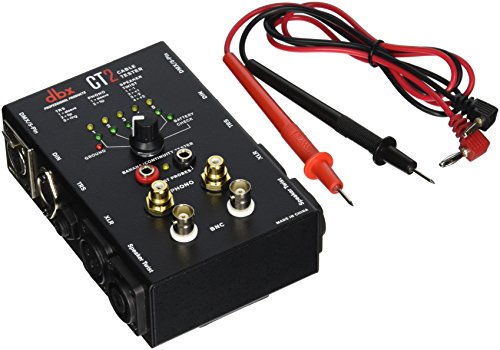
- Six-position selector with individual LEDs
- Tests a wide range of audio connectors
- Adds beeper and LED continuity feedback
Best For: Professional audio cable testing and workshop use
Broad Format Cable Tester
Hosa CBT-500 Audio Cable Tester
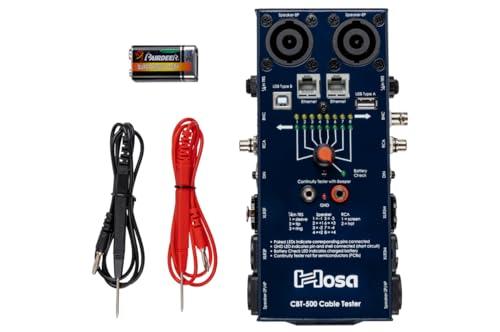
- Supports XLR, BNC, Ethernet, and SpeakON
- Ohmmeter-style cable measurement
- Includes a limited lifetime warranty
Best For: Mixed audio and related cable formats
Versatile Bench Tester
dbx CT-3 Advanced Cable Tester

- Tests up to eight-pin cables
- Supports numerous audio and data connectors
- Includes tone generation and installed-cable testing
Best For: Mixed-format cable testing at an audio workbench
Hands-On Maker Pick
PEMENOL 9-in-1 USB Cable Tester Kit

- Checks six common cable interface types
- Offers battery or Type-C operation
- Combines cable testing with soldering practice
Best For: STEM projects, hobby electronics, and learning cable wiring
Live Audio Troubleshooter
Xvive AT-2 Portable Audio Tester Pro
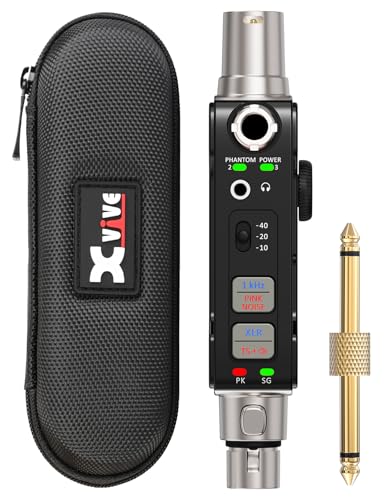
- Tests XLR cables and meters input signals
- Generates pink noise and 1kHz test tones
- Checks phantom power and supports headphone monitoring
Best For: Portable live-sound and studio signal-path troubleshooting
Compact RCA & Speaker Tester
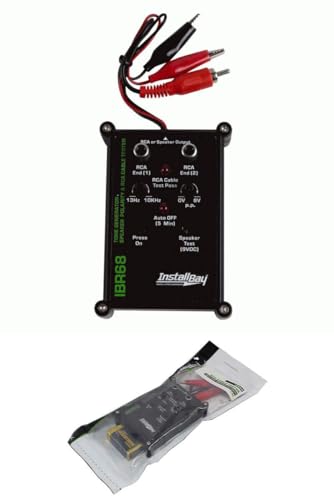
- Tests RCA cables and speakers
- Includes tone generation
- Compact design with auto-off
Best For: RCA and speaker troubleshooting
Multi-Connector Cable Checker

- Supports a wide range of audio connectors
- Uses LED connection indicators
- Rugged metal casing with 10-way switch
Best For: Recording and live-performance cable checks
Broad Audio Cable Tester

- Checks 13 plug and cable types
- LEDs show conductor connections
- Metal housing with 8-way switch
Best For: Multi-connector DIY audio setups
Versatile Connector Checker – Mackie Cable Tester
For DIY audio cable testers, the Mackie Cable Tester is a practical choice for checking common live-sound and studio connectors. Its five-way switch helps verify individual pins, while the included probes allow manual continuity checks.
Best For: Home studios, live-sound setups, and users testing a broad mix of audio connector types.
Pros:
- Tests TRS, TS, XLR, RCA, Speakon, 3.5mm TRS, MIDI, and banana jacks.
- Five-way switch and LED readout support quick pin checks.
- Includes signal probes for manual continuity testing.
- Steel chassis and single 9V battery operation.
Cons:
- Its 1.4-pound, 6.5-by-4.8-by-2.7-inch design is less portable than a pocket tester.
- Requires a 9V battery.
The Mackie stands out when connector coverage and straightforward pin testing matter most. It is a solid all-around option for DIY users who want a durable tester for varied audio cables.
Car Audio Signal Tool – PAC Tone Generator & Polarity Tester
Unlike basic continuity-focused DIY audio cable testers, the PAC Tone Generator combines signal generation with speaker polarity testing. It provides a variable tone from 13 to 10,000Hz and connects through RCA or supplied alligator clips.
Best For: Car-audio troubleshooting, speaker connection checks, and system-level testing.
Pros:
- Generates variable tones from 13 to 10,000Hz.
- Offers a 0- to 8-volt output range.
- Includes a 9V speaker popper for visually checking polarity.
- Supports RCA and alligator-clip connections.
Cons:
- Its feature set is geared toward car-audio systems rather than broad connector testing.
- Does not list the multi-connector pin-testing functions found on dedicated cable testers.
The PAC is best viewed as a signal and polarity diagnostic tool rather than a general-purpose cable-pin tester. Choose it when speaker testing and tone-based troubleshooting are more important than connector variety.
Rugged Multi-Pin Tester – dbx CT-2 Cable Tester
The dbx CT-2 is a sturdy option among DIY audio cable testers, using a six-position rotary selector and individual LEDs to check up to five pins. It also includes dedicated connectors for XLR, speaker twist, and banana-style continuity testing.
Best For: Audio technicians and studios needing durable testing across multiple professional cable formats.
Pros:
- Six-position selector includes a battery-life check.
- Individual LEDs identify pin continuity.
- Supports banana, BNC, DIN, DMX, phono, speaker twist, TRS, TS, and XLR connections.
- Includes a beeper and LED for banana-connector continuity.
Cons:
- At 1.5 pounds, it is not the lightest tester for mobile kits.
- Operates from battery power, so the tester depends on a charged battery.
The CT-2 is a strong fit for users who value connector breadth and rugged construction. Its dedicated XLR and speaker-twist connections make it particularly useful around professional audio equipment.
Broad Format Cable Tester – Hosa CBT-500 Audio Cable Tester
The Hosa CBT-500 offers a straightforward way to approach DIY audio cable testers when your setup includes more than standard XLR and phone cables. The supplied notes identify support for XLR, 75-ohm BNC, Ethernet, and SpeakON connections.
Best For: Users who need one battery-powered tester for audio and related cable formats.
Pros:
- Supports XLR, 75-ohm BNC, Ethernet, and SpeakON cables.
- Uses ohmmeter-style measurement for cable checking.
- Battery powered with a listed 9V minimum operating voltage.
- Includes a limited lifetime warranty.
Cons:
- Its listed 2-pound weight makes it relatively substantial for portable use.
- The supplied notes provide fewer details about indicators or selector controls than some competing models.
The CBT-500 is worth considering when connector variety extends beyond traditional audio cables. Its coverage of Ethernet and 75-ohm BNC adds flexibility, though buyers wanting detailed control descriptions may prefer a more fully specified tester.
Versatile Bench Tester – dbx CT-3 Advanced Cable Tester
For DIY audio cable testers, the dbx CT-3 is a versatile choice for checking a broad range of connector formats. It supports cables up to eight pins, includes a tone generator, and can help test installed cables with its two-piece chassis.
Best For: Audio workbenches, installers, and users testing mixed-format cables.
Pros:
- Supports BNC, DIN, DMX, MIDI, RCA, RJ11, RJ45, TRS, TS, XLR, and other connector types.
- Tests cables with up to eight pins.
- Two-piece chassis supports testing installed cables.
- Built-in test tone generator and support for connecting different connector formats.
Cons:
- Uses corded electric power and requires a minimum operating voltage of 9 volts.
- At 2.2 pounds, it is less portable than compact handheld testers.
The CT-3 stands out when your cable collection includes more than standard XLR leads. Its wide connector compatibility and installed-cable testing capability make it a strong general-purpose option for audio and electronic troubleshooting.
Hands-On Maker Pick – PEMENOL 9-in-1 USB Cable Tester Kit
This PEMENOL kit brings a hands-on approach to DIY audio cable testers and electronics learning. After assembly, it checks connectivity across several USB, RJ45, and Lightning cable types while exposing the circuitry through a transparent acrylic case.
Best For: Students, hobbyists, and makers learning cable pinouts and basic soldering.
Pros:
- Checks USB Type A, Type C, Micro B, Mini B, RJ45, and Lightning connections.
- Can run from a battery compartment or a Type-C power adapter.
- Transparent acrylic enclosure makes the components and LED indicators visible.
- Pre-soldered PCB and included parts support a guided soldering project.
Cons:
- It is primarily a connectivity checker rather than a full audio signal tester.
- Requires assembly, so it may be less convenient for immediate plug-and-test use.
The PEMENOL is a good fit if building the tester is part of the goal. Its compact design, multiple cable interfaces, and visible LEDs provide a practical way to learn wiring logic while checking common cable connections.
Live Audio Troubleshooter – Xvive AT-2 Portable Audio Tester Pro
The Xvive AT-2 goes beyond basic continuity checks, making it a capable option among DIY audio cable testers for live sound and studio work. It combines XLR cable testing with signal generation, monitoring, phantom-power checking, and rechargeable portable operation.
Best For: Musicians, audio engineers, and technicians troubleshooting XLR-based sound systems.
Pros:
- Built-in 3-pin XLR connectors support quick cable testing and input signal metering.
- Generates pink noise or 1kHz sine waves at selectable output levels.
- Allows real-time monitoring through a headphone jack or speaker.
- Checks phantom power and includes rechargeable USB charging and a carrying bag.
Cons:
- Its feature set is centered on audio equipment and XLR connections rather than broad connector coverage.
- The supplied notes do not specify a full range of cable interfaces beyond the included XLR and TSM-TSM connections.
Choose the AT-2 when troubleshooting involves the entire audio signal path, not just cable continuity. Signal generation, monitoring, and phantom-power verification make it especially useful for stage setups, recording systems, and gain-staging checks.
Compact RCA & Speaker Tester – 9V Cable and Tone Generator
Install Bay RCA AIO 9V Cable Wire Tester Tone Generator Speaker Polarity / IBR68
Check Price On AmazonFor basic DIY audio cable testers needs, the Install Bay IBR68 combines RCA cable checking, speaker testing, and tone generation in one battery-powered unit. Its control knobs and auto-off function make it a practical choice for tracing common wiring and connection problems.
Best For: DIY users troubleshooting RCA cables, speakers, and amplifier-related wiring issues.
Pros:
- Combines RCA testing, speaker testing, and tone generation.
- Uses a 9V power source for speaker testing.
- Includes easy-to-use control knobs and an auto-off function.
- Compact, lightweight design at 0.15 kg.
Cons:
- Its listed testing focus is narrower than multi-connector cable testers.
- A 9V battery is required for operation.
The IBR68 is a focused option when your setup mainly uses RCA connections and speakers. Choose it for straightforward troubleshooting rather than broad connector coverage.
Multi-Connector Cable Checker – 15-Plug Audio Tester
The MFL 15-in-1 is a versatile choice for DIY audio cable testers, supporting a broad mix of connectors used with recording, live-performance, and general audio equipment. LED indicators and a 10-way switch help you select and verify connections, while the metal casing is designed for repeated use.
Best For: Recording and live-sound users who need to check multiple audio cable types.
Pros:
- Accepts connector types including TRS, XLR, RCA, DIN, and Speakon.
- LED indicators help confirm conductor connections.
- 10-way switch provides connection-selection control.
- Strong, compact metal casing suits regular use.
Cons:
- Battery is required but not included.
- At 1.5 pounds, it is less lightweight than the compact IBR68.
With its extensive connector compatibility and indicator-based checking, this tester is a strong fit for larger audio setups. It is especially useful when your cable collection spans several connector standards.
Broad Audio Cable Tester – 13-Plug Line Finder
The MFL 13-in-1 provides broad connector coverage for DIY audio cable testers without the 15-plug model’s expanded switch count. Its LED indicators show conductor connections, and the compact metal housing is suited to checking cables used with audio equipment, instruments, and other compatible devices.
Best For: DIY audio setups needing a multi-connector tester for common equipment and instrument cables.
Pros:
- Designed for 13 plug and cable types.
- LED indicators help identify conductor connection issues.
- 8-way switch selects connections for testing.
- Compact metal casing is built for ongoing use.
Cons:
- Battery is powered but not included.
- Its 8-way switch offers less selection control than the 15-plug version’s 10-way switch.
- The listed weight is 1.5 pounds.
This model balances wide connector support with a straightforward switch-and-indicator layout. It makes sense for users who want an all-in-one checker for several audio cable types but do not need the larger model’s additional coverage.
How We Picked These DIY Audio Cable Testers
We selected testers that address common audio troubleshooting tasks: continuity checks, pin-to-pin wiring verification, short detection, polarity testing, and cable identification. The list includes simple battery-powered switch testers, models designed for car audio and speaker systems, advanced multi-connector units, and a USB-focused soldering kit.
We also considered connector coverage, portability, operating simplicity, visible indicators, tone-generation features, and how useful each design is for home repair, studio maintenance, installation work, or live sound. A tester does not need every feature to be useful; the right choice depends on the cables and faults you handle most often.
Quick Comparison
| Best For | Look For | Typical Strength |
|---|---|---|
| Basic audio cable checks | Clear continuity indicators and common connector support | Fast, straightforward fault finding |
| Studios and live sound | XLR, TRS, TS, MIDI, speaker, and other connector coverage | One tool for varied cable inventories |
| Car audio installation | Tone generation and speaker polarity testing | Tracing wires and confirming speaker phase |
| DIY electronics work | USB connector support and included components | Testing or assembling USB cables |
| Large cable collections | Multiple ports, switch positions, and LED readouts | Organized line identification |
Key Buying Factors for DIY Audio Cable Testers
Connector Compatibility
Start by listing the connectors you actually use. XLR and 1/4-inch TS or TRS cables are common in music setups, while RCA, speaker terminals, MIDI, and USB require additional support. A tester with many ports is valuable only if those ports match your cable collection.
Test Functions
Continuity testing confirms whether a conductor reaches the other end, but it may not reveal every wiring problem. Look for separate checks for shorts, crossed pins, intermittent connections, and polarity when those faults matter. Tone generators can help trace a cable through an installation, while speaker polarity functions are especially useful in car audio and multi-speaker systems.
Readability and Ease of Use
LED indicators and clearly labeled switch positions make results easier to interpret. Consider whether you need a remote test mode for long cables, a line finder for identifying one cable among many, or a simple point-to-point check that requires little setup.
Power and Portability
Battery-powered testers are convenient for tool bags and field work, but check the required battery and expected access to the compartment. Compact models are easy to carry, while larger multi-connector testers may be more practical on a workbench.
Who Should Buy Which DIY Audio Cable Testers?
Choose a basic connector tester if you mainly repair microphone, instrument, patch, or speaker cables and want quick continuity checks. Studio owners and live-sound technicians should favor broader connector coverage, clear fault indicators, and durable controls. Car audio installers will benefit most from a tone generator with speaker polarity testing and wire-tracing capability.
If your projects include custom USB leads or soldering practice, a dedicated USB tester kit is the more appropriate option than a conventional audio tester. For households, schools, or repair benches with many cable types, a multi-plug tester with LED indicators can reduce the need for several specialized tools. Before buying, prioritize the connectors and fault types you encounter most; that usually matters more than the highest advertised number of test positions.