
When you’re looking to capture the true essence of your guitar amp, the right dynamic microphone can make all the difference. With so many options available, how do you choose one that enhances your sound quality? From the renowned Sennheiser e 609 to the reliable Shure SM57, each mic offers unique features tailored for guitarists. Let’s explore the top contenders and what you should consider before making your choice.
Sennheiser e 609 Super-Cardioid Instrument Microphone

If you’re a guitarist looking for a reliable microphone that excels in live settings, the Sennheiser e 609 Super-Cardioid Instrument Microphone is a standout choice. Its super-cardioid pick-up pattern isolates your sound, minimizing interference from other instruments on stage. Built with durable metal construction, it withstands the rigors of touring while a neodymium ferrous magnet guarantees stability in different climates. This mic suits various instruments and offers wired and wireless options, making it versatile for any performance. Designed for peak audio quality, the e 609 is perfect for professional applications, guaranteeing your guitar tone shines in every setting.
Best For: Guitarists and musicians seeking a reliable, high-quality microphone for live performances.
Pros:
- Durable metal construction ensures longevity and reliability during extensive touring.
- Super-cardioid pick-up pattern provides excellent sound isolation from other stage instruments.
- Versatile options available in both wired and wireless formats suitable for various performance settings.
Cons:
- May require adjustments for optimal placement to achieve the best sound quality.
- The super-cardioid pattern may not be ideal for all stage setups or instruments.
- Some users may find it heavier compared to other lightweight microphones.
Shure SM57 Dynamic Microphone – Wired Cardioid XLR Handheld Mic

The Shure SM57 Dynamic Microphone is an exceptional choice for guitarists and sound engineers looking for a reliable, high-quality microphone that excels in both live and studio settings. Its contoured frequency response enhances attack and clarity, allowing your guitar amps and other instruments to shine through in mixes. Trusted worldwide, this mic handles high sound pressure levels and demanding environments with ease. Its rugged construction guarantees it withstands the rigors of transport and frequent use. Whether you’re close-miking a guitar cabinet or capturing a snare drum, the SM57 delivers clear, professional-quality sound every time.
Best For: Musicians, sound engineers, and recording artists seeking a reliable and high-quality microphone for live performances and studio recordings.
Pros:
- Versatile performance: Excels in capturing a variety of instruments, including guitar amps, snare drums, and brass.
- Durable construction: Built to withstand high sound pressure levels and frequent transport, ensuring longevity.
- Professional sound quality: Delivers clear and detailed audio, enhancing the mix in both live and studio settings.
Cons:
- Dynamic microphone limitations: May not capture the full range of frequencies as well as condenser microphones.
- Requires preamp: Needs a compatible audio interface or mixer with a preamp for optimal performance.
- Not ideal for distant miking: Best suited for close-miking applications, which may limit its use in certain recording scenarios.
Pyle Dynamic Cardioid Microphone with XLR Cable

For musicians seeking a reliable and high-quality microphone, the Pyle Dynamic Cardioid Microphone with XLR Cable stands out with its unidirectional pickup pattern. This dynamic mic excels in minimizing background noise, guaranteeing your sound remains clear and punchy. With a frequency response of 50Hz-15KHz and a sensitivity of -54dB, it delivers exceptional audio quality for both stage and studio use. Its rugged all-metal construction guarantees durability, while the included 15ft XLR cable provides convenience. Plus, built-in noise reduction features like an acoustic pop filter enhance clarity, making it perfect for live vocals and amplified instruments.
Best For: Musicians and audio professionals seeking a reliable microphone for live performances and studio recordings.
Pros:
- Unidirectional pickup pattern effectively reduces background noise for clear sound.
- Rugged all-metal construction ensures durability in demanding environments.
- Includes a 15ft XLR cable for added convenience and versatility in setup.
Cons:
- Dynamic mic design may not capture the same level of detail as condenser mics for studio recordings.
- Limited frequency response (50Hz-15KHz) may not cater to all audio frequencies for certain applications.
- Weight of 1.48 lbs could be cumbersome for some users during extended performances.
Superlux PRA628MKII Professional Dynamic Instrument Microphone

Looking for a reliable mic that can handle the power of your guitar amp? The Superlux PRA628MKII is your go-to choice. This wired super-cardioid mic offers a compact and durable design, perfect for close mic placement. With an optimized frequency response of 80Hz–18kHz, it captures rich midrange and crisp highs, preserving your electric guitar tones beautifully. Plus, its super-cardioid pattern effectively rejects background noise and minimizes feedback, making it ideal for live settings. It can withstand high sound pressure levels up to 150dB, so whether you’re using it for guitar amps or drums, you’re covered. Just remember, an XLR cable isn’t included!
Best For: Musicians and sound engineers looking for a dependable microphone to capture high-quality audio from loud instruments like guitar amps and drums.
Pros:
- Durable, rugged metal housing suitable for live performances.
- Super-cardioid pattern effectively reduces background noise and feedback.
- Can handle high sound pressure levels up to 150dB, ideal for loud sound sources.
Cons:
- Does not include an XLR cable, requiring an additional purchase.
- Limited frequency response range compared to some condenser microphones.
- May not be suitable for vocal applications due to its design focus on instruments.
Pyle Professional Dynamic Vocal Microphone (PDMIC59)

Designed with a unidirectional pickup pattern, the Pyle Professional Dynamic Vocal Microphone (PDMIC59) excels in capturing clear sound from guitar amps while reducing unwanted background noise. Its robust, all-metal design guarantees durability, making it perfect for both live performances and studio sessions. You’ll appreciate the 15ft XLR to 1/4″ audio cable included, along with the convenient ON/OFF switch. With an impressive frequency response of 0.05 kHz to 15 kHz and a signal-to-noise ratio of 76, this microphone delivers brilliant sound quality. Plus, it’s lightweight and easy to handle, making your gigging experience seamless and enjoyable.
Best For: Musicians and performers seeking a reliable, high-quality vocal microphone for live performances and studio recordings.
Pros:
- Durable Construction: Rugged, all-metal design ensures longevity and reliability during extensive use.
- Unidirectional Pickup Pattern: Effectively captures vocals and instruments while minimizing background noise and feedback.
- Included Accessories: Comes with a 15ft XLR to 1/4″ audio cable and an ON/OFF switch for added convenience.
Cons:
- Corded Electric Power Source: Limited mobility compared to wireless microphones.
- Weight: At 1 pound, it may feel slightly heavier for some users during extended use.
- Fixed Frequency Response: May not suit all vocal types or applications, as it is optimized for specific ranges.
Behringer B 906 Dynamic Microphone for Instrument and Vocal Applications

The Behringer B 906 Dynamic Microphone stands out as an excellent choice for musicians seeking clarity and versatility in their sound. This professional dynamic mic is perfect for guitar amplifiers, percussion, and brass instruments, delivering an impressive signal output that enhances sound clarity. With a tailored frequency response and a super-cardioid polar pattern, it minimizes background noise and feedback effectively. You’ll appreciate the switchable low-cut, flat, and high-frequency boost options for added flexibility. Weighing just 190 grams and featuring XLR connectivity, it’s easy to handle and set up. Plus, a solid customer rating of 4.6 stars reflects its quality.
Best For: Musicians and sound engineers looking for a reliable microphone to capture high-quality sound from instruments and vocals.
Pros:
- High signal output enhances sound clarity for various applications.
- Super-cardioid polar pattern effectively minimizes background noise and feedback.
- Switchable low-cut, flat, and high-frequency boost options provide versatility in sound tailoring.
Cons:
- Requires XLR connectivity, which may necessitate additional equipment for some users.
- Corded electric power source limits mobility during performances.
- Some users may find the microphone heavier compared to other handheld options.
Sennheiser Pro Audio E906 Microphone, black

If you’re a guitarist seeking professional sound quality, the Sennheiser Pro Audio E906 Microphone is a standout choice. With its superior sound capture, it delivers exceptional clarity for guitar amps, percussion, and horns. The wide frequency response from 40-18,000 Hz guarantees accurate reproduction, while the presence filter at 4.2 kHz enhances instrument clarity. Its supercardioid polar pattern minimizes off-axis noise, making it perfect for various environments. Built rugged and lightweight, the E906 is durable and easy to handle. Plus, the gold-plated XLR connector promotes ideal signal transfer, making this microphone a versatile tool for your performances or recordings.
Best For: Guitarists and audio professionals seeking high-quality sound capture for instruments in both live and studio settings.
Pros:
- Superior sound quality with exceptional clarity for guitar amps, percussion, and horns.
- Durable and lightweight design ensures reliability and ease of use on stage or in the studio.
- Versatile connectivity with a gold-plated XLR connector, compatible with various audio interfaces and mixers.
Cons:
- Limited to specific instruments as it is optimized primarily for guitar amps and similar sound sources.
- Supercardioid polar pattern may not be ideal for all recording environments and could require careful positioning.
- Additional presence filters may require some experimentation for optimal sound customization, which can be time-consuming.
Fifine Dynamic Vocal Microphone (K6)

For musicians looking for a reliable, high-quality microphone, the Fifine Dynamic Vocal Microphone (K6) stands out as an excellent choice. This dynamic microphone features a cardioid pickup pattern that minimizes feedback, ensuring clear sound during performances. With a 14.8-foot detachable cable and no power requirements, it’s perfect for live situations like weddings and conferences. Its rugged metal construction and built-in pop filter enhance durability and sound quality. Just plug it into any 6.35mm mic jack, and you’re ready to go. Whether you’re singing, speaking, or playing an instrument, the K6 delivers outstanding performance every time.
Best For: Musicians, speakers, and event hosts seeking a reliable and high-quality vocal microphone for live performances.
Pros:
- Rugged metal construction ensures durability for frequent use in various settings.
- Cardioid pickup pattern minimizes feedback and enhances sound clarity.
- Detachable 14.8ft cable provides flexibility and ease of movement during performances.
Cons:
- Not compatible with 3.5mm connections, limiting connectivity options.
- Wired design may restrict movement compared to wireless microphones.
- No built-in battery or power option, which may be inconvenient for some users.
GLS Audio ES-57 Instrument Microphone
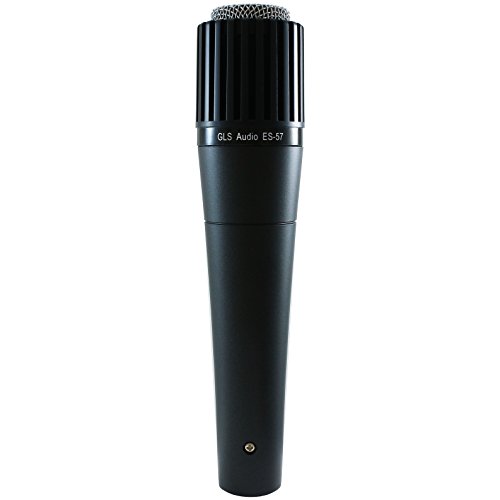
Designed with musicians in mind, the GLS Audio ES-57 Instrument Microphone excels in capturing the nuances of guitar amps, making it an ideal choice for live performances and studio recordings. Its dynamic cardioid design guarantees superior sound quality, allowing you to capture detailed audio with ease. With a frequency response of 50 Hz to 15,000 Hz and an impedance of 300 ohms, it delivers high-fidelity performance across diverse applications. The sturdy metal construction adds reliability, assuring it withstands the rigors of both studio and live settings. Whether you’re recording or performing, the ES-57 is an essential tool for your audio arsenal.
Best For: Musicians and audio professionals looking for a reliable and high-quality microphone to capture intricate sound details in live performances and studio recordings.
Pros:
- Superior sound quality with a dynamic cardioid design for detailed audio capture.
- Sturdy metal construction ensures durability and reliability in various environments.
- Compatible with both Lo-Z XLR and Hi-Z 1/4 connectors for versatile use.
Cons:
- Limited frequency response range may not suit all audio applications.
- Dynamic microphones can require higher sound levels to achieve optimal performance.
- May not be as effective for capturing subtle vocal nuances compared to condenser microphones.
Shure Nexadyne 5 Guitar Amp Microphone

The Shure Nexadyne 5 Guitar Amp Microphone stands out as an exceptional choice for professional musicians and audio engineers seeking to capture the unique nuances of amplified guitar tones. With its Revonic Technology and supercardioid design, this dynamic mic excels in isolating desired sounds while minimizing background noise. You’ll appreciate the dual-engine transducer technology that covers the full frequency range of amplified guitars. Its durable build, including a dent-resistant grille, guarantees longevity in any setting. Plus, the included mic clip and zipper pouch make setup a breeze, integrating seamlessly into your professional rig for pristine sound.
Best For: Professional musicians and audio engineers looking for a high-quality microphone to capture amplified guitar tones with precision.
Pros:
- Exceptional sound isolation due to the supercardioid polar pattern, minimizing background noise.
- Durable construction with a dent-resistant grille ensures long-lasting performance in various environments.
- Integrated features such as a mic clip and zipper pouch enhance usability and setup convenience.
Cons:
- Higher price point may not be suitable for amateur musicians on a budget.
- Limited versatility as it is primarily designed for amplified guitar sounds, potentially not ideal for other applications.
- Requires standard XLR connection, which may necessitate additional equipment for users without compatible setups.
Factors to Consider When Choosing a Dynamic Microphone for Guitar Amp
When choosing a dynamic microphone for your guitar amp, you’ll want to contemplate several key factors. The type of microphone, frequency response, and polar pattern can greatly affect your sound. Additionally, durability and sound pressure handling are essential for withstanding high volumes and ensuring longevity.
Microphone Type Selection
Selecting the right dynamic microphone for your guitar amp can greatly impact your sound, especially in live settings where clarity and isolation are vital. Look for microphones that can handle high sound pressure levels; this is important in loud environments. A super-cardioid pick-up pattern is your best bet, as it isolates your guitar sound while reducing background noise and feedback. Opt for models with rugged construction to guarantee they withstand the rigors of live performances and frequent transport. Additionally, consider microphones with advanced features like dual-engine transducers or presence filters, which can refine your sound quality and adapt to various guitar tones. Making the right selection will elevate your performance and enhance your overall sound experience.
Frequency Response Range
Finding the right dynamic microphone for your guitar amp goes beyond just the microphone type; frequency response range plays a significant role in capturing your sound. Generally, look for microphones with a frequency response of 50Hz to 18kHz or broader. A wider range guarantees you capture the low-end thump and the higher harmonics, giving you a rich audio profile. Some microphones emphasize specific frequencies, like a presence boost around 4-5 kHz, which enhances attack and clarity in live mixes. It’s crucial to choose a mic that complements your specific amp, as different models produce varying tonal qualities. This attention to frequency response will lead to a cleaner, more vibrant sound that truly reflects your guitar’s character.
Polar Pattern Importance
The polar pattern of a microphone is essential for effectively capturing the sound of your guitar amp while minimizing unwanted noise. It determines how the mic picks up sound from different directions, which is vital for isolating your guitar’s audio. For guitar amplifiers, super-cardioid and cardioid patterns are often preferred since they focus on sound directly in front of the mic while rejecting off-axis noise, enhancing clarity during live performances. If you’re in a loud environment, a super-cardioid mic offers even greater isolation, reducing sound leakage from other instruments. Additionally, tighter patterns are less prone to feedback, making them ideal for close placements near your amp. Understanding these patterns is key to achieving the best mix and sound quality.
Durability and Build Quality
When selecting a dynamic microphone for your guitar amp, durability and build quality are just as important as polar patterns. Opt for models with rugged metal construction to endure the demands of live performances and touring. A steel mesh windscreen is essential, providing protection against plosive sounds and physical damage while enhancing longevity. Additionally, consider the microphone’s weight; heavier models often indicate a more robust build, while lighter ones may compromise durability. Look for features such as moisture resistance and reinforced housing, which help guarantee reliable performance in challenging conditions. By prioritizing these factors, you’ll choose a microphone that not only sounds great but also stands the test of time on stage.
Sound Pressure Handling
Although you might focus on sound quality and build, understanding sound pressure handling is essential when choosing a dynamic microphone for your guitar amp. Sound pressure handling refers to a microphone’s ability to endure high sound pressure levels without distortion or damage. For loud instruments like guitar amps, look for microphones with SPL ratings above 130 dB. This guarantees clear sound reproduction in high-volume environments, preventing clipping during energetic performances. Dynamic microphones excel in live situations, making them ideal for capturing the intensity of electric guitars and brass instruments. By selecting a microphone with appropriate SPL handling capabilities, you’ll preserve the integrity and clarity of your sound, elevating your overall performance quality.
Connectivity Options
Choosing the right connectivity options for your dynamic microphone can considerably impact your setup’s performance and sound quality. Most dynamic microphones for guitar amps use XLR connectors, which provide a balanced audio signal that minimizes interference, especially over long distances. While some models may offer 1/4-inch connections, these might not deliver the same noise reduction. It’s vital to guarantee compatibility with your audio interface or mixer; many dynamic mics are designed for low-impedance (Lo-Z) XLR connections. Also, consider cable length—longer cables can degrade signal quality and introduce noise if they aren’t well shielded. Finally, look for microphones with switchable connectivity options to adapt to various setups and environments, giving you flexibility in your sound production.