
Choosing the right eight channel microphone preamplifier can dramatically improve your recording chain, whether you need cleaner gain, more inputs, or better integration with your interface.
This roundup focuses on practical studio value: sound quality, connectivity, headroom, conversion, and the workflow features that matter most for modern tracking setups.
Best 10 Eight Channel Microphone Preamplifier Picks for 2026
Heritage Rackmount Choice
Focusrite ISA828 MkII 8-Channel Mic Preamp

- Eight ISA transformer mic preamps
- Variable impedance, including ISA 110
- Optional A-D card with 192kHz support
Best For: High-end studio tracking with flexible routing and classic transformer tone
Expandable Color Option
Audient ASP800 8-Channel Preamp with ADC

- Eight Audient console mic preamps
- Two HMX and IRON color channels
- 118-dB Burr-Brown A-D conversion with ADAT
Best For: Project studios that want clean 8-channel input with a little analog character
Dynamic Tracking Pick
Focusrite Scarlett OctoPre Dynamic 8-Channel Expander
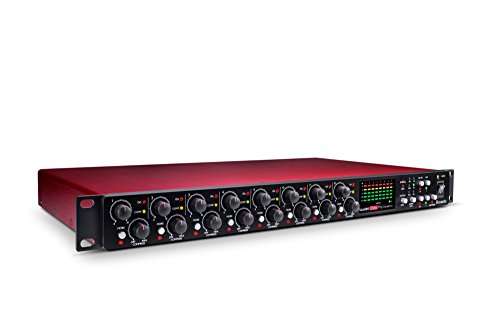
- Eight Scarlett mic preamps with ADAT
- Compression on every channel
- Word clock I/O for synchronization
Best For: Tracking drums and other loud sources in an ADAT expansion setup
Passive Splitter Utility
Behringer MS8000 8-Channel Mic Splitter
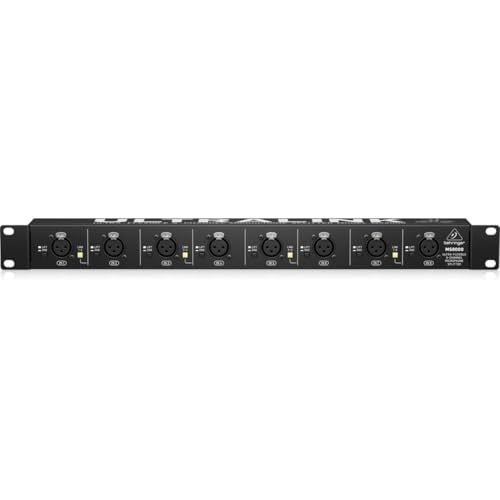
- 8 inputs and 16 outputs
- Direct Out and Link Out routing
- Passive design with ground-lift switch
Best For: Routing mic or DI signals to FOH, monitors, and recording gear
Rack-Mount Flexibility

- 1U rack-mount chassis for compact installs
- Bluetooth, USB, RCA, mic, and line connectivity
- Includes 3-band EQ and low-cut crossover
Best For: Users who want a flexible rack preamp for streaming, recording, and live sound
High-Resolution AD Conversion
RME OctaMic II 8-channel Preamp

- 8-channel microphone preamp in a single unit
- 24-bit/192kHz A/D conversion
- Dual digital outputs for flexible routing
Best For: Engineers and recording setups that want clean eight-channel mic capture with digital outs
Budget ADAT Expansion

- Eight-channel mic preamp with XLR inputs
- ADAT optical out for interface expansion
- Includes Midas mic preamplifiers
Best For: Home and project studios needing affordable eight-channel expansion
Redundant Dante Power
Focusrite RedNet MP8R 8-Channel Mic Preamp

- 8 mic preamps with line inputs
- Dante Ethernet connectivity
- Redundant power and Ethernet
Best For: Networked studios needing dependable 8-channel audio
Drive Control Core
SSL PureDrive Octo 8 Channel Mic Pre

- 8 PureDrive mic preamp channels
- 31-step trim with 1 dB steps
- Multiple impedance options
Best For: Engineers seeking flexible tone control and gain staging
Transformer Classic Rack
Neve 1073OPX 8-Channel Mic Preamp

- Remote-controlled mic/line/DI inputs
- 70 dB gain with Marinair transformers
- Optional USB/Dante I/O module
Best For: Studios wanting classic transformer sound with remote control
Heritage Rackmount Choice – Focusrite ISA828 MkII 8-Channel Mic Preamp
If you need an eight channel microphone preamplifier with a classic console-style sound and lots of routing flexibility, the Focusrite ISA828 MkII is built for serious studio use. It combines eight ISA transformer mic preamps with variable impedance, line inputs, front-panel instrument access on the first four channels, and optional digital conversion expansion.
Best For: Engineers who want a high-end 8-channel rack preamp with transformer tone, variable impedance, and expansion options.
Pros:
- Eight ISA transformer mic preamps with Lundahl LL1538 input transformers
- Switchable impedance, including the classic ISA 110 setting
- Front-panel instrument inputs on the first four channels
- Optional A-D card support with up to 192kHz, 24-bit conversion and Dante/ADAT/AES3 output options
Cons:
- Digital conversion and some routing features depend on the optional A-D card
- More of a studio rack solution than a simple plug-and-play preamp
The ISA828 MkII stands out if you want flexible input handling and the familiar Focusrite ISA approach in an 8-channel format. It is especially appealing for tracking sessions where impedance choices, metering, and expansion matter.
Expandable Color Option – Audient ASP800 8-Channel Preamp with ADC
The Audient ASP800 is an eight channel microphone preamplifier designed for recording setups that want clean gain plus a touch of character on select channels. It pairs eight Audient console mic pres with built-in A-D conversion, ADAT output, and two dedicated color channels for HMX and IRON saturation.
Best For: Home and project studios that want an 8-channel preamp with conversion and a couple of character channels.
Pros:
- Eight Audient console mic preamps for multi-channel recording
- Two retro channels with HMX and IRON saturation controls
- Two discrete JFET instrument inputs
- Pristine 118-dB Burr-Brown A-D converters with ADAT output
Cons:
- ADAT expansion means you need compatible digital gear to use the full output path
- Character processing is limited to two channels
For buyers who want a practical eight-channel front end with built-in conversion, the ASP800 offers a nice balance of cleanliness and optional coloration. It is a strong fit when you need to expand recording inputs without giving up a couple of useful tone-shaping channels.
Dynamic Tracking Pick – Focusrite Scarlett OctoPre Dynamic 8-Channel Expander
If you want an eight channel microphone preamplifier for expanding an interface or handling louder sources, the Scarlett OctoPre Dynamic is aimed at practical recording workflows. It offers eight Scarlett mic preamps, analog compression on every channel, ADAT connectivity, and word clock for synchronization.
Best For: Engineers who need an 8-channel ADAT expander with compression for tracking drums and other loud sources.
Pros:
- Eight natural-sounding Scarlett mic preamps
- Flexible analogue compression on every channel
- Eight balanced line outputs and dual front-panel instrument inputs
- ADAT connectivity plus word clock I/O for expansion and sync
Cons:
- Works best as part of an ADAT-based setup rather than as a standalone hub
- More focused on tracking utility than on premium character color
The OctoPre Dynamic is a sensible choice when you need more inputs, controlled peaks, and simple digital expansion. Its compression and headroom advantages make it especially useful in session situations where sources can get unexpectedly hot.
Passive Splitter Utility – Behringer MS8000 8-Channel Mic Splitter
The Behringer MS8000 is not a microphone preamplifier in the usual active sense, but it is a useful eight channel microphone signal splitter for live and studio routing. With 8 inputs, 16 outputs, and link functionality, it helps send the same microphone or DI signal to multiple destinations without extra complexity.
Best For: Live and studio users who need an 8-channel passive splitter for routing signals to multiple consoles or monitoring systems.
Pros:
- 8 inputs and 16 outputs for flexible signal distribution
- Direct Out and Link Out paths for FOH, recording, and monitor feeds
- Input Link function can combine adjacent channels or duplicate one source
- Passive design with front-panel XLR inputs and ground-lift switching
Cons:
- Passive unit, so it does not provide microphone preamp gain
- Volume must be controlled at the source devices
If your priority is routing rather than amplification, the MS8000 is a practical stage and studio utility. It is best viewed as a signal-management tool that complements preamps and mixers instead of replacing them.
Rack-Mount Flexibility – Rockville PPA53 Preamp Pro
If you need an eight channel microphone preamplifier alternative for a compact rack, the Rockville PPA53 is more of a versatile preamp hub than a pure multi-channel recording unit. It combines mic and line input support with Bluetooth, USB computer recording, RCA connectivity, and XLR output, making it a practical choice for small studios, podcast setups, and live rigs that need flexible routing in one 1U chassis.
Best For: Home studio users, podcasters, and live sound setups that want a rack-mount preamp with broad input/output options.
Pros:
- 1U rack-mount design fits neatly into studio or live sound racks.
- Offers Bluetooth streaming, USB recording, mic/line inputs, and RCA connectivity.
- Low-noise performance is aimed at clear recording and live use.
- Includes 3-band EQ and low-cut crossover for basic tone shaping.
Cons:
- Not an actual eight-channel mic preamp like the other products in this roundup.
- Best suited to flexible utility use rather than dedicated multi-mic tracking.
Overall, the PPA53 stands out when you want a compact, rack-friendly preamp with lots of connectivity rather than a traditional eight channel microphone preamplifier. It makes sense for setups that value convenience and integration across several audio sources.
High-Resolution AD Conversion – RME OctaMic II 8-channel Preamp
The RME OctaMic II is a straightforward eight channel microphone preamplifier built for clean multi-mic capture and digital output. Its 8-channel design and 24-bit/192kHz A/D conversion make it a strong fit when you need a high-quality front end for recording sessions that feed directly into digital gear.
Best For: Recording setups that need eight mic channels with high-resolution conversion and dual digital outputs.
Pros:
- Provides 8 channels of microphone preamplification in one unit.
- 24-bit/192kHz A/D conversion supports high-resolution recording.
- Dual digital outputs add routing flexibility.
Cons:
- Supplied notes focus on conversion and outputs rather than extra onboard features.
- More specialized for digital recording chains than general-purpose utility.
For buyers comparing an eight channel microphone preamplifier, the OctaMic II is the most direct fit in this group. It keeps the feature set centered on clean multi-channel preamping and digital conversion, which is exactly what many recording workflows need.
Budget ADAT Expansion – Behringer ADA8200 ADAT Preamp
Behringer ADA8200 Audiophile 8 In/8 Out ADAT Audio Interface with Midas Mic Preamplifiers
Check Price On AmazonThe Behringer ADA8200 is an eight channel microphone preamplifier and ADAT audio interface designed to expand a digital recording setup. With Midas mic preamplifiers, 8 XLR inputs, and ADAT optical out, it works well as an add-on front end for a computer-based rig that needs more mic inputs and simple digital connectivity.
Best For: Expanding a recording interface with eight microphone channels and ADAT output.
Pros:
- Eight-channel microphone preamp with XLR inputs.
- ADAT optical out makes it useful as an expansion unit.
- Midas mic preamplifiers are included in the design.
- Compact 8-in/8-out interface format suits studio expansion.
Cons:
- Maximum sample rate is listed at 48 kHz.
- Feature set is focused on utility expansion rather than premium extras.
In a roundup of eight channel microphone preamplifier options, the ADA8200 is the practical expansion pick. It is geared toward users who already have a digital interface and need more mic inputs without complicating the setup.
Redundant Dante Power – Focusrite RedNet MP8R 8-Channel Mic Preamp
If you need an eight channel microphone preamplifier built for networked studio or live workflows, the Focusrite RedNet MP8R centers on Dante connectivity, 8 mic preamps, and line inputs. It also adds redundant power supplies and redundant Ethernet ports, making it a practical option when uptime matters.
Best For: Networked recording setups that prioritize redundancy and Dante integration.
Pros:
- 8-channel mic preamp section with line inputs
- Dante network interface for Ethernet-based audio routing
- Redundant power supplies for added reliability
- Redundant Ethernet ports for resilient connectivity
Cons:
- Focused on networked use rather than simple standalone operation
- Details provided do not list onboard tone-shaping controls
For buyers building around Dante and reliability features, this preamp is aimed at system stability as much as channel count. Its core strength is straightforward: eight channels with network audio and backup options in one unit.
Drive Control Core – SSL PureDrive Octo 8 Channel Mic Pre
The Solid State Logic PureDrive Octo is an eight channel microphone preamplifier designed for engineers who want channel flexibility and controllable color. It combines PureDrive mic preamps, +48V phantom power, polarity invert, a 3rd order hi-pass filter, and 31-step trim control with 1 dB increments.
Best For: Producers and engineers who want adjustable gain staging and tonal options across eight channels.
Pros:
- Eight high-performance PureDrive mic preamp channels
- 31-step trim control with precise 1 dB increments
- +48V phantom power, polarity invert, and 3rd order hi-pass filter
- Multiple input impedance options for mic tonal experimentation
Cons:
- Built around tone shaping and control, so it may be more than a basic utility preamp
- Connectivity options are specific to TRS jack or dedicated D-Sub paths
What stands out here is the amount of control available per channel, especially the trim steps and impedance choices. If your workflow calls for dialing in different microphones with more precision, this unit is set up for that.
Transformer Classic Rack – Neve 1073OPX 8-Channel Mic Preamp
Neve 1073OPX 8-channel Microphone Preamp with Remote Control and USB/Dante Option Card
Check Price On AmazonThe Neve 1073OPX is an eight channel microphone preamplifier that combines remote-controlled mic, line, and DI inputs with the familiar character cues of Neve Marinair transformers. It also offers 70 dB of gain, switchable impedance, highpass filters, and an optional USB/Dante I/O module.
Best For: Users who want remote-controlled 8-channel preamps with transformer-based design and optional digital I/O.
Pros:
- 8-channel mic/line/DI preamplifier layout
- Remote control for flexible operation
- 70 dB of gain with switchable impedance
- Optional USB/Dante I/O module plus highpass filters
Cons:
- Heavier rack unit at 23 pounds
- Optional I/O functionality depends on the module choice
For buyers who want classic transformer-equipped preamp design in an eight-channel format, this model covers a lot of studio ground. The remote control and optional USB/Dante module make it especially adaptable for modern routing needs.
How We Picked the Best Eight Channel Microphone Preamplifier
We prioritized units that solve real recording needs: reliable gain, low noise, flexible routing, and compatibility with common studio workflows. Since an Eight Channel Microphone Preamplifier is often bought to expand an existing rig, we also weighed digital outputs, line-level integration, and rack-friendly design.
We favored models that offer a clear advantage in at least one area, such as premium analog character, built-in conversion, remote control, instrument inputs, or strong ADAT and network connectivity.
Quick Comparison
If you need simple expansion, an ADAT-capable Eight Channel Microphone Preamplifier is usually the easiest fit. If your setup is already digital or networked, look for Dante or remote-controlled options. For tone shaping, some units add transformer-style saturation, impedance switching, or analog compression. Budget choices are best when the goal is dependable extra inputs without demanding color or advanced routing.
Key Buying Factors for an Eight Channel Microphone Preamplifier
Gain and Noise Performance
Check whether the preamp provides enough clean gain for dynamic and ribbon microphones. Quiet performance matters just as much as maximum gain, especially in vocal, acoustic, and classical recording.
Connectivity and Expansion
Many buyers want ADAT for easy interface expansion, while others need USB, Dante, or analog line outputs. Match the connection type to your current interface so you do not create a bottleneck.
Conversion Quality
If the unit includes A/D conversion, that can simplify your rack and reduce cabling. For hybrid studios, the quality of the converters may matter as much as the preamp stage itself.
Tonal Options
Some models are designed to stay transparent, while others add harmonic color or saturation. Choose a neutral design for clean capture, or a character preamp if you want more attitude on the way in.
Workflow Features
Instrument inputs, compression, channel linking, pad controls, and remote software can all speed up sessions. These extras are especially valuable when one Eight Channel Microphone Preamplifier must cover multiple recording tasks.
Who Should Buy Which Eight Channel Microphone Preamplifier?
Home studio owners and interface users usually benefit most from ADAT expanders that add channels quickly. Professional studios and mobile rigs may prefer networked or remotely controlled models for routing flexibility and recall. If you want maximum sonic character, choose a premium analog design; if you want straightforward multitrack expansion, pick a clean, conversion-focused unit.
In short, the best choice depends on whether you need transparency, tone, or workflow convenience. Match the feature set to your recording style, and your Eight Channel Microphone Preamplifier will remain useful long after the initial upgrade.