
Electronic wind instruments make it easier to practice saxophone-style technique, melodies, and breath control without the volume and setup demands of an acoustic instrument. The best models combine responsive sensors with headphones, useful sounds, and a comfortable fingering layout.
This roundup compares 10 options for beginners, traveling musicians, home producers, and experienced players seeking a quieter practice setup. Consider connectivity, tone controls, battery life, and mouthpiece feel before choosing.
Best 10 Electronic Wind Instruments for Practice Picks for 2026
Premium Practice Pick
Yamaha YDS-150 Digital Saxophone

- Realistic saxophone mouthpiece and fingerings
- 73 voices with app customization
- Headphone, AUX, and micro USB connectivity
Best For: Saxophonists seeking realistic practice and versatile sounds
Recording-Focused Option
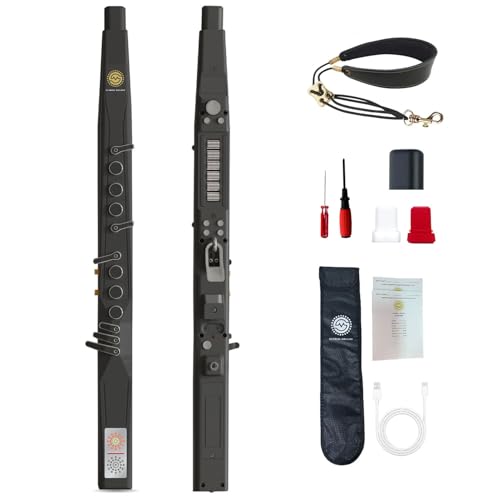
- 68 built-in sounds
- OTG recording for capturing ideas
- Rechargeable with a 5W speaker
Best For: Players wanting portable wind-synth recording
Beginner-Friendly Value
Eastar EDA-100 Electric Woodwind
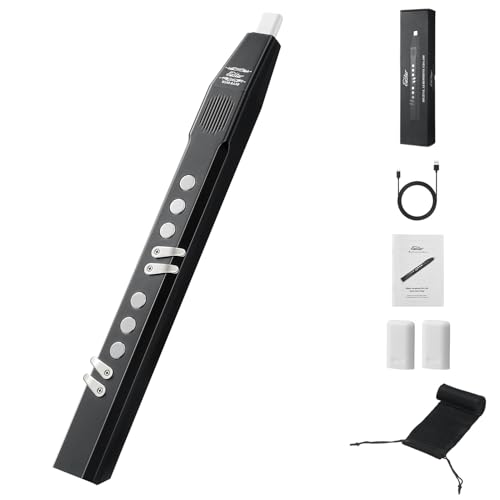
- 27 tones and two fingering modes
- Lightweight with up to five hours of play
- Bluetooth or wired MIDI support
Best For: Beginners seeking portable, flexible practice
Feature-Rich Battery Pick
AP 300 Pro Electronic Wind Instrument

- 108 tones with LCD controls
- Bluetooth audio and MIDI
- Up to six hours from a 6000mAh battery
Best For: Players wanting wireless features and long sessions
Most Portable

- About 1.8 pounds and highly compact
- Authentic alto mouthpiece and sax fingering
- Headphone, Bluetooth, and MIDI connectivity
Best For: Portable, quiet saxophone practice
Best Battery Life
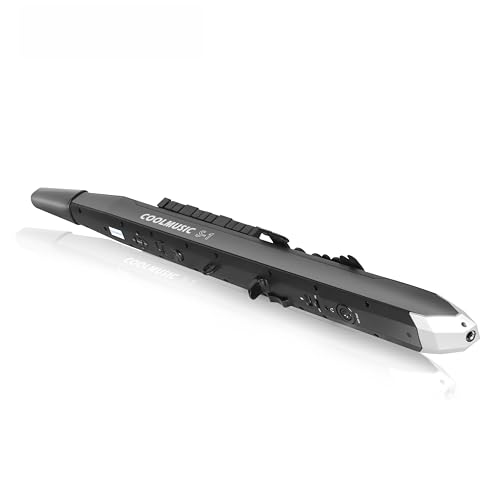
- 72 timbres with multiple fingering options
- 8–12-hour built-in battery
- Speaker and headphone monitoring included
Best For: Extended, flexible practice sessions
Best for Beginners
EX Electric Digital Wind Instrument

- Three fingering modes and 12 tones
- Three-octave range with transpose control
- Lightweight kit with case, earphones, and Bluetooth MIDI
Best For: Students and first-time electronic wind players
Best Portable Pick
Vangoa EWI-100 Mini Digital Wind Instrument

- 10 built-in tones with two fingering styles
- MIDI support for mobile and desktop apps
- Up to four hours of rechargeable playtime
Best For: Beginners needing a compact, quiet practice instrument
Best Feature Set

- 12 tones and three selectable fingering modes
- Three-octave range with transpose control
- Bluetooth MIDI, vibrato, reverb, and LCD display
Best For: Students wanting extensive sound and playability controls
Best Beginner Bundle
KONIX DC02 Pro Electronic Wind Instrument

- 10 tones with two fingering styles
- MIDI connectivity for apps and DAWs
- Case, USB cable, and two washable nozzles included
Best For: Beginners seeking a portable ready-to-play kit
Premium Practice Pick – Yamaha YDS-150 Digital Saxophone
The Yamaha YDS-150 is a strong choice among electronic wind instruments for practice when realistic saxophone technique and flexible sound options matter. Its acoustic saxophone mouthpiece, familiar fingerings, headphone connection, and 73 preset voices support quiet sessions, experimentation, and portable performance.
Best For: Saxophonists who want a realistic playing experience with extensive sounds and app-based customization.
Pros:
- Acoustic saxophone mouthpiece and fingerings provide a natural feel.
- 73 preset voices cover multiple tones and musical styles.
- Headphone, AUX, and micro USB connections support practice, recording, and performance.
- Includes a mouthpiece, synthetic reed, strap, and soft case.
Cons:
- At 7.1 pounds, it is heavier than several compact practice instruments.
- App-based customization may be more than beginners need.
The YDS-150 stands out for players who prioritize saxophone-like response and a polished feature set. Its integrated bell acoustic system and included accessories make it a particularly complete option for structured practice and travel.
Recording-Focused Option – MK Performance-Grade EWI
The MK performance-grade EWI is worth considering among electronic wind instruments for practice if built-in recording and a broad sound selection are priorities. It combines 68 sounds with OTG recording, a rechargeable design, and a 5W high-power cavity speaker for a self-contained setup.
Best For: Players who want a modern wind synth with onboard recording and speaker-based practice.
Pros:
- Offers 68 sounds for exploring different musical parts.
- Built-in OTG recording supports convenient capture of ideas.
- Rechargeable and compact at 618 grams.
- Includes a 5W high-power cavity speaker.
Cons:
- The supplied details list OTG as the connector, with no headphone connection specified.
- Its modern EWI layout may require adjustment for players accustomed to acoustic wind instruments.
This MK EWI emphasizes portability, onboard sound variety, and recording convenience. It is a practical fit for musicians who want to sketch ideas or practice without assembling a larger setup.
Beginner-Friendly Value – Eastar EDA-100 Electric Woodwind
The Eastar EDA-100 is one of the more approachable electronic wind instruments for practice, offering 27 tones, dual saxophone and flute fingering modes, and adjustable airflow control. Its lightweight build, built-in speaker, rechargeable battery, and earphone jack make it suitable for home, dorm, and travel use.
Best For: Beginners and casual players who want an affordable, portable instrument with multiple learning-friendly controls.
Pros:
- 27 tones include saxophone, flute, trumpet, clarinet, and more.
- Dual fingering modes and three-stage airflow control support flexible play.
- About 14 ounces with up to five hours of battery life.
- Supports Bluetooth or wired MIDI, accompaniment, and 30 reverb effects.
Cons:
- The plastic construction may feel less substantial than premium instruments.
- The built-in speaker is rated at 3W, which may be limited for larger spaces.
With its light weight and straightforward controls, the EDA-100 is well suited to first-time players and convenient daily practice. The included mouthpieces, storage bag, and 12-month service add useful value for beginners.
Feature-Rich Battery Pick – AP 300 Pro Electronic Wind Instrument
The AP 300 Pro is a feature-rich choice among electronic wind instruments for practice, especially for players who want wireless connections, recording, and long battery life. Its LCD screen, 108 tones, eight fingering options, OTG recording, and Bluetooth audio and MIDI provide substantial flexibility.
Best For: Players who need extended battery life, multiple fingering systems, and wireless accompaniment or MIDI control.
Pros:
- 108 tones provide a broad range of sound choices.
- Bluetooth audio and MIDI support backing tracks and wireless control.
- OTG recording is designed to reduce external noise interference.
- 6000mAh battery provides up to six hours of use.
Cons:
- The supplied details specify right-handed use.
- At 1.8 pounds, it is not the lightest option for extended carrying.
- Only Bluetooth is listed among the connector details.
The AP 300 Pro is a strong match for practice setups that extend beyond basic silent playing. Its display, tone storage, wireless features, and substantial battery make it especially useful for players who value quick access to settings and mobile recording.
Most Portable – Travel Sax 2
The Travel Sax 2 is a strong pick for electronic wind instruments for practice when portability and quiet playing matter most. At about 1.8 pounds, it combines an authentic alto mouthpiece, saxophone-style fingering, built-in sounds, headphones, and wireless connectivity in a compact design.
Best For: Saxophonists who need a lightweight practice instrument for travel, shared spaces, or late-night sessions.
Pros:
- Compact design weighs about 1.8 pounds and fits easily in a backpack or saxophone case.
- Real alto mouthpiece and ergonomic key layout support a familiar saxophone feel.
- Headphone and Bluetooth options enable quiet practice, while 70-plus sounds add variety.
- Bluetooth MIDI, Bluetooth audio, and USB-C support connections to devices, apps, and DAWs.
Cons:
- Its compact electronic format may not provide the same experience as practicing on an acoustic saxophone.
- The extensive connectivity and sound options may be more than beginners need.
Choose the Travel Sax 2 if silent practice and easy transport are your priorities. Its authentic mouthpiece and MIDI features also make it useful beyond basic practice, including composing and recording.
Best Battery Life – Coolmusic S1
The Coolmusic S1 is a versatile option among electronic wind instruments for practice, offering 72 instrument timbres, a display with practice settings, and an internal battery rated for 8 to 12 hours. Its built-in speaker and headphone monitoring let you choose between open or private practice.
Best For: Players who want long battery life, multiple sounds, and a self-contained instrument for home practice or portable use.
Pros:
- Offers 72 instrument timbres, multiple fingerings, user timbre storage, and tone upgrades.
- LCD display shows timbre, tone, volume, fingering, battery level, and octave information.
- Built-in full-range speakers eliminate the need for external speakers during basic practice.
- Battery life is rated at 8 to 12 hours, with USB-C charging and power-bank compatibility.
Cons:
- At 1.59 kg, it is considerably heavier than the Travel Sax 2.
- The supplied notes do not specify Bluetooth MIDI support, so connectivity is less clearly defined for recording workflows.
The S1 suits players who value a broad sound library and extended unplugged use. It is especially practical when you want speaker playback at home but still need headphone monitoring for quieter sessions.
Best for Beginners – EX Electric Digital Wind Instrument
The EX Electric Digital Wind Instrument is designed for accessible exploration, making it a practical choice among electronic wind instruments for practice. It includes 12 tones, three fingering modes, a three-octave range, adjustable breath sensitivity, and Bluetooth MIDI in a lightweight rechargeable package.
Best For: Beginners, students, and players who want guided experimentation with different sounds and fingering layouts.
Pros:
- Three fingering modes—Flute, Piano, and Hulusi—accommodate different playing preferences.
- Offers 12 tones, five blow-sensitivity levels, automatic vibrato, and adjustable reverb.
- Three-octave range and transpose function support varied repertoire and keys.
- Includes headphones, carrying case, rechargeable battery, and Bluetooth MIDI for compatible apps.
Cons:
- Its 90-day manufacturer warranty is shorter than the two-year warranty listed for the Travel Sax 2.
- With 12 onboard tones, it offers fewer sounds than the Coolmusic S1 and Travel Sax 2.
The EX model is a sensible entry point for players who want simple controls and room to experiment. Its different fingering modes, transpose function, and included accessories make it particularly approachable for students and first-time electronic wind players.
Best Portable Pick – Vangoa EWI-100 Mini Digital Wind Instrument
The Vangoa EWI-100 is a compact option for anyone comparing electronic wind instruments for practice. It offers 10 built-in tones, adjustable blowing sensitivity, two fingering styles, and headphone connectivity for quieter sessions. Its rechargeable battery provides up to four hours of playing after a full charge.
Best For: Beginners, kids, and adults who want a lightweight practice instrument with flexible tone options.
Pros:
- Includes 10 tones, from saxophone and clarinet to flute, trumpet, and recorder.
- Supports MIDI connections with Android, iOS, macOS, and Windows apps or DAWs.
- Compact 0.32 kg design includes a case, earphones, USB cable, and washable silicone nozzles.
- Headphone output and three blow-sensitivity settings support private, controlled practice.
Cons:
- Its 30-day warranty is shorter than some alternatives.
- The built-in battery is rated for about four hours of playtime per charge.
The EWI-100 stands out when portability and beginner-friendly features matter most. It is a practical choice for practicing quietly or experimenting with different sounds through MIDI.
Best Feature Set – EX M2 Digital Wind Instrument
The EX M2 is a versatile choice among electronic wind instruments for practice, especially for players who want more control over sound and pitch. It combines 12 tones, three fingering modes, five blow-sensitivity levels, automatic vibrato, reverb, and a three-octave range in a lightweight rechargeable design.
Best For: Students and developing players who want broad tone, fingering, and expression options.
Pros:
- Provides 12 onboard voices and flute, piano, and hulusi fingering modes.
- Offers a three-octave range, transpose control up or down 12 semitones, and adjustable reverb.
- Bluetooth MIDI connects wirelessly with compatible music apps for expanded tones and recording.
- Includes a speaker, headphone support, LCD display, case, earphones, and charging cable.
Cons:
- Its broader feature set may take more time for beginners to learn.
- The listed manufacturer warranty lasts 90 days.
The M2 is the strongest fit for practice sessions that benefit from customization. Its wider range and expressive controls give learners more room to explore as their playing develops.
Best Beginner Bundle – KONIX DC02 Pro Electronic Wind Instrument
The KONIX DC02 Pro keeps electronic wind instruments for practice straightforward with 10 tones, two fingering styles, three blow-sensitivity settings, and a built-in speaker. Its headphone connection supports quieter practice, while the rechargeable battery delivers up to four hours of use after charging.
Best For: Beginners who want a ready-to-carry kit with essential accessories and simple controls.
Pros:
- Offers 10 tones, including saxophone, clarinet, flute, trumpet, harmonica, and recorder.
- MIDI connectivity works with Android, iOS, macOS, and Windows apps or DAWs.
- Includes two removable washable silicone nozzles, a USB cable, and a portable cloth case.
- Lightweight 0.25 kg body and headphone output suit mobile or low-noise practice.
Cons:
- The notes do not specify a detailed warranty duration beyond “1.”
- It has fewer onboard tones and sensitivity levels than the EX M2.
The DC02 Pro is a sensible starter package for players prioritizing portability and essential practice features. Its included accessories make it easy to begin without assembling a separate setup.
How We Picked the Best Electronic Wind Instruments for Practice
We evaluated these instruments by focusing on the features that matter during regular practice: playability, fingering response, sound selection, headphone-friendly operation, portability, and connectivity. We also considered whether each model is better suited to beginners, saxophonists moving to digital practice, MIDI users, or performers who need a more responsive wind controller.
Because product specifications vary, check the current listing for included accessories, charging details, app compatibility, and supported MIDI connections before buying.
Quick Comparison
| Best For | What to Look For |
|---|---|
| Beginner practice | Simple controls, familiar fingering, built-in sounds, and a forgiving response |
| Quiet home sessions | Headphone output, adjustable volume, and low-latency monitoring |
| Travel | Compact dimensions, rechargeable battery, removable mouthpiece, and protective storage |
| Recording and production | MIDI over USB or Bluetooth, stable connectivity, and expressive breath control |
| Performance | Reliable sensors, quick tone changes, strong battery life, and wireless flexibility |
Key Buying Factors for Electronic Wind Instruments for Practice
Fingering and Response
Choose a fingering system that matches your experience. Saxophone-style layouts can shorten the learning curve for sax players, while simplified controls may be more approachable for children and first-time players. Responsive breath, bite, and touch sensors are important for natural dynamics.
Headphones, Sounds, and Volume Control
For apartment or late-night practice, confirm that the instrument supports headphones and lets you adjust volume independently. Built-in tones are useful for immediate practice, but MIDI connectivity offers far more sounds through a computer, tablet, or compatible synthesizer.
Portability and Power
A rechargeable battery and compact body are valuable if you practice in different rooms or travel frequently. Check charging time, expected battery life, and whether the mouthpiece or other parts can be removed for easier storage.
Connectivity
Bluetooth can simplify wireless MIDI or audio workflows, but wired USB may provide lower latency and broader compatibility. If recording matters, verify the operating systems and software supported by the instrument.
Who Should Buy Which Electronic Wind Instruments for Practice?
Beginners should prioritize an easy fingering layout, straightforward tone selection, and a comfortable mouthpiece over advanced performance features. Saxophonists who want a quiet substitute for an acoustic horn should favor digital saxophone designs with familiar alto-style ergonomics and expressive breath response.
Traveling players should choose the lightest rechargeable model that still offers headphone practice and dependable controls. Producers and electronic musicians should prioritize MIDI, Bluetooth or USB compatibility, and multiple expressive parameters. Performers should spend more on sensor accuracy, quick sound switching, wireless options, and reliable battery performance.