
Compact streaming rigs need dependable video processing without adding unnecessary bulk, heat, or software complexity. The right hardware encoder can convert HDMI or SDI sources into a stream-ready signal while keeping your computer free for monitoring, graphics, or recording.
These 10 picks cover simple single-input encoders, NDI-capable devices, portable production switchers, and all-in-one streaming systems. Compare connection types, output protocols, resolution support, and workflow features before choosing the best fit for your setup.
Best 10 Hardware Streaming Encoders for Compact Setups Picks for 2026
Best Protocol Flexibility

- 1080p60 H.265/H.264 encoding
- Broad RTMP, SRT, RTSP, HLS, and WebRTC support
- Browser setup and compact palm-sized design
Best For: Standalone IP streaming, IPTV, monitoring, and signage
Best 4K NDI Option
ZowieBox Pro 4K60 Encoder Decoder

- 4K60 HDMI encoding, decoding, and loop-out
- NDI|HX2/HX3 with PTZ control and tally support
- Touchscreen control and standalone RTMP/SRT/RTSP streaming
Best For: Compact NDI production and portable 4K workflows
Best Thunderbolt Capture Choice

- Thunderbolt-connected video capture
- Up to 1080p capture resolution
- Works with listed Windows and Linux systems
Best For: Computer-based capture, editing, and recording
Best All-in-One Production Switcher
IOGEAR Upstream Pro Production Switch
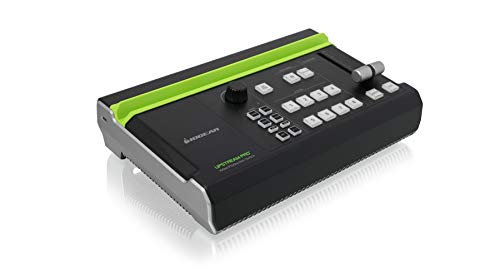
- Three HDMI inputs for multi-source production
- Direct H.264 USB recording and streaming
- Integrated microphone and RCA audio inputs
Best For: Portable multi-camera production and live events
Best Compact NDI Encoder
ZowieBox 4K HDMI NDI Encoder/Decoder

- 4K HDMI passthrough with standalone streaming
- NDI|HX3/HX2/HX, SRT, RTMP(S), and RTSP support
- USB-C, PoE, tripod mount, tally light, and LCD
Best For: Compact gaming, NDI, and PC-free HDMI streaming
Best Multi-Protocol Encoder
URayCoder 1080p HDMI-to-IP Encoder

- Dual streams can target different servers
- Broad RTMPS, SRT, HLS, UDP, WebRTC, and IPTV support
- Adjustable overlays, bitrate, audio, and video orientation
Best For: Broadcast and IPTV workflows needing simultaneous HDMI streams
Best Compact SDI Encoder
ZowieBox 3G SDI NDI Encoder/Decoder

- SDI-to-NDI|HX and NDI|HX-to-SDI conversion
- Standalone SRT, RTMP(S), and RTSP streaming
- PoE, USB-C, tripod mount, tally light, and SDI loopout
Best For: Compact SDI, NDI|HX, and LAN video-extension workflows
Pocket Pro Encoder

- Pocket-sized, low-power HDMI encoder
- Supports H.265/H.264 and 2K SRT
- Offers dual streaming and cloud management
Best For: Portable broadcasts, surveillance, and space-limited installations
Mobile Production Hub
All-in-One Live Streaming Switcher

- Switches, encodes, records, and streams standalone
- 7-inch AMOLED touchscreen for scene control
- Supports HDMI, USB, IP, Wi-Fi, Ethernet, and 4G
Best For: Mobile productions and multi-source live broadcasts
Wireless Mini Encoder

- Ultra-mini USB-powered wireless design
- Encodes 1080p60 input in H.265 or H.264
- Supports hotspot streaming and remote management
Best For: Outdoor events, weddings, churches, and mobile camera feeds
Best Protocol Flexibility – 1080p60 HDMI Hardware Encoder
For compact setups needing direct HDMI-to-IP streaming, this palm-sized encoder combines 1080p60 hardware encoding with H.265/H.264 support. Its browser-based configuration and broad protocol coverage make it a practical choice among hardware streaming encoders for compact setups, especially when you want to operate without a dedicated computer.
Best For: Live streaming, IPTV, remote monitoring, digital signage, and multi-protocol network distribution.
Pros:
- Encodes up to 1080p60 in H.265 or H.264.
- Supports RTMP(S), RTSP, SRT, HLS, WebRTC, UDP, and additional IP protocols.
- Compact 90 × 54 × 29 mm design supports flexible placement.
- Browser setup requires no special software or drivers.
Cons:
- Advanced configuration assumes basic networking knowledge.
- Limited to 1080p60 rather than 4K input or output.
- Requires a 12V DC power source; the listing specifies no included plug.
This is a strong fit when protocol versatility, standalone operation, and low-power continuous use matter more than 4K resolution. The built-in OSD and external 3.5mm audio input add useful flexibility for branded or labeled streams.
Best 4K NDI Option – ZowieBox Pro 4K60 Encoder Decoder
The ZowieBox Pro is designed for compact professional workflows that need more than basic streaming. It combines 4K60 HDMI encoding and decoding, NDI connectivity, a touchscreen, loop-out monitoring, and standalone RTMP, SRT, and RTSP streaming in a smartphone-sized unit.
Best For: NDI production, portable 4K streaming, PTZ workflows, gaming, events, education, and remote production.
Pros:
- Supports up to 4K60 HDMI input and output with zero-latency loop-out.
- Provides NDI|HX2/HX3 encoding and decoding with stated 2–3 frame latency.
- Includes a 3.42-inch touchscreen, tally light, and tripod mounting thread.
- Offers standalone RTMP, RTMPS, SRT, and RTSP streaming without a PC.
Cons:
- Does not support Full NDI or NDI|HB.
- Cannot encode and decode simultaneously.
- Its advanced PTZ and AI features are most useful with supported camera setups.
Among hardware streaming encoders for compact setups, this is the most feature-rich choice in the group. It suits users building an NDI-centered production system, though its broader capabilities may be unnecessary for simple single-camera streaming.
Best Thunderbolt Capture Choice – UltraStudio Mini Recorder
The Blackmagic Design UltraStudio Mini Recorder is a compact computer-connected capture device rather than a standalone network streamer. With a Thunderbolt interface and 1080p capture support, it is best considered when your compact setup already includes a compatible Windows or Linux computer.
Best For: Computer-based video capture, editing, and recording with a Thunderbolt-equipped system.
Pros:
- Uses Thunderbolt for connection to a compatible computer.
- Supports video capture up to 1080p.
- Compatible with Windows and Linux systems listed in the specifications.
- Includes Blackmagic Media Express software.
Cons:
- Requires a computer with a Thunderbolt port and suitable system resources.
- It is not described as a standalone network encoder.
- Its 1080p capture capability does not target 4K workflows.
This option makes sense for a desk-based or mobile computer workflow, but it is less self-contained than the other hardware streaming encoders for compact setups here. Confirm that your computer meets the listed Thunderbolt, operating system, CPU, and memory requirements before buying.
Best All-in-One Production Switcher – IOGEAR Upstream Pro Production Switch
The IOGEAR Upstream Pro is a portable production switcher for compact multi-source setups. It combines three HDMI inputs, audio mixing, USB recording, preview and monitoring functions, and direct streaming, making it a practical alternative to assembling separate capture, switching, and audio devices.
Best For: Portable live production using multiple cameras or HDMI sources with integrated audio and streaming.
Pros:
- Provides three HDMI inputs, including two 1080p inputs and one 4K input.
- Supports direct H.264 recording to USB storage.
- Streams directly to YouTube, Facebook, Twitch, and other services.
- Includes 1/4-inch microphone and RCA left/right audio inputs.
Cons:
- The product is listed at up to 1080p at 30 fps for production, rather than 4K streaming.
- At 1.9 kg, it is less lightweight than the smallest dedicated encoders.
- Its broader production feature set may be excessive for a single HDMI source.
Choose this unit when your compact setup needs source switching and audio handling as much as encoding. It is especially useful for events and mobile productions where direct recording and streaming are more valuable than the smallest possible footprint.
Best Compact NDI Encoder – ZowieBox 4K HDMI NDI Encoder/Decoder
For hardware streaming encoders for compact setups, the ZowieBox combines a phone-sized aluminum enclosure with 4K HDMI passthrough, standalone streaming, and NDI|HX conversion. It is a flexible fit for creators who need a small device that can handle console, camera, or PTZ workflows without relying on a PC for live streaming.
Best For: Compact gaming, NDI, and PC-free HDMI streaming setups.
Pros:
- Supports HDMI capture up to 4K with zero-lag passthrough and standalone streaming.
- Works with NDI|HX3, HX2, and HX workflows, plus SRT, RTMP(S), and RTSP.
- Offers USB-C, PoE, DC output, tripod mounting, a tally light, and an LCD status screen.
Cons:
- Encoder and decoder modes cannot operate simultaneously.
- It does not support full NDI signals or USB capture-card functionality.
- UVC-to-HDMI decoding is limited to up to 4K at 30fps or 1080p at 60fps.
The ZowieBox is especially appealing when space, flexible power, and network-video compatibility matter. Its limitations are important for full-NDI or USB-capture workflows, but its 4K passthrough and broad protocol support make it a capable compact encoder.
Best Multi-Protocol Encoder – URayCoder 1080p HDMI-to-IP Encoder
Among hardware streaming encoders for compact setups, this URayCoder model is built for users who need extensive protocol and stream-output options in a relatively small aluminum chassis. It accepts an HDMI source and can deliver two simultaneous streams with separate settings or destinations.
Best For: Broadcast and IPTV workflows requiring multiple simultaneous HDMI streams.
Pros:
- Supports RTMPS, RTSP, SRT, HLS, UDP, RTP, MP4, FLV, WebRTC, multicast, and other formats.
- Can output two video streams per HDMI input and send them to different streaming servers.
- Provides adjustable resolution, frame rate, bitrate, audio, overlays, cropping, rotation, and mirroring.
- Includes lifetime technical support, warranty coverage, SDK/API resources, and CGI control documentation.
Cons:
- Its 7 x 5 x 1.5-inch enclosure is less compact than the smallest portable encoders.
- The supplied details identify HDMI input and 1080p HD streaming rather than 4K support.
- It requires a 12-volt power input and a North American Type A plug.
This encoder stands out for configurable delivery rather than ultra-minimal size. Choose it when dual streams, overlays, and protocol flexibility are more valuable than 4K capture or the smallest possible footprint.
Best Compact SDI Encoder – ZowieBox 3G SDI NDI Encoder/Decoder
For hardware streaming encoders for compact setups built around SDI, the ZowieBox provides SDI-to-NDI conversion, network streaming, and SDI extension in a small aluminum housing. Its PoE support and tripod mount make it practical for portable production systems where cabling and space are limited.
Best For: Compact SDI, NDI|HX, and point-to-point LAN video workflows.
Pros:
- Encodes SDI to NDI|HX3, HX2, or HX, or decodes compatible streams to SDI.
- Supports standalone SRT, RTMP(S), and RTSP streaming without using a PC.
- Can convert UVC cameras to SDI at up to 1080p60 and supports SDI extension over LAN with two units.
- Offers PoE, USB-C, DC power, tripod mounting, a tally light, and SDI loopout.
Cons:
- Encoder and decoder modes cannot run at the same time.
- It supports NDI|HX formats but not full NDI|HB.
- USB capture-card functionality is not supported, and the SDI workflow has listed compatibility limitations with certain devices.
This is a strong choice for compact SDI installations and LAN-based production links. It is less suitable for users who require full NDI or simultaneous encode/decode operation, but its power flexibility and standalone streaming are valuable in mobile setups.
Pocket Pro Encoder – Compact 2K Streaming Encoder
For buyers comparing hardware streaming encoders for compact setups, the DDMALL AVC-2K prioritizes portability, low power use, and broad protocol support. It accepts up to 1080p60 HDMI input, encodes up to 1080p30, and supports H.265/H.264 workflows for cameras, PCs, NVRs, and other HDMI sources.
Best For: Space-constrained installations, mobile broadcasts, surveillance streaming, and multi-platform productions that need SRT, RTMP, RTMPS, HLS, RTSP, or UDP support.
Pros:
- Very small 2.95 x 1.26 x 0.87-inch design weighing about 1.13 ounces.
- Low 2.4W power consumption with USB or HDMI-source power options.
- Supports H.265/H.264, 2K SRT, dual-stream output, OSD overlays, and Web-UI preview.
- DDMALL LinkCloud enables remote monitoring and control.
Cons:
- Encoding output is limited to 1080p30, despite supporting 1080p60 input.
- Its compact encoder-focused design does not provide integrated switching or recording features.
The AVC-2K is a practical choice when a small footprint matters more than built-in production controls. Its protocol range and remote-management options make it flexible for distributed or specialized streaming deployments.
Mobile Production Hub – All-in-One Live Streaming Switcher
Among hardware streaming encoders for compact setups, the Magewell Director One is the most complete production system in this group. It combines HDMI switching, encoding, recording, monitoring, and streaming in one standalone unit, reducing the need for a separate computer and switcher.
Best For: Mobile and fixed productions that need multi-source switching, touchscreen control, recording, graphics, and streaming from one device.
Pros:
- Combines switching, encoding, recording, monitoring, and streaming in one system.
- Accepts up to two HDMI sources, two USB-A sources, and three simultaneous IP sources.
- Built-in 7-inch AMOLED touchscreen supports scene control and monitoring.
- Supports H.264/H.265 up to 1080p60, HDMI program output, and simultaneous streaming and recording.
Cons:
- Larger and more feature-heavy than a simple single-input encoder.
- Its integrated 4G modem requires separate 4G service.
- Advanced production capabilities may be unnecessary for basic one-camera streaming.
The Director One makes the most sense when compactness means consolidating several production tools rather than choosing the smallest possible box. Its battery support, connectivity options, and built-in creative tools suit field crews and more polished live broadcasts.
Wireless Mini Encoder – Pocket 1080p60 HDMI Streamer
If you need hardware streaming encoders for compact setups with mobile connectivity, the DDMALL HEV-2KW is built for highly portable 1080p workflows. This USB-powered wireless encoder accepts 1080p60 HDMI input, uses H.265 or H.264 hardware encoding, and can connect to 4G/5G hotspots for outdoor streaming.
Best For: Outdoor events, church services, weddings, sports, drone feeds, and other mobile broadcasts where a pocket-sized encoder and hotspot-friendly workflow are useful.
Pros:
- Ultra-small 2.95 x 1.26 x 0.59-inch form factor weighing about 0.88 ounces.
- Low 2.6W USB-powered operation for mobile setups.
- Supports 1080p60 input, H.265/H.264 encoding, and multiple streaming protocols.
- Physical one-click live control, LinkCloud management, NTP synchronization, OSD, and Web-UI preview.
Cons:
- Requires a separate network connection, such as a 4G/5G hotspot, for mobile internet streaming.
- Does not include the multi-source switching and recording features of an all-in-one production system.
- Its feature set is focused on encoding and streaming rather than comprehensive production control.
The HEV-2KW is a strong fit when weight, power draw, and wireless-ready operation are top priorities. It is especially useful for single-source field streaming and distributed camera deployments that benefit from NTP timing and remote management.
How We Picked the Best Hardware Streaming Encoders for Compact Setups
We focused on devices that make sense in small studios, mobile production kits, classrooms, houses of worship, offices, and event setups. Selection criteria included video input compatibility, maximum resolution and frame rate, supported streaming protocols, network connectivity, portability, recording or switching features, and ease of deployment.
Because “compact” can mean different things, this list includes both dedicated encoders and small all-in-one production tools. A basic HDMI-to-IP unit may be the better choice for a single camera, while an integrated switcher can replace several pieces of equipment when space and setup time matter most.
Quick Comparison
| Type | Best For | What to Check |
|---|---|---|
| Single-input HDMI encoder | Simple camera-to-stream workflows | Resolution, protocol support, and network port |
| NDI encoder/decoder | IP video production and flexible routing | NDI version, bandwidth, and source compatibility |
| SDI encoder | Long cable runs and professional cameras | SDI standard, loop-through, and power options |
| Portable switcher/encoder | Multi-camera productions | Input count, switching controls, and recording |
| Wireless or mobile encoder | Field work and temporary installations | Wireless stability, latency, and battery strategy |
Key Buying Factors
Inputs and Signal Compatibility
Start with the output available from your camera, console, or playback device. HDMI is common and convenient for compact rigs, while SDI is generally better for secure professional connections and longer cable distances. NDI models are useful when you want to move video through a network rather than run dedicated video cables.
Resolution, Frame Rate, and Encoding
Confirm whether the encoder supports your intended combination, such as 1080p60 or 4K60. Some products accept a high-resolution signal but encode or stream at a lower setting. H.264 offers broad compatibility; H.265 can reduce bandwidth but may have narrower playback and platform support.
Protocols and Network Requirements
RTMP is widely supported by streaming platforms, while SRT is valuable for more resilient contribution links. RTSP, HLS, UDP, and WebRTC can suit surveillance, internal distribution, or browser-based workflows. Wired Ethernet is usually more dependable than Wi-Fi for long broadcasts.
Control, Monitoring, and Power
Touchscreens, local previews, physical controls, and browser-based administration can significantly affect setup speed. Also check whether the unit uses USB-C, DC power, PoE, or a proprietary adapter, especially for mobile kits.
Who Should Buy Which Hardware Streaming Encoders for Compact Setups?
Choose a Basic HDMI Encoder If:
You stream one camera or source and want the smallest, simplest path to RTMP, RTSP, SRT, or another IP output. These models are usually the best value for solo creators and fixed single-camera installations.
Choose an NDI Model If:
Your workflow already uses network video, software production tools, or distributed sources. NDI devices can reduce cable clutter, but your network must have enough capacity and reliable switching equipment.
Choose an SDI Encoder If:
You use professional cameras or need robust connections over longer runs. SDI is particularly practical for stage, venue, and broadcast-style installations.
Choose a Switcher or All-In-One Production Unit If:
You need to combine multiple HDMI sources, add production control, record locally, or stream without a separate computer. The extra features and cost make the most sense for multi-camera operators and mobile crews.
Before buying, verify platform compatibility, required cabling, network speed, and actual output settings. The best Hardware Streaming Encoders for Compact Setups are not necessarily the most powerful; they are the ones that match your sources and deliver a stable, repeatable workflow with minimal extra equipment.