
Choosing the right encoder can determine whether a multi-camera production feels polished or frustrating. The best hardware streaming encoders for multi-camera production handle reliable signal conversion, streaming protocols, recording, and integration without overloading a production computer.
This roundup compares 10 options ranging from professional Magewell and Blackmagic Design units to compact, multi-channel HDMI and SDI encoders. Use the buying guide below to narrow your choice by input type, resolution, network workflow, and production scale.
Best 10 Hardware Streaming Encoders for Multi-Camera Production Picks for 2026
Best Hybrid 4K Pick

- HDMI and SDI inputs with built-in source mixing
- 4K encoding and up to six streaming destinations
- Simultaneous recording with flexible network control
Best For: Mixed-camera live productions needing an integrated encoder and mixer
Best Five-Input Mixer

- Five HDMI inputs for multi-source production
- Low-latency H.264/H.265 encoding with NDI and SRT
- Built-in split-screen layouts, overlays, and recording
Best For: HDMI camera productions requiring multiple inputs and live layouts
Best SDI Workflow
Magewell Ultra Encode SDI Plus

- Standalone 4K SDI encoding up to 30 fps
- NDI|HX, SRT, RTMP, and multi-destination streaming
- 128 GB storage with simultaneous recording and streaming
Best For: SDI-based broadcast, AV, and remote-production workflows
Best Protocol Flexibility
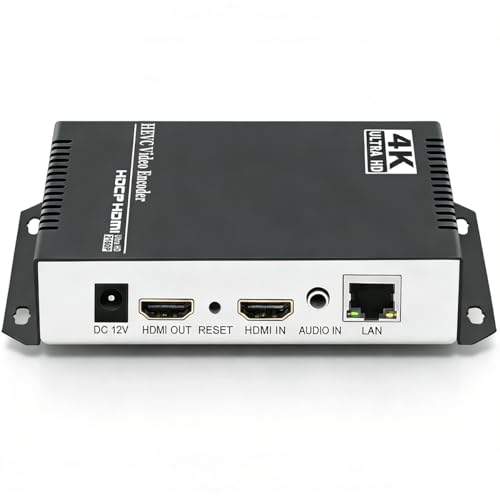
- 4K HDMI encoding with H.264/H.265 support
- Four simultaneous outputs across varied protocols
- Configurable overlays, audio, and image adjustments
Best For: HDMI streaming setups needing broad protocol and platform support
Best HDMI Workflow Pick
Magewell Ultra Encode HDMI Plus

- 4K HDMI encoding with loop-through output
- Multi-protocol, multi-destination streaming
- Simultaneous streaming and recording
Best For: HDMI-based live production with recording and IP workflow needs
Best Multi-Channel SDI Value
URayCoder Multi-Channel 4K SDI Encoder

- Four-channel SDI-oriented encoding
- Up to four simultaneous protocol outputs
- Supports 4K, overlays, and flexible audio settings
Best For: Multi-source SDI streaming and customized network delivery
Best Broadcast-Grade 4K60 Option
Blackmagic Streaming Encoder 4K
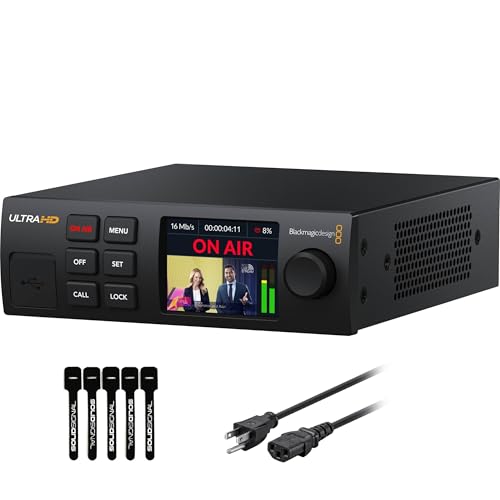
- 12G-SDI encoding up to 2160p60
- Ethernet and mobile auto-failover
- Camera control, tally, talkback, and REST API
Best For: SDI broadcast and remote-production workflows requiring 4K60
Flexible 1080p Streaming

- 1080p at up to 60 fps
- Up to four protocol outputs
- HDMI and line-in audio support
Best For: Single-camera streaming and IPTV workflows
4K Production Encoder

- 4K input and output at 30 fps
- Up to 120 fps at lower resolutions
- Four simultaneous protocol outputs
Best For: Dedicated 4K HDMI camera feeds
Multi-Channel 1080p Encoder

- Eight-port multi-source design
- Two streams per HDMI input
- Broad protocol and overlay support
Best For: Multi-camera 1080p broadcast installations
Best Hybrid 4K Pick – Magewell Ultra Encode AIO
For teams comparing hardware streaming encoders for multi-camera production, the Magewell Ultra Encode AIO stands out for combining HDMI and SDI inputs in one rack-mountable unit. It can mix sources, encode up to 4K, stream to multiple destinations, and record at the same time.
Best For: Multi-camera productions that need HDMI/SDI flexibility, onboard mixing, and simultaneous streaming and recording.
Pros:
- Accepts HDMI and SDI sources, with picture-in-picture and side-by-side layouts.
- Supports up to six simultaneous destinations and protocols including RTMP, SRT, NDI|HX, and HLS.
- Offers 4K encoding, overlays, recording, PoE, Wi-Fi, and optional 4G modem support.
Cons:
- SDI input supports up to 4K at 30 fps, while HDMI reaches up to 4K at 60 fps.
- Its broad feature set may be more than needed for a simple single-source stream.
The AIO is a strong all-around choice when a production uses mixed camera outputs or needs built-in layout control without adding a separate mixer. Its multi-destination streaming and recording features also suit repeatable live-event workflows.
Best Five-Input Mixer – WayPonDEV LinkPi ENC5-V2
The WayPonDEV LinkPi ENC5-V2 is designed for hardware streaming encoders for multi-camera production, with five HDMI inputs and built-in layouts for multi-source programs. Its H.264/H.265 hardware encoding, NDI/SRT support, and local recording make it suited to compact production setups.
Best For: HDMI-based productions needing five camera or source inputs, low-latency streaming, and flexible split-screen layouts.
Pros:
- Provides five HDMI 1.4 inputs supporting up to 4K at 30 fps.
- Supports H.264/H.265 encoding, RTMP, RTMPS, SRT, NDI, HLS, RTSP, and UDP.
- Includes picture-in-picture, 4-split, 9-split, OSD overlays, local recording, and remote control options.
Cons:
- It is HDMI-only, so productions using SDI cameras need additional conversion equipment.
- The standard kit does not list an NDI key; the supplied notes identify it as an optional kit item.
- 4K input is specified at up to 30 fps.
With five HDMI inputs and several built-in composition modes, the ENC5-V2 offers substantial source capacity in a single device. It is particularly practical for events, gaming, education, and other productions that can remain within an HDMI workflow.
Best SDI Workflow – Magewell Ultra Encode SDI Plus
For SDI-centered teams evaluating hardware streaming encoders for multi-camera production, the Magewell Ultra Encode SDI Plus provides standalone 4K SDI encoding with professional networking features. It supports multi-destination streaming, NDI|HX workflows, onboard storage, and recording while streaming.
Best For: Professional SDI production, remote contribution, corporate AV, education, and other fixed or mobile broadcast workflows.
Pros:
- Encodes SDI video up to 4096×2160p30 using H.264 or H.265.
- Supports RTMP, RTMPS, SRT, NDI|HX, HLS, and TS over UDP/RTP for varied workflows.
- Includes 128 GB internal storage, USB/network recording, PoE, Wi-Fi, and 4G/5G modem support.
- Provides overlays, video processing, web/API control, and an on-device display.
Cons:
- It is built around an SDI input rather than HDMI.
- 4K SDI encoding is specified at up to 30 fps.
- 4G/5G USB modems are supported but not supplied.
The SDI Plus is a focused option for productions already using SDI infrastructure. Its internal storage and PoE support simplify deployments, while NDI|HX and SRT help bridge traditional SDI sources with IP-based distribution.
Best Protocol Flexibility – URayCoder 4K HDMI Encoder
The URayCoder 4K HDMI encoder is a flexible choice among hardware streaming encoders for multi-camera production when broad protocol support matters. It accepts 4K HDMI input, supports H.264/H.265 encoding, and can output multiple streams for platforms and services such as YouTube, Facebook, Twitch, and Vimeo.
Best For: HDMI-based streaming setups that need broad protocol compatibility, configurable overlays, and multi-platform output.
Pros:
- Supports 4K input and output at up to 30 fps, plus up to 120 fps at 2K and lower resolutions.
- Handles RTSP, RTMP/RTMPS, SRT, HLS, UDP/RTP, WebRTC, FLV, and other listed protocols.
- Can simultaneously output four video streams using different protocols.
- Provides text, scrolling captions, logos, timestamps, audio options, and image adjustments.
Cons:
- It accepts HDMI rather than SDI inputs.
- 4K operation is limited to a maximum of 30 fps.
- The supplied notes do not specify onboard recording storage.
This encoder is compelling when a producer needs to distribute one HDMI source across several services or protocols. Its extensive configuration options are useful for branded streams, though multi-camera users may need a separate switcher or mixer before the encoder.
Best HDMI Workflow Pick – Magewell Ultra Encode HDMI Plus
For hardware streaming encoders for multi-camera production, the Magewell Ultra Encode HDMI Plus is a flexible choice when your cameras or switcher use HDMI. It supports up to 4096×2160p30 encoding, HDMI loop-through, multiple streaming protocols, and simultaneous recording.
Best For: HDMI-based live production, events, education, and corporate AV setups that need local monitoring and flexible IP delivery.
Pros:
- Supports 4K HDMI encoding with loop-through for monitoring or pass-through.
- Streams to multiple destinations using RTMP, RTMPS, SRT, NDI|HX, HLS, and other protocols.
- Can stream and record simultaneously to internal, USB, or network storage.
- Offers overlays, scaling, cropping, PoE, Wi-Fi, and optional USB modem connectivity.
Cons:
- HDMI input limits it compared with SDI-focused production hardware.
- 4K encoding is specified up to 30p rather than 60p.
The Ultra Encode HDMI Plus stands out for compact HDMI workflows that still require professional networking, recording, overlays, and NDI|HX integration. Its 128 GB internal storage and broad connectivity make it particularly adaptable for permanent or mobile installations.
Best Multi-Channel SDI Value – URayCoder Multi-Channel 4K SDI Encoder
Among hardware streaming encoders for multi-camera production, this URayCoder model is aimed at SDI systems needing multi-channel network distribution. Its four-channel design, 4K support, and simultaneous output across several protocols can simplify delivery to streaming platforms and production servers.
Best For: SDI-based teams that need multiple encoded outputs, configurable overlays, and broad protocol compatibility.
Pros:
- Provides four channels and supports 4K input and output at up to 30fps.
- Can output up to four streams simultaneously using different protocols.
- Supports RTMP, RTMPS, SRT, HLS, RTSP, UDP, RTP, multicast, and other formats.
- Includes text, scrolling captions, logos, timestamps, audio options, and image adjustments.
Cons:
- Its feature set and configuration may be more involved than a single-channel encoder.
- 4K operation is limited to 30fps according to the supplied specifications.
- The notes identify SDI compatibility but do not provide detailed physical input/output layout.
This encoder is a strong fit when channel count and protocol flexibility matter more than a compact single-source design. Its lifetime warranty and technical support may also appeal to organizations planning customized or enterprise-oriented deployments.
Best Broadcast-Grade 4K60 Option – Blackmagic Streaming Encoder 4K
For hardware streaming encoders for multi-camera production using SDI infrastructure, the Blackmagic Streaming Encoder 4K combines 12G-SDI input, 4K60 H.264/H.265 encoding, standards conversion, and connection failover. It is designed for workflows that need more than basic platform streaming.
Best For: Broadcast and remote-production teams using SDI cameras, monitoring outputs, camera control, tally, and resilient network connections.
Pros:
- Supports H.264 and H.265 streaming up to Ultra HD 2160p60.
- 12G-SDI input and loop output support DCI 4K60 sources.
- Ethernet and USB-C mobile connectivity include automatic failover.
- Adds standards conversion, REST API control, captions, timecode, tally, talkback, and webcam outputs.
Cons:
- Its advanced SDI feature set may be excessive for simple single-camera streaming.
- Remote camera control and tally features are intended for compatible Blackmagic Design cameras.
- It carries a one-year manufacturer warranty in the supplied details.
The Blackmagic model is the most production-oriented option here, especially for crews that need 4K60, SDI monitoring, automation control, and connectivity redundancy. Its feature set makes it well suited to integrated control-room and remote-production environments.
Flexible 1080p Streaming – URayCoder UHE265-1S
For buyers comparing hardware streaming encoders for multi-camera production, the URayCoder UHE265-1S is a practical single-input option for converting an HDMI camera or source into network streams. It supports 1080p at up to 60 fps, H.265/H.264 encoding, and several delivery protocols for streaming or distribution.
Best For: Single-camera production, live streaming, IPTV, and setups needing flexible protocol output.
Pros:
- Supports 1080p input and output at up to 60 fps.
- Can output up to four streams using different protocols, including RTMP(S), RTSP, SRT, HLS, and UDP.
- Offers overlays, cropping, rotation, mirroring, adjustable bitrate, and HDMI or 3.5mm line-in audio.
- Includes lifetime warranty and technical support according to the supplied product information.
Cons:
- Has one HDMI video input, so a multi-camera system requires one encoder per source or additional switching hardware.
- Does not provide 4K input or output based on the listed specifications.
This encoder is a strong fit when reliable 1080p distribution and protocol flexibility matter more than integrated multi-input switching. Its single-channel design is straightforward, but production teams should plan their camera-to-encoder count accordingly.
4K Production Encoder – URayCoder UHE265-1L-4K
The URayCoder UHE265-1L-4K is a useful choice for hardware streaming encoders for multi-camera production when each camera source needs a dedicated 4K-capable encoder. It accepts 4K HDMI video at up to 30 fps and can also handle higher frame rates at lower resolutions.
Best For: 4K HDMI sources, higher-resolution live production, and protocol-rich streaming installations.
Pros:
- Supports 3840×2160 input and output at up to 30 fps.
- Supports up to 120 fps at 2K and lower resolutions.
- Can output four streams with different protocols, including RTMP(S), SRT, HLS, WebRTC, and UDP.
- Provides branding overlays, image adjustments, audio input flexibility, and lifetime technical support.
Cons:
- Uses a single HDMI port, so multi-camera installations may require multiple units.
- 4K operation is limited to 30 fps according to the supplied specifications.
Compared with the 1080p models, this unit is the better match for 4K acquisition and delivery. Its single-channel architecture keeps the workflow modular, while the broad protocol selection supports direct publishing and custom network distribution.
Multi-Channel 1080p Encoder – URayCoder UHE265-8
For teams seeking hardware streaming encoders for multi-camera production, the URayCoder UHE265-8 is the most purpose-built option in this group. Its eight-port design is intended for handling multiple HDMI sources in a broadcast, IPTV, NVR, or live-streaming environment.
Best For: Multi-camera 1080p installations that need several HDMI inputs in one encoder chassis.
Pros:
- Provides eight HDMI-related ports for multi-source production workflows.
- Supports H.265/H.264 streaming through RTMP(S), RTSP, SRT, HLS, UDP, RTP, MP4, FLV, and other protocols.
- Each HDMI input can produce two simultaneous streams using different protocols.
- Includes overlays, video adjustments, audio controls, SDK/API resources, and lifetime support.
Cons:
- Designed for 1080p workflows rather than 4K production.
- Its larger multi-channel chassis may be more than needed for a single-camera setup.
- The supplied information does not specify whether all eight ports are HDMI inputs, so buyers should verify the exact port configuration before ordering.
This is the strongest fit for consolidating several HDMI sources into one hardware encoding unit. Verify the detailed port layout and your required stream count, but the multi-channel design can simplify cabling and management compared with deploying separate single-input encoders.
How We Picked the Best Hardware Streaming Encoders for Multi-Camera Production
We focused on the features that matter during real-world live production: input compatibility, supported resolutions, codec efficiency, streaming protocols, recording capability, networking, and ease of deployment. Models with HDMI inputs suit cameras, switchers, and consumer or prosumer sources, while SDI options are better suited to longer cable runs and professional studio environments.
We also considered support for RTMP, RTMPS, SRT, RTSP, HLS, UDP, NDI, and related workflows. Multi-channel designs received attention for productions that need to manage several sources, while single-input units may be preferable when reliability, portability, or straightforward operation is the priority.
Quick Comparison
- Best for flexible professional workflows: Magewell Ultra Encode AIO, with broad connectivity and production-oriented features.
- Best for SDI systems: Magewell Ultra Encode SDI Plus or a dedicated multi-channel SDI encoder.
- Best for HDMI sources: Magewell Ultra Encode HDMI Plus or one of the compact HDMI-to-IP models.
- Best for integrated multi-channel encoding: WayPonDEV LinkPi ENC5-V2, subject to confirming the required input and output configuration.
- Best for a familiar broadcast brand: Blackmagic Design Streaming Encoder 4K.
- Best for budget experimentation: Generic HEVC/H.264 HDMI encoders, provided their firmware, support, and protocol compatibility meet your needs.
Key Buying Factors for Hardware Streaming Encoders for Multi-Camera Production
Inputs and Signal Format
Start with the cameras and switchers you already own. HDMI is common and affordable but has shorter practical cable runs. SDI is more secure and dependable for professional installations. Confirm whether the encoder accepts the exact resolution, frame rate, color format, and connector type used by each source.
Resolution, Codecs, and Bandwidth
4K support is useful for high-detail productions and future-proofing, but it requires more network capacity and storage. HEVC/H.265 can reduce bitrate compared with H.264, although your streaming platform and playback devices must support it. For many live broadcasts, stable 1080p encoding is more valuable than an unreliable 4K workflow.
Protocols and Redundancy
RTMPS is widely used for platform delivery, while SRT is valuable over unpredictable networks. RTSP, UDP, HLS, and NDI can simplify local distribution and production monitoring. Look for dual-network options, recording, loop-through, and PoE when your installation benefits from backup paths or centralized power.
Control and Multi-Camera Workflow
Check how sources are selected, mixed, monitored, and configured. A multi-input encoder can reduce equipment count, but separate encoders may offer easier fault isolation. Verify whether “multi-channel” means simultaneous independent streams, switching between inputs, or a combined output.
Who Should Buy Which Hardware Streaming Encoders for Multi-Camera Production?
Choose a professional Magewell or Blackmagic unit when dependable operation, support, and integration matter more than the lowest price. Select an SDI model for studio, venue, worship, sports, or event systems built around SDI cabling. HDMI models are practical for small studios, classrooms, creators, and camera rigs located close to the encoder.
Choose a multi-channel unit when you need several simultaneous feeds and have confirmed its exact channel architecture. Compact generic encoders can be cost-effective for secondary feeds, IPTV, testing, or fixed installations, but verify firmware quality, warranty coverage, administration tools, and protocol behavior before using one for a mission-critical broadcast.