Choosing the right encoder can simplify a studio’s entire live-production workflow. The best hardware streaming encoders for professional studios reduce computer load while delivering dependable video transport, switching, and streaming features.
This roundup compares dedicated encoders, capture devices, audio streamers, and production switchers across 4K support, input options, protocols, monitoring, and portability. Use the guide below to narrow the field by production scale and workflow.
Best 10 Hardware Streaming Encoders for Professional Studios Picks for 2026
Most Versatile Encoder-Decoder

- 4K30 H.264/H.265 hardware encoding
- RTMP, SRT, RTSP, HLS, and multicast support
- Encoding, decoding, recording, and multi-view in one unit
Best For: Studios and IPTV workflows needing broad protocol and display flexibility
Best Compact Capture Option
Blackmagic UltraStudio Mini Recorder

- Thunderbolt-connected video capture
- 1080p capture resolution
- Supports Windows and Linux workflows
Best For: Computer-based studio capture and editing setups
Best for Multicamera Production

- Four HDMI inputs with two 4K60 inputs
- RTMP, SRT, RTSP, NDI, and UVC streaming
- PTZ control, switching, recording, and multi-view
Best For: Multicamera live production and PTZ-equipped studios
Best for Studio Audio Transport
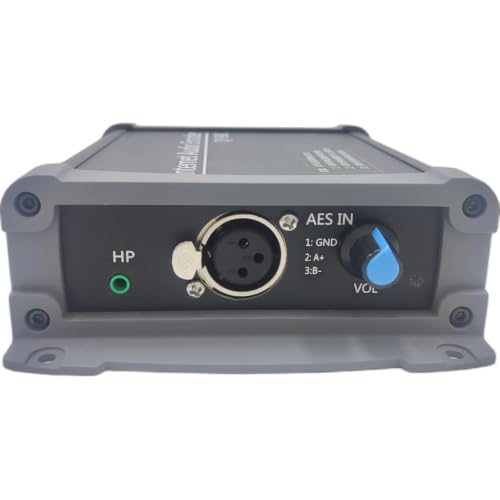
- 24-bit/48 kHz balanced AES/EBU XLR I/O
- Low-latency SRT with anti-packet-loss support
- Fanless 24/7 design with fail-restart
Best For: Professional IP audio contribution and distribution
Versatile Studio Switcher

- Four SDI and four HDMI inputs with four-source selection
- PTZ joystick, multiview, Super Source, and audio mixing
- NDI, SRT, RTMP, recording, and USB 1080p60 capture
Best For: Multi-camera studios and live event productions
Portable HEVC Encoder

- Pocket-sized 25g encoder powered over USB
- 1080p60 H.265/H.264 encoding with multiple protocols
- Cloud control, NTP synchronization, and multi-platform output
Best For: Mobile and remote single-source broadcasts
Compact Production Switcher
IOGEAR Upstream Pro Video Production Switch
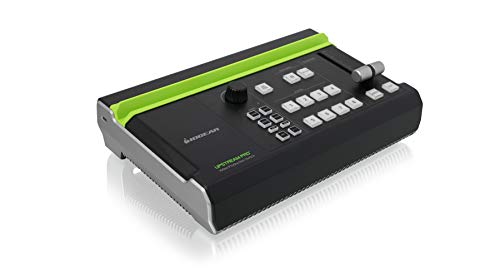
- Three HDMI inputs with one 4K input
- Direct H.264 USB recording and no-PC streaming
- Integrated microphone and RCA audio inputs
Best For: Small studios and portable three-source productions
Feature-Rich Studio Hub
SPROLINK Neolive R5PRO Multi-Camera Switcher

- Two 4K HDMI inputs plus two 1080p inputs
- Hardware RTMP streaming and USB recording
- PTZ, chroma key, audio mixing, and web control
Best For: Multi-camera studios needing integrated switching, encoding, and recording
Best Heavy-Duty Pick
Mirabox 1080p60 HDMI Capture Card

- Accepts 4K30 input with 1080p60 capture
- 4K30 HDMI passthrough with zero-latency monitoring
- Plug-and-play USB 3.0 UVC workflow
Best For: Computer-based studios capturing one HDMI source
Streamlined Broadcast Workflow
SPROLINK Neolive R5 4K Switcher

- Four HDMI inputs with two supporting 4K60
- Dual RTMP streaming without a computer
- PTZ control, recording, graphics, and UVC output
Best For: Studios needing standalone streaming plus software workflow support
Most Versatile Encoder-Decoder – 4K HDMI Streaming Encoder
For professional studios seeking hardware streaming encoders for professional studios, this 4K HDMI unit combines real-time H.264/H.265 encoding with broad protocol support and no host CPU load. It is a practical fit for live production, IPTV, education, and event workflows that need both streaming and decoding.
Best For: Studios, churches, classrooms, IPTV systems, and control rooms needing 4K input, multi-protocol streaming, and 24/7 operation.
Pros:
- Supports HDMI encoding up to 4K at 30 fps with H.264 and H.265.
- Works with RTMP, RTSP, SRT, HLS, FLV, TS, RTC, and UDP Multicast.
- Includes HDMI loopout, network decoding, multi-view layouts, OSD overlays, and USB/network recording.
- Offers dual concurrent streams with independently configurable resolutions.
Cons:
- Limited to 4K at 30 fps rather than 4K at 60 fps.
- The generic branding and unspecified software-update date may require extra due diligence.
This is one of the most flexible options in the group, especially when a studio needs encoding, decoding, recording, overlays, and IPTV compatibility in one compact chassis.
Best Compact Capture Option – Blackmagic UltraStudio Mini Recorder
Blackmagic Design Ultrastudio MINI Recorder Video Editing Card, Hardware Encoder
Check Price On AmazonThe Blackmagic Design UltraStudio Mini Recorder is a compact Thunderbolt video capture solution for workflows that need to bring video into a Windows or Linux computer. Among hardware streaming encoders for professional studios, it is best viewed as a computer-connected capture component rather than a standalone network streamer.
Best For: Editors and studio operators with a compatible Thunderbolt-equipped Windows or Linux computer and a 1080p capture requirement.
Pros:
- Compact design weighing about 8.48 ounces.
- Supports 1080p video capture through a Thunderbolt connection.
- Compatible with Windows and Linux systems.
- Includes Blackmagic Media Express software.
Cons:
- Requires a Thunderbolt port, a capable CPU, and at least 4GB of RAM.
- Its supplied specifications indicate 1080p capture rather than 4K.
- It is computer-dependent, so it is less suitable for standalone streaming deployments.
Choose this model when your studio already has a compatible computer-based workflow and values a small capture device. It is not the strongest fit for direct, PC-free delivery to streaming platforms.
Best for Multicamera Production – NeoLIVE N5 Streaming Switcher
The SPROLINK NeoLIVE N5 goes beyond basic encoding by combining a live switcher, multicamera control surface, recorder, and network streamer. For professional studios comparing hardware streaming encoders for professional studios, its 4K inputs, PTZ joystick, NDI support, and built-in monitoring make it suited to active live-production environments.
Best For: Multicamera studios, events, houses of worship, classrooms, conferences, and productions using PTZ cameras.
Pros:
- Provides four HDMI inputs, including two supporting 4K at 60 fps.
- Supports RTMP, RTSP, SRT, NDI, and USB-C UVC streaming, with up to two platforms simultaneously.
- Combines switching, multi-view, PTZ control, recording, and web-based operation.
- Records to SD card or USB storage and supports instant playback as an auxiliary source.
Cons:
- Program output is specified up to 1080p60 despite 4K input support.
- Its broad feature set may be more than a simple single-source streaming setup requires.
This is the most production-oriented choice here for teams managing several cameras and sources. It offers a fuller live-production workflow than a standalone encoder, though its output ceiling should be considered when planning a 4K delivery chain.
Best for Studio Audio Transport – AES XLR Audio Encoder
The AES Audio Encoder is designed for studios that need to move balanced digital audio over IP rather than encode video. It complements hardware streaming encoders for professional studios with 24-bit/48 kHz AES/EBU connectivity, low-latency SRT, and several broadcast-oriented audio protocols.
Best For: Broadcast studios, REMI production, mixers, and point-to-point or one-to-many IP audio distribution.
Pros:
- Uses balanced AES/EBU XLR digital I/O at 24-bit/48 kHz.
- Supports SRT with stated end-to-end latency of 200–500 ms and anti-packet-loss features.
- Handles SRT, RTMP, RTP/TS, RTSP, and Icecast workflows.
- Fanless hardware design, 24/7 operation, fail-restart, and web/front-panel control support dependable deployment.
Cons:
- This is an audio encoder, not a video streaming encoder.
- Its maximum sample rate is 48 kHz, so it is not intended for higher-rate audio workflows.
- The supplied notes describe the included unit and power adapter but do not specify video features or platform presets.
For audio-only contribution and distribution, this is a focused studio tool with useful low-latency and reliability features. Pair it with a video encoder when the production requires complete audiovisual streaming.
Versatile Studio Switcher – SPROLINK NeoLIVE R5S PRO
For professional studios needing hardware streaming encoders for professional studios, the SPROLINK NeoLIVE R5S PRO combines multi-camera switching, recording, PTZ control, and streaming in one unit. Its mix of SDI and HDMI inputs suits productions that need both broadcast-oriented and consumer video sources.
Best For: Multi-camera studios, churches, esports, live events, and productions using PTZ cameras.
Pros:
- Accepts four active sources selected from four SDI and four HDMI inputs, including two HDMI inputs supporting 4K60.
- Built-in 5.5-inch display and joystick control up to five PTZ cameras over LAN.
- Supports NDI, SRT, and RTMP streaming, with dual-platform streaming and recording to USB, SD, or HDD.
- Includes SDI, HDMI, multiview, and USB 3.0 UVC outputs plus Super Source layouts.
Cons:
- Program output is specified at 1080p60 despite support for selected 4K inputs.
- Its extensive switching, audio, PTZ, and streaming features may be more than a simple single-camera setup needs.
The R5S PRO is the most complete production hub in this group. Choose it when your studio values integrated switching and control more than the smallest possible encoder footprint.
Portable HEVC Encoder – DDMALL HEV-2KW Wireless HDMI
The DDMALL HEV-2KW is a compact choice for teams comparing hardware streaming encoders for professional studios that also need mobile or remote deployment. It accepts an HDMI source and delivers 1080p60 H.265 or H.264 streams through a range of network protocols.
Best For: Outdoor broadcasts, churches, weddings, sports, drone feeds, and space-constrained streaming kits.
Pros:
- Ultra-small 25g design with USB power and 2.6W power consumption.
- Supports 1080p60 input and HEVC/H.265 or H.264 hardware encoding.
- Works with SRT, RTMP, RTMPS, RTSP, UDP, and HLS, with dual-stream output for up to four platforms.
- Offers one-button live control, web preview, OSD settings, cloud management, and NTP synchronization.
Cons:
- Resolution is limited to 1080p rather than 4K.
- It is an encoder rather than a multi-input production switcher, so switching and mixing require additional equipment.
This is the strongest portability-focused option here. It makes sense when a studio needs to send a single HDMI feed from changing locations without carrying a larger production switcher.
Compact Production Switcher – IOGEAR Upstream Pro Video Production Switch
The IOGEAR Upstream Pro is a practical middle ground for studios evaluating hardware streaming encoders for professional studios without adding a computer to the core workflow. It combines three HDMI inputs, basic audio mixing, USB recording, and direct streaming in a portable production switch.
Best For: Small studios, presentations, interviews, education, and portable productions using up to three HDMI sources.
Pros:
- Provides three HDMI inputs, including two for 1080p sources and one 4K input.
- Supports previewing, monitoring, recording, editing, and streaming from one device.
- Records H.264 directly to USB storage and can stream to YouTube, Facebook, Twitch, and other services.
- Includes a 1/4-inch microphone input, RCA left/right audio input, and iPad app support.
Cons:
- Video production and streaming capabilities are specified around 1080p30, rather than 1080p60.
- It has fewer inputs and less advanced network and PTZ functionality than the SPROLINK.
- The 1.9 kg weight is less travel-friendly than the DDMALL encoder.
The Upstream Pro fits compact productions that need source switching and direct streaming but not the broader SDI, PTZ, or protocol feature set of a larger studio system. Its no-PC design can simplify small-team workflows.
Feature-Rich Studio Hub – SPROLINK Neolive R5PRO Multi-Camera Switcher
For studios comparing hardware streaming encoders for professional studios, the SPROLINK Neolive R5PRO combines multi-camera switching, hardware RTMP streaming, recording, audio mixing, and PTZ control in one production unit. Its two 4K HDMI inputs, two 1080p HDMI inputs, and USB-A source input support flexible live workflows.
Best For: Multi-camera studios, podcasts, events, and productions that need direct streaming plus recording without a separate computer.
Pros:
- Supports two 4K HDMI inputs, two 1080p HDMI inputs, and selectable active sources.
- Built-in hardware encoder supports RTMP streaming and simultaneous recording to USB storage.
- Includes PTZ control, chroma key, lower-thirds, audio mixing, and adjustable audio delay.
- Provides HDMI monitoring outputs and USB-C UVC output for computer-based workflows.
Cons:
- Optional NDI input requires a separately sold license.
- Its source configuration supports selecting any four inputs rather than using all five simultaneously.
The R5PRO is a strong all-in-one choice when a studio needs switching, encoding, recording, and production controls in one chassis. It is more capable than a basic capture device, but buyers should account for the separate NDI license if that workflow is essential.
Best Heavy-Duty Pick – Mirabox 1080p60 HDMI Capture Card
For buyers evaluating hardware streaming encoders for professional studios, the Mirabox HSV321 is a compact capture card for bringing HDMI sources into OBS or other computer-based software. It accepts up to 4K30 input and provides 1080p60 capture over USB 3.0, with HDMI passthrough for a low-latency monitoring path.
Best For: Studios that already rely on a streaming computer and need an affordable capture interface for a camera, console, or other HDMI source.
Pros:
- Supports 4K30 HDMI input and 4K30 passthrough while capturing up to 1080p60.
- USB 3.0 connectivity and UVC operation support OBS, Twitch, YouTube, and similar workflows.
- HDMI loopout is designed for zero-latency monitoring during streaming.
- Plug-and-play compatibility is listed for Windows, Mac OS, and Linux systems.
Cons:
- It cannot capture video at 4K; capture resolution is limited to 1080p.
- It is a capture interface rather than a standalone encoder, so computer software is required for streaming.
The Mirabox makes sense for a computer-centered studio needing one HDMI capture path at 1080p60. Its passthrough and broad device compatibility are useful, but it lacks the standalone switching, recording, and direct-streaming features of larger production systems.
Streamlined Broadcast Workflow – SPROLINK Neolive R5 4K Switcher
The SPROLINK Neolive R5 is a practical option for studios seeking hardware streaming encoders for professional studios with integrated multi-camera production. It combines four HDMI inputs, NDI and RTMP support, dual-platform streaming, PTZ control, recording, and USB 3.0 UVC output for software such as OBS, Zoom, Teams, Streamlabs, and vMix.
Best For: Broadcast-style studio setups, podcasts, worship services, conferences, and online events requiring direct streaming and computer capture flexibility.
Pros:
- Offers four HDMI inputs, including two supporting 4K60 and two supporting 1080p60.
- Built-in hardware RTMP encoder can stream to two platforms simultaneously without a computer.
- Provides PGM and multiview HDMI outputs plus lossless 1080p60 USB-C UVC output.
- Includes PTZ control, audio monitoring and delay adjustment, chroma key, graphics, recording, and media playback.
Cons:
- Its USB UVC output is 1080p60, even though two HDMI inputs support 4K60.
- Direct hardware streaming requires an Ethernet connection and stream-key setup through the web server.
The Neolive R5 balances standalone streaming with traditional computer-assisted production. It is a particularly versatile fit when a team wants dual RTMP streaming today but still needs a clean UVC feed for software-based control, meetings, or recording.
How We Picked the Best Hardware Streaming Encoders for Professional Studios
We evaluated these devices by looking at the features that matter most in studio production: video resolution and frame-rate support, HDMI or SDI connectivity, encoding formats, streaming protocols, monitoring, switching flexibility, and ease of integration. We also considered whether each unit is best suited to a fixed studio, mobile production kit, broadcast contribution workflow, or specialized audio-streaming setup.
Protocol support is especially important. RTMP remains widely compatible with streaming platforms, while SRT can improve reliability over unpredictable networks. RTSP, HLS, UDP multicast, NDI, and RTP can be valuable for IP video distribution, internal routing, and professional production environments.
Quick Comparison
- Dedicated video encoders: Best for sending a camera or production feed directly to streaming platforms without relying on a computer.
- Production switchers: Ideal for multi-camera shows requiring transitions, picture-in-picture, PTZ control, and integrated streaming.
- Capture devices: Useful when a computer remains central to encoding, recording, graphics, or software switching.
- Audio encoders: Designed for internet radio, event audio, and XLR-based streaming workflows rather than video production.
Key Buying Factors for Hardware Streaming Encoders for Professional Studios
Inputs, Outputs, and Signal Standards
Match the encoder to your cameras and infrastructure. HDMI is common for compact and prosumer systems, while SDI is generally preferable for longer cable runs and more robust studio wiring. Check input count, loop-through capability, multiview output, and whether simultaneous HDMI and SDI operation is supported.
Resolution and Frame Rate
4K support provides useful headroom for recording, cropping, and high-resolution delivery, but many live platforms and workflows still use 1080p. Confirm the required frame rate—particularly 30 versus 60 frames per second—and check whether 4K applies to input, pass-through, switching, or actual encoded output.
Encoding and Network Reliability
H.264 offers broad compatibility, while H.265 can reduce bandwidth at comparable image quality when the destination supports it. Ethernet is typically the most dependable connection; wireless capability can help mobile crews but should not replace a stable wired path for critical broadcasts. SRT support is valuable when contribution links must withstand packet loss.
Control and Production Features
For live shows, prioritize transition controls, keying, picture-in-picture, PTZ operation, NDI, audio mixing, screen previews, and remote or web control. These features can eliminate extra hardware, but only if they fit the operator’s workflow.
Who Should Buy Which Hardware Streaming Encoders for Professional Studios?
Choose a dedicated encoder for a simple, reliable camera-to-platform workflow. Choose a multi-input switcher for studios producing interviews, events, lectures, worship services, or multi-camera programs. Choose an SDI-capable model when your studio uses professional cameras and long cable runs. Choose a capture card when software production, gaming, graphics, or recording is central to the setup. Finally, choose an audio encoder for XLR-based audio-only broadcasting or streaming radio applications.