
If you need one audio source sent to several listeners at once, a headphone amplifier with multiple outputs is the cleanest way to keep volume consistent and signal loss low.
This roundup focuses on practical multi-channel options for studios, podcast setups, classrooms, and home listening, with picks that balance power, flexibility, and value.
Best 10 Headphone Amplifier with Multiple Outputs Picks for 2026
Best for Group Listening
Fosi Audio PH05 5-Channel Headphone Splitter Amp

- Five independent outputs for shared monitoring
- Per-channel volume knobs plus master mute
- Supports 16–300 ohm headphones and IEMs
Best For: Teams, families, and creators who need one audio source for multiple listeners.
Best for Small Groups
Mackie HM-4 4-Way Headphone Amp

- Four headphone outputs for shared monitoring
- Independent volume control for each listener
- Compact, rugged design with included power adapter
Best For: Small studios and home users sharing one stereo source with up to four headphones.
Best for Shared Listening

- Six independent headphone outputs
- 3.5mm and 1/4-inch compatibility
- Bass boost and stereo/mono switch
Best For: Groups, studios, and rehearsal setups that need one audio source sent to several headphones.
Best Bluetooth DAC AMP
Topping DX3 Pro+ LDAC Headphone Amp

- USB, optical, coaxial, and Bluetooth inputs
- ES9038Q2M DAC with NFCA headphone amp
- Line out, preamp mode, and remote control
Best For: Desktop users who want a versatile DAC/amp for headphones and powered speakers.
Best for Multi-Headphone Sessions
Bolanle PH800 8-Channel Headphone Amp

- 8 channels with 16 total headphone outputs
- 3.5mm and 6.35mm headphone jack support
- Drives up to 250Ω headphones for monitoring
Best For: Bands, home studios, and venues that need to feed several headphones from one audio source.
Best for 4-Listener Monitoring
FIFINE 4-Channel Headphone Amplifier
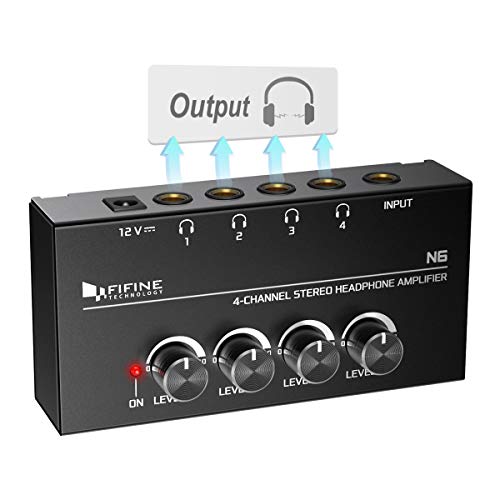
- 4 separate headphone outputs with individual volume knobs
- Metal build and compact footprint for studio or stage
- Clean stereo sharing with low noise and minimal distortion
Best For: Small teams, home studios, and shared listening setups needing four independent headphone feeds.
Best for Small Group Monitoring
Bolanle PH400 4-Channel Headphone Amp

- 8 headphone outputs in 3.5mm and 6.35mm formats
- Powerful enough for many common studio headphones
- Mono/stereo switching fits tracking and playback sessions
Best For: Small bands, podcasters, and home studios that need several listeners on one compact monitoring hub.
Best Compact 4-Output Pick
Pyle PHA40 4-Channel Headphone Amp

- Four headphone outputs for shared monitoring
- Independent volume control for each listener
- Compact, portable design with 1/4" TRS connections
Best For: Recording sessions, rehearsal spaces, and budget-minded shared listening.
Best for 4-Channel Sharing
HA400 4-Channel Headphone Amplifier

- Four independent headphone outputs
- Compact metal design for portable use
- Good for studio, stage, and group listening
Best For: Bands, podcasters, and small studios needing four separate headphone feeds.
Best for Multi-Listener Monitoring
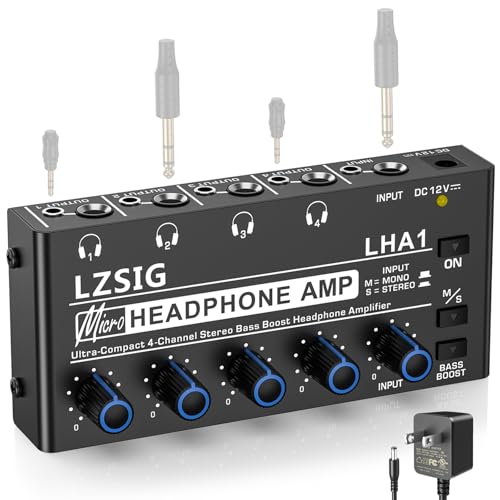
- Four outputs with individual volume control
- Bass boost and stereo/mono switching
- Supports 1/8" and 1/4" headphones
Best For: Small studios, rehearsal spaces, and home audio setups that need four listener outputs with individual level control.
Best for Group Listening – Fosi Audio PH05 5-Channel Headphone Splitter Amp
If you need a headphone amplifier with multiple outputs for shared listening, the Fosi Audio PH05 is built for exactly that. It lets up to five people monitor the same source at once, with independent volume control on each channel so everyone can set a comfortable level.
Best For: Music studios, podcasts, classrooms, and families that need simple multi-headphone audio sharing.
Pros:
- Five independent headphone outputs for multi-person monitoring
- Each channel has its own level knob plus a master volume and mute button
- Supports 16–300 ohm headphones and IEMs with solid power output
- Compact aluminum build feels sturdy and stable on a desk
Cons:
- Designed for sharing and monitoring, not for adding advanced DSP features
- Best suited to wired headphones rather than wireless use
For buyers who want a straightforward headphone amplifier with multiple outputs, the PH05 stands out for its easy per-channel control, strong compatibility, and practical studio-friendly layout. It’s a useful pick when one source needs to serve several listeners without constant volume compromises.
Best for Small Groups – Mackie HM-4 4-Way Headphone Amp
If you need a headphone amplifier with multiple outputs for a simple studio or home listening setup, the Mackie HM-4 keeps things easy: feed in one stereo source and split it to four headphones with independent volume control. It’s a practical choice when several people want to monitor the same mix without sharing a single headphone jack.
Best For: Small studios, content creators, and home users who want a straightforward way to share one stereo source with up to four listeners.
Pros:
- Four 1/4-inch headphone outputs for shared listening
- Individual level control on each output
- Compact, rugged build that’s easy to place on a desk or rack area
- Includes a 12V AC adapter for plug-in power
Cons:
- Single stereo input only, so it’s not a full-featured mixer
- Uses 1/4-inch connections, which may need adapters for some headphones
- Best for simple sharing, not advanced studio routing
For buyers who mainly want a reliable headphone amplifier with multiple outputs and separate volume control, the HM-4 is a clean, no-fuss solution. It focuses on the basics and does them well, making it a smart pick for group monitoring at home or in a small studio.
Best for Shared Listening – LZSIG 6-Channel Headphone Amp
If you need a headphone amplifier with multiple outputs for rehearsal rooms, small studios, or group listening, this LZSIG unit keeps things simple: one source in, up to six headphone outs, and independent level control for each channel. It also supports both 1/8-inch and 1/4-inch headphones, plus a stereo/mono switch and bass boost for quick tuning.
Best For: Musicians, home recording setups, and anyone who needs to share one audio source across several headphones without constant adapter swapping.
Pros:
- Six outputs with individual volume control for flexible monitoring
- Works with both 3.5mm and 6.35mm headphones
- Bass boost and stereo/mono switching add useful control
- Low-noise design suits studio and stage use
Cons:
- Single-input design is geared toward distribution, not mixing
- Best suited to headphones in the 32–100Ω range
As a headphone amplifier with multiple outputs, this model is a practical pick when you care more about clean distribution and independent volume control than advanced effects. It’s a straightforward solution for shared listening and basic monitoring.
Best Bluetooth DAC AMP – Topping DX3 Pro+ LDAC Headphone Amp
If you want a headphone amplifier with multiple outputs that also works as a compact DAC and preamp, the Topping DX3 Pro+ is a strong all-in-one option. It adds USB, optical, coaxial, and Bluetooth 5.0 input support, plus line out and headphone output, making it flexible for desktop systems and wireless listening.
Best For: Listeners who want a clean-sounding desktop DAC/amp with Bluetooth LDAC support and enough connectivity to drive headphones, active speakers, or a separate power amp.
Pros:
- Multiple inputs and outputs make it easy to use with headphones, speakers, and source devices
- ES9038Q2M DAC and NFCA amp design for detailed, low-noise playback
- Bluetooth 5.0 with LDAC, aptX HD, aptX LL, AAC, and SBC support
- Remote control and preamp function add everyday convenience
Cons:
- No balanced headphone output
- Not the cheapest choice if you only need a basic headphone amp
The DX3 Pro+ stands out as a headphone amplifier with multiple outputs for buyers who want a compact, polished desktop hub instead of separate boxes. It is especially appealing if you value wireless streaming, clean conversion, and straightforward volume control in one unit.
Best for Multi-Headphone Sessions – Bolanle PH800 8-Channel Headphone Amp
If you need a headphone amplifier with multiple outputs for rehearsals, small studio sessions, or stage monitoring, the Bolanle PH800 gives you a practical 8-channel layout with both 3.5mm and 6.35mm connections. It’s designed to split one source across a lot of listeners while still offering enough power to drive higher-impedance headphones.
Best For: Bands, home studios, and venues that need to feed several headphones from one audio source.
Pros:
- 8-channel design with 16 total headphone outputs for larger groups
- Supports both 3.5mm and 6.35mm plugs for flexible compatibility
- High-output design can handle headphones up to 250Ω
- Mono/stereo switch adds routing flexibility for monitoring setups
Cons:
- More outputs than most casual listeners need
- Best suited to shared listening or monitoring rather than portable use
For buyers comparing a headphone amplifier with multiple outputs, the PH800 stands out for sheer connection count and straightforward monitoring features. It’s a sensible pick when you care more about feeding several headphones cleanly than about a compact desktop footprint.
Best for 4-Listener Monitoring – FIFINE 4-Channel Headphone Amplifier
If you need a headphone amplifier with multiple outputs for small studio sessions, gaming setups, or shared TV listening, this FIFINE unit keeps the signal simple and the controls practical. It takes one stereo source and splits it to four 1/4-inch headphone outputs, each with its own volume knob for easy monitoring.
Best For: Small teams, home studios, and anyone who needs four people to monitor the same stereo source without signal loss.
Pros:
- Four independent headphone outputs with separate volume control
- Compact metal build feels sturdy for studio or stage use
- Low-noise operation with minimal distortion at higher volumes
- Includes a 12V power adapter for ready-to-use setup
Cons:
- Uses 6.35mm/TRS connections, so adapters may be needed for 3.5mm headphones
- Not a mixer, so it only splits one input to four outputs
- Cables are not included
This is a straightforward headphone amplifier with multiple outputs for users who care more about clean distribution than extra features. If you want reliable shared monitoring with simple level control, it fits the job well.
Best for Small Group Monitoring – Bolanle PH400 4-Channel Headphone Amp
If you need a headphone amplifier with multiple outputs for rehearsals, podcast sessions, or home recording, the Bolanle PH400 is built around simple shared monitoring. It offers 8 headphone outs, a mono/stereo switch, and enough output power to handle many common studio headphones without adding much desk clutter.
Best For: Small bands, podcasters, and home studios that need several listeners on one compact monitoring hub.
Pros:
- 8 total headphone outputs with both 3.5mm and 6.35mm connections
- High output power helps drive popular studio headphones cleanly
- Mono/stereo switching makes it flexible for tracking and playback
- Compact metal housing is easy to fit into a desktop or portable rig
Cons:
- More of a monitoring splitter than a feature-rich studio processor
- Best suited to small-group setups rather than large multi-room installs
- LED styling may be unnecessary if you prefer a plain utility design
Overall, the PH400 makes sense if your priority is a straightforward headphone amplifier with multiple outputs that can keep a few performers or collaborators listening at the same time. It focuses on practical routing, easy setup, and enough power for everyday studio use.
Best Compact 4-Output Pick – Pyle PHA40 4-Channel Headphone Amp
If you need a headphone amplifier with multiple outputs for small studios, band practice, or shared listening, the Pyle PHA40 keeps things simple. It sends one source to four pairs of headphones, with separate volume control for each listener and a compact design that fits easily on a desk or in a rack bag.
Best For: Recording sessions, rehearsal spaces, and budget-minded buyers who need four independent headphone outs in a portable package.
Pros:
- Drives up to four headphones at once from a single input
- Independent volume knobs let each listener adjust their own mix level
- Compact metal-style footprint is easy to move between sessions
- Simple 1/4" TRS input and output layout for quick setup
Cons:
- Only a basic distribution amp, not a feature-rich studio monitor controller
- Requires 1/4" headphone plugs or adapters for many consumer headphones
- Best suited to shared monitoring rather than high-end audiophile use
For buyers who want a straightforward headphone amplifier with multiple outputs, the PHA40 stands out for its four-channel layout and individual level control. It’s an affordable way to let several people listen from the same source without crowding around a single jack.
Best for 4-Channel Sharing – HA400 4-Channel Headphone Amplifier
If you need a headphone amplifier with multiple outputs for rehearsal, recording, or group listening, the HA400 is built for simple sharing without sacrificing independent level control. It takes a 1/4″ TRS input and lets up to four listeners adjust their own volume, making it a practical fit for small studios, stage monitoring, and home setups.
Best For: Bands, podcasters, and studios that need four separate headphone feeds in a compact, portable unit.
Pros:
- Four independent headphone outputs with separate volume knobs
- Compact metal chassis that’s easy to move between rooms or gigs
- Low-noise JRC4580-based design for cleaner monitoring
- Useful for studio sessions, stage monitoring, karaoke, and group gaming
Cons:
- Uses a 1/4" TRS input, so some sources may need an adapter
- Best suited to standard 32–100 Ω headphones rather than demanding cans
- Single-source sharing only; no mixing or advanced routing features
For buyers comparing a headphone amplifier with multiple outputs, the HA400 stands out for its straightforward four-channel layout and easy portability. It’s not a feature-heavy studio hub, but it covers the basics well when you need several people listening at once.
Best for Multi-Listener Monitoring – LZSIG 4-Channel Headphone Amp
If you need a headphone amplifier with multiple outputs for shared listening, this LZSIG unit is built around four independent channels with separate volume control. It’s a practical pick for studio monitoring, practice sessions, or any setup where several headphones need clean signal distribution without constant swapping.
Best For: Small studios, rehearsal spaces, and home audio setups that need four listener outputs with individual level control.
Pros:
- Four headphone outputs with independent volume knobs
- Bass boost and stereo/mono switching for flexible monitoring
- Works with both 1/8" and 1/4" TRS headphones
- Low-noise design helps keep shared listening clean
Cons:
- It’s a headphone amp, not a mixer
- Best suited to moderate-impedance headphones rather than demanding cans
- Compact feature set may be overkill for single-user setups
Overall, this is a straightforward headphone amplifier with multiple outputs for buyers who care more about practical routing and per-channel control than advanced mixing features. The bass boost and input flexibility add useful value, especially in compact monitoring setups.
How We Picked the Best Headphone Amplifier with Multiple Outputs
We focused on headphone amplifiers with multiple outputs that are easy to use, offer enough power for typical studio and consumer headphones, and provide a sensible mix of input/output options. We also weighed build quality, channel count, stereo vs. mono flexibility, and whether the amp is better suited to simple sharing or more serious monitoring.
Quick Comparison
Some models are compact 4-channel splitters for small teams, while others add 6 or 8 outputs for larger sessions. A few units prioritize basic analog distribution, while others include DAC features, Bluetooth, or bass control. In short, the right choice depends on whether you need straightforward headphone sharing or a more versatile desktop audio hub.
Key Buying Factors for a Headphone Amplifier with Multiple Outputs
Channel Count and Output Type
Match the number of outputs to your real use case. Four outputs are usually enough for podcasts, band rehearsals, or small classrooms. Six or eight outputs make more sense for group monitoring, content teams, or busy home studios. Also check whether the unit uses 1/4-inch, 3.5mm, or both, so everyone can plug in without adapters.
Power and Headphone Compatibility
Higher output power helps drive less efficient headphones without distortion or weak volume. If you use larger over-ear monitoring headphones, prioritize an amp with enough headroom rather than the cheapest splitter-style solution.
Input and Control Features
Basic analog inputs are fine for simple distribution, but some buyers may want bass boost, mono/stereo switching, or a built-in DAC for digital sources. If your setup involves a computer, streaming device, or Bluetooth input, those extras can simplify your rig.
Build Quality and Practicality
Metal housings, dedicated power adapters, and front-panel level controls usually indicate a more dependable daily-use device. For portable use, size and cable management matter more; for fixed studios, durability and clean signal routing matter more.
Who Should Buy Which Headphone Amplifier with Multiple Outputs?
Choose a compact 4-output headphone amplifier if you need affordable sharing for a few people. Go with a 6- or 8-output model if you regularly monitor with a larger group. If you want one box for both distribution and higher-end playback, look for a Headphone Amplifier with Multiple Outputs that also includes DAC or Bluetooth features. For straightforward studio monitoring, prioritize clean power and simple controls over extra effects or wireless convenience.