
If you want one compact audio hub for both headphones and speakers, a headphone amplifier with speaker outputs can simplify your setup fast. It’s a smart choice for desks, studios, and small living rooms where flexibility matters.
In this roundup, we focus on options that balance clean output, practical connectivity, and everyday usability so you can match the right amp to your gear and space.
Best 10 Headphone Amplifier with Speaker Outputs Picks for 2026
Retro All-in-One Desktop Amp
Fosi Audio MC331 Tube Integrated Amplifier
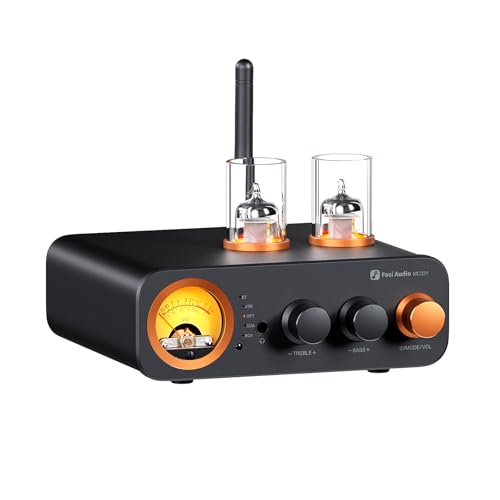
- DAC, amp, preamp, and headphone output in one
- Bluetooth, USB, optical, coaxial, and RCA inputs
- 105W x2 at 4Ω with pre-out and remote
Best For: Compact speaker-and-headphone setups with retro styling
Simple Multi-Headphone Splitter
Mackie HM-4 4-Way Headphone Amp

- Feeds one stereo source to four headphones
- Individual level control for each output
- Compact metal build with included power adapter
Best For: Group headphone monitoring and rehearsal use
Balanced Desktop Control Hub
Fosi Audio ZH3 DAC Headphone Amp
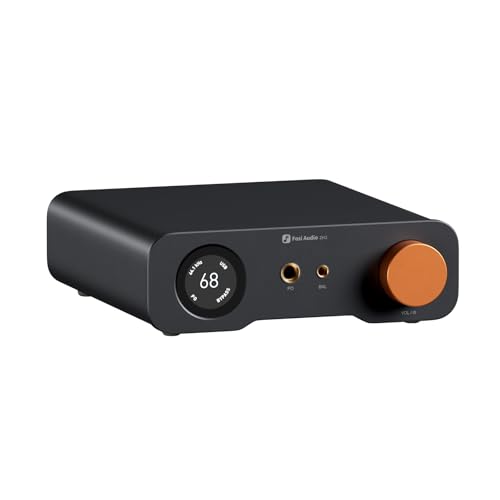
- Fully balanced DAC/headphone amp/preamp design
- 6.35mm and 4.4mm headphone outputs with gain control
- USB, optical, coaxial, RCA, XLR, and 4.4mm connections
Best For: Balanced desktop audio setups with flexible preamp outputs
Multi-User Monitoring Amp
Bolanle PH400 8-Channel Headphone Amplifier

- 16 headphone outputs across 3.5mm and 6.35mm
- Drives headphones up to 250Ω
- Mono/stereo switch for studio and band use
Best For: Multi-listener studio and rehearsal monitoring
Entry-Level DAC Amp
Fosi Audio Q4 DAC Headphone Amp

- USB, optical, and coaxial inputs
- RCA and 3.5mm outputs for headphones or speakers
- Bass and treble knobs with plug-and-play setup
Best For: Entry-level desktop users who need a simple DAC amp for headphones and powered speakers
Four-Listener Monitor Hub
FIFINE N6 4-Channel Headphone Amp
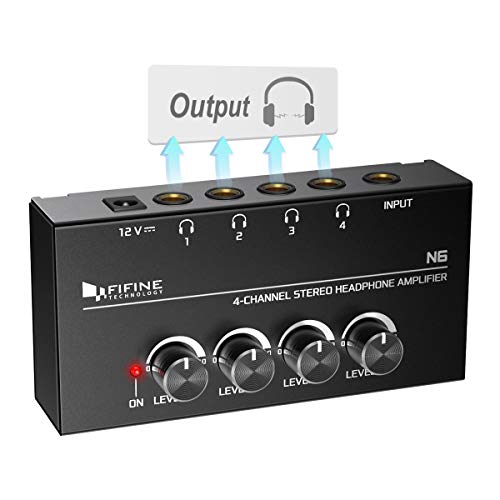
- Four 1/4-inch TRS headphone outputs
- Independent volume knob for each output
- Metal build with included 12V adapter
Best For: Studio or monitoring setups where four listeners need individual volume control
Portable 4-Channel Splitter
Pyle PHA40 4-Channel Headphone Amp

- Four 1/4-inch headphone outputs
- Independent volume control for each listener
- Compact metal-style portable design
Best For: Portable studio or shared-listening setups that need four separate headphone levels
Compact 4-Channel Monitor Hub
HA400 4-Channel Metal Stereo Headphone Amp

- Four independent headphone volume controls
- Low-noise JRC4580 operational chip
- Compact metal body for studio or stage use
Best For: Small groups needing simple shared monitoring
Bass-Boost Sharing Amp
LZSIG 4-Channel Stereo Headphone Amplifier
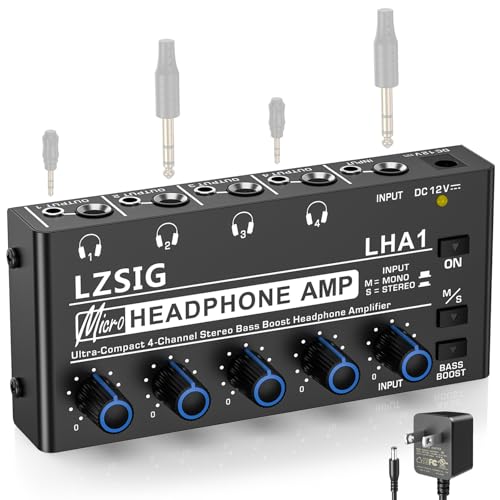
- Bass boost switch enhances vocals and low end
- Accepts both 3.5 mm and 6.35 mm headphones
- Four independent level controls for shared listening
Best For: Listeners who want bass boost and plug flexibility
Portable Four-Output Splitter
Mini Metal 4-Channel TRS Headphone Amp

- Four TRS outputs from one stereo input
- Independent volume knob for each channel
- Compact metal build with 12V adapter
Best For: Portable shared monitoring and group listening
Retro All-in-One Desktop Amp – Fosi Audio MC331 Tube Integrated Amplifier
The Fosi Audio MC331 is a practical headphone amplifier with speaker outputs for listeners who want one compact box to handle several jobs at once. It combines a DAC, integrated amplifier, preamp, and 3.5mm headphone output, while also adding Bluetooth, USB, optical, coaxial, and RCA inputs for flexible desktop or small-room setups.
Best For: All-in-one desktop systems for bookshelf speakers and casual headphone listening.
Pros:
- Built-in DAC, amp, preamp, and headphone amplifier in one unit
- Supports Bluetooth, USB, optical, coaxial, and RCA sources
- Drives bookshelf speakers with up to 105W x2 at 4Ω
- Includes pre-out and remote control for easier system use
Cons:
- Headphone output is 3.5mm only
- Tubes are shipped randomly between 5725W and 6J1
- Designed for compact setups rather than large rooms
Overall, the MC331 makes sense if you want a headphone amplifier with speaker outputs that also handles source switching and basic tone control. Its retro tube styling is a bonus, but the real value is the simple, space-saving feature set.
Simple Multi-Headphone Splitter – Mackie HM-4 4-Way Headphone Amp
The Mackie HM-4 is a straightforward headphone amplifier with speaker outputs? No—this model is focused entirely on sharing one stereo source across multiple headphones. If you need a compact, durable way to give several listeners their own level control, it’s built for that job and nothing more.
Best For: Shared headphone monitoring in rehearsal rooms, home studios, or small recording setups.
Pros:
- Shares one stereo source with up to four pairs of headphones
- Individual level control for each output
- Compact metal construction feels rugged and portable
- Powered by the included 12V AC adapter
Cons:
- No speaker outputs or speaker-switching function
- Limited to headphone distribution only
- Does not include source switching or DAC features
For buyers comparing a headphone amplifier with speaker outputs, the HM-4 is a narrower tool that works best when multiple headphones matter more than speaker playback. It’s a clean, reliable splitter-style amp for monitoring and group listening.
Balanced Desktop Control Hub – Fosi Audio ZH3 DAC Headphone Amp
The Fosi Audio ZH3 is a desktop headphone amplifier and preamp designed for users who want strong headphone performance plus flexible output options for amplifiers or active speakers. It combines balanced circuitry, multiple inputs, and both XLR/RCA output paths, making it a versatile control center for a compact HiFi setup.
Best For: Desktop HiFi systems needing balanced headphone drive and preamp connectivity.
Pros:
- Fully balanced DAC/headphone amp/preamp design
- High output options with 6.35mm and 4.4mm headphone outputs
- Multiple inputs and outputs including USB, optical, coaxial, RCA, XLR, and 4.4mm
- Includes bass/treble EQ, six filters, and swappable op-amps
Cons:
- EQ only applies to headphone output
- RCA and XLR output levels differ significantly
- More complex than a basic headphone amp
If you want a headphone amplifier with speaker outputs in the broader preamp sense, the ZH3 is a strong candidate thanks to its RCA and XLR output flexibility. It’s best suited to users who want tuning control and balanced connectivity in a single desktop unit.
Multi-User Monitoring Amp – Bolanle PH400 8-Channel Headphone Amplifier
The Bolanle PH400 is built for situations where one source needs to feed many listeners at once. This headphone amplifier is focused on studio, band, and home recording use, with enough outputs and power to handle high-impedance headphones up to 250Ω.
Best For: Band rehearsals, studio monitoring, and multi-listener recording sessions.
Pros:
- 16 headphone outputs total, split across 3.5mm and 6.35mm jacks
- Drives headphones up to 250Ω for professional monitoring
- Mono/stereo switch adds flexibility for different session types
- Compact metal housing with a visible 7-color LED volume knob
Cons:
- Focused on headphone distribution rather than speaker output
- No wireless or DAC features listed
- Best suited to monitoring, not a general-purpose home amp
For buyers searching for a headphone amplifier with speaker outputs, the PH400 is really about high-capacity headphone routing instead. It makes the most sense when multiple musicians need clean, independent monitoring in one place.
Entry-Level DAC Amp – Fosi Audio Q4 DAC Headphone Amp
The Fosi Audio Q4 is a practical headphone amplifier with speaker outputs for desktop systems that need simple digital-to-analog conversion and easy switching between headphones and powered speakers. With USB, optical, and coaxial inputs plus RCA and 3.5mm outputs, it fits a wide range of TV, PC, and stereo setups without driver installation.
Best For: Budget-conscious buyers who want a compact DAC/headphone amp for computers, TVs, and powered speakers.
Pros:
- USB, optical, and coaxial inputs make it flexible for common source devices.
- RCA and 3.5mm outputs support headphones, speakers, or amplifiers.
- Bass and treble knobs let you fine-tune sound by source.
- Compact metal build and plug-and-play use keep setup simple.
Cons:
- No microphone input.
- Limited to an entry-level feature set.
- Designed for straightforward desktop use rather than advanced control.
If you want a compact headphone amplifier with speaker outputs and easy connectivity, the Q4 covers the basics well. Its value is in convenience, versatility, and simple tone adjustment rather than high-end extras.
Four-Listener Monitor Hub – FIFINE N6 4-Channel Headphone Amp
The FIFINE N6 is a compact headphone amplifier with speaker outputs style multi-listener distribution for studios, rehearsal spaces, or shared listening setups. It takes a single stereo source and feeds up to four headphones through 1/4-inch TRS outputs, each with its own volume knob for individual control.
Best For: Recording and monitoring setups where up to four people need separate headphone volume control from one source.
Pros:
- Four 1/4-inch TRS outputs let up to four people listen at once.
- Separate volume knobs give each listener independent control.
- Metal construction and compact size suit studio and portable use.
- 12V power adapter is included.
Cons:
- TRS/TS cables are not included.
- Requires the correct stereo or mono cabling for proper use.
- It is not a mixer; it only provides one input and four outputs.
For teams that need a straightforward headphone amplifier with speaker outputs-style distribution to multiple listeners, the N6 is built for monitoring rather than mixing. It is a strong fit when you want clean signal sharing and simple per-channel level control.
Portable 4-Channel Splitter – Pyle PHA40 4-Channel Headphone Amp
The Pyle PHA40 is a portable headphone amplifier with speaker outputs-style multi-user monitoring for four headphones at once. It uses a single 1/4-inch TRS input and four 1/4-inch TRS outputs, making it a simple choice for studio sessions or any setup where multiple listeners need the same source.
Best For: Portable monitoring rigs, studio sessions, and shared listening where four headphones need independent level control.
Pros:
- Powers up to four headphones at the same time.
- Independent rotary volume controls for each output.
- Compact, lightweight design is easy to carry.
- Ultra-low-noise amplification supports clean monitoring.
Cons:
- Uses 1/4-inch connections only.
- Does not include Bluetooth despite some listing wording.
- Best suited to headphone distribution, not full home audio duties.
If you need a compact headphone amplifier with speaker outputs-style sharing for a small group, the PHA40 keeps the setup simple. Its strength is dependable multi-headphone monitoring in a very portable form.
Compact 4-Channel Monitor Hub – HA400 4-Channel Metal Stereo Headphone Amp
If you want a headphone amplifier with speaker outputs-style shared monitoring for a small group, the HA400 focuses on simple 4-way headphone distribution rather than extra mixing features. It takes a 1/4" TRS input and sends the signal to four independent headphone outputs, with low-noise circuitry aimed at studio, stage, gaming, and event use.
Best For: Small teams that need four independently controlled headphone feeds for monitoring, rehearsal, or shared listening.
Pros:
- 4-channel design lets up to four listeners use separate volume controls.
- Low-noise JRC4580 op amp is built for clearer stereo monitoring.
- Compact metal housing makes it easy to move between desk, stage, and studio.
- Works well for studio sessions, karaoke, conference speeches, and gaming setups.
Cons:
- Uses 1/4" TRS input and output, so some setups may need adapters.
- Designed for headphones in the 32-100 Ω range.
- Not water resistant and powered by an external 12V adapter.
The HA400 is a straightforward choice when the goal is clean, shared headphone monitoring with individual control and minimal clutter.
Bass-Boost Sharing Amp – LZSIG 4-Channel Stereo Headphone Amplifier
This headphone amplifier with speaker outputs-style distribution is aimed at listeners who want four separate headphone feeds plus a bass boost option. It supports both 1/8" and 1/4" headphones without converter adapters, and its stereo/mono switch adds flexibility for different input sources in studio or stage setups.
Best For: Users who want a 4-channel headphone amp with bass boost and broad plug compatibility.
Pros:
- Bass boost switch increases the 400-600 Hz and 3000-7200 Hz bands for fuller vocals and bass.
- Supports both 3.5 mm and 6.35 mm headphones without adapters.
- Four independent volume controls help each listener set a preferred level.
- Low-noise design with ROHM op amps supports clean monitoring.
Cons:
- Listed as a headphone amplifier, not a mixer.
- Best matched to 32-100 Ω headphones with 50 mm drivers.
- Its extra bass function may not suit listeners wanting a strictly flat response.
The LZSIG stands out if you want more tonal shaping than a basic splitter, while still keeping the setup compact and easy to share.
Portable Four-Output Splitter – Mini Metal 4-Channel TRS Headphone Amp
For anyone shopping for a headphone amplifier with speaker outputs-style multi-listener sharing, this compact unit keeps the focus on four TRS headphone outputs and independent control. It is designed for 32-100 Ω headphones, uses a low-noise JRC4580 chip, and includes a 12V adapter for studio, stage, and home audio use.
Best For: People who want a portable 4-output headphone amp for recording, rehearsals, or group listening.
Pros:
- One 1/4" TRS input feeds four separate 1/4" TRS headphone outputs.
- Each output has its own volume knob for independent adjustment.
- Low-noise JRC4580 op amp helps deliver clean stereo audio.
- Small metal enclosure is easy to carry and fits tight spaces.
Cons:
- Only supports 1/4" TRS input and output connections.
- Intended for 32-100 Ω headphones.
- Warranty is listed as 30 days in the supplied notes.
This model is a practical pick if you want a simple, durable way to share one audio source with four listeners and keep volume control at each seat.
How We Picked the Best Headphone Amplifier with Speaker Outputs
We prioritized units that serve more than one job: headphone monitoring, speaker playback, and straightforward connectivity. For this category, the best picks typically offer solid gain control, low-noise operation, useful input options, and enough power for common headphone impedances without adding unnecessary complexity.
We also favored models that make sense for real buyers, whether you need a desktop DAC/amp, a small home stereo unit, or a simple multi-headphone distribution amp.
Quick Comparison
The lineup splits into two main groups. First are integrated desktop and home-audio models, which are best if you want to drive speakers and headphones from one source. Second are multi-channel headphone amps, which are better for sharing one signal across several listeners in studios, rehearsal spaces, or classrooms.
If your priority is speaker switching and source quality, look more closely at DAC-equipped integrated units. If you mainly need several headphone outputs at once, a compact distribution amp is usually the better fit.
Key Buying Factors for a Headphone Amplifier with Speaker Outputs
Output Power and Impedance Support
Check whether the amp can comfortably drive your headphones, especially if they are 80Ω, 250Ω, or otherwise harder to power. More power is not always better, but insufficient power can lead to low volume, weak dynamics, and reduced clarity.
Speaker Connectivity and Use Case
Some units are designed to feed powered speakers or act as a small integrated stereo amp, while others focus on headphone distribution only. Make sure the speaker output type matches your setup, whether that means passive speakers, powered speakers, or external amplification.
Inputs, DAC Features, and Source Quality
USB, optical, coaxial, RCA, and 3.5mm inputs all serve different systems. A built-in DAC can be a big advantage for PC and desktop setups, while analog-only models may be perfectly adequate for simpler rigs.
Controls and Build
Look for easy volume access, clear channel handling, and sturdy metal construction if the amp will see frequent use. Bass boost, balanced inputs, or preamp functions may be useful, but only if they fit your actual listening needs.
Who Should Buy Which Headphone Amplifier with Speaker Outputs?
Buy an integrated Headphone Amplifier with Speaker Outputs if you want one device for both private listening and speaker playback. Choose a multi-channel headphone amplifier if your main goal is monitoring for several people at once. For PC or desktop users, a DAC/amp makes the most sense. For studios and group setups, a simple headphone distribution amp is often the most practical and affordable option.