
A high-end cassette deck can still earn its place in a listening setup, whether you want to play a tape collection, make new recordings, or transfer audio to a computer. The challenge is finding the right features without overlooking the condition of an older machine.
These nine options span dual decks, cassette-and-CD units, and models with USB connectivity. Use the buying guide below to narrow your choice by workflow and buying risk.
Best 9 High End Cassette Deck Picks for 2026
Dual-Cassette Pick

- Dual cassette deck recorder
- USB connectivity
- One-year parts warranty listed
Best For: Dual-deck buyers who want USB connectivity
Multi-Format Pick

- Cassette, CD, and USB in one unit
- Records multiple sources to USB as MP3
- Mic input, echo, and pitch control
Best For: Computer-free transfers between tape, CD, and USB
Vinyl-to-CD Pick

- Records between cassette and CD
- Built-in RIAA phono preamplifier
- Auto-reverse and Dolby B cassette features
Best For: Computer-free vinyl and cassette transfers to CD
Best for Fast Dubbing
Onkyo TA-RW244 Double Cassette Deck
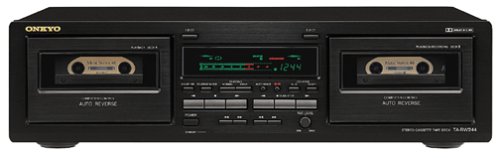
- Double auto-reverse with high-speed dubbing
- Dolby B/C and HX Pro
- Record-level control and CD synchro recording
Best For: Quick cassette dubbing and recording
Best for Mixed Media
TEAC AD-850 Cassette, CD and USB Recorder
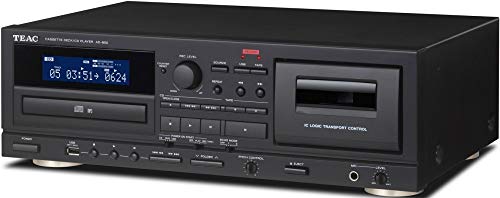
- Records supported sources to USB as MP3
- Records CDs and USB audio to cassette
- Pitch control and peak-level meters
Best For: Combining cassette, CD, and USB recording
Best for Tape Specs
Onkyo TA-RW311 Double Cassette Deck

- Auto-reverse double deck
- Supports Type I, CrO2, and metal tapes
- Dolby B/C with published performance figures
Best For: Comparing tape formats and stated specifications
Best for Tape Archiving
TEAC W-1200 Dual Cassette Deck

- Independent dual tape transports
- USB output for digital archiving
- Parallel recording and mic mixing
Best For: Playing, duplicating, and digitizing cassettes
Auto-Reverse Pick
Onkyo TA-RW303 Dual Cassette Deck

- Dual cassette configuration
- Auto-reverse feature
- Cassette recording capability
Best For: Dual-deck cassette use with auto reverse
Best CD-and-Cassette Combo

- CD recorder and auto-reverse cassette deck
- Front and rear USB ports
- LCD level meter and headphone output
Best For: Combining cassette use with CD recording
Dual-Cassette Pick – Tascam 202MKVII
Tascam 202MKVII Double Cassette Deck Recorder with USB Port, Dual Cassette Deck
Check Price On AmazonIf your search for a high end cassette deck centers on a dual-cassette setup, the Tascam 202MKVII is a straightforward option with USB connectivity. The supplied specifications identify it as a double cassette deck recorder, but give few details about its recording controls.
Best For: Buyers who want a dual cassette deck with a USB connection.
Pros:
- Dual cassette deck recorder.
- USB connectivity.
- Listed warranty covers one year for parts and 90 days for labor.
Cons:
- Supplied specifications do not describe tape-type support or recording controls.
- Listed weight is 14.5 pounds.
Choose this model for its dual-deck layout; check the detailed specifications if you need particular tape formats or recording features.
Multi-Format Pick – TEAC AD-850
The TEAC AD-850 is worth considering if a high end cassette deck needs to share space with a CD player and USB recording. It can save recordings from CDs, tapes, or external inputs to a USB flash drive as MP3 files without a computer.
Best For: Buyers who want cassette recording, CD playback, and USB transfers in one unit.
Pros:
- Records CDs, tapes, and external inputs to USB as MP3 files.
- Can record CDs, USB MP3 files, and external inputs to cassette.
- Offers ±10% cassette pitch control and a mic input with adjustable echo.
Cons:
- Metal-position tapes are supported for playback only.
- Cassette section uses a two-head, one-way design.
This is the most versatile media hub of the three listed here, particularly for computer-free USB transfers. If your priority is cassette transport flexibility, note its one-way design.
Vinyl-to-CD Pick – Tascam CC-222
For a high end cassette deck setup focused on moving recordings between formats, the Tascam CC-222 pairs a cassette section with a CD recorder. Its built-in RIAA phono preamplifier also allows direct recording from vinyl LPs to CD or cassette.
Best For: Buyers transferring vinyl or cassette recordings to CD without a computer.
Pros:
- Records between cassette and CD without a PC.
- Built-in RIAA phono preamplifier supports direct vinyl recording.
- Cassette features include auto-reverse, Dolby B, and return-to-zero.
- Provides analog RCA and coaxial and optical digital-audio connections.
Cons:
- Supplied specifications do not list USB connectivity.
- Listed weight is 19.55 pounds.
The CC-222 makes the strongest case when CD recording and a direct turntable input matter more than USB-based transfers.
Best for Fast Dubbing – Onkyo TA-RW244 Double Cassette Deck
If your high end cassette deck search is focused on copying tapes efficiently, the Onkyo TA-RW244 is worth a look. Its double auto-reverse design supports high-speed dubbing, while record-level control gives you a way to adjust recordings.
Best For: Tape collectors who want a double deck for quick dubbing and controlled cassette recording.
Pros:
- Double auto-reverse deck with high-speed dubbing.
- Dolby B/C noise reduction and HX Pro headroom expansion.
- CD synchro recording, auto-space, and record mute.
Cons:
- No USB recording or digital file playback is listed.
- The supplied notes do not include performance measurements.
This is the practical pick when dubbing features matter more than digital connectivity. Check the connections and operating condition before buying, especially if considering a used unit.
Best for Mixed Media – TEAC AD-850 Cassette, CD and USB Recorder
Teac AD-850 Home Audio Cassette and CD Player with USB-Recorder and Karaoke Mic Input (AD850B)
Check Price On AmazonThe TEAC AD-850 fits a high end cassette deck search when you also need CD playback and USB recording. It can save audio from cassettes and other supported sources to a USB flash drive as MP3 files, and it can record from CDs, USB, mic input, or external inputs to cassette.
Best For: Listeners moving between tapes, CDs, and USB files who want recording options in one component.
Pros:
- Records from cassettes, CDs, mic input, and external inputs to USB as MP3 files.
- Supports cassette recording from CDs, USB, mic input, and external inputs.
- Offers playback-only cassette pitch control, peak-level meters, and a dedicated remote.
Cons:
- Mic audio cannot be added when recording from CD to USB.
- Recording levels cannot be adjusted for CD-to-USB dubbing.
Choose this model for its source flexibility rather than for a double-cassette setup. Its stated recording exceptions are worth checking against your intended workflow.
Best for Tape Specs – Onkyo TA-RW311 Double Cassette Deck
For a high end cassette deck shortlist built around stated tape specifications, the Onkyo TA-RW311 offers a useful set of figures to compare. This auto-reverse double deck supports Type I, CrO2, and metal tapes, with Dolby B/C noise reduction.
Best For: Cassette listeners comparing double decks by supported tape types and published performance figures.
Pros:
- Auto-reverse double-deck design.
- Supports Type I, CrO2, and metal tapes.
- Specified at 20 Hz–17 kHz with metal tape, 78 dB signal-to-noise ratio with Dolby C, and 0.07% wow and flutter.
Cons:
- The supplied notes do not specify high-speed dubbing.
- No USB recording or digital playback is listed.
The published measurements make this one easier to compare on paper, but they do not establish the condition of an individual deck. Verify operation before purchasing a used example.
Best for Tape Archiving – TEAC W-1200 Dual Cassette Deck
For shoppers seeking a high end cassette deck with practical recording and archiving tools, the TEAC W-1200 offers two independently operated tape transports, pitch control on TAPE1, and USB digital output.
Best For: Cassette collectors who want to play, duplicate, and digitize tapes.
Pros:
- Both decks play Type I, II, and IV tapes and record on Type I and II.
- Independent transports allow tape changes or winding on one deck while the other runs.
- Parallel recording, mic mixing, and USB output provide several ways to make or preserve recordings.
Cons:
- Pitch control is limited to TAPE1.
- Recording is not supported on Type IV tapes.
The W-1200 is the most feature-focused choice here for cassette workflows, particularly if USB archiving and simultaneous tape copies matter to you.
Auto-Reverse Pick – Onkyo TA-RW303 Dual Cassette Deck
If your search for a high end cassette deck centers on dual-deck playback with auto reverse, the Onkyo TA-RW303 is a straightforward option. The supplied details also identify it as a recordable stereo tape deck.
Best For: Buyers seeking a dual cassette deck with auto reverse and recording capability.
Pros:
- Dual cassette configuration.
- Auto reverse is listed as a feature.
- Supports cassette recording.
Cons:
- The supplied specifications do not establish supported tape types or recording controls.
- No USB or digital transfer capability is listed.
Consider this Onkyo for its core dual-deck and auto-reverse features, but verify any advanced functions you need before buying.
Best CD-and-Cassette Combo – TEAC AD-RW900-B Recorder
The TEAC AD-RW900-B is worth considering if a high end cassette deck for your setup also needs CD recording. It combines an auto-reverse cassette deck with a CD recorder, USB connectivity, and an LCD level meter.
Best For: Listeners who want cassette playback alongside CD and multimedia recording options.
Pros:
- Combines an auto-reverse cassette deck and CD recorder.
- Provides front and rear USB ports, with the front port listed for PC transfer.
- Includes an LCD level meter and a 1/4-inch headphone output.
Cons:
- Only one cassette deck is identified, so it is not a dual-deck option.
- The supplied details do not specify supported cassette tape types.
Choose this TEAC when combining cassette and CD functions matters more than having two cassette transports; check the exact recording workflow against your needs.
How We Picked the Best High End Cassette Deck
We compared the nine selected models by their stated formats and features: single versus dual cassette transport, CD playback or recording, USB connectivity, and controls such as pitch adjustment or auto-reverse. We also considered the practical distinction between newer-style offerings and older decks that may require more careful condition checks. A feature list cannot establish sound quality or mechanical health, so treat the exact listing and its test results as part of the decision.
Quick Comparison
Start with the job you need the deck to do. The Tascam 202MKVII and TEAC W-1200 are dual-cassette choices for buyers who want two tape wells; the Tascam also lists USB, while the W-1200 lists USB and pitch control. The Onkyo TA-RW244, TA-RW311, and TA-RW303 are older dual-deck options whose appeal depends heavily on the condition of the individual unit. The TEAC AD-850 and AD850B combine cassette and CD functions, with the AD850B listing USB recording and a mic input. The Tascam CC-222 and TEAC AD-RW900-B are cassette/CD combinations to investigate if recording across formats matters. Check the specific model’s manual before assuming it supports a particular recording direction.
Key Buying Factors for a High-End Cassette Deck
Transport Condition Comes First
Ask for a recent demonstration of play, stop, fast-forward, rewind, and recording if you need it. On a dual deck, request a test of both wells. Belts, pinch rollers, heads, and switches can age even when a unit looks clean. For a used High End Cassette Deck, documented servicing and a clear return policy may be more valuable than extra features.
Match Connections to Your Workflow
USB can simplify transfers, but confirm whether it sends cassette audio to a computer, records to a USB drive, or serves another purpose; the label alone does not tell you. For an analog stereo system, verify the inputs and outputs against your amplifier or receiver. If you need CD recording, distinguish a CD recorder from a unit that only plays CDs.
Choose Controls You Will Actually Use
Dual wells are useful when copying tapes or keeping two cassettes loaded. Pitch control helps with playback of tapes that run at an unusual speed, while auto-reverse adds convenience. Neither feature compensates for a poorly maintained transport. If recording quality is a priority, ask how the deck has been tested with the tape type you plan to use.
Who Should Buy Which High End Cassette Deck?
Choose a dual-cassette model if tape-to-tape use is central to your setup; prioritize a well-tested example over the rarest one. Consider an AD-850 variant if you want cassette and CD functions together, and check the exact variant’s USB features before ordering. Look closely at the CC-222 or AD-RW900-B if CD recording is essential, but verify supported functions and media first. For straightforward listening to an existing collection, buy the best-documented, best-maintained deck that fits your system and budget.