
Choosing an in-ear monitoring setup is easier when the RF chain is planned from the start. A good system should keep mixes clear, stay stable on stage, and handle multiple performers without unnecessary clutter.
This roundup focuses on practical options for musicians, worship teams, and live sound users who want dependable wireless monitoring with smarter antenna management.
Best 10 In Ear Monitor System with Antenna Combiner Picks for 2026
Rack-Ready RF Upgrade
4-Way IEM Combiner with Paddle Antenna
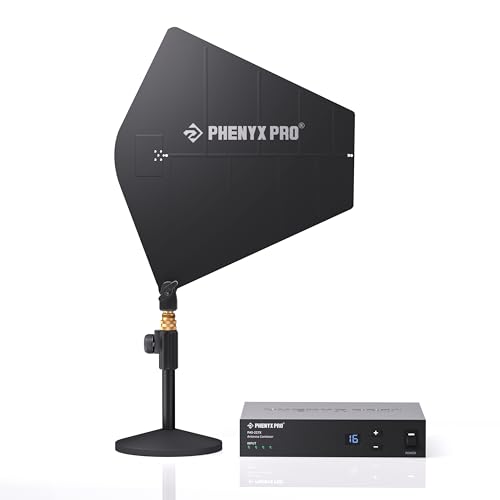
- Combines four IEM inputs into one antenna output
- 16-level gain control with up to +6dB boost
- Includes paddle antenna and mounting accessories
Best For: Rack-mounted IEM setups needing cleaner signal management
Simple Wireless Monitoring
Zero-Latency 2-Bodypack UHF IEM System

- UHF system with 40 switchable frequencies
- Built-in limiter circuitry for distortion control
- Reported 250-350ft wireless range
Best For: Small bands, churches, and studios needing basic wireless monitoring
Rack Power and RF Control
19-Inch 4-Way UHF IEM Antenna Combiner

- Four-way combiner reduces RF interference
- Wide 450-970MHz support for many UHF systems
- Adds 4 DC 12V outputs for transmitters
Best For: Installed UHF racks that need combiner and transmitter power outputs
Four-Performer Monitor Package
4-Bodypack Mono UHF IEM System

- Four independent mono mixes for up to four users
- 4x25 UHF frequencies help reduce interference
- Includes rackmount kit, antennas, and 4 bodypacks
Best For: Bands and worship teams needing separate mono mixes for four performers
Editor’s Choice
UHF Dual Channel Stereo IEM for Flexible Stage Monitoring
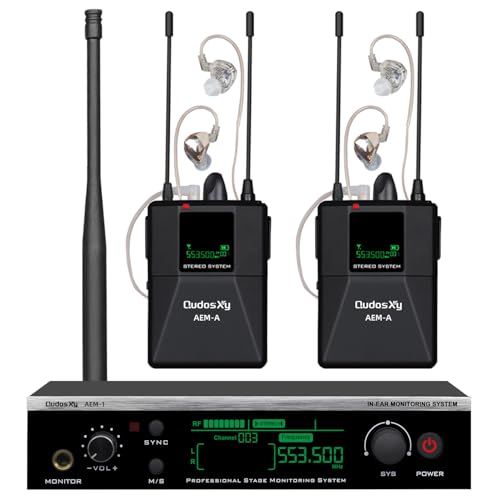
- Stereo and mono monitoring modes
- One transmitter supports multiple receivers
- 200-foot UHF range with rackmount antenna kit
Best For: Bands and performers needing flexible monitoring with easy expansion
Worship Pick
Mono 2-Channel IEM with 4 Bodypacks
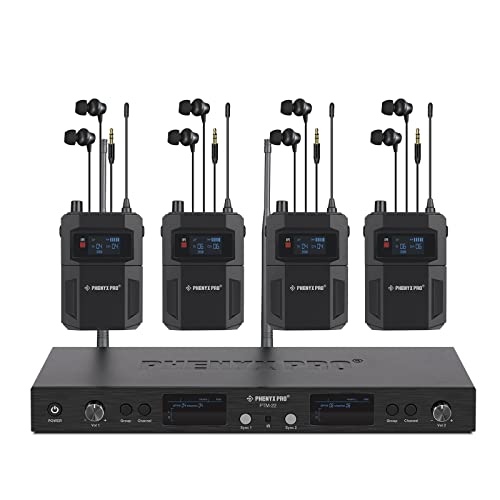
- Mono monitoring with daisy-chain loop outs
- 4 bodypacks and 4 earphones included
- UHF system with 2x50 frequencies
Best For: Churches and live teams that need simple multi-user monitoring
Long-Range Value
Mono UHF IEM System with 5 Bodypacks
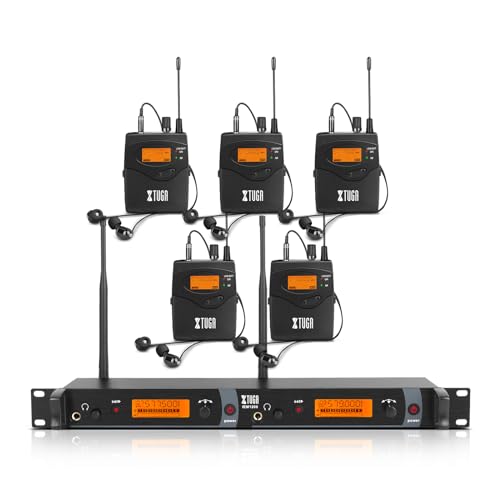
- 5 bodypacks included for larger groups
- Up to 300 feet operating range
- 40 frequencies and limiter circuitry
Best For: Larger bands or churches wanting durable long-range monitoring
Mono Clarity for Simple Stage Monitoring
Phenyx Pro PTM-11 Mono Wireless IEM

- Mono monitoring reduces phase issues and keeps audio focused.
- UHF 900MHz system offers 50 frequencies and up to 5-system use.
- 164 ft range, metal transmitter, and separate outputs add flexibility.
Best For: Users who want straightforward mono monitoring for stage, church, studio, or speech use.
Immersive Monitoring with Mix Control

- True stereo monitoring with stereo/mono mode selection.
- 89 frequencies and up to 5-system support help limit interference.
- EQ, balance, limiter, lock, and PAD tools improve mix control.
Best For: Performers who want stereo monitoring and more onboard control for live or studio use.
Dual-Receiver Simplicity for Small Teams
Phenyx Pro PTM-22 Dual Mono IEM

- Includes 2 bodypack receivers for two-person monitoring.
- 2x50 frequencies help reduce interference in busy RF spaces.
- Mono design, metal transmitter, and LCD keep setup practical.
Best For: Small bands, worship teams, or duos needing two reliable mono monitor feeds.
Rack-Ready RF Upgrade – 4-Way IEM Combiner with Paddle Antenna
If you’re building an in ear monitor system with antenna combiner, the PAS-227X is aimed at simplifying RF management for multi-transmitter setups. It combines up to four IEM signals into one antenna output, adds 16-level gain control, and includes a directional paddle antenna plus mounting hardware for rack-friendly installs.
Best For: Bands, stages, and event rigs that need a compact 4-way combiner with adjustable gain and wideband compatibility.
Pros:
- Combines up to four wireless IEM inputs into one antenna output to reduce RF clutter.
- 16-level gain control with up to +6dB boost helps adapt to different venues.
- Wide 460-970MHz bandwidth supports broad compatibility across major IEM systems.
- Includes antenna, jumper cables, mounting pieces, and carrying case for setup and transport.
Cons:
- Designed as a combiner package, so it is not a standalone monitor system.
- Best suited to users who already have multiple IEM transmitters to connect.
The PAS-227X makes sense when you want cleaner RF handling and easier rack integration from a single, bundled solution. Its mix of gain control, wideband support, and included accessories gives it a practical edge for live production work.
Simple Wireless Monitoring – Zero-Latency 2-Bodypack UHF IEM System
This in ear monitor system with antenna combiner isn’t a combiner-focused package, but it is a straightforward wireless monitoring solution for small performance setups. XTUGA gives you UHF operation, 40 switchable frequencies, a built-in limiter circuit, and a reported 250-350ft range for stage, church, or studio monitoring.
Best For: Players and worship teams wanting a basic UHF IEM system with zero-latency monitoring and a simple two-bodypack setup.
Pros:
- UHF PLL design with 40 switchable frequencies helps improve stability and avoid dropouts.
- Built-in limiter circuitry is intended to reduce distortion from excessive input levels.
- Reported wireless range of 250-350ft supports typical stage monitoring needs.
- Metal housing and LCD indicators add durability and easy status checking.
Cons:
- Only includes 2 bodypacks, so it suits smaller monitoring needs.
- Does not include an antenna combiner, so larger multi-transmitter rigs need separate RF gear.
- Frequency range is limited to 550-580MHz.
XTUGA is a practical entry-level monitor system when you want dependable wireless IEM performance without a lot of complexity. It works best as a compact monitoring solution rather than the centerpiece of a larger RF setup.
Rack Power and RF Control – 19-Inch 4-Way UHF IEM Antenna Combiner
For an in ear monitor system with antenna combiner, the AC-325L is built around practical rack integration and broad UHF compatibility. It combines four antenna inputs into one output, covers a wide 450-970MHz range, and adds gain adjustment plus DC power output ports for connected IEM transmitters.
Best For: Rack-mounted UHF IEM setups that need a 4-way combiner with transmitter power outputs.
Pros:
- Four-input combiner helps reduce signal interference and simplify RF routing.
- Wide 450-970MHz frequency range supports most UHF wireless IEM systems.
- 1U/19-inch rack-mount chassis is designed for secure, clean installation.
- Includes 4 DC 12V power output ports for powering up to four IEM transmitters.
Cons:
- Heavier rack-style unit, so it is less portable than compact alternatives.
- Best suited to users with a full rack setup rather than a minimal rig.
The AC-325L is a strong fit if you want a combiner that does more than just merge signals. The added transmitter power outputs and rack chassis make it especially useful for organized live-sound installs.
Four-Performer Monitor Package – 4-Bodypack Mono UHF IEM System
If you need a complete in ear monitor system with antenna combiner-style rack convenience already built into the package, the PTM-33-4B is aimed at four-performer monitoring. It provides four independent mono mixes, 4×25 UHF frequencies, loop outputs, and a rackmount-friendly transmitter layout for live stages and worship teams.
Best For: Four-person bands, church teams, and stage acts that want separate mono mixes in one wireless package.
Pros:
- Supports four groups of left/right inputs and loop outputs for flexible monitoring.
- 4×25 UHF frequencies help reduce interference in busy environments.
- Reported 140-164ft line-of-sight range fits typical live-performance use.
- Includes 4 bodypacks, 4 earphones, antennas, and a rackmount kit.
Cons:
- Mono-only monitoring may not suit users who prefer stereo IEM mixes.
- Range is lower than some other wireless IEM systems in the lineup.
- Best results depend on avoiding thick walls, glass, and metal obstructions.
The PTM-33-4B is a practical choice when each performer needs a dedicated mix without building a system from separate parts. Its rack-friendly design and included accessories make it especially useful for organized stage workflows.
Editor’s Choice – UHF Dual Channel Stereo IEM for Flexible Stage Monitoring
If you want an in ear monitor system with antenna combiner-style scalability for small to medium performance setups, this dual-channel UHF model is built around flexibility. It supports stereo or mono monitoring, uses a rugged metal transmitter, and one transmitter can support multiple bodypack receivers, making it a practical pick for bands, choirs, and stage crews who need synchronized monitoring.
Best For: Bands, ensembles, and performers who want stereo/mono switching plus multi-receiver expandability.
Pros:
- Switchable stereo and mono modes for different monitoring needs
- One transmitter can support multiple bodypack receivers
- UHF operation with a stated 200-foot wireless range
- Rugged metal transmitter with carrying case and rackmount antenna kit included
Cons:
- AA batteries for the bodypacks are not included
- Range is lower than some longer-distance stage systems
- Only 2 bodypack receivers are included in the box
Overall, this system stands out for users who want a straightforward wireless IEM setup with both stereo detail and mono stability. The included antenna rackmount kit and support for additional receivers make it especially useful when your monitoring needs may grow over time.
Worship Pick – Mono 2-Channel IEM with 4 Bodypacks
This in ear monitor system with antenna combiner-style shared output features is aimed at users who need clean, dependable mono monitoring across multiple performers. The dual-channel transmitter includes loop out left/right jacks for daisy-chaining, while the metal construction, rack-mountable design, and 4 included bodypacks make it a strong fit for organized stage and worship setups.
Best For: Churches, conference hosts, broadcasters, and live bands needing simple mono monitoring for multiple users.
Pros:
- Mono monitoring helps avoid phase issues and keeps audio focused
- Loop out left/right jacks support daisy-chaining to additional channels
- Includes 4 bodypack receivers and 4 earphones for multi-user monitoring
- UHF operation with 2×50 selectable frequencies and 164-foot coverage
Cons:
- Mono-only design may not suit users who prefer stereo imaging
- Range is shorter than some higher-distance systems
- Requires AA batteries for receivers
For teams that value simplicity and signal stability over stereo effects, this model is a sensible choice. The included rack kit, carry case, and multiple receivers make it especially practical for repeatable stage use.
Long-Range Value – Mono UHF IEM System with 5 Bodypacks
For buyers comparing an in ear monitor system with antenna combiner-friendly stage use in mind, this XTUGA setup is built for long-range mono monitoring and larger groups. It offers a 2-channel transmitter, 5 bodypacks, 40 switchable frequencies, and a metal housing designed for durability, making it a good fit for churches, bands, and other performance environments.
Best For: Larger groups that want a durable mono wireless IEM system with extended operating range.
Pros:
- Includes 5 bodypacks for monitoring multiple performers
- Stated operating range up to 300 feet, with 250–350 feet typical use noted
- 40 selectable frequencies for flexible channel selection
- Limiter circuitry and metal housing add practical stage reliability
Cons:
- Mono-only monitoring may not meet stereo workflow needs
- No antenna combiner is listed in the supplied details
- AA batteries are required for the receiver packs
This is a solid fit when coverage, receiver count, and ruggedness matter more than advanced stereo features. The built-in limiter and LCD indicators add useful stage practicality for regular performers.
Mono Clarity for Simple Stage Monitoring – Phenyx Pro PTM-11 Mono Wireless IEM
If you want an in ear monitor system with antenna combiner style simplicity in a compact setup, the PTM-11 focuses on clean mono monitoring and dependable UHF performance. It is built for users who need clear, stable audio without the complexity of stereo mixing, making it a practical option for stage, studio, church, and speaking applications.
Best For: Singers, pastors, hosts, broadcasters, and performers who want straightforward mono monitoring with a durable metal transmitter.
Pros:
- Mono monitoring helps avoid phase issues and keeps the mix focused.
- UHF 900MHz operation with 50 selectable frequencies supports up to 5 systems together.
- 164 ft operating range gives useful freedom on stage.
- Separate left/right inputs and line out support flexible signal routing.
Cons:
- Mono-only monitoring will not suit users who want stereo imaging.
- Range can drop in thick walls, glass, or metal-heavy environments.
The PTM-11 is a solid pick when clear mono monitoring matters more than extra features. Its metal transmitter, rackmount kit, and included carry case make it easy to integrate into a portable rig or fixed setup.
Immersive Monitoring with Mix Control – Phenyx Pro PTM-10 Stereo IEM
The PTM-10 is a strong choice if you need an in ear monitor system with antenna combiner-style stage reliability plus true stereo monitoring. It gives performers the option to switch between stereo and mono, while the 900MHz UHF design aims to keep transmission stable in live, studio, lecture, and worship environments.
Best For: Performers, drummers, vocalists, and presenters who want stereo imaging, mix controls, and a durable rack-ready system.
Pros:
- True stereo with stereo/mono mode selection for different monitoring needs.
- 89 tunable frequencies and support for up to 5 systems help reduce interference.
- EQ, balance, limiter, lock, and PAD functions provide more control over the monitor mix.
- Metal transmitter, LCD panel, rackmount kit, and carrying case suit professional setups.
Cons:
- Stereo monitoring may be more than some users need for basic cue mixes.
- The feature set is broader, so setup may take more time than a simpler mono system.
For users who want a more immersive in-ear mix and extra control over tone and levels, the PTM-10 stands out. It combines practical stage features with a rugged build that fits recurring live or studio use.
Dual-Receiver Simplicity for Small Teams – Phenyx Pro PTM-22 Dual Mono IEM
The PTM-22 is aimed at teams that need a dependable in ear monitor system with antenna combiner-type convenience for two listeners at once. Its dual-channel mono design and included pair of bodypack receivers make it a practical fit for bands, worship teams, and small performance setups that want clear monitoring with simple operation.
Best For: Duos, worship teams, and small bands that need two wireless receivers and focused mono monitoring.
Pros:
- Dual-channel design includes 2 bodypack receivers for monitoring by two users.
- 2×50 selectable frequencies help reduce interference in crowded RF environments.
- Mono wireless monitoring keeps audio clear and reliable for live performance.
- Rugged metal transmitter and LCD display support easier day-to-day use.
Cons:
- Mono monitoring does not provide stereo separation.
- Best suited to small teams rather than larger multi-performer rigs.
If you need a simple two-receiver system for rehearsals or live events, the PTM-22 offers a straightforward package. It emphasizes clear monitoring, durable hardware, and enough frequency flexibility for practical stage use.
How We Picked the Best In Ear Monitor System with Antenna Combiner
We focused on systems that make sense for real-world live use: stable UHF operation, usable bodypack count, sensible frequency management, rack-friendly hardware, and antenna-combining compatibility where it helps simplify stage setup. For an In Ear Monitor System with Antenna Combiner, the goal is not just more gear, but cleaner distribution and better signal efficiency.
Quick Comparison
Look at the product set in three ways: single-user setups, multi-pack systems for bands or churches, and antenna combiner solutions that support centralized transmit management. Mono systems are usually simpler and more affordable, while stereo options are better for players who need separation and spatial detail.
Key Buying Factors for an in Ear Monitor System with Antenna Combiner
Channel Count and Bodypacks
Match the number of receivers to the number of performers. If your team expands often, leave room for growth instead of buying at the exact minimum.
Mono Vs. Stereo
Mono is often enough for vocals, worship, and general stage monitoring. Stereo is worth considering for drummers, MDs, and players who rely on panning or more detailed cue mixes.
Range and RF Stability
Published range is only part of the story. Real performance depends on venue size, antenna placement, and interference control. An antenna combiner can help by consolidating transmit antennas and improving setup consistency.
Frequencies and Coordination
More available frequencies make it easier to avoid dropouts when multiple wireless devices are in use. This matters especially in crowded RF environments.
Build Quality and Mounting
Metal chassis, rack mounting, and clearly labeled controls are useful for touring rigs, install setups, and anyone who wants faster soundcheck workflow.
Who Should Buy Which In Ear Monitor System with Antenna Combiner?
Solo performers and small acts can usually start with a simple mono system. Bands and churches with multiple vocalists or instrumentalists should prioritize multi-channel or multi-bodypack options. If your setup includes several wireless transmitters and you want a cleaner rack layout, choose an In Ear Monitor System with Antenna Combiner support so your stage monitoring stays organized and more reliable.
If you value straightforward operation, choose the simplest system that covers your channel needs. If you need expansion, stability, and less RF hassle, it is worth paying for stronger antenna management and a more flexible frequency set.