
Finding the right keyboard amplifier with XLR microphone input can simplify your setup fast. Instead of juggling separate gear, you get a cleaner, more flexible rig for keys and vocals.
Below, we’ve focused on practical options for home practice, rehearsals, and small live performances, with an emphasis on sound quality, input flexibility, and real-world usability.
Best 10 Keyboard Amplifier with Xlr Microphone Input Picks for 2026
Compact Practice Amp
Donner DKA-20 Keyboard Amplifier

- 20W amp with 8-inch woofer and 2-inch tweeter
- Two channels with EQ and separate volume controls
- Supports microphone input plus aux, headphone, and DI out
Best For: Home practice, small jams, and portable multi-instrument use
Feature-Packed Mixer Amp

- 5 XLR inputs with TRS and RCA connectivity
- 24 DSP effects and a 7-band EQ
- Bluetooth, USB interface, and phantom power
Best For: Live setups that need multiple microphone inputs and onboard processing
Tube-Voiced Keyboard Amp
VOX VX50KB 50-Watt Keyboard Amp

- 50 watts with an 8-inch coaxial speaker
- NuTube-equipped preamp for tube-style tone
- Three channels plus aux, headphones, and line out
Best For: Keyboard players who want compact, tone-focused amplification
Portable 4-Channel Power
Rockville RPM45BT Powered Mixer

- 4 XLR/1/4-inch inputs with +48V phantom power
- Bluetooth, USB playback, and AUX/REC outputs
- Echo, delay, and per-channel tone controls
Best For: Rehearsals and small venues that need a flexible powered mixer
High-Power All-in-One Pick
Behringer ULTRATONE KXD12 600W 4-Channel PA

- 600W bi-amped design for strong output
- 12-inch Turbosound speaker with 1-inch driver
- Built-in KLARK TEKNIK FX with 100 presets
Best For: keyboard players who want a powerful all-in-one amp with mic input and effects
Compact Mixer Companion
Yamaha MG06 6-Input Compact Stereo Mixer

- 6-input mixer with XLR input support
- D-PRE preamps and 3-band EQ for cleaner sound
- Rugged metal chassis for portable use
Best For: users who need a compact mixer with XLR mic support for an amp or PA setup
Stage-Ready Midrange Option
Roland KC-400 4-Channel Stereo Keyboard Amp

- XLR mic input with four stereo channels
- 12-inch woofer and horn tweeter for two-way sound
- Stereo Link lets you chain another KC-400
Best For: keyboard players who want a durable stage amp with mic input and easy expansion
Best with Extra Features

- XLR/6.35mm mic/line input for vocals or keys
- 3-band EQ with adjustable reverb
- OTG recording plus headphone and line out options
Best For: portable practice and small rehearsal setups
Small Venue Mixer Amp
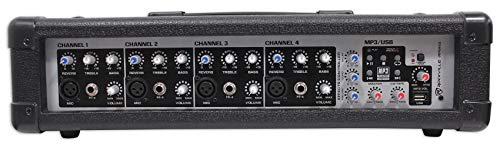
- 4 XLR and 4 TRS inputs for flexible routing
- Echo, delay, reverb, and channel EQ controls
- +15V phantom power for condenser mics
Best For: small venues needing multiple mic inputs and effects
High-Input Powered Mixer

- 8 XLR and 8 TRS inputs for large setups
- 5-band master EQ with per-channel effects
- 48V phantom power plus Bluetooth and USB
Best For: larger events and rehearsal rigs with many inputs
Compact Practice Amp – Donner DKA-20 Keyboard Amplifier
If you want a keyboard amplifier with xlr microphone input-style flexibility for practice and small performances, the Donner DKA-20 is built around straightforward two-channel use and easy tone shaping. Its 20-watt output, 8-inch woofer plus 2-inch tweeter, and separate channel controls make it a practical pick for keyboards, electronic drums, guitar, and casual karaoke setups.
Best For: Players who want a compact, multi-use amp for home practice, small jams, and portable playing.
Pros:
- 20-watt design with an 8-inch woofer and 2-inch tweeter for fuller practice-room sound.
- Two channels with separate volume controls plus Gain, Boost Select, Treble, Middle, and Bass.
- Includes 1/4-inch instrument inputs, 1/8-inch auxiliary input, headphone output, and DI output.
- Supports microphone input with up to 48 dB max gain.
Cons:
- 20 watts is best suited to small spaces rather than loud stage use.
- Microphone support is basic compared with dedicated PA gear.
- No Bluetooth or USB connectivity listed.
The DKA-20 stands out if you need a simple, affordable amp that covers keyboard practice and light gig duties without adding complexity. It offers useful connectivity and onboard controls in a compact cabinet.
Feature-Packed Mixer Amp – Rockville RPM47 Powered Mixer
The Rockville RPM47 is a bigger powered mixer option if you need a keyboard amplifier with xlr microphone input capabilities and far more headroom than a small combo amp. With 5 XLR inputs, 24 DSP effects, a 7-band EQ, Bluetooth, USB, and phantom power, it is aimed at users who need one box to handle instruments, microphones, and playback.
Best For: Bands, churches, schools, and karaoke setups that need multiple XLR inputs and built-in effects.
Pros:
- 5 XLR inputs with TRS and RCA options for flexible wired connections.
- 24 DSP effects plus a 7-band master EQ for more detailed sound control.
- Bluetooth and USB support for wireless playback and recording via USB interface.
- +15V phantom power and headphone output add useful live-sound features.
Cons:
- It is a powered mixer, not a simple dedicated keyboard amp.
- Larger cabinet and higher power make it less portable than compact practice amps.
- May be more system than needed for solo keyboard practice.
If you need connectivity and mixing flexibility first, the RPM47 is the most versatile option here. It is best viewed as a compact live-sound hub that can handle keyboards and microphones together.
Tube-Voiced Keyboard Amp – VOX VX50KB 50-Watt Keyboard Amp
The VOX VX50KB is a compact 50-watt keyboard amp built for players who want a stronger small-format monitor with simple controls. Its NuTube-equipped preamp, 8-inch coaxial speaker, three-channel layout, and bass reflex structure make it a useful choice when you want clear keyboard sound with more tonal character.
Best For: Keyboard players who want a lightweight amp with tube-style preamp character and straightforward control.
Pros:
- 50 watts of output gives more room than basic practice amps.
- NuTube-equipped preamp adds tube-style feel to the sound.
- Three-channel design with independent volume controls for flexible setup.
- Aux in, headphones out, and line out support practice and direct connection needs.
Cons:
- No microphone input is listed in the supplied specs.
- Single 8-inch speaker may limit low-end impact compared with larger systems.
- Designed primarily for keyboards rather than broader PA-style use.
The VX50KB makes sense if you value tone and portability more than multi-input mixing. It is a focused keyboard amp with a compact footprint and useful monitoring features.
Portable 4-Channel Power – Rockville RPM45BT Powered Mixer
The Rockville RPM45BT is a practical powered mixer if you need a keyboard amplifier with xlr microphone input support and room to expand into small live sound duties. It combines 4 XLR/1/4-inch inputs, Bluetooth, USB playback, echo and delay effects, and +48V phantom power in a compact wooden cabinet.
Best For: Small bands, karaoke, and rehearsal setups that need several mic inputs with easy transport.
Pros:
- 4-channel mixing with 4 XLR/1/4-inch inputs and +48V phantom power.
- Bluetooth and USB playback add convenient music-source options.
- Echo and delay effects plus per-channel volume, bass, treble, and reverb controls.
- Lightweight wooden enclosure makes it easier to move than larger live-sound gear.
Cons:
- It is a powered mixer rather than a dedicated keyboard combo amp.
- No speaker system is built in, so it requires compatible external speakers.
- Best suited to small venue or rehearsal use rather than all-in-one portability.
The RPM45BT is a strong choice when input count and control matter more than simplicity. It gives you a flexible mixer platform for keyboards, vocals, and playback sources in one unit.
High-Power All-in-One Pick – Behringer ULTRATONE KXD12 600W 4-Channel PA
If you want a keyboard amplifier with xlr microphone input that can also function like a compact PA, the Behringer ULTRATONE KXD12 is built for that job. Its 600-watt bi-amped design, 12-inch Turbosound speaker, and built-in Klark Teknik effects make it a flexible choice for players who want power, onboard sound shaping, and stage-ready connectivity in one cabinet.
Best For: Keyboard players who want a powerful all-in-one amp with mic input, onboard effects, and four-channel flexibility.
Pros:
- 600-watt bi-amped design delivers plenty of output for rehearsal or performance use.
- Includes a 12-inch TURBOSOUND speaker plus a 1-inch driver for a full-range setup.
- Built-in KLARK TEKNIK FX processor offers 100 presets, including reverb, chorus, delay, and more.
- Connector options include XLR, 1/4-inch, 3.5mm, and USB for broader hookup flexibility.
Cons:
- At 40.3 pounds, it is not the lightest option to move around.
- Its large cabinet size may be more than some home or small-practice setups need.
For players who want a single box that handles keyboard sound, microphone input, and built-in effects, the KXD12 is a strong feature-rich pick. It is especially appealing if you want more than a basic amp and prefer a true PA-style layout.
Compact Mixer Companion – Yamaha MG06 6-Input Compact Stereo Mixer
If you are shopping for a keyboard amplifier with xlr microphone input but want to build a small, flexible audio rig, the Yamaha MG06 is a practical mixer to pair with an amp or powered speaker. It gives you 6 channels, XLR input handling, and clean D-PRE preamps, making it useful when you need a simple front end for keyboards, vocals, lectures, or performances.
Best For: Users who need a compact mixer with XLR mic support to feed a keyboard amp or PA setup.
Pros:
- 6-input layout keeps setups simple while still offering useful routing flexibility.
- D-PRE preamps are designed for smooth, natural-sounding audio.
- 3-band EQ, high-pass filters, and one-knob compressors help shape and clean up the mix.
- Rugged metal chassis suits portable and regular live-use setups.
Cons:
- It is a mixer, not a self-powered keyboard amplifier.
- No USB support is included.
The MG06 makes sense if you need microphone and instrument control before the signal reaches your amplification system. For players who already have an amp or powered speaker, it offers a compact way to manage XLR sources and improve mix control.
Stage-Ready Midrange Option – Roland KC-400 4-Channel Stereo Keyboard Amp
The Roland KC-400 is a straightforward keyboard amplifier with xlr microphone input for players who want a reliable stage amp with a built-in mixer. With 150 watts, a 12-inch woofer, and a horn tweeter, it is designed to provide a compact but capable stereo sound system for keyboards, vocals, and monitoring.
Best For: Keyboard players who want a durable stage amp with XLR mic input, stereo channels, and easy expansion.
Pros:
- XLR mic input makes it easy to connect a microphone directly.
- Four stereo input channels plus stereo auxiliary input support multiple sources.
- 12-inch woofer and horn tweeter create a two-way speaker setup.
- Stereo Link function lets you chain another KC-400 for more inputs or true stereo sound.
Cons:
- 150 watts is less powerful than higher-output keyboard amps.
- At 54 pounds, it is relatively heavy for frequent transport.
If you want a keyboard amp that keeps the layout simple while still offering mic input and useful onboard mixing, the KC-400 fits well. It is a practical midrange choice for players who value durability, expansion options, and a familiar stage-focused format.
Best with Extra Features – COOLMUSIC Drum Amplifier 50W
If you want a keyboard amplifier with xlr microphone input that can also handle rehearsal-duty sound, the COOLMUSIC 50W amp is a practical pick. Its 8-inch woofer, 3-inch tweeter, and 3-band EQ give you enough control to balance keys, vocals, or other instruments for home practice, small rehearsals, and modest live sets.
Best For: Players who want a portable keyboard amp with mic/line input, basic tone shaping, and simple recording support.
Pros:
- XLR/6.35mm mic/line input supports vocals alongside keyboard use.
- 3-band EQ and adjustable reverb help shape the sound for different rooms.
- OTG recording lets you capture audio directly to phones or computers.
- Compact 6.3 kg design is easier to carry for gigs or outdoor events.
Cons:
- 50W output is better suited to practice and small venues than larger stages.
- Single-channel design is more basic than full mixer-style amplifiers.
Overall, this is a straightforward all-in-one amp for keyboard players who also need mic support and recording convenience. It keeps the feature set focused on portability, simple control, and versatile everyday use.
Small Venue Mixer Amp – Rockville RPM45 4-Channel
For buyers comparing a keyboard amplifier with xlr microphone input, the Rockville RPM45 leans more toward a compact powered mixer than a simple keyboard amp. It offers 4 XLR inputs, 1/4-inch TRS inputs, EQ, and built-in echo/delay, making it useful when you need to run microphones, instruments, and playback through one unit.
Best For: Musicians and presenters who need a compact powered mixer with multiple XLR mic inputs and onboard effects.
Pros:
- 4 XLR and 4 TRS inputs give you flexible mic and instrument hookup options.
- Echo, delay, and reverb help tailor vocals and live sound.
- +15V phantom power supports condenser microphones.
- Wooden enclosure and compact footprint suit transport to small venues.
Cons:
- It is a powered mixer amp, so it may be more than some keyboard-only users need.
- Heavier and larger than a basic practice amp at 18 pounds and 5.75″ x 19.44″ x 9.5″.
If you need more input flexibility than a simple keyboard combo amp, this model brings useful mixing features and effects in a portable format. It is strongest when the setup includes several microphones or sources, not just one keyboard.
High-Input Powered Mixer – Rockville RPM80BT 8-Channel
If your priority is a keyboard amplifier with xlr microphone input that can scale up to larger, busier setups, the Rockville RPM80BT is the most input-rich option here. With 8 XLR inputs, 8 TRS inputs, Bluetooth, USB, RCA, and onboard EQ plus effects, it is built for mixed-source use in rehearsals, karaoke, recording, or live gigs.
Best For: Larger practice rooms, live setups, and events that need many mic and line inputs in one powered unit.
Pros:
- 8 XLR inputs and 8 TRS inputs provide broad connectivity for microphones and instruments.
- 5-band master EQ plus per-channel bass, treble, reverb, echo, and delay offer strong control.
- 48V phantom power supports condenser microphones.
- Bluetooth and USB expand playback and media options.
Cons:
- At 24 pounds, it is less convenient to move than smaller amps.
- The feature set is likely more complex than needed for simple keyboard practice.
This model is the best fit when you need a powered hub rather than a basic keyboard amp. Its high input count and broad control options make it a better match for multi-mic events and full rehearsal rigs.
How We Picked the Best Keyboard Amplifier with Xlr Microphone Input
We prioritized models that make sense for players who need a Keyboard Amplifier with Xlr Microphone Input for both instruments and vocals. That means looking at channel count, input versatility, speaker power, portability, onboard effects, and whether the amp is suited to practice, rehearsal, or gigging.
We also favored units with practical connectivity such as line inputs, aux playback, Bluetooth, USB, EQ controls, and phantom power where applicable. For buyers, the goal is not just volume, but a useful all-in-one setup that is easy to carry and simple to run.
Quick Comparison
Smaller combos are best for personal practice and portable use, while higher-power powered mixers and PA-style units are better if you need to cover vocals, drums, or a louder room. If you mainly want a straightforward keyboard amp, a dedicated keyboard combo usually offers the easiest experience. If you need more mic channels, effects, and expansion, a powered mixer can be a smarter fit.
Key Buying Factors for a Keyboard Amplifier with Xlr Microphone Input
Power and Coverage
Match wattage to your space. A modest amp can work well in a bedroom or studio, but rehearsals and live settings usually benefit from more headroom so the sound stays clear at higher volumes.
Input Layout and Channel Count
Check how many XLR and 1/4-inch inputs you actually need. Some models are designed for one mic and one keyboard, while others function more like compact mixers with multiple channels for vocals, backing tracks, and instruments.
Sound Shaping
EQ, reverb, delay, and onboard multi-effects can help you dial in vocals and keyboards quickly. If you play in different rooms, useful tone controls can matter more than raw wattage.
Portability and Build
If you move your gear often, weight, cabinet size, and handle design matter. A lightweight combo is easier to carry, but heavier units often bring more output and flexibility.
Connectivity
Aux input, Bluetooth, USB playback, and recording features can add convenience. These are especially helpful if you rehearse with tracks or want a simple practice rig.
Who Should Buy Which Keyboard Amplifier with Xlr Microphone Input?
Choose a compact keyboard amp if you want simple practice and easy transport. Pick a larger mixer-amplifier if you need multiple mic inputs, more volume, and room for expansion. If your main priority is a clean vocal-plus-keys setup, focus on models with dependable XLR inputs, responsive EQ, and enough power for your actual room size.
In short, the best Keyboard Amplifier with Xlr Microphone Input is the one that matches your volume needs, channel count, and portability expectations without adding unnecessary complexity.