
The best live streaming computers for remote work need to handle more than video calls. They should keep browsers, collaboration apps, screen sharing, recording tools, and streaming software responsive at the same time.
This roundup includes compact mini PCs, a laptop, a refurbished business desktop, and a dedicated gaming tower so you can match performance, portability, expandability, and budget to your workflow.
Best 10 Live Streaming Computers for Remote Work Picks for 2026
Compact Home-Office Value

- 16GB RAM and 512GB NVMe SSD
- Dual 4K HDMI display support
- Wi-Fi 6 in a compact design
Best For: Space-saving remote work and everyday streaming
Portable Creator Powerhouse
NIMO 15.6-Inch AI-Creator Laptop

- Ryzen 7 8-core processor
- 64GB DDR5 RAM and 1TB SSD
- Up to three external monitors
Best For: Mobile creators and demanding remote professionals
Triple-Display Workstation

- Six-core Ryzen 5 6600H processor
- Supports three 4K displays
- Wi-Fi 6 and dual Gigabit LAN
Best For: Multi-monitor office and programming setups
High-Performance Mini Workstation
GMKtec M6 Ultra Ryzen 5 Mini PC

- Ryzen 5 7640HS with 32GB DDR5
- 1TB SSD and 2.5G dual LAN
- Three-display support up to 8K
Best For: Power users needing a fast multi-monitor mini PC
Best Budget Business Desktop

- 16GB RAM and 256GB SSD
- Dual-display support up to 4K
- Certified Refurbished with warranty
Best For: Affordable remote work and basic streaming setups
Best Performance Mini PC

- Ryzen 7 7735HS with 8 cores and 16 threads
- 24GB RAM and 1TB NVMe SSD
- Triple 4K-display output
Best For: Compact multitasking and remote-work streaming
Compact Business Value

- Ryzen 3 5300U handles office multitasking and video calls
- Supports three 4K displays and expandable RAM
- Compact, quiet design with dual M.2 storage support
Best For: Small, multi-monitor remote-work stations
Dedicated Graphics Power
ZYNEEX Ryzen 5 RTX 3050 Desktop

- Ryzen 5 5500 processor with six cores and 12 threads
- RTX 3050 graphics support 1080p gaming and 4K editing
- 16GB RAM, 1TB NVMe SSD, Wi-Fi, and Bluetooth included
Best For: Remote workers who also game, stream, or edit video
Best Multi-Screen Mini PC
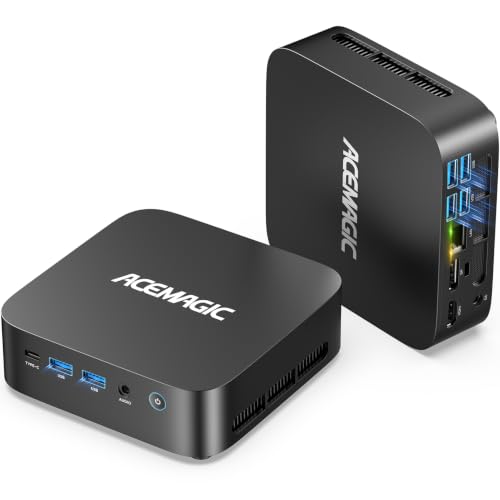
- Six-core Ryzen 5 7530U supports demanding office multitasking
- Drives up to three 4K displays at 60Hz
- 16GB RAM, 512GB SSD, Wi-Fi 6, and Windows 11 Pro
Best For: Quiet, compact multi-monitor home offices
Compact Home-Office Value – Getorli Ryzen 5 Mini PC
For shoppers comparing live streaming computers for remote work, the Getorli mini PC offers a compact, practical setup for everyday office tasks, browsing, video streaming, and multitasking. Its 16GB of RAM, 512GB NVMe SSD, dual HDMI outputs, and Wi-Fi 6 fit well in a space-conscious workspace.
Best For: Home offices, remote meetings, everyday productivity, and users who want dual 4K monitor support in a small desktop.
Pros:
- 16GB DDR4 RAM and a 512GB NVMe SSD support responsive multitasking and fast file access.
- Dual HDMI ports can drive one or two 4K displays.
- Compact design, Wi-Fi 6, Bluetooth 5.3, and multiple USB ports simplify a home-office setup.
- Includes a one-year manufacturer warranty and 24-hour technical support.
Cons:
- The Ryzen 5 3500U is an older, lower-power processor compared with newer options in this roundup.
- Integrated graphics are better suited to everyday use and streaming than demanding gaming or creator workloads.
This is a sensible budget choice when desk space and basic productivity matter most. It provides useful display and connectivity features, though heavier streaming production or intensive editing may call for a more powerful system.
Portable Creator Powerhouse – NIMO 15.6-Inch AI-Creator Laptop
The NIMO laptop is a strong candidate among live streaming computers for remote work when portability and demanding multitasking are priorities. Its Ryzen 7 processor, 64GB DDR5 memory, 1TB PCIe 4.0 SSD, large battery, and broad display connectivity are designed for mobile productivity and creator workloads.
Best For: Remote professionals, software work, video editing, presentations, and users who need a powerful laptop with long stated battery life.
Pros:
- Ryzen 7 8745HS with 8 cores and 16 threads is suited to compiling, editing, and heavy multitasking.
- 64GB DDR5 RAM and a 1TB PCIe 4.0 SSD provide substantial capacity and quick application access.
- 15.6-inch FHD display, 180-degree hinge, backlit keyboard, and fingerprint login support flexible remote work.
- USB4, HDMI 2.1, and additional ports support up to three external monitors.
Cons:
- Its powerful hardware and 75Wh battery make it less compact than a mini PC for a fixed desk.
- Graphics are integrated, so demanding modern gaming may not match a dedicated-GPU laptop.
Choose this model if your remote-work setup includes editing, coding, large spreadsheets, or frequent presentations. It costs desk space and may be more capability than basic office users need, but its memory, storage, and connectivity give it considerable headroom.
Triple-Display Workstation – Glorlin Ryzen 5 6600H Mini PC
For live streaming computers for remote work, the Glorlin mini PC balances a compact footprint with a newer six-core Ryzen 5 6600H processor. Its 16GB LPDDR5 memory, 512GB NVMe SSD, triple-display support, and dual Gigabit LAN make it especially useful for organized, multi-screen workflows.
Best For: Office multitasking, programming, spreadsheets, content viewing, and remote workers who want three displays from a small desktop.
Pros:
- Ryzen 5 6600H provides 6 cores and 12 threads for everyday multitasking.
- HDMI, DisplayPort, and USB-C support up to three 4K displays.
- Wi-Fi 6, Bluetooth 5.3, and dual Gigabit LAN offer flexible connectivity.
- Dual heat pipes and a low-noise fan are designed for stable, quieter operation.
Cons:
- Memory is listed as 16GB maximum, limiting future RAM expansion.
- Integrated graphics are intended for media playback and light gaming rather than intensive production.
This model is a good fit for a remote desk built around multiple screens, particularly when quiet operation and wired-network flexibility matter. Its fixed 16GB memory makes it less adaptable than systems with upgradeable RAM, but the display support is unusually strong for its size.
High-Performance Mini Workstation – GMKtec M6 Ultra Ryzen 5 Mini PC
The GMKtec M6 Ultra is aimed at shoppers seeking live streaming computers for remote work with extra performance and expansion potential in a mini-PC format. Its Ryzen 5 7640HS processor, 32GB DDR5 RAM, 1TB SSD, 2.5G LAN, and multi-display support suit demanding productivity, streaming, and mixed-use desks.
Best For: Power users, multi-monitor remote offices, light gaming, video-related tasks, and users who value fast wired networking and upgrade options.
Pros:
- Ryzen 5 7640HS offers 6 Zen 4 cores, 12 threads, and boost speeds up to 5.0GHz.
- 32GB dual-channel DDR5 RAM and a 1TB PCIe SSD provide strong multitasking capacity.
- Supports three displays, including up to 8K at 60Hz through USB4.
- 2.5G dual-network connectivity, Wi-Fi 6, and hardware video codec support benefit connected workflows.
Cons:
- The listed configuration has 32GB RAM, despite the notes also mentioning expansion support up to 128GB.
- Integrated Radeon 760M graphics are not a substitute for a dedicated graphics card in demanding games or production.
This is one of the strongest mini-PC choices here for a performance-focused remote workspace. It combines substantial memory and fast networking with flexible display outputs, while its integrated graphics keep it better suited to light gaming and productivity than high-end rendering.
Best Budget Business Desktop – Dell OptiPlex 3050 SFF
For shoppers comparing live streaming computers for remote work, this renewed Dell OptiPlex 3050 offers a practical business-focused setup with a quad-core Intel processor, 16GB of RAM, and a 256GB SSD. Its compact small-form-factor case and dual-display support suit a straightforward home office.
Best For: Remote workers who want an affordable desktop for business tasks, video playback, and multi-monitor productivity.
Pros:
- 16GB DDR4 RAM and a 256GB SSD provide a useful everyday-work configuration.
- HDMI and DisplayPort support dual displays, including up to 4K resolution.
- Includes a USB keyboard, mouse, and USB Wi-Fi adapter.
- Certified Refurbished with functionality testing and a minimum 90-day warranty.
Cons:
- The older Intel Core i5-6500 and integrated Intel HD 530 graphics are not aimed at demanding modern workloads.
- Storage capacity is modest for large media libraries or extensive recordings.
- As a renewed product, packaging and cosmetic condition may vary.
This Dell is a sensible value pick for remote office work and basic streaming-related tasks, especially if you already have a webcam and microphone. It is less suitable for intensive editing or graphics-heavy production.
Best Performance Mini PC – ACEMAGIC M1 Ryzen 7
The ACEMAGIC M1 is a strong option among live streaming computers for remote work when you need substantial multitasking performance in a small footprint. Its Ryzen 7 7735HS processor, 24GB of LPDDR5 memory, and 1TB NVMe SSD provide more headroom for meetings, productivity apps, media playback, and light creation.
Best For: Remote professionals who want a compact, high-memory computer with room for multiple displays and demanding multitasking.
Pros:
- Ryzen 7 7735HS provides 8 cores, 16 threads, and boost speeds up to 4.75GHz.
- 24GB LPDDR5 RAM and a 1TB NVMe SSD offer strong everyday capacity.
- HDMI, DisplayPort, and USB-C support up to three 4K displays.
- Compact chassis includes dual-outlet cooling, a VESA mount, and Windows 11 Pro.
Cons:
- Integrated Radeon 680M graphics are not a substitute for a dedicated graphics card for advanced production.
- The compact design may provide less upgrade flexibility than a full-size desktop.
- It is designed for light gaming and creation rather than specialized workstation workloads.
With its generous memory, fast storage, and triple-display capability, the M1 is the most versatile choice here for a busy remote-work desk. It makes particular sense when space is limited but performance still matters.
Best Connected Mini PC – KAMRUI Ryzen 7 7730U
For live streaming computers for remote work, the KAMRUI mini PC balances an 8-core Ryzen 7 7730U processor with a compact, monitor-mountable design. It includes 16GB of LPDDR4X memory, a 512GB NVMe SSD, triple-display support, Wi-Fi 6, and a broad selection of ports for a flexible home office.
Best For: Remote workers who need a small, well-connected computer for multitasking, video work, and multi-monitor setups.
Pros:
- Ryzen 7 7730U offers 8 cores, 16 threads, and boost speeds up to 4.5GHz.
- Supports three displays through HDMI, DisplayPort, and USB-C, including 4K at 60Hz.
- Wi-Fi 6 and Bluetooth 5.2 support fast wireless connectivity.
- Compact 5.04-inch-square chassis includes a VESA bracket and upgradeable storage options.
Cons:
- 16GB RAM and 512GB storage provide less capacity than the ACEMAGIC M1.
- Integrated Radeon graphics are intended for light gaming and creation, not demanding dedicated-GPU workflows.
- The compact enclosure may offer less expansion convenience than a tower desktop.
The KAMRUI is a practical middle ground for a tidy remote-work station. Its networking, triple-display support, and port selection are especially useful for users managing meetings, browser tabs, documents, and media tasks at once.
Compact Business Value – BOSGAME E5 11 Pro Mini PC
The BOSGAME E5 is a compact option for live streaming computers for remote work, combining a Ryzen 3 5300U processor with Windows 11 Pro for office apps, video calls, and everyday multitasking. Its triple-display support and upgradeable memory make it especially practical for a multi-screen home office.
Best For: Remote workers who need a small, quiet desktop for video meetings, browser-heavy workflows, and multiple monitors.
Pros:
- Ryzen 3 5300U with 4 cores and 8 threads supports multitasking, Zoom, browser tabs, and large spreadsheets.
- Supports up to three 4K displays through HDMI, DisplayPort, and full-function USB-C.
- Dual SODIMM slots allow RAM expansion up to 64GB, while a second M.2 slot supports additional storage.
- Compact, VESA-mountable design with reported operating noise below 25dB.
Cons:
- The included 8GB RAM and 256GB SSD are more limited than the configurations in the other options.
- Integrated Radeon graphics are intended for casual gaming and media use rather than demanding graphics workloads.
- It does not include a dedicated graphics card for advanced streaming or video production.
The E5 is a sensible space-saving work computer with strong connectivity and clear upgrade paths. Consider it if remote-work productivity and a quiet, multi-monitor setup matter more than gaming performance.
Dedicated Graphics Power – ZYNEEX Ryzen 5 RTX 3050 Desktop
The ZYNEEX prebuilt desktop is the performance-oriented choice among these live streaming computers for remote work. Its Ryzen 5 5500 processor, dedicated RTX 3050 graphics, and 16GB of RAM provide ample headroom for video calls, content creation, gaming, and demanding multitasking.
Best For: Remote professionals who also edit video, stream, game, or need a full-size desktop with dedicated graphics.
Pros:
- Six-core, 12-thread Ryzen 5 5500 processor reaches up to 4.2GHz for demanding multitasking.
- Dedicated GeForce RTX 3050 6GB graphics support 1080p gaming and 4K video editing workloads.
- 16GB DDR4 RAM and a 1TB NVMe SSD offer a balanced starting configuration.
- Includes Wi-Fi, Bluetooth, HDMI, DisplayPort, DVI, and multiple USB ports.
Cons:
- The tower takes more desk space than either mini PC.
- Windows 11 Home is included rather than Windows 11 Pro.
- The listed maximum display resolution is 1920×1080, so it is not positioned as a triple-4K office system.
This desktop is overqualified for basic office work but better suited to buyers who want one computer for remote work and graphics-heavy hobbies. Its dedicated GPU and larger storage make it the strongest fit for editing, gaming, and streaming-focused setups.
Best Multi-Screen Mini PC – ACEMAGIC K1 Ryzen 5 7530U
The ACEMAGIC K1 is a well-rounded pick for live streaming computers for remote work, pairing a six-core Ryzen 5 7530U with 16GB of RAM, a 512GB SSD, and Windows 11 Pro. It is designed for video conferencing, cloud work, programming, and a clean multi-monitor desk setup.
Best For: Home-office users, developers, and small businesses that want strong everyday performance in a compact, quiet computer.
Pros:
- Ryzen 5 7530U provides 6 cores, 12 threads, and speeds up to 4.5GHz for demanding multitasking.
- Runs up to three 4K displays at 60Hz through HDMI, DisplayPort, and USB-C.
- 16GB LPDDR4X RAM and a 512GB SSD provide a stronger out-of-box configuration than entry-level mini PCs.
- Compact 5 × 5 × 1.6-inch design, Wi-Fi 6, Bluetooth 5.2, and noise below 30dB suit shared workspaces.
Cons:
- LPDDR4X memory is specified as part of the system, so the notes do not indicate user-upgradable RAM.
- Integrated graphics are aimed at productivity, streaming, and everyday use rather than dedicated-GPU gaming.
- Storage expansion is available, but additional drives are not included.
The K1 offers the best balance of compact size, modern connectivity, memory, and display flexibility in this group. It is a particularly strong choice for remote workers who regularly keep meetings, documents, and communication tools open across several screens.
How We Picked These Live Streaming Computers for Remote Work
We focused on systems with enough CPU performance and memory for video conferencing, multitasking, screen capture, and live broadcasting. The selection spans efficient Ryzen mini PCs, a portable creator laptop, a refurbished Dell business desktop, and a discrete-GPU gaming tower. We also considered storage, display support, connectivity, operating system, upgrade potential, and the practical differences between compact and full-size designs.
Specifications can vary by configuration or seller, so verify the exact RAM, SSD, ports, wireless standard, and included accessories before buying.
Quick Comparison
| Computer type | Best for | Main advantage | Potential trade-off |
|---|---|---|---|
| Mini PC | Desk-based remote work | Small footprint and strong value | Often requires a separate monitor and peripherals |
| Laptop | Mobile creators | Built-in screen, keyboard, camera, and battery | Less convenient to upgrade |
| Business desktop | Basic office streaming | Affordable, familiar, and serviceable | Older hardware may limit demanding workloads |
| Gaming tower | High-quality streaming and gaming | Dedicated graphics and expansion room | Larger, louder, and typically more expensive |
Key Buying Factors for Live Streaming Computers for Remote Work
Processor and Memory
For regular meetings and light streaming, a modern quad- or six-core processor with 16GB of RAM is a sensible baseline. Choose 24GB or 32GB if you routinely run multiple monitors, browser tabs, editing software, virtual backgrounds, and streaming tools together. Newer Ryzen 5 and Ryzen 7 systems generally offer a stronger balance of multitasking speed and integrated graphics than older office desktops.
Graphics and Streaming Workload
Integrated graphics are usually sufficient for webcam calls, presentations, and moderate screen sharing. A dedicated GPU is more useful for gaming broadcasts, demanding effects, higher-resolution encoding, and simultaneous creative work. Check whether your preferred streaming application supports hardware encoding on the installed graphics hardware.
Storage, Displays, and Connectivity
A 512GB SSD is a practical starting point; 1TB gives more room for recordings, project files, and applications. Confirm the available HDMI, DisplayPort, or USB-C outputs if you need multiple monitors. Ethernet can improve stream stability, while Wi-Fi 6 is helpful when wired networking is unavailable. Also budget for a webcam, microphone, monitor, and speakers if choosing a mini PC.
Portability, Noise, and Upgradeability
A laptop is the simplest choice for moving between locations. Mini PCs save desk space but vary in fan noise and upgrade access. A tower usually provides the best cooling and future expansion, although it needs more room. For professional broadcasts, prioritize reliable cooling and wired networking over headline specifications alone.
Who Should Buy Which Live Streaming Computers for Remote Work?
- Choose a mini PC if you want an affordable, tidy workstation for meetings, screen sharing, and everyday streaming.
- Choose the creator laptop if you need a complete mobile setup for remote work, travel, and content production.
- Choose the business desktop for basic calls, office applications, and light streaming at the lowest practical cost.
- Choose a higher-end mini PC if you want compact size with more headroom for multitasking, multiple displays, and heavier applications.
- Choose the gaming tower if gaming broadcasts, demanding overlays, video editing, or dedicated graphics encoding are central to your workflow.