
If you’re looking to enhance your filmmaking with Micro Four Thirds lenses, you’ve come to the right place. Choosing the right lens can greatly impact your storytelling, from capturing stunning visuals in low light to achieving that perfect depth of field. Each lens offers unique features that can elevate your projects. Let’s explore the top options available and see which ones might be the game-changer you need.
Panasonic LUMIX G VARIO 45-150mm Camera Lens (H-FS45150AK)

If you’re a budding filmmaker or casual photographer looking for a versatile telephoto lens that won’t weigh you down, the Panasonic LUMIX G VARIO 45-150mm (H-FS45150AK) is an excellent choice. Weighing just 11.2 ounces, this lens offers a focal length of 45-150mm, perfect for capturing stunning images from a distance. Its multi-coated design minimizes ghosting and flare, while the optical image stabilization guarantees clear shots, even in low light. With fast, near-silent focusing, it’s ideal for video. Plus, its compact size makes it a worthy companion for travel and everyday shooting, providing exceptional value for under $300.
Best For: Casual photographers and budding filmmakers seeking a lightweight, versatile telephoto lens for everyday use.
Pros:
- Compact and lightweight design makes it easy to carry for travel and everyday photography.
- Optical image stabilization ensures clear shots, even in low light conditions.
- Fast, near-silent focusing is ideal for capturing video without distracting noise.
Cons:
- Modest close-up capabilities limit its use for macro photography.
- Minimum focusing distance of 3-3.5 feet may be restrictive for some subjects.
- Not suitable for professional-level photography due to its entry-level features.
OM SYSTEM M.Zuiko Digital ED 40-150mm Lens for Micro Four Thirds

The OM SYSTEM M.Zuiko Digital ED 40-150mm lens stands out as an excellent choice for amateur photographers and travelers seeking a versatile and lightweight option. Weighing just 10.2 ounces, it’s compact enough to carry anywhere. With a focal length of 40-150mm, you get edge-to-edge clarity and stunning bokeh thanks to its 7-blade circular aperture. This lens excels in capturing nature, wildlife, and portraits without drawing attention, making it perfect for street photography. Customers praise its sharpness and color quality, with an impressive 4.4 out of 5 stars. At $199, it’s a great addition to your travel gear.
Best For: Amateur photographers and travelers looking for a lightweight and versatile lens for nature, wildlife, and street photography.
Pros:
- Compact and lightweight design makes it easy to carry for travel.
- Exceptional image quality with edge-to-edge clarity and beautiful bokeh.
- Smooth autofocus and ideal for capturing candid moments without drawing attention.
Cons:
- Limited aperture range (f/4-5.6) may not perform well in low-light conditions.
- Not suitable for professional-level photography compared to higher-end lenses.
- Some users may find the focal length limiting for certain types of photography.
Panasonic LUMIX G II Lens, 20MM, F1.7 ASPH

For filmmakers seeking a versatile and compact lens, the Panasonic LUMIX G II 20mm F1.7 ASPH stands out with its impressive maximum aperture of F1.7. This lens offers a focal length equivalent to 40mm on a 35mm camera, making it perfect for a variety of shooting scenarios. With a closest focusing distance of just 0.2m, you can capture stunning, detailed shots. Its seven-lens design provides beautiful, soft focus, enhancing your cinematic visuals. While it’s not zoomable, its compatibility with Lumix G Micro System Cameras and advanced contrast Auto Focus guarantees sharp, professional results every time you film.
Best For: Filmmakers and photographers looking for a compact and high-quality lens that excels in low-light conditions and offers a versatile focal length.
Pros:
- Wide aperture of F1.7 allows for beautiful, soft focus and excellent low-light performance.
- Lightweight and compact design makes it easy to carry and handle during shooting sessions.
- Designed for Lumix G Micro System Cameras, ensuring compatibility and optimal performance with advanced autofocus systems.
Cons:
- Fixed focal length limits versatility compared to zoom lenses.
- Maximum magnification of 0.13x may not be suitable for extreme close-up shots.
- Not weather-sealed, which may be a drawback for outdoor shooting in challenging conditions.
Meike 35mm F1.4 Manual Focus Prime Lens for Micro Four Thirds
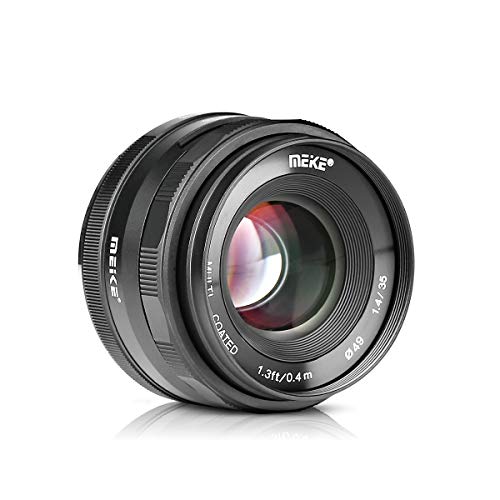
With its impressive maximum aperture of F1.4, the Meike 35mm Manual Focus Prime Lens is an excellent choice for filmmakers and photographers who prioritize low-light performance and stunning bokeh. Compatible with Olympus and Panasonic mirrorless cameras, this lens is versatile for various Micro Four Thirds models. Its fixed focal length makes it ideal for landscape, product, and portrait photography, delivering beautiful background blur for close-ups. With a robust lens structure of 5 groups and 8 elements, you’ll enjoy sharp images and rich detail. Just remember to enable M mode or set “Release without lens” in your camera settings for peak use.
Best For: Photographers and filmmakers seeking a high-quality manual focus lens for low-light conditions and beautiful bokeh effects.
Pros:
- Versatile compatibility with a wide range of Olympus and Panasonic Micro Four Thirds cameras.
- Impressive maximum aperture of F1.4 allows for excellent low-light performance and shallow depth of field.
- Robust lens structure with 5 groups and 8 elements ensures sharp images with rich details.
Cons:
- Manual focus may not suit users who prefer autofocus for quick shooting.
- Requires adjustments in camera settings (M mode or “Release without lens”) for optimal use.
- Fixed focal length may limit flexibility compared to zoom lenses in certain shooting scenarios.
OM SYSTEM OLYMPUS M.Zuiko Digital 14-42mm Zoom Lens for Micro Four Thirds Cameras
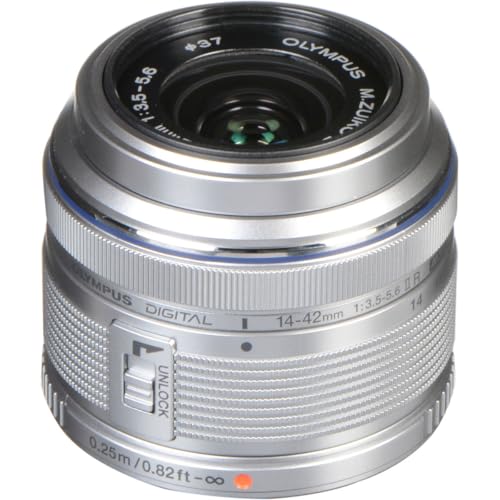
Compact and versatile, the OM SYSTEM OLYMPUS M.Zuiko Digital 14-42mm Zoom Lens is perfect for photographers and videographers who need a lightweight option without sacrificing quality. Weighing just 3.95 ounces and measuring 1.9 x 2.2 inches, it features a collapsible design for easy portability. With a 3x zoom range (14-42mm) and nearly silent auto-focus, it’s ideal for both landscapes and portraits. You’ll appreciate the natural background blurring from its 7 aperture blades, while close focusing down to 9.84 inches enhances your creative possibilities. Priced around $99, it offers excellent performance and value for your filming needs.
Best For: The OM SYSTEM OLYMPUS M.Zuiko Digital 14-42mm Zoom Lens is best for photographers and videographers seeking a lightweight, versatile lens for their Micro Four Thirds cameras.
Pros:
- Compact and lightweight design enhances portability for on-the-go shooting.
- Nearly silent auto-focus allows for smooth video recording without distracting noise.
- Excellent image quality with 3x zoom range suitable for various photography styles.
Cons:
- Some users reported initial sticky zoom action that improves with use.
- Mixed feedback on auto-focus consistency may affect shooting in fast-paced situations.
- Issues with receiving incorrect lens colors can lead to customer dissatisfaction.
25mm F10 Free Focus Pancake Lens for M43 Mount Cameras

The 25mm F/10 Free Focus Pancake Lens is an excellent choice for creative photographers seeking a lightweight and retro option for their M43 mount cameras. Weighing just 0.95 ounces and measuring only 0.5 inches thick, it’s perfect for casual portrait and street photography. The focus-free design offers a depth of field from 1.5 meters to infinity, making it easy to capture soft, vintage-style images. While it may not deliver sharp, pixel-perfect results, its lo-fi aesthetic adds character to your shots. Recycled from disposable cameras, this lens transforms into a body cap, enhancing your gear’s versatility.
Best For: Creative photographers looking for a lightweight, retro lens for casual portrait and street photography with M43 mount cameras.
Pros:
- Lightweight and compact design, making it easy to carry.
- Focus-free design allows for a wide depth of field, simplifying photography.
- Unique vintage aesthetic that enhances the character of images.
Cons:
- Fixed aperture at F/10 may limit versatility in varying lighting conditions.
- Not suitable for achieving sharp, pixel-perfect images.
- Some users report difficulty with focus at different distances.
Meike 35mm F1.7 Manual Focus Prime Lens for Micro 4/3 Cameras

For photographers who appreciate precise control over their shots, the Meike 35mm F1.7 Manual Focus Prime Lens stands out as an exceptional choice for Micro 4/3 cameras. Weighing just 6 ounces and measuring 1.8 inches, it’s compact and lightweight—perfect for on-the-go shooting. With a wide aperture of f/1.7, you’ll excel in low-light conditions, while its nano multi-layer coating minimizes flaring and ghosting. Users report smooth focusing and sharp images, making it ideal for landscapes and portraits alike. Though the focus ring can be stiff, this lens remains a fantastic, budget-friendly option for manual focus enthusiasts.
Best For: Photography enthusiasts who value manual focus control and require a lightweight lens for versatile shooting in various lighting conditions.
Pros:
- Wide aperture of f/1.7 allows for excellent performance in low-light scenarios.
- Compact and lightweight design makes it easy to carry for on-the-go photography.
- Sharp image quality with good color saturation and contrast, suitable for multiple photography styles.
Cons:
- Focus ring can be stiff, which may affect ease of use for some photographers.
- No clicking stops on the aperture ring, requiring careful adjustment to maintain settings.
- Manual focus only, which may not suit those who prefer automatic focusing features.
OM SYSTEM OLYMPUS M.Zuiko Digital 45mm F1.8 Lens for Micro Four Thirds Camera

Looking for a versatile lens that excels in portrait photography? The OM SYSTEM OLYMPUS M.Zuiko Digital 45mm F1.8 is your go-to option. Weighing just 4.1 ounces and measuring 1.81 x 2.2 inches, it’s compact and lightweight, perfect for on-the-go shooting. With a maximum aperture of f/1.8, you’ll achieve stunning low-light performance and creamy bokeh, enhancing your images. Its fast autofocus is quiet and accurate, ideal for video and tracking moving subjects. Highly rated by users, this lens offers exceptional sharpness and is a fantastic choice for both portraits and street photography at an unbeatable value.
Best For: Photographers seeking a lightweight, high-quality portrait lens with excellent low-light performance and fast autofocus.
Pros:
- Exceptional sharpness even at maximum aperture, delivering clear images.
- Beautiful bokeh quality that enhances portrait shots with a smooth defocused background.
- Lightweight and compact design makes it easy to carry for on-the-go photography.
Cons:
- Limited versatility for wide-angle shots due to the fixed focal length.
- Autofocus may struggle in very low light conditions compared to some competitors.
- No weather sealing, which may limit use in harsh environments.
Panasonic LUMIX Micro Four Thirds Camera Lens, Leica DG SUMMILUX 9mm F1.7 ASPH

With a large f/1.7 aperture, the Panasonic LUMIX Micro Four Thirds Camera Lens, Leica DG SUMMILUX 9mm F1.7 ASPH, stands out as an exceptional choice for professional photographers and videographers who thrive in low-light conditions. Weighing just 5.6 ounces, it’s compact and rugged, making it perfect for street and architectural photography. Its impressive optical performance features twelve elements in nine groups, effectively suppressing chromatic aberration. You’ll appreciate its minimal focus breathing and smooth aperture control while shooting video. Rated 4.6 out of 5 stars, this lens is a reliable companion for capturing stunning, cinematic visuals.
Best For: Professional photographers and videographers seeking a compact, high-performance lens for low-light and versatile shooting scenarios.
Pros:
- Excellent low-light performance with a large f/1.7 aperture.
- Compact and lightweight design, making it easy to carry for extended periods.
- Effective chromatic aberration suppression and smooth video performance.
Cons:
- Some users report edge distortion during fast panning.
- Mixed reviews on performance in astrophotography regarding chromatic aberration.
- Limited to Micro Four Thirds system, which may not suit all camera users.
YONGNUO YN17MM F1.7 Lens for M43 Mount

The YONGNUO YN17MM F1.7 Lens stands out as an excellent choice for filmmakers and photographers seeking a versatile, high-performance lens for their Micro Four Thirds cameras. With a fast F1.7 aperture, it excels in low-light situations, delivering sharp images thanks to its ten optical lenses. You’ll appreciate the dust-proof and water-proof build, ensuring durability in various conditions. Weighing just 9.5 ounces, it’s lightweight and easy to handle. Plus, the auto and manual focus features give you control over your shots. While some users note barrel distortion, the overall quality makes it a fantastic value for your cinematic endeavors.
Best For: Photographers and filmmakers looking for a versatile, high-performance lens for Micro Four Thirds cameras, especially in low-light conditions.
Pros:
- Fast F1.7 aperture excels in low-light situations.
- Lightweight design at just 9.5 ounces, making it easy to handle.
- Durable build with dust-proof and water-proof features.
Cons:
- Some users report barrel distortion and flare.
- Non-removable lens hood may limit customization.
- Color saturation issues noted by certain users.
Factors to Consider When Choosing a Micro Four Thirds Lens for Film
When you’re picking a Micro Four Thirds lens for film, there are several key factors to keep in mind. You’ll want to think about focal length, aperture, and the type of lens that best suits your shooting style. Also, consider build quality, durability, and autofocus capabilities to guarantee your lens meets your filmmaking needs.
Focal Length Selection
Choosing the right focal length for your Micro Four Thirds lens is essential, as it shapes your film’s visual narrative. Shorter focal lengths, like 9mm to 20mm, offer wider angles perfect for landscapes and confined spaces, while longer lengths, like 45mm to 150mm, excel at capturing distant subjects and creating a shallow depth of field. With the Micro Four Thirds crop factor of 2x, a 25mm lens acts like a 50mm lens on full-frame cameras, making it versatile for standard perspectives. A focal length between 40mm and 50mm is ideal for natural-looking footage. Using zoom lenses, like 14-42mm, lets you switch between wide shots and close-ups quickly, enhancing your storytelling without frequent lens changes.
Aperture and Light Performance
Selecting the right focal length sets the stage for your film, but aperture and light performance play an essential role in achieving your desired look. A lens with a wider maximum aperture, like F1.7, excels in low-light conditions, allowing you to shoot without cranking up your ISO and introducing unwanted noise. Wider apertures also create a shallower depth of field, giving you that beautiful bokeh that enhances portraits and artistic shots. Additionally, consider the number of aperture blades; more blades typically offer smoother, more circular bokeh. Fixed aperture lenses maintain consistent exposure throughout the zoom range, offering you greater control, while multi-coated lenses reduce flare and ghosting, improving contrast and color fidelity in tricky lighting.
Lens Type Considerations
Lens type plays an essential role in your filmmaking toolkit, impacting everything from image quality to shooting flexibility. When selecting a Micro Four Thirds lens, consider the focal length range; wide-angle lenses (like 9mm) capture expansive scenes, while telephoto options (up to 150mm) excel at isolating subjects. A larger aperture, such as f/1.7, enhances low-light performance and creates beautiful bokeh effects, elevating your cinematic storytelling. Decide between prime lenses for sharpness and wider apertures, or zoom lenses for versatile framing without needing to switch. Additionally, think about autofocus for fast-moving subjects versus manual focus for precision. Finally, look for multi-coated elements and optical image stabilization to guarantee clear, stable shots during handheld filming.
Build Quality and Durability
When it comes to filmmaking, the durability and build quality of your Micro Four Thirds lens can greatly influence your shooting experience. You’ll want a lens that can withstand environmental challenges like dust and moisture, especially during outdoor shoots. High-quality lenses often feature metal mounts and rugged construction, enhancing their longevity. Pay attention to the weight; heavier lenses typically use more robust materials, contributing to durability. Look for lenses with special coatings that protect against scratches and flare, improving performance in varying light conditions. Additionally, consider the overall design, including weather sealing and the robustness of moving parts, as these factors guarantee reliable performance during extensive filming sessions. Choosing wisely will enhance your filmmaking journey.
Autofocus Capabilities
How important is autofocus performance in your filmmaking process? Fast and accurate autofocus can make or break your shots, especially when capturing moving subjects in action or wildlife scenarios. Look for lenses with inner focus systems and stepping motors—they provide smooth, near-silent focusing, perfect for video recording. Lenses equipped with multiple focusing elements and advanced coatings help minimize focus breathing, ensuring consistent framing. Additionally, some lenses offer both auto and manual focus options, giving you greater creative control in challenging lighting conditions. Remember, the lens construction plays a significant role too; elements designed to reduce aberrations can enhance sharpness, improving the speed and reliability of your autofocus. Choose wisely to elevate your cinematic experience!
Compatibility With Camera Systems
Choosing the right Micro Four Thirds lens for your film project hinges on compatibility with your camera system. Confirm the lens fits the MFT mount standard used by Olympus and Panasonic, guaranteeing peak performance. But compatibility involves more than just mount types; check that features like autofocus systems and image stabilization align with your camera body for effective operation. If you’re considering specialized functionalities, such as weather sealing or enhancements for video performance, make certain they match your camera’s capabilities. Finally, don’t overlook the lens’s electronic communication with your camera, as this affects vital aspects like aperture control and focus adjustments. A well-matched lens will enhance your shooting experience and elevate your film project.