
A portable amplifier can help you reach a classroom or tour group without straining your voice. But these picks are not all built for the same job: most amplify speech through a speaker, while one is designed for wired headphones.
Use the roundup to narrow your choices by microphone style, room size, portability, and the features you will actually use.
Best 10 Portable Amplifier Picks for 2026
Best Wireless Mic
ResponseBridge B006 Voice Amplifier

- 15W speaker with wireless lavalier mic
- At least 98-foot stated mic range in open areas
- Up to 7 hours of speaker operation
Best For: Hands-free teaching and presentations
Best Playback Options

- Wired headset mic included
- Bluetooth, USB, microSD, and AUX playback
- Up to 12–15 hours of stated amplification
Best For: Voice presentations with music playback
Best for Headphones
Neoteck 16–300Ω Headphone Amplifier
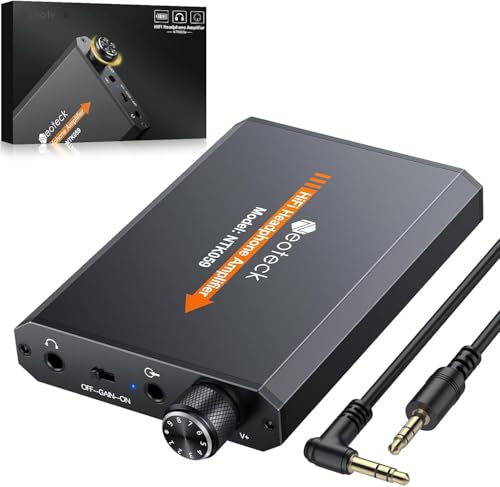
- For wired 16–300Ω headphones
- Two-stage gain and volume controls
- Over 12 hours of stated battery life
Best For: Private listening with wired headphones
Best Compact Clip-On

- 10W speaker with wired headset mic
- 5.76-ounce listed weight
- Up to 12 hours of stated use
Best For: Lightweight wearable voice amplification
Best for Simple Setup
Norwii 10W Wired Voice Amplifier
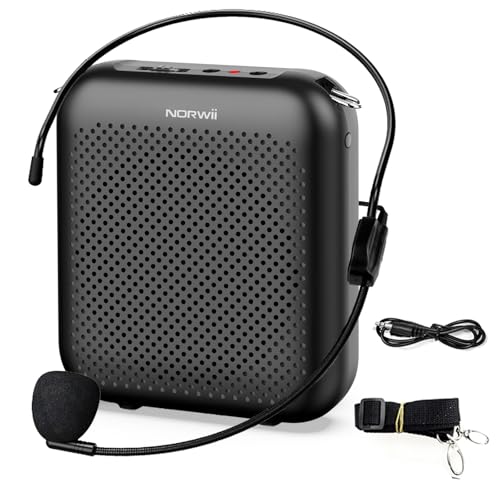
- 10W output with 3-inch speaker
- 5.6-ounce clip-on design
- Wired headset; cable not included
Best For: Teachers who want straightforward hands-free amplification
Best for Audio Playback
ZOWEETEK 10W Wired Voice Amplifier

- MicroSD, USB, and AUX playback
- Up to 12 hours of amplification
- Compact 160g body with wired mic
Best For: Presenters who use recorded audio alongside speech
Best for Wireless Teaching
WinBridge WB002 Bluetooth Voice Amplifier

- 15W output with wireless headset
- Up to 12–15 hours for amplifier
- Includes Type-C cable and lanyard
Best For: Teachers who want cable-free movement indoors
Higher-Output Pick

- 10W stated output
- Up to 12 hours of voice amplification
- Clip-on or waistband carry
Best For: Hands-free speaking to larger groups
Long-Runtime Black Pick

- Up to 20 hours of stated voice use
- Adjustable headset microphone
- USB, microSD, and 3.5mm playback
Best For: Extended teaching or tour days
White Wearable Pick

- White S17 model with 8W stated output
- Up to 20 hours of stated voice use
- Adjustable headset and wearable speaker
Best For: Hands-free speaking with a white amplifier
Best Wireless Mic – ResponseBridge B006 Voice Amplifier
This portable amplifier pairs a 15W speaker with a clip-on wireless lavalier microphone, letting teachers, guides, and presenters move without a headset or mic cable.
Best For: Presenters who want a hands-free wireless mic and Bluetooth music playback.
Pros:
- 2.4GHz microphone connection has a stated range of at least 98 feet in open areas.
- One-touch mute on the mic makes pauses convenient.
- Bluetooth music can play alongside voice amplification.
Cons:
- Speaker runtime is up to 7 hours under specific testing conditions, shorter than the mic’s stated 15 hours.
The clip-on mic is the main reason to choose this model; check whether the speaker’s stated runtime covers your full session.
Best Playback Options – Giecy G300A Voice Amplifier
This portable amplifier includes a wired headset microphone and offers Bluetooth, USB flash drive, microSD, and AUX audio playback. It suits speakers who want several ways to add music to a session.
Best For: Teachers and event hosts who need a headset mic plus flexible playback options.
Pros:
- Includes an adjustable strap and wired headset microphone.
- Supports Bluetooth streaming and USB, microSD, and AUX audio sources.
- Lists up to 12–15 hours of voice amplification per charge.
Cons:
- The headset mic is wired, so it does not offer wireless mic freedom.
- The notes conflict on power output: the bullets claim 30W, while the details list 7.4W.
Choose it for its connection choices and stated battery life rather than relying on the conflicting wattage figures to judge loudness.
Best for Headphones – Neoteck 16–300Ω Headphone Amplifier
This portable amplifier is for private headphone listening, not projecting your voice to a room. Its 3.5mm connections and two-stage gain switch are intended to drive headphones rated from 16 to 300 ohms.
Best For: Listeners using wired headphones with phones, laptops, or portable music players.
Pros:
- Supports a stated headphone impedance range of 16–300 ohms.
- Two-stage gain switch and volume adjustment provide listening controls.
- Rechargeable battery is rated for over 12 hours of continuous use.
Cons:
- Requires wired 3.5mm audio connections; it is not a voice PA speaker.
- Supplied details give conflicting weights of 102g and 160g.
It fills a different role from the voice amplifiers here: consider it when your goal is headphone output rather than addressing an audience.
Best Compact Clip-On – ZOWEETEK Mini Voice Amplifier
This portable amplifier is a compact 10W voice speaker that clips to a belt or pocket and comes with a wired, adjustable headworn microphone. It is a straightforward option for keeping your hands free while speaking.
Best For: Teachers, guides, and coaches who prefer a small wearable speaker with a wired mic.
Pros:
- Weighs a stated 5.76 ounces and includes clip and waist-wearing options.
- Rechargeable battery is rated for up to 12 hours of use.
- Plays audio from microSD or USB and accepts a 3.5mm AUX input.
Cons:
- Its headworn microphone is wired.
- Bluetooth connectivity is not listed in the supplied specifications.
If you value a light wearable setup over wireless microphone convenience, this model covers the basics and adds local audio playback.
Best for Simple Setup – Norwii 10W Wired Voice Amplifier
The Norwii portable amplifier is a straightforward choice for teachers who want to make their voice easier to hear without managing a wireless connection. Turn it on, plug the wired headset into the MIC port, and adjust the analog volume dial.
Best For: Teachers and guides who prefer a lightweight, hands-free setup with simple controls.
Pros:
- 10W output with a 3-inch speaker for voice amplification.
- Weighs 5.6 ounces and includes a belt clip for hands-free wear.
- USB-C rechargeable; the listed 2000mAh version also has an analog volume dial.
Cons:
- The headset microphone is wired.
- Keep the microphone at least 20 cm from the amplifier to help avoid feedback.
- Charging cable is not included.
Its simple operation and low weight make it a practical everyday teaching aid. Choose it if a wired headset is acceptable and you value easy volume adjustment over wireless freedom.
Best for Audio Playback – ZOWEETEK 10W Wired Voice Amplifier
The ZOWEETEK portable amplifier combines a wired microphone with several ways to play audio. Alongside its 10W voice output, it supports microSD cards, USB flash drives, and 3.5mm AUX input, making it useful when a lesson or presentation includes recorded material.
Best For: Teachers and presenters who want voice amplification plus playback from removable media or an AUX source.
Pros:
- Supports microSD, USB flash drive, and 3.5mm AUX audio playback.
- Built-in 1800mAh battery provides up to 12 hours of voice amplification, according to the supplied specifications.
- Compact 160g body can clip to a belt or pocket or be worn with the waistbelt.
Cons:
- The microphone is wired, so it does not offer a cable-free headset setup.
- A full charge takes a stated 3–5 hours.
This is the more flexible pick for mixing speech with stored audio. If you only need a microphone and speaker, its playback features may be more than you need.
Best for Wireless Teaching – WinBridge WB002 Bluetooth Voice Amplifier
The WinBridge WB002 portable amplifier is aimed at teachers who want to move without a microphone cable running to the speaker. Its Bluetooth headset microphone pairs with the 15W amplifier when both are switched on, and the speaker can be clipped to a belt or worn on the supplied lanyard.
Best For: Classroom teachers and presenters who prioritize a wireless microphone and wearable speaker.
Pros:
- 15W output and an automatically pairing Bluetooth headset microphone.
- Amplifier battery is rated for up to 12–15 hours; the headset is rated for 8–10 hours.
- Includes a Type-C charging cable, belt clip, and lanyard; the microphone can also be used handheld.
Cons:
- The headset’s stated battery life is shorter than the amplifier’s.
- The supplied guidance recommends indoor use, such as in a classroom.
Pick this model when freedom of movement matters more than a wired headset’s simplicity. For a full day of use, remember that both the amplifier and microphone need charging.
Higher-Output Pick – SHIDU SD-258 Voice Amplifier
The SHIDU SD-258 is a portable amplifier for teachers, guides, and presenters who want a wearable speaker with a stated 10W output. It pairs a headset microphone with a compact speaker that can clip to a belt or hang from the included waistband.
Best For: Speaking to larger groups while keeping your hands free.
Pros:
- 10W output and a stated capacity for groups of up to 120 people.
- Up to 12 hours of voice amplification per charge.
- Supports USB flash drives and microSD cards for audio playback.
Cons:
- The microphone and speaker need to face away from each other to help avoid feedback.
- A full charge takes a stated 3–5 hours.
Choose this model if output and wearing options matter more to you than the longer stated battery life of the 8W alternatives below. Its coverage figures are manufacturer claims, so consider your room and background noise when planning an event.
This black VOVIGGOL S17 portable amplifier is geared toward teachers and guides who prioritize time between charges. Its rechargeable 2200mAh battery is rated for up to 20 hours of voice amplification, and the adjustable headset helps position the microphone near your mouth.
Best For: Long teaching, training, or tour days when a wearable microphone is useful.
Pros:
- Up to 20 hours of stated amplification time per charge.
- Flexible headset microphone and belt-clip or neck/waist wearing options.
- USB and microSD playback, plus a 3.5mm input for wired audio.
Cons:
- Its 8W stated output is lower than the SHIDU model’s 10W.
- A full charge takes a stated 4–6 hours.
For shoppers comparing the two VOVIGGOL listings, this is the black version. Its stated runtime is appealing, but keep the microphone separated from the speaker as instructed to reduce unwanted noise.
The white VOVIGGOL S17 portable amplifier offers a compact, wearable setup for classroom instruction, tours, and meetings. It has a stated 8W output, a flexible headset microphone, and a rechargeable battery rated for up to 20 hours of voice amplification.
Best For: Speakers who want the listed S17 features in a white finish.
Pros:
- Up to 20 hours of stated voice amplification from its 2200mAh battery.
- Headset microphone can be adjusted toward your mouth.
- Supports microSD and USB audio playback and a 3.5mm wired connection.
Cons:
- Its 8W stated output is below the SHIDU model’s 10W.
- The stated full-charge time is 4–6 hours.
This listing describes the same S17 feature set as the black option, making finish the clearest distinction in the supplied information. Position the microphone away from the speaker to help avoid feedback.
How We Picked These Portable Amplifiers
We focused on practical differences visible in the selected products: whether each model is a voice amplifier or headphone amp, its microphone setup, stated power or battery capacity where available, and extras such as Bluetooth. We did not treat wattage, battery capacity, or marketing claims as proof of real-world loudness, runtime, or sound quality. Check the current listing for specifications, included accessories, and return terms before buying.
Quick Comparison: Voice Amplifier or Headphone Amp?
Nine picks are personal voice amplifiers intended to send your speech through a portable speaker. They suit teaching, guiding tours, presentations, and other situations where people need to hear you. The Neoteck model is different: it connects to wired headphones through a 3.5 mm jack and is intended for private listening, not projecting your voice to a group.
Among the voice models, start with the microphone and connection you prefer. Some include a headset or wired microphone; the B006 listing specifies a wireless lavalier microphone. Bluetooth-equipped models may add playback options, but confirm whether Bluetooth handles music, microphones, or both.
Key Buying Factors for a Portable Amplifier
Coverage and Volume
Choose for your room and audience, not the largest wattage number alone. A small classroom and a noisy outdoor group pose different demands. Published power ratings may use different measurement methods, so look for clear information about intended coverage and usable volume.
Microphone Fit and Feedback
A headset keeps the mic near your mouth as you move; a lavalier can feel less obtrusive. A wired mic avoids wireless pairing but may restrict movement. Whichever you choose, check that the microphone stays secure and that you can position the speaker away from it to reduce feedback.
Battery, Carrying, and Connections
Compare claimed runtime at a realistic volume rather than capacity in mAh alone. Check charging method and time if you teach back-to-back sessions. A belt clip, strap, or compact body can matter as much as output when you wear a speaker for hours. For music or recorded lessons, verify the exact input options you need instead of assuming every Bluetooth model works the same way.
Who Should Buy Which Portable Amplifier?
Teachers and tour guides: Start with a wearable voice amplifier and a comfortable headset, especially if you speak while walking. Presenters who prefer a discreet mic: Consider the B006 wireless-lavalier option, after checking its connection and charging details. Buyers who want audio playback too: Compare the Bluetooth-enabled voice models, including WinBridge, against your playback needs. Wired-headphone listeners: Consider the Neoteck only if you need a 3.5 mm headphone amplifier and its stated headphone-impedance range suits your setup. It is not a substitute for a speaker-and-microphone PA.