
A portable voice recorder makes it easier to capture a lecture, meeting, or interview without draining your phone or sorting through unrelated apps. The right choice depends less on the biggest advertised capacity and more on how easily you can record, find, and transfer clear audio.
These 10 options range from straightforward playback recorders to high-capacity models with voice activation and AI-assisted notes. Use the buying guide below to narrow down which features are worth paying for.
Best 10 Portable Voice Recorder Picks for 2026
Best Magnetic Option
64GB Magnetic Voice-Activated Recorder
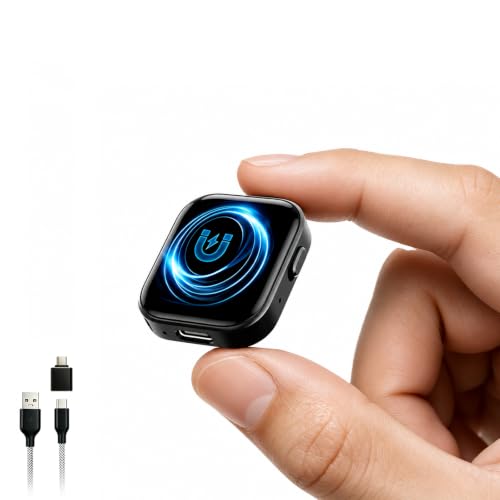
- Magnetic mounting; about 35g
- Up to 100 hours of recording
- MP3 and WAV support
Best For: Hands-free recording on compatible metal surfaces
Best for Expandable Storage
Tonfarb 136GB Digital Voice Recorder

- 8GB built-in plus 128GB TF card
- Up to 68 hours of recording
- One-click record and save
Best For: Long classes and interviews with ample included storage
Best for Scheduled Recording
Tonfarb 64GB Digital Voice Recorder

- Scheduled and voice-activated recording
- Included 64GB TF card
- A-B playback and bookmarking
Best For: Planned recordings and easy playback navigation
Best for Playback Control
EVISTR L357 64GB Voice Recorder

- Variable-speed playback and A-B repeat
- Adjustable gain and voice activation
- Time-based recording filenames
Best For: Reviewing lectures and interviews
Simple USB Pick

- Direct USB connection to a PC
- Up to 57 hours of stated battery life
- 4 GB storage for MP3 recordings
Best For: Simple recording and cable-free PC transfers
High-Capacity Pick
EVIDA 128GB Digital Voice Recorder

- 128 GB storage
- Up to 54 hours per charge
- Voice activation and four folders
Best For: Long lecture and meeting archives
AI Note-Taking Pick

- Transcription in 113 languages via app
- AI summaries and speaker identification
- 128 GB storage; up to 33 hours per charge
Best For: Turning meetings and lectures into organized notes
Straightforward Pick

- One-button recording controls
- A-B repeat and built-in speaker
- More than 30 hours of recording
Best For: Simple lecture and meeting capture
Study Features Pick
HoTiyan 16GB Stereo Voice Recorder

- Stereo recording
- A-B repeat and variable speed
- MP3/WAV support with Micro USB transfer
Best For: Reviewing lectures and interviews
Long-Recording Pick
Elasound Voice-Activated Recorder

- 136GB listed storage with TF card
- Up to 100 hours of recording
- USB-C transfer and clip-on microphone
Best For: Extended recording sessions
Best Magnetic Option – 64GB Magnetic Voice-Activated Recorder
This portable voice recorder is a practical pick when you want to attach it to a compatible metal surface and leave your hands free. It weighs about 35g, starts recording with a simple switch, and supports both MP3 and WAV files.
Best For: Hands-free voice notes, meetings, and lectures where magnetic placement is useful.
Pros:
- Built-in magnet offers flexible placement on compatible metal surfaces.
- 64GB storage and up to 100 hours of continuous recording.
- Voice activation and adjustable recording quality help tailor recordings to the task.
Cons:
- Magnetic mounting requires a compatible metal surface.
- The approximately 9,800-hour storage estimate applies only at the lowest bitrate.
The straightforward switch and long stated battery life suit extended recording sessions. Choose WAV when audio quality matters more than file size, and back up important recordings regularly.
Best for Expandable Storage – Tonfarb 136GB Digital Voice Recorder
This portable voice recorder combines 8GB of built-in storage with an included 128GB TF card. Its one-click recording control, 1.44-inch screen, and stated battery life of up to 68 hours make it worth considering for long days of lectures or interviews.
Best For: Recording lengthy classes, meetings, and interviews with ample included storage.
Pros:
- 136GB total listed capacity includes an already supplied 128GB TF card.
- Side control can start a recording even when the device is powered off.
- Offers voice activation, A-B repeat, and password protection.
Cons:
- The 136GB figure is not all built-in memory.
- The approximately 9,775-hour storage estimate depends on recording settings.
This is the storage-focused choice if you also want on-device playback controls. For higher-quality PCM recordings, expect files to use more space than low-bitrate recordings.
Best for Scheduled Recording – Tonfarb 64GB Digital Voice Recorder
This portable voice recorder packs scheduled recording, voice activation, and one-click capture into a pocket-size device. Its included 64GB TF card and 1.44-inch screen make it a flexible option for organizing lectures, interviews, and voice notes.
Best For: Users who want scheduled capture and playback tools in a compact recorder.
Pros:
- Side button starts recording even when the device is powered off.
- Supports up to 1536kbps PCM WAV recording and noise reduction.
- Includes scheduled recording, bookmarking, A-B playback, and password protection.
Cons:
- The 64GB capacity comes from an included TF card rather than built-in memory.
- The stated 48-hour recording figure is specified for MP3 at 32kbps.
Its range of functions is useful if you will actually use scheduling and playback navigation. Battery life and storage time will vary with recording settings, so check those settings before an extended session.
Best for Playback Control – EVISTR L357 64GB Voice Recorder
This portable voice recorder stands out for its playback tools: A-B repeat, rewind, and variable-speed playback can help when reviewing lectures or interviews. It also offers MP3 and WAV recording, a simple record-and-save button layout, and 64GB of storage.
Best For: Students and interviewers who regularly replay and review recordings.
Pros:
- Variable-speed playback and A-B repeat make review more flexible.
- Seven gain levels and seven voice-activation sensitivity levels offer adjustment.
- Time-based filenames help identify recordings after transfer.
Cons:
- The stated 4,660-hour capacity is based on 32Kbps recording.
- Its stated continuous recording time is 32 hours, shorter than some other options here.
Pick the L357 if reviewing audio matters as much as capturing it. Its adjustable settings are useful, but choosing higher-quality recordings will reduce the hours that fit in storage.
Simple USB Pick – Sony ICD-PX370
Sony ICD-PX370 Mono Digital Voice Recorder with Built-In USB Voice Recorder,black
Check Price On AmazonThe Sony ICD-PX370 is a straightforward portable voice recorder for capturing MP3 audio and moving files to a PC without a separate USB cable. Its built-in USB connector and stated battery life of up to 57 hours suit extended recording sessions.
Best For: Buyers who want simple MP3 recording and direct PC transfers.
Pros:
- Built-in USB connector plugs directly into a PC.
- Up to 57 hours of stated battery life.
- 4 GB of built-in storage.
Cons:
- 4 GB offers less storage than the 128 GB alternatives here.
- Requires replaceable batteries rather than offering a rechargeable setup.
Choose this model if easy file transfer and long stated battery life matter more than high-capacity storage or app-based features.
The EVIDA 128GB portable voice recorder is geared toward lectures and meetings where storage space and recording controls matter. It supports MP3 and WAV settings, voice activation with six sensitivity levels, and playback on the device.
Best For: Students and meeting attendees who need substantial storage and organized recordings.
Pros:
- 128 GB storage, with a stated capacity of up to 9,296 hours at compatible settings.
- Up to 54 hours of continuous recording per full charge.
- Four folders, password protection, bookmarks, and A-B repeat aid file management and review.
Cons:
- Its many recording and organization options may take time to learn.
- The listed specifications do not include a headphone jack.
This is the more feature-heavy choice for keeping many recordings on hand; check the recording format you select, since file size and available recording time will vary.
The EVISTR L359 is a portable voice recorder for people who want to do more with their audio after a lecture or meeting. Alongside one-button recording, it works with the AI DVR Link app for transcription in 113 languages and AI-generated summaries.
Best For: Buyers who want recordings they can turn into searchable notes and summaries.
Pros:
- App-supported transcription, summaries, mind maps, and speaker identification.
- 128 GB storage and up to 33 hours of continuous recording per charge.
- Included OTG cable supports wired transfer to a phone; a password lock helps protect files.
Cons:
- AI processing requires transferring recordings to a phone and using the companion app.
- Its stated 33-hour continuous runtime is shorter than the other two models listed here.
The L359 makes sense when post-recording organization is the priority. If you only need audio files, its app-centered features may be more than necessary.
Straightforward Pick – Sunlan 16GB Voice Recorder
This portable voice recorder keeps lecture and meeting capture simple: press REC to start, STOP to finish, and PLAY to review audio through its built-in speaker. Its compact body and 16GB of storage make it easy to carry.
Best For: Students and meeting attendees who want uncomplicated controls and on-device playback.
Pros:
- Dedicated recording controls and A-B repeat for revisiting key passages.
- Voice-activated recording and DSP noise reduction.
- Rated for more than 30 hours of continuous recording.
Cons:
- Mono microphone operation, rather than stereo.
- Playback battery life is listed at 7 hours, shorter than recording time.
Choose this model if quick operation matters more than stereo recording; its repeat feature is especially useful when reviewing lectures.
Study Features Pick – HoTiyan 16GB Stereo Voice Recorder
This portable voice recorder combines stereo recording with review tools suited to classes and interviews. Alongside 16GB of storage, it offers adjustable voice activation, A-B repeat, variable playback speed, and time-stamped files.
Best For: Students who want more control over recording and replaying spoken material.
Pros:
- Stereo microphone operation with a stated noise-reduction function.
- Variable playback speed, A-B repeat, and password protection.
- Supports MP3 and WAV files and transfers via the supplied Micro USB cable.
Cons:
- Voice activation must be set up before use.
- Rated for 20 hours of continuous recording, less than the other two models here.
Its playback controls make it a practical study companion, provided you are willing to configure voice activation when you need it.
Long-Recording Pick – Elasound Voice-Activated Recorder
If you need a portable voice recorder for extended sessions, the Elasound emphasizes capacity and battery life. Its listed storage reaches 136GB with the included 128GB TF card, while its battery is rated for up to 100 hours of continuous recording.
Best For: People recording lengthy meetings, lectures, or interviews who need substantial storage.
Pros:
- Up to 9,800 hours of stated storage at 32 kbps.
- One-touch recording, voice activation, and AI-based noise reduction.
- USB-C transfer; bundle includes a clip-on microphone and headphones.
Cons:
- The 9,800-hour capacity figure applies at the low 32 kbps setting.
- Listed at 0.17 kg, heavier than the two smaller recorders here.
This is the capacity-focused option of the three. Check the recording bitrate you plan to use before relying on the maximum storage estimate.
How We Picked These Portable Voice Recorders
We compared the listed features of the 10 selected models against common recording needs: lectures, meetings, interviews, and quick personal notes. Our priorities were usable playback, storage options, transfer methods, voice activation, and extras such as password protection or transcription. A product name’s recording-hour claim is not a guarantee of battery life or usable high-quality audio; those figures can depend on compression, storage, and settings. Check the current listing for specifications and included accessories before buying.
Quick Comparison: Which Type Fits Your Needs?
- Simple recording: The Sony ICD-PX370 and the two 16GB recorders suit buyers who want basic capture without prioritizing maximum storage.
- More room for recordings: The 64GB EVISTR and Tonfarb options, plus the listed 128GB EVIDA and 136GB Tonfarb models, are worth comparing if you keep many files on the device.
- Hands-free starts: The magnetic 64GB model, EVIDA, Elasound, and other voice-activated listings may help capture speech without recording every quiet interval.
- Notes from audio: The 128GB EVISTR AI model is the option to investigate if transcription and summaries matter more than basic recording alone.
Key Buying Factors for a Portable Voice Recorder
Sound Quality and Placement
For interviews, prioritize intelligible speech over a large storage number. Microphone position, distance from the speaker, room noise, and recording format all affect results. MP3 files are convenient to share; WAV generally creates larger files. Test placement before an important session, especially if the recorder will sit on a table or be worn.
Storage, Battery, and File Transfer
Capacity determines how much you can save, not how long a charge lasts. Compare stated battery runtime separately, and confirm whether the device records while charging if that matters to you. Built-in USB, cable-based transfer, and file organization can make a bigger day-to-day difference than another storage upgrade.
Playback, Activation, and Privacy
On-device playback is useful for checking a recording immediately. Voice activation can reduce silent sections, but it may miss quiet openings or soft-spoken comments, so test its sensitivity. For sensitive conversations, consider password features and where files are stored or processed. AI transcription may require an app, account, or network access; verify the workflow and any fees.
Who Should Buy Which Portable Voice Recorder?
Students should look for dependable playback, easy file naming or navigation, and enough battery life for a full class day. Interviewers should put clear speech and easy transfers first, then make a short test recording in the actual setting. Frequent meeting recorders may benefit from higher capacity and voice activation, provided activation captures every speaker reliably. Buyers who turn recordings into written notes should compare the EVISTR AI model’s transcription workflow with their privacy needs and budget. If you only record occasional reminders, a simpler 16GB model may be sufficient.