
When it comes to studio recording, the quality of your XLR cables can make a significant difference in your sound. You want cables that guarantee clear audio transmission and reduce interference. With so many options available, it might feel overwhelming to choose the right one for your setup. But don’t worry—let’s explore the top 10 premium XLR cables that could elevate your recording experience and enhance your sound quality.
Cable Matters 2-Pack Premium XLR to XLR Cables (6ft)

If you’re a professional audio engineer or musician looking for reliable and high-quality connections, the Cable Matters 2-Pack Premium XLR to XLR Cables (6ft) is an excellent choice. These cables feature oxygen-free copper conductors that guarantee pristine sound quality, making them perfect for both studio and live settings. The balanced design and soft PVC jacket minimize interference, while copper braided shielding maximizes noise cancellation. With heavy-duty metal connectors and molded strain relief, you’ll enjoy enhanced durability. Plus, having two cables gives you flexibility for different audio setups, assuring you’re always prepared for any recording situation.
Best For: Professional audio engineers and musicians seeking high-quality, reliable microphone connections for studio and live performances.
Pros:
- High-quality oxygen-free copper conductors ensure exceptional sound quality.
- Durable construction with heavy-duty metal connectors and molded strain relief.
- Includes two cables for flexibility in various audio setups.
Cons:
- Limited to 6ft length, which may not suit all setups.
- Might be overkill for casual users or basic home audio systems.
- Higher price point compared to basic XLR cables.
Elgato XLR Cable – Shielded Microphone Cable for Studio Recording (10ft)

The Elgato XLR Cable stands out as an excellent choice for studio recording and live production, thanks to its rugged nylon braided jacket and optimized shielding that effectively reduces electromagnetic noise interference. At 10 feet long, it offers ample reach for various setups, connecting seamlessly from your microphone to any XLR-compatible audio equipment. With durable metal plugs and a lightweight design, you won’t have to worry about wear and tear. Its impressive 4.8 out of 5-star rating from customers speaks to its reliability and sound quality, making it a top contender in the premium microphone cable market.
Best For: Musicians, podcasters, and audio engineers seeking a reliable and high-quality microphone cable for studio recording and live production.
Pros:
- Durable design with a rugged nylon braided jacket and metal plugs that withstand wear and tear.
- Optimized shielding effectively reduces electromagnetic noise interference for improved sound quality.
- Plug and play compatibility with any XLR-compatible audio equipment, making setup quick and easy.
Cons:
- Length limitation of 10 feet may not be sufficient for larger studio setups or performances.
- Weight of 7.76 ounces may be considered slightly heavy compared to other lighter cables.
- Potential restocking fees may apply for returns if the product is misrepresented or damaged.
Amazon Basics XLR Microphone Cable (10 ft)

For those seeking reliable connectivity without breaking the bank, the Amazon Basics XLR Microphone Cable (10 ft) stands out as an excellent choice. This cable features an XLR male to female design, making it compatible with various PA systems, speakers, and sound equipment. Its all-copper conductors and inner copper spiral shielding guarantee minimal noise interference, enhancing your audio quality. Plus, with durable zinc alloy 3-pin connectors, nickel plating, and a protective metal housing, you can trust its longevity. The flexible 6.0mm PVC jacket adds convenience, making it ideal for both studio recording and live sound environments.
Best For: The Amazon Basics XLR Microphone Cable is best for musicians, podcasters, and sound engineers looking for a cost-effective solution for quality audio connectivity.
Pros:
- High-quality transmission with all-copper conductors and shielding to reduce noise interference.
- Durable construction featuring zinc alloy connectors and protective metal housing for increased longevity.
- Versatile application suitable for both studio recording and live sound environments.
Cons:
- Limited length of 10 ft may not be sufficient for larger setups or stages.
- Basic design may lack advanced features found in higher-end cables.
- Not suitable for non-XLR equipment, limiting its compatibility.
Aqdocvf 2 Pack 25ft Premium XLR Cable (Male to Female)
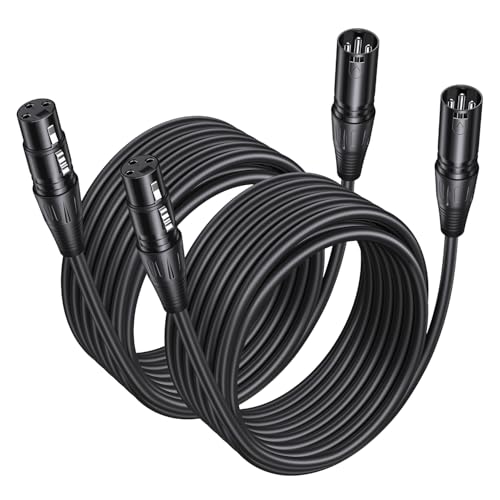
Designed with professionals in mind, the Aqdocvf 2 Pack 25ft Premium XLR Cable (Male to Female) offers studio-grade sound precision that elevates your recording experience. Made with oxygen-free copper conductors, these cables guarantee pristine audio quality, making them ideal for mixers, amplifiers, and pro audio equipment. The robust connectors provide secure connections that minimize setup time, while the soft PVC jacket reduces interference. With a durability tested for over 20,000 bends, you can rely on these cables for heavy usage in the studio or on the road. Plus, they come backed by excellent customer support and a solid warranty.
Best For: Audio professionals and enthusiasts looking for high-quality, durable XLR cables for studio and live performance use.
Pros:
- Studio-grade sound precision with oxygen-free copper conductors ensures pristine audio quality.
- Robust connectors provide secure connections, minimizing setup time and preventing disconnection during use.
- Durable design tested for over 20,000 bends makes these cables reliable for heavy usage in various environments.
Cons:
- May be longer than necessary for smaller setups, leading to excess cable management.
- Limited color options, as they only come in black, which may not suit all aesthetic preferences.
- Some users may prefer thicker gauge cables for specific applications, which these may not provide.
Cable Matters 2-Pack Premium Short XLR to XLR Cables

If you’re on the hunt for reliable, high-quality XLR cables, the Cable Matters 2-Pack Premium Short XLR to XLR Cables stands out as a top choice for artists and audio professionals alike. These 3-foot cables feature oxygen-free copper conductors that guarantee exceptional sound clarity, minimizing interference for pristine audio. With heavy-duty metal connectors and copper braided shielding, they’re built for durability and effective noise cancellation. Compatible with various professional equipment, you’ll find them perfect for microphones, mixing boards, and more. Plus, their 4.8 out of 5-star rating from over 16,000 customers speaks volumes about their performance and reliability.
Best For: Audio professionals and musicians seeking high-quality, durable XLR cables for studio and live performances.
Pros:
- High-quality oxygen-free copper conductors provide exceptional sound clarity and minimize interference.
- Heavy-duty metal connectors and copper braided shielding ensure durability and effective noise cancellation.
- Versatile compatibility with various professional audio equipment, including microphones and mixing boards.
Cons:
- 3-foot length may be too short for some setups or stage configurations.
- Standard packaging might not provide additional protective features for storage or transport.
- Limited to male to female configuration, which may not suit all users’ needs.
GEARit XLR Male to Female Microphone Cable (100ft)

The GEARit XLR Male to Female Microphone Cable (100ft) stands out as an essential tool for musicians, podcasters, and sound engineers who demand excellent audio quality. This premium cable delivers pristine sound with advanced EMI/RFI shielding, effectively eliminating static and noise. You’ll appreciate the heavy-duty connectors, designed for secure, reliable connections that withstand countless plug-unplug cycles. Its versatility allows you to connect microphones to audio mixers, preamplifiers, and patch bays, making it perfect for both studio recordings and live performances. Plus, it’s universally compatible with various gear, ensuring you get the most out of your audio setup.
Best For: Musicians, podcasters, and sound engineers seeking high-quality audio performance in their recordings and live performances.
Pros:
- Premium audio quality with advanced EMI/RFI shielding to eliminate static and noise.
- Durable heavy-duty connectors designed for secure and reliable connections.
- Versatile compatibility with a wide range of audio gear, suitable for various applications.
Cons:
- The 100ft length may be excessive for smaller setups, leading to unnecessary cable management issues.
- Some users may find it heavier compared to standard microphone cables.
- It may come at a higher price point than basic XLR cables, which could be a consideration for budget-conscious buyers.
Warrky XLR Cables 10ft 2 Pack (Oxygen-Free Copper, Gold-Plated Connector)
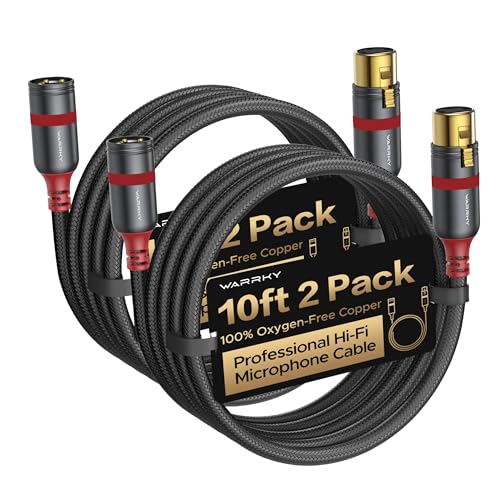
Warrky XLR Cables 10ft 2 Pack is perfect for audio professionals who demand high-quality performance without breaking the bank. These balanced microphone cables utilize oxygen-free copper and feature gold-plated connectors, ensuring excellent conductivity and durability. With a frequency response of 20Hz–20kHz and less than 0.01% total harmonic distortion, you’ll experience lifelike vocals and tight lows. Their dual-layer anti-interference shielding blocks EMI/RFI noise by 98%, making them ideal for studio recording and live performances. Plus, the rugged design and torque-resistant strain relief guarantee reliability, so you can focus on creating exceptional sound without worry.
Best For: Audio professionals and musicians seeking high-quality, reliable microphone cables for studio and live performance settings.
Pros:
- Excellent conductivity and durability due to oxygen-free copper and gold-plated connectors.
- Dual-layer anti-interference shielding effectively blocks EMI/RFI noise, ensuring clear audio.
- Rugged design with torque-resistant strain relief provides long-lasting reliability for frequent use.
Cons:
- Limited to a 10ft length, which may not be sufficient for all setups.
- Slightly higher price point compared to basic microphone cables.
- May be overkill for casual users or non-professional audio applications.
Mogami Gold Studio XLR to XLR Patch Cable (15 feet)

For audio professionals seeking top-tier performance, the Mogami Gold Studio XLR to XLR Patch Cable (15 feet) stands out as an exceptional choice. Its quad conductor design delivers impressive noise rejection, ensuring clarity and a silent background. With high-performance XLPE insulation and a dense copper shield, you’ll enjoy enhanced sonic quality. The rugged connectors and gold-plated contacts resist corrosion, promising durability for years to come. Backed by a lifetime warranty, this cable is a reliable addition to any studio. Trusted by professionals, it’s designed for critical audio paths, making it perfect for both digital and analog applications.
Best For: Audio professionals and studios looking for high-quality, reliable cables for critical audio paths.
Pros:
- Quad conductor design offers superior noise rejection, enhancing audio clarity.
- Durable construction with rugged connectors and gold-plated contacts prevents corrosion.
- Lifetime warranty ensures long-term reliability and peace of mind for users.
Cons:
- Higher price point compared to standard cables may not suit budget-conscious buyers.
- 15-foot length may be too short for certain setups or larger studio environments.
- Weight of 0.32 kilograms might be cumbersome for portable applications.
Monoprice XLR Male to 1/4-Inch TRS Male Cable (6 Feet)

Looking for a reliable cable that delivers high fidelity audio without interference? The Monoprice XLR Male to 1/4-Inch TRS Male Cable is your go-to solution. At 6 feet long, this 16 AWG balanced cable features gold-plated connectors and a braided shield to eliminate noise and ground loop issues. Perfect for recording studios and live performances, it’s compatible with various audio devices. With a stellar customer rating of 4.7 out of 5 stars from over 7,200 reviews, you’ll feel confident in its performance. Upgrade your audio experience with this robust and efficient cable today!
Best For: Audio professionals and musicians seeking high-quality, noise-free sound for recording and live performances.
Pros:
- High fidelity audio: Ensures clear sound with minimal interference through balanced cable design.
- Durable construction: Features gold-plated connectors and a braided shield for enhanced durability and longevity.
- Versatile compatibility: Works with a variety of audio devices, making it ideal for both studio and live settings.
Cons:
- Limited length: At 6 feet, it may not be suitable for setups requiring longer cable runs.
- Male-to-male connectors: May require additional adapters for certain equipment with different input/output configurations.
- Higher price point: Compared to standard cables, it may be pricier for budget-conscious consumers.
XLR Cables 25ft 6 Pack – Professional Male to Female Microphone Cables
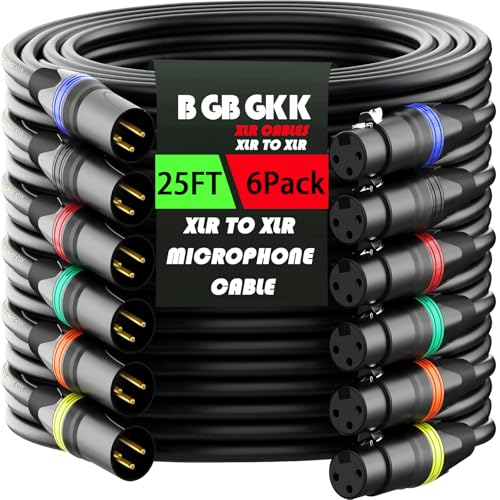
When you need reliable, high-quality sound transmission, the BGBGKK XLR Cables 25ft 6 Pack stands out as an ideal choice for audio professionals. These professional male-to-female microphone cables feature gold-plated 3-pin connectors for peak performance. With a thickened oxygen-free copper double wire core and a multi-layer shielding network, you’ll experience pure, noise-free audio across low, mid, and high frequencies. They’re compatible with a range of devices, making them perfect for KTV, recording, and live broadcasting. Plus, their durable build and flexible design guarantee ease of use. Plug them in, and enjoy the exceptional sound quality they deliver!
Best For: Audio professionals and enthusiasts seeking high-quality, reliable microphone cables for various applications.
Pros:
- High-quality sound transmission with noise-free audio and excellent clarity.
- Durable construction with gold-plated connectors and metal spring design for flexibility.
- Widely compatible with multiple devices, making them versatile for different audio setups.
Cons:
- The length of 25ft may be excessive for smaller setups or home use.
- Slightly heavier than some alternative cables, which could affect portability.
- Color variety may not appeal to all users, especially those preferring a uniform look.
Factors to Consider When Choosing a Premium XLR Cable for Studio Recording
When you’re selecting a premium XLR cable for studio recording, several key factors come into play. You’ll want to take into account cable length options, connector quality, and the shielding techniques used to guarantee peak performance. Additionally, reflect on the material composition and durability, as these elements can greatly influence your recording experience.
Cable Length Options
Choosing the right cable length for your premium XLR cables can greatly impact your studio recording experience. Standard lengths range from 3 feet to 100 feet, giving you the flexibility to match your studio layout. For close connections, shorter cables (3-10 feet) minimize signal loss and interference, making them perfect for compact setups. If you need a balance between flexibility and sound quality, medium-length cables (10-25 feet) work well in most environments. For larger spaces or live performances, longer cables (25 feet and above) are useful, but be mindful of potential signal degradation. Always select a length that fits your setup without excess slack to prevent tangling and interference, ensuring peak performance during your recordings.
Connector Quality Matters
While the quality of XLR connectors may seem like a minor detail, it plays an important role in the overall performance of your studio recordings. High-quality connectors guarantee a reliable audio connection, reducing the risk of signal loss. Look for metal connectors with gold plating; they resist corrosion and oxidation, which can degrade sound quality over time. Consider connectors with molded strain relief, as these enhance durability during frequent plug-unplug cycles. Robust construction is crucial, especially if you’re moving equipment between studio and live settings. Finally, verify the connectors are compatible with your audio gear to avoid potential audio issues or signal failures. Investing in quality connectors will pay off in clearer, more consistent sound.
Shielding Techniques Used
Effective shielding techniques are essential for achieving high-quality audio in your studio recordings. Look for XLR cables that utilize copper braided shielding and aluminum foil layers to minimize electromagnetic interference (EMI) and radio frequency interference (RFI). These features guarantee pristine sound clarity. Premium cables with quad conductor designs can provide up to 30dB better noise rejection than traditional twisted pair cables, enhancing signal integrity. Choose cables with oxygen-free copper (OFC) conductors, as they reduce signal loss and improve audio fidelity. Multi-layer shielding networks, combining foil and braided shielding, prevent ground loop issues, guaranteeing a noiseless audio signal. Aim for cables that achieve up to 98% noise reduction for the best sound quality in professional applications.
Material Composition Significance
When it comes to premium XLR cables, material composition plays a significant role in achieving superior audio quality. Using oxygen-free copper (OFC) in your cables greatly enhances conductivity and reduces signal loss, which is vital for studio recording. High-quality materials like nylon braided jackets and heavy-duty metal connectors not only add durability but also resist wear in professional settings. Advanced shielding options, such as copper braided or multi-layer shielding, minimize electromagnetic interference (EMI) and radio frequency interference (RFI), ensuring clearer sound reproduction. A balanced design helps cancel noise, preserving audio signal integrity. Finally, consider flexibility; soft PVC jackets make handling easier and reduce tangling, providing convenience during setup and transport.
Durability and Build Quality
Durability and build quality are essential factors to evaluate when selecting a premium XLR cable for studio recording. You’ll want heavy-duty connectors made from metal to withstand frequent plugging and unplugging without losing performance. Look for cables with oxygen-free copper (OFC) conductors, as they minimize signal loss and guarantee clear audio transmission. Multi-layer shielding, including braided copper and foil, effectively reduces electromagnetic interference, maintaining audio fidelity in professional settings. A robust outer jacket made from flexible PVC or nylon enhances durability and protects against wear and tear. Finally, verify the cable has been tested for durability, capable of enduring thousands of bends and plug cycles, ensuring long-lasting reliability for your studio needs.
Sound Quality Performance
While durability and build quality lay the foundation for a reliable XLR cable, sound quality performance is where the real magic happens in studio recording. Choosing oxygen-free copper (OFC) conductors is essential; they’ll minimize signal loss and distortion, giving you clearer sound reproduction. High-quality 3-pin XLR connectors maintain balanced audio signals, effectively reducing noise interference. Look for cables with advanced shielding, like copper braided options, to protect against electromagnetic and radio frequency interference, ensuring a noiseless audio signal. Additionally, pay attention to construction quality; features like dual-layer anti-interference shielding and robust connectors help maintain sound integrity. Finally, remember that longer cable lengths can degrade your signal, so select appropriately sized cables to keep your sound pristine.
Compatibility With Equipment
Choosing the right XLR cable for your studio recording setup is vital, and compatibility with your equipment is a top priority. First, make certain the cable has the appropriate connector type—male or female—to match your microphones and mixing boards. Opt for cables that support balanced connections to minimize noise interference, which is essential for professional audio. Pay attention to cable length, too; options typically range from 3ft to 100ft, so choose one that fits your studio layout. Confirm your cables have 3-pin XLR connectors, as this is a standard requirement for most audio devices. Finally, look for cables designed for specific applications, like studio recording, to guarantee ideal performance and sound quality.
Price and Value Comparison
When you’re evaluating XLR cables for studio recording, price is just one piece of the puzzle. Premium XLR cables can range from about $10 for basic models to over $100 for high-end options. It’s vital to find a balance between price and features like oxygen-free copper conductors and durable connectors, as these enhance both audio quality and longevity. While budget-friendly cables typically cost around $20-$30, they might lack the advanced shielding and durability essential in professional settings. Always check customer ratings to see if the price reflects perceived value. Finally, consider warranty and return policies; premium cables often come with better support, justifying their higher prices over budget alternatives.