
Great sound starts with a recorder that fits your setup—not just one with a long feature list. A solo filmmaker needs different inputs and controls than a four-person podcast or a musician capturing rehearsals.
These 10 Zoom recorders cover compact XLR rigs, handheld recording, multitrack production, and podcast workflows. Use the comparisons below to narrow your choices by microphone count, recording location, and how you plan to edit.
Best 10 Professional Audio Recorder Picks for 2026
Best for Two-Input Field Recording

- 32-bit float recording
- Two locking XLR/TRS inputs
- Standalone or USB workflows
Best For: Two-mic location sound and run-and-gun filming
Best for Flexible Portable Multitracking

- Four XLR/TRS inputs
- X/Y and mid-side capsules included
- SD recording and multichannel USB audio
Best For: Portable video, podcast, and music sessions
Best for Multimic Film Production

- Six XLR inputs and up to 14 tracks
- 32-bit float recording
- Timecode I/O for video sync
Best For: Multimic location recording and synchronized video
Best for Podcast Interviews

- Four XLR mic inputs
- Four independent headphone outputs
- Phone and USB calls with mix-minus
Best For: Group podcasts and remote interviews
Best for Flexible Multisource Recording

- Six-track 32-bit float recording
- Four XLR/TRS inputs plus X/Y mics
- USB interface and SD recording
Best For: Multi-mic music, interviews, and live events
Best for Demanding Sound Levels

- Six tracks plus a stereo mix
- 19.4 mm mics handle up to 140 dB SPL
- Look-ahead limiters; up to 192 kHz
Best For: Variable-volume film, music, and field sessions
Best for Compact Two-Input Setups

- Four-track 32-bit float recording
- Two XLR/TRS inputs and stereo mics
- USB-C use with SD-card recording
Best For: Solo creators and small two-input setups
Best for High-Resolution Field Recording

- 19.4mm built-in X/Y stereo mics
- 32-bit float recording
- Two XLR/TRS inputs and gain knobs
Best For: Portable stereo recording with external-input flexibility
Best for Swappable Mic Capsules
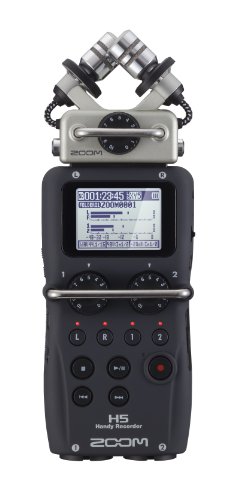
- Interchangeable Zoom input capsules
- Four-track simultaneous recording
- Two XLR/TRS inputs with phantom power
Best For: Changing microphone setups across projects
Best for Two-Input Setups

- Two locking XLR/TRS inputs
- 32-bit float recording up to 96kHz
- OLED waveform display
Best For: Interviews and podcasts with external microphones
Best for Two-Input Field Recording – Zoom F3
The Zoom F3 is a compact professional audio recorder for capturing dialogue or location sound when levels can change unexpectedly. Its 32-bit float recording and two locking XLR/TRS inputs suit a small, mobile microphone setup.
Best For: Filmmakers and field recordists who need two secure mic inputs and flexible levels on location.
Pros:
- 32-bit float recording handles quiet sources and sudden peaks without constant level adjustments.
- Two locking XLR/TRS inputs help keep connected microphones secure.
- Ultra-low-noise preamps and standalone or USB workflows add versatility.
Cons:
- Two inputs may be insufficient for larger multimikrophone sessions.
- Requires two AA batteries for battery operation.
Choose the F3 when reliable two-mic capture matters more than a high input count; for larger productions, consider a multitrack alternative.
Best for Flexible Portable Multitracking – Zoom H6
The Zoom H6 is a professional audio recorder for buyers who want onboard stereo microphones alongside four XLR/TRS inputs. It records to SD cards and can serve as a multichannel USB audio interface for video, podcasts, or music.
Best For: Creators who need portable multitrack recording with included microphone capsules and hands-on input controls.
Pros:
- Four XLR/TRS inputs have individual gain knobs, pads, and phantom power.
- Includes X/Y and mid-side microphone capsules.
- Records WAV or MP3 and supports multichannel USB audio.
Cons:
- Its stated recording resolution tops out at 24-bit/96kHz rather than 32-bit float.
- Direct DSLR or camcorder mounting requires an optional hot-shoe adapter.
The H6 is the versatile pick if you want built-in mic options and direct input controls; choose a 32-bit float model if that recording format is your priority.
Best for Multimic Film Production – Zoom F6
The Zoom F6 is a professional audio recorder built for productions that need more microphones and video synchronization. It combines six XLR inputs, up to 14 tracks, 32-bit float recording, and timecode I/O in a portable field unit.
Best For: Film and broadcast crews recording several microphones while keeping audio aligned with video.
Pros:
- Six XLR inputs and up to 14 tracks accommodate complex setups.
- 32-bit float recording with dual A/D converters handles a wide dynamic range.
- Timecode I/O supports frame-accurate video sync.
- Works as a standalone recorder or USB audio interface.
Cons:
- Six-input capability may be more than a simple one- or two-mic setup needs.
- At a listed 2.4 pounds, it is heavier than the F3 or H6.
The F6 makes sense when input count and timecode are essential; smaller recorders are easier to justify for straightforward capture.
Best for Podcast Interviews – Zoom PodTrak P4
The Zoom PodTrak P4 is a professional audio recorder aimed at podcast conversations rather than general-purpose field sound. Four XLR mic inputs, four independently controlled headphone outputs, and remote-interview connections make it practical for group episodes.
Best For: Podcasters recording multiple in-person speakers or bringing callers into a show.
Pros:
- Four mic inputs with phantom power and four headphone outputs with individual volume controls.
- Phone and USB interview options include automatic mix-minus.
- Multitrack recording and four programmable sound pads support podcast production.
Cons:
- Battery life is listed at up to 3.5 hours on two AA batteries.
- Its 2-in/2-out USB interface is narrower than its four-mic standalone recording setup.
Pick the P4 for its podcast-specific monitoring and call features; plan your power source for sessions that may run beyond its stated AA battery life.
Best for Flexible Multisource Recording – Zoom H6 Essential
If your professional audio recorder needs to handle several sources at once, the Zoom H6 Essential offers six-track 32-bit float recording, four XLR/TRS combo inputs, and built-in X/Y microphones. It suits projects that move between interviews, music, and live events.
Best For: Creators recording multiple microphones or instruments who also want a USB interface and an SD-card recording workflow.
Pros:
- Four XLR/TRS inputs plus built-in X/Y microphones provide flexible source options.
- 32-bit float recording across six tracks helps protect takes from clipping.
- Works as a USB audio interface while recording to SD card; spoken menu guidance improves accessibility.
Cons:
- Alternative microphone capsules are optional rather than included.
- Requires four AAA batteries for battery-powered use.
Choose this model when input count and adaptability matter more than a minimal setup. Its interchangeable capsule system offers room to change recording approaches as your needs grow.
Best for Demanding Sound Levels – Zoom H6 Studio
The Zoom H6 Studio is a professional audio recorder aimed at sessions where sound levels can change quickly. Its 32-bit float recording, look-ahead limiters, and 19.4 mm microphones rated for up to 140 dB SPL make it a strong candidate for music, filmmaking, and field work.
Best For: Filmmakers and musicians recording both quiet material and high-volume performances.
Pros:
- Records up to six individual tracks plus a stereo mix.
- Look-ahead limiters help prevent overloads in unpredictable conditions.
- Offers sample rates from 44.1 to 192 kHz and up to 15 hours of operation on four AA batteries.
Cons:
- At 1.05 pounds, it is heavier than the H4 Essential listed here.
- Battery-powered operation requires four AA batteries.
This is the pick to examine if microphone SPL handling, limiter protection, and sample-rate options are priorities. Check its connection options against your setup before buying, since the supplied specifications do not detail its audio inputs.
Best for Compact Two-Input Setups – Zoom H4 Essential
For a professional audio recorder that covers a two-input setup without moving to a larger six-track model, consider the Zoom H4 Essential. It combines four-track 32-bit float recording, built-in stereo microphones, and two XLR/TRS inputs for interviews, podcasts, music, and video audio.
Best For: Solo creators and small crews using built-in microphones alongside up to two external input connections.
Pros:
- Four-track 32-bit float recording helps safeguard takes from clipping.
- Two XLR/TRS inputs accommodate external microphones, instruments, or a mixer feed.
- USB-C supports device recording or streaming while audio is also saved to SD card.
Cons:
- Two XLR/TRS inputs limit setups that need more external sources.
- Requires two AA batteries for battery-powered recording.
The H4 Essential makes sense when you want essential external connections and stereo microphones in a 243 g handheld unit. Spoken menu guidance is a useful addition for accessible navigation.
Best for High-Resolution Field Recording – Zoom H5 Studio
The Zoom H5 Studio is a professional audio recorder for location work that calls for built-in stereo mics and flexible external inputs. Its 19.4mm X/Y capsule, 32-bit float recording, and dedicated gain knobs make it a practical choice when recording conditions change quickly.
Best For: Filmmakers and musicians who want portable stereo capture alongside XLR/TRS inputs.
Pros:
- Large built-in X/Y mics capture stereo audio without an external microphone.
- 32-bit float recording provides extended dynamic range.
- Dedicated gain knobs and two XLR/TRS inputs support hands-on, flexible setups.
- Battery operation suits recording away from an outlet.
Cons:
- Requires four AA batteries for battery-powered use.
- At 14.4 ounces, it is heavier than the other two recorders in this roundup.
Choose the H5 Studio if built-in stereo recording is a priority and you also need room to add external sources. It offers more recording options than a basic two-input setup, though that comes with a larger battery requirement.
Best for Swappable Mic Capsules – Zoom H5
The Zoom H5 is a professional audio recorder built around interchangeable input capsules. Its included shock-mounted X/Y capsule handles stereo capture, while two XLR/TRS combo inputs make it useful for filming, music sessions, and other four-track setups.
Best For: Recordists who want to change microphone capsules as their projects change.
Pros:
- Interchangeable capsule system works with Zoom input capsules.
- Included shock-mounted X/Y mics help reduce handling noise.
- Records four tracks simultaneously and provides two XLR/TRS inputs with selectable phantom power.
- Can serve as a multichannel or stereo USB audio interface.
Cons:
- SD/SDHC card support is limited to 32GB.
- The supplied notes do not list 32-bit float recording.
The H5 makes the most sense when capsule compatibility and four-track recording matter more than newer recording formats. Its included X/Y capsule is ready for handheld use, with other capsule options available when your setup changes.
Best for Two-Input Setups – Zoom H1 XLR
The Zoom H1 XLR is a professional audio recorder for people who primarily connect external microphones or instruments. It pairs two locking XLR/TRS inputs with 32-bit float recording at up to 96kHz, plus an OLED waveform display for checking a recording at a glance.
Best For: Interviews, podcasts, and compact two-source recording setups.
Pros:
- Two locking XLR/TRS combo inputs accommodate microphones and instruments.
- 32-bit float recording provides extended dynamic range.
- OLED waveform display offers a quick visual check of recorded audio.
- Supports SDXC cards up to 1TB.
Cons:
- Limited to two channels rather than a four-track setup.
- The supplied notes do not list a built-in stereo microphone capsule; plan on external sources.
Pick the H1 XLR when your recording kit already includes the microphones you need. Its straightforward two-input layout keeps the focus on external-source capture, with a 3.5mm headphone output for monitoring.
How We Picked These Professional Audio Recorders
We compared the selected models by the jobs buyers need them to do: capturing dialogue on set, recording live sound, tracking music, and producing podcasts. The most useful distinctions are microphone inputs, onboard microphones, track capacity, monitoring, power options, and how easily each recorder fits into a mobile setup. We also treated models with similar names as separate choices; check the exact version before buying because features can differ.
Quick Comparison: Which Type Fits Your Setup?
Compact XLR recording: The Zoom F3 and H1 XLR suit small rigs built around external microphones. More inputs for production: The F6 is the field-oriented choice when a shoot needs more microphone channels. Handheld versatility: The H4 Essential and H5 models balance portable recording with external mic connections; the H6 models offer room for larger setups. Podcast production: The PodTrak P4 is purpose-built for multiple hosts, headphone monitoring, and remote guests.
Within the handheld group, distinguish the H6, H6 Essential, and H6 Studio—and the H5 Studio from the H5 4-Track—by their specific input layouts and workflow features rather than assuming they are interchangeable.
Key Buying Factors for a Professional Audio Recorder
Inputs and Track Count
Count every source you must record separately: interview microphones, instruments, ambient sound, and backup feeds. Leave an input free if your projects may grow. Confirm the exact mix of XLR, TRS, and onboard microphone options for the model you choose.
Built-In Microphones or an External-Mic Rig?
A handheld recorder with onboard microphones is convenient for ambience, rehearsals, and quick interviews. If you already use lavaliers, shotguns, or studio microphones, prioritize suitable external inputs, placement flexibility, and secure cabling instead.
Monitoring, Power, and Recording Workflow
Check that you can monitor the channels you need while recording and that the recorder’s battery or external-power options suit your session length. Also consider media requirements, file transfer, and whether USB audio-interface operation matters to your workflow. Features such as 32-bit float recording can provide more latitude when levels are unpredictable, but they do not fix microphone placement, clipping elsewhere in the signal chain, or unwanted background noise. Verify feature availability on the exact model.
Who Should Buy Which Professional Audio Recorder?
Solo filmmakers and sound recordists: Start with the F3 or H1 XLR for a compact external-mic setup; consider the F6 when you need more channels. Musicians and location reporters: Compare the H4 Essential, H5, and H6 families according to how many simultaneous sources you use and whether onboard microphones are important. Podcasters with multiple hosts or remote guests: Look first at the PodTrak P4’s podcast-focused connections. Buyers choosing between generations: Compare the exact H5 or H6 variant against your must-have inputs and recording features before paying for a name alone.