
The best professional broadcast mixing consoles make it easier to manage microphones, playback, monitors, streaming feeds, and recordings from one dependable control surface. The right choice depends on channel capacity, routing flexibility, remote control, connectivity, and the demands of your production workflow.
We selected 10 mixers spanning full-size digital consoles, compact rack units, hybrid recording systems, and more accessible live-broadcast options. Use the guide below to narrow the list by venue size, operator needs, and long-term expansion plans.
Best 10 Professional Broadcast Mixing Consoles Picks for 2026
Best All-Around Workhorse
Behringer X32 Digital Mixing Console

- 40 inputs and 25 buses
- 32 programmable MIDAS preamps
- 25 motorized faders
Best For: Large studio and live productions needing extensive hands-on control
Best for High-Resolution Live Sound
Allen & Heath SQ-6 Digital Mixer

- 96kHz processing with under 0.7ms latency
- 48 inputs with 24 onboard preamps
- 64-channel expansion and 32x32 USB
Best For: Live, recording, and streaming applications requiring advanced routing
Best for Large Applications
Yamaha TF5 Digital Mixing Console

- 48 mixing channels and 33 motor faders
- 20 auxes plus stereo and subgroup buses
- 32 XLR/TRS combo inputs
Best For: Larger productions requiring high input capacity and direct control
Best Compact Tablet-Controlled Option
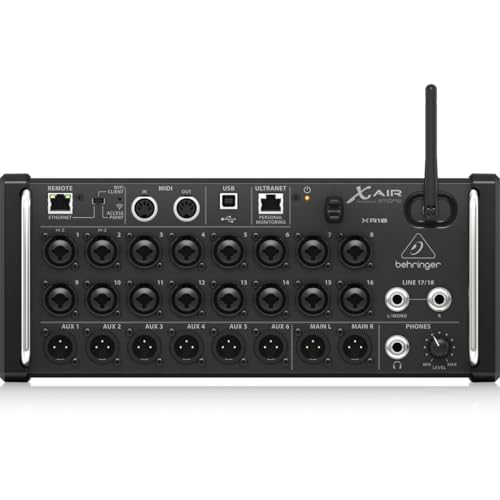
- 18 inputs and 12 buses in a 7.1-pound unit
- 16 programmable MIDAS preamps
- Built-in Wi-Fi and 18x18 USB
Best For: Portable live and studio setups using tablet-based control
Compact Broadcast Powerhouse
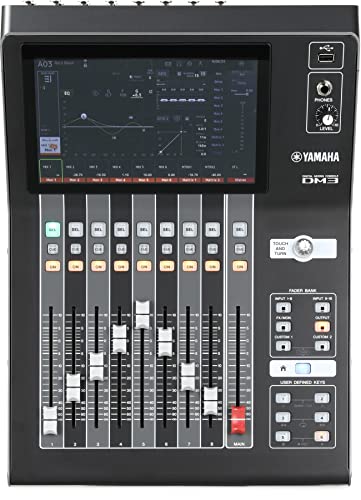
- 22 channels with 96kHz operation
- 18x18 USB interface and USB recorder
- Nine-inch touchscreen with eight XLR outputs
Best For: Compact broadcast, live sound, and recording setups
Large-Format Routing Choice

- 48 channels and 36-bus architecture
- 96kHz FPGA processing with low latency
- 64-channel I/O and 32x32 USB interface
Best For: Complex broadcast and live-production systems
Hybrid Production Workstation

- 12-channel mixer with multitrack recording
- 12-in/10-out USB interface and DAW control
- Built-in compression, EQ, MIDI, and dual headphones
Best For: Small broadcast, podcast, and project-studio workflows
Flagship Networked Control
Behringer WING 48-Channel Digital Console

- 48 channels and 28 buses with Midas PRO preamps
- 24 motorized faders in configurable control sections
- AES50 networking for extensive remote I/O
Best For: Large broadcast, studio and concert systems
Versatile Value Mixer
Depusheng MX16 16-Channel Sound Console

- 16 channels with XLR, 1/4-inch and RCA connections
- USB recording, Bluetooth, MP3 and DSP effects
- Includes 256 reverb options and a rotary compressor
Best For: Small broadcasts, podcasts and live streams
Rack-Ready Production Hub
Behringer X32 PRODUCER Digital Console

- 40 inputs and 25 buses in a rack-mountable design
- 16 programmable Midas mic preamps and 17 motorized faders
- 32 x 32 USB interface with DAW control support
Best For: Studio, live and rack-based broadcast production
Best All-Around Workhorse – Behringer X32 Digital Mixing Console
For buyers comparing professional broadcast mixing consoles, the Behringer X32 offers a substantial 40-input, 25-bus digital platform for studio and live applications. Its programmable MIDAS preamps, automated faders, and extensive XLR connectivity make it suited to productions that require hands-on control and flexible routing.
Best For: Studio and live setups needing many inputs, motorized faders, and scene management.
Pros:
- 40 inputs and 25 buses provide broad mixing capacity.
- 32 programmable MIDAS-designed mic preamps support detailed input configuration.
- 25 motorized 100 mm faders provide an immediate overview and automated control.
- Includes 16 XLR outputs, additional line I/O, phones connections, and talkback.
Cons:
- At 45.4 pounds, it is less convenient to transport than compact mixers.
- Its large 40.4-by-25.9-inch footprint requires a dedicated workspace.
The X32 is a strong choice when channel count, physical control, and routing flexibility matter more than portability.
Best for High-Resolution Live Sound – Allen & Heath SQ-6 Digital Mixer
Among professional broadcast mixing consoles, the Allen & Heath SQ-6 stands out for its 96kHz XCVI FPGA processing, low latency, and flexible bus architecture. It combines 48 input channels with 24 onboard preamps, onboard effects, USB audio, and expansion support for demanding live, recording, and streaming workflows.
Best For: Professional live sound, recording, and streaming systems that need high-resolution processing and expansion.
Pros:
- 96kHz processing and latency below 0.7ms support responsive operation.
- 48 input channels and 24 onboard preamps accommodate complex setups.
- Offers 12 stereo mixes, LR, and three stereo matrix outputs.
- Includes eight stereo FX engines, a 32×32 USB interface, and a 64-channel I/O port.
Cons:
- The 24 onboard preamps are fewer than the total 48 input channels.
- Its 240-volt power specification may require careful system planning.
The SQ-6 is a capable option for professionals who prioritize low latency, detailed routing, and a platform that can grow through digital expansion.
Best for Large Applications – Yamaha TF5 Digital Mixing Console
The Yamaha TF5 is a practical contender among professional broadcast mixing consoles for larger applications. It provides 48 mixing channels, 33 motor faders, 20 auxes, stereo and subgroup buses, plus 32 analog XLR/TRS combo inputs and two RCA stereo inputs.
Best For: Larger productions needing high input capacity, many faders, and broad auxiliary mixing options.
Pros:
- 48 mixing channels support sizable production setups.
- 33 motorized faders include 32 channel faders plus a master fader.
- Provides 20 auxes, stereo and subgroup buses, and eight DCA groups.
- Offers 32 XLR/TRS combo inputs and two RCA stereo line inputs.
Cons:
- At 20 kg, it is not a lightweight portable mixer.
- Its 34.1-inch width may require a substantial console space.
The TF5 balances a large channel count with direct fader access, making it a sensible fit when a production outgrows smaller digital consoles.
Best Compact Tablet-Controlled Option – Behringer X AIR XR18 Mixer
For buyers seeking professional broadcast mixing consoles in a compact format, the Behringer X AIR XR18 uses iPad or Android tablet control instead of a traditional control surface. It combines 18 inputs, 12 buses, 16 programmable MIDAS preamps, built-in tri-mode Wi-Fi, and an 18×18 bidirectional USB interface.
Best For: Portable studio and live setups that favor tablet control, integrated Wi-Fi, and multichannel USB recording.
Pros:
- Compact 18-input, 12-bus design weighs 7.1 pounds.
- Includes 16 programmable MIDAS-designed mic preamps.
- Built-in tri-mode Wi-Fi supports direct tablet operation without an external router.
- 18×18 bidirectional USB enables multichannel computer or iPad recording.
Cons:
- Tablet control may be less suitable for users who require physical faders.
- Its 18 inputs and 12 buses offer less capacity than the larger consoles in this roundup.
The XR18 is the most transportable option here, trading a conventional surface for flexible wireless control and a compact footprint.
Compact Broadcast Powerhouse – Yamaha DM3 Standard
For professional broadcast mixing consoles where space and straightforward operation matter, the Yamaha DM3 Standard combines 22 channels, 96kHz operation, and a compact footprint. Its 9-inch touchscreen, Yamaha preamps, XLR outputs, and USB connectivity support live production, playback, and recording workflows.
Best For: Compact broadcast, live sound, and recording setups that need professional Yamaha processing in a portable console.
Pros:
- 96kHz operation and Yamaha sound quality.
- 22 channels with 16 mono channels, stereo returns, mixes, matrixes, and a stereo bus.
- 18×18 USB audio interface plus a 2×2 USB recorder.
- Eight XLR analog outputs and 16 professional Yamaha preamps.
Cons:
- Its 22-channel capacity may be limiting for larger productions.
- The compact design provides fewer physical controls than a larger console.
The DM3 Standard is a strong fit when portability and routing flexibility outweigh the need for a high channel count. Its touchscreen and broad USB features make it especially practical for hybrid broadcast and recording work.
Large-Format Routing Choice – Allen & Heath SQ-5
The Allen & Heath SQ-5 is built for professional broadcast mixing consoles applications that demand substantial channel capacity and routing flexibility. Its 48 input channels, 36-bus architecture, 96kHz FPGA processing, and extensive digital connectivity support complex live, recording, and broadcast systems.
Best For: Larger broadcast and live-production environments requiring extensive inputs, mixes, effects, and expansion options.
Pros:
- 48 input channels and 36-bus mixing architecture.
- 96kHz XCVI FPGA processing with stated latency below 0.7ms.
- Twelve stereo mixes, LR output, and three stereo matrix outputs.
- 64-channel I/O port and 32×32 USB audio interface for expansion and recording.
Cons:
- Its larger 20.3-inch width and 23.1-pound weight are less convenient for compact setups.
- The extensive routing and processing options may require more setup time than a smaller mixer.
With its high channel count, onboard effects, and networking-oriented I/O, the SQ-5 is suited to productions that expect to grow. It is the most capable option here for complex routing, provided the installation can accommodate its larger footprint.
Hybrid Production Workstation – Tascam Model 12
The Tascam Model 12 takes a practical all-in-one approach for users comparing professional broadcast mixing consoles with integrated recording tools. It combines a 12-channel mixer, 12-in/10-out USB interface, multitrack recording, DAW control, MIDI, and onboard channel compression and EQ.
Best For: Small broadcast, podcast, production, and project-studio workflows that need mixing and recording in one unit.
Pros:
- Combines a 12-track digital multitrack recorder, mixer, USB interface, and DAW controller.
- 12-in/10-out USB connectivity supports DAW workflows.
- One-knob compressor and three-band EQ are available on all input modules.
- Dual headphone outputs provide individual volume and source selection.
Cons:
- Its 12-channel capacity is smaller than the other consoles in this roundup.
- Audio outputs use auxiliary connectors rather than XLR.
- It operates at the listed 12-channel feature set rather than the 48-channel scale of the SQ-5.
The Model 12 is less suited to large, highly routed broadcast systems, but it offers a useful production hub for smaller teams. Its integrated recorder, USB interface, DAW control, and MIDI make it a convenient choice when minimizing separate equipment is a priority.
Flagship Networked Control – Behringer WING 48-Channel Digital Console
The Behringer WING is a high-capacity option for professional broadcast mixing consoles, offering 48 channels, 28 buses, Midas PRO preamps and extensive AES50 networking. Its configurable control layout and large touch display suit complex studio, concert and broadcast workflows.
Best For: Broadcast, studio and concert users who need substantial channel capacity, networked I/O and hands-on digital control.
Pros:
- Eight Midas PRO mic preamps and eight Midas PRO outputs are built in.
- Twenty-four motorized 100 mm faders are arranged across three configurable sections.
- Three AES50 ports support remote I/O connectivity for up to 144 input and output signals.
- Large capacitive touchscreen and dedicated channel-editing controls provide detailed access to channel properties.
Cons:
- At 72.4 pounds, it is a substantial console for portable setups.
- Its extensive routing and control features may be more than smaller productions require.
The WING stands out when your system demands scalable connectivity and detailed tactile control. It is a serious investment in both physical space and operator familiarity, but its feature set is well aligned with demanding professional environments.
Versatile Value Mixer – Depusheng MX16 16-Channel Sound Console
The Depusheng MX16 provides an accessible entry point for professional broadcast mixing consoles, combining 16 channels with USB recording, Bluetooth, USB playback and onboard DSP effects. Its mix of XLR, 6.35mm and RCA connections supports varied small-production setups.
Best For: Small broadcast rooms, podcasting, KTV, conference projects, live streams and stage performances needing flexible connections at a modest scale.
Pros:
- Sixteen channels accommodate multiple microphones and line-level devices.
- Includes USB connectivity for computer recording and a supplied USB cable.
- Offers 256 reverb effects, a rotary compressor, MP3 functionality and Bluetooth.
- Provides XLR, 1/4-inch and RCA input/output options for varied equipment.
Cons:
- Its 16-channel layout is less suited to large or highly complex broadcast systems.
- The supplied notes do not specify advanced networking or remote-control features.
The MX16 is a practical choice when connection flexibility and built-in effects matter more than large-scale routing. It is best matched with compact productions that want USB recording and live-broadcast features without moving to a larger digital console.
Rack-Ready Production Hub – Behringer X32 PRODUCER Digital Console
The Behringer X32 PRODUCER is a rack-mountable choice among professional broadcast mixing consoles, pairing 40 inputs and 25 buses with programmable Midas-designed preamps, motorized faders and a 32 x 32 USB audio interface. It is designed for studio and live applications where recallable control is valuable.
Best For: Studios, live productions and broadcast-style systems that need rack-mountable digital mixing, scene management and computer integration.
Pros:
- Provides 40 input channels and 25 buses in a rack-mountable format.
- Sixteen fully programmable Midas-designed mic preamps support detailed input control.
- Seventeen motorized 100 mm faders enable automated operation and scene management.
- Includes a 32 x 32 USB 2.0 audio interface with DAW remote-control emulation.
Cons:
- Its 25.1-pound weight and rack-mountable design still require suitable installation space.
- The supplied information does not identify the specific iPad/iPhone remote-control method or software support status.
The X32 PRODUCER balances substantial routing capacity with a more installation-friendly form than a full-size console. Its motorized faders, scene management and multichannel USB interface make it especially useful where repeatable mixes and computer-based production are central.
How We Picked the Best Professional Broadcast Mixing Consoles
We compared these consoles by practical broadcast and live-production capabilities rather than channel count alone. Key considerations included input and bus capacity, preamp quality, physical controls, motorized faders, scene and recall functions, remote operation, recording connectivity, monitor routing, and the learning curve for operators. We also included several form factors so buyers can compare installed, touring, mobile, and studio-oriented setups.
Quick Comparison
- Large productions: The Behringer X32, Behringer WING, Allen & Heath SQ-6, and Yamaha TF5 offer extensive routing, mixing capacity, and hands-on control.
- Compact professional rigs: The Yamaha DM3, Allen & Heath SQ-5, and Behringer X32 Producer balance capability with smaller footprints.
- Tablet-controlled systems: The Behringer X AIR XR18 suits mobile setups where wireless control and minimal hardware are priorities.
- Recording and podcast workflows: The Tascam Model 12 combines mixing, multitrack recording, USB audio, and DAW control.
- Budget-conscious applications: The Depusheng MX16 is aimed at simpler live broadcast, podcast, and PC recording setups.
Key Buying Factors for Professional Broadcast Mixing Consoles
Inputs, Buses, and Routing
Choose enough microphone, line, and stereo inputs for your current production, then allow room for guests, playback devices, communications, and future expansion. Bus count matters when you need separate mixes for the house, presenters, remote contributors, recording feeds, and streaming platforms.
Control and Workflow
Physical faders are valuable for fast, repeatable adjustments, while tablet or computer control helps operators work from a listening position. Consider whether your team prefers a traditional surface, a rack mixer, or a hybrid approach. Scene recall, mute groups, DCAs, automation, and customizable layouts can significantly reduce setup time.
Connectivity and Recording
Check USB audio channels, network-audio compatibility, expansion options, digital outputs, and multitrack recording support. If the console will feed both a broadcast encoder and a recorder, verify that it can create independent mixes rather than sending the same stereo bus everywhere.
Reliability and Support
For professional use, evaluate firmware maturity, replacement availability, compatible accessories, warranty coverage, and the manufacturer’s documentation. A familiar console with dependable support may be a better investment than a feature-heavy model your team cannot operate confidently.
Who Should Buy Which Professional Broadcast Mixing Consoles?
Choose a large-format console such as the X32, WING, SQ-6, or TF5 when you need many sources, multiple monitor mixes, and substantial hands-on control. The SQ-5 and DM3 are better fits for smaller venues, production trucks, classrooms, and mobile crews that still need professional routing. Select the XR18 when space and remote operation matter most. The Tascam Model 12 is a sensible choice for creators who prioritize recording and DAW integration, while the Depusheng MX16 suits straightforward, lower-complexity streaming and podcast setups.