
In 2025, the world of professional cinema cameras is more competitive than ever, with cutting-edge technology pushing the boundaries of filmmaking. You’ll find options that range from compact designs to high-performance features, catering to various styles and projects. As you explore the top contenders, consider what aspects matter most for your work. The right choice could redefine your creative process and elevate your productions to new heights. So, which camera will make the cut?
Sony Alpha FX3 | ILME-FX3A | Full-Frame Cinema Line Camera

The Sony Alpha FX3, also known as the ILME-FX3A, is the perfect choice for filmmakers and content creators who demand high-quality performance in a compact design. Featuring a 4K full-frame sensor and over 15 stops of dynamic range, this camera delivers stunning visuals. With S-Cinetone, you’ll achieve that cinematic look inspired by VENICE colorimetry. You can record uninterrupted in 4K 60p, and the full pixel readout guarantees clarity in every frame. Its cage-free design, complete with ¼”-20 mounting points, makes it versatile. Plus, the XLR top handle supports professional audio, while the in-body cooling fan allows for extended recording sessions.
Best For: Filmmakers and content creators looking for a high-performance, compact camera that delivers professional-quality video.
Pros:
- Exceptional image quality with a 4K full-frame sensor and over 15 stops of dynamic range.
- Cinematic look achieved through S-Cinetone colorimetry inspired by the VENICE camera.
- Versatile design with cage-free structure and multiple mounting points for accessories.
Cons:
- Higher price point compared to entry-level cameras, which may not fit all budgets.
- Limited internal storage capacity may require external recording solutions for extended projects.
- In-body cooling fan may introduce some noise, potentially affecting audio in quiet environments.
Sony Cinema Line FX30 Super 35 Camera

For filmmakers seeking high-quality cinematic output, the Sony Cinema Line FX30 Super 35 Camera stands out with its impressive 20.1 MP Exmor R APS-C image sensor. It offers a dual base ISO with a remarkable 14+ stop range, ensuring wide latitude and low-noise images. Capture stunning visuals with its wide dynamic range and S-Cinetone™ for a cinematic look straight out of the camera. Enjoy flexible shooting modes, including Cine EI Quick and Cine EI Log, optimizing your image quality. Plus, you can customize your workflow using user LUTs for both the LCD display and HDMI output, enhancing your creative flexibility.
Best For: Filmmakers seeking high-quality cinematic output with advanced imaging capabilities.
Pros:
- Exceptional image quality with a 20.1 MP Exmor R APS-C image sensor.
- Wide dynamic range and S-Cinetone™ for a cinematic look without the need for extensive color grading.
- Flexible shooting modes, including Cine EI Quick and Cine EI Log, allowing for optimized image quality.
Cons:
- The camera may be more complex for beginners unfamiliar with professional filmmaking equipment.
- Limited to Super 35mm format, which may not suit all filmmakers’ needs.
- Higher price point compared to entry-level cameras, making it less accessible for casual users.
Nikon RED Z Cinema Camera

With a remarkable 6K full-frame sensor and over 15 stops of dynamic range, the Nikon RED Z Cinema Camera stands out as an ideal choice for filmmakers seeking exceptional visual quality. Weighing only 1.18 lbs, it’s lightweight and portable. The dual base ISO guarantees stunning performance in various lighting conditions. You’ll love the industry-leading 32-bit float audio recording, along with support for external microphones. The extra-large 4-inch DCI-P3 touchscreen monitor swivels for versatile viewing angles. Plus, it captures REDCODE RAW footage with renowned RED color science, making color grading a breeze. Its adaptable lens mount integrates seamlessly with your gear.
Best For: Filmmakers and content creators looking for a lightweight, high-performance cinema camera that delivers exceptional visual and audio quality.
Pros:
- Exceptional image quality with a 6K full-frame sensor and over 15 stops of dynamic range.
- Lightweight design at only 1.18 lbs, making it easy to carry and operate in various settings.
- Industry-leading audio capabilities with 32-bit float recording and support for external microphones.
Cons:
- Potentially high cost compared to other camera options in the market.
- Complexity in color grading may require advanced knowledge for optimal results.
- Limited battery life may necessitate carrying extra batteries for extended shoots.
Sony FX3A Full-Frame Cinema Camera Pro Bundle
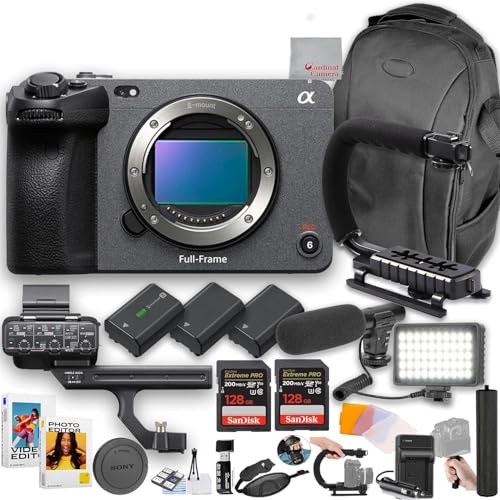
Designed for filmmakers seeking flexibility and high-quality output, the Sony FX3A Full-Frame Cinema Camera Pro Bundle stands out with its impressive UHD 4K video capture capabilities. With a 12.1MP Exmor R BSI CMOS sensor, you’ll enjoy internal 10-bit 4:2:2 sampling or 16-bit raw output for stunning visuals. The BIONZ XR processor guarantees fast performance, while the silent fan and heatsink allow for uninterrupted recording at 4K60. Control the FX3A remotely through Imaging Edge apps, and take advantage of the included accessories, like the 256GB memory card and LED video light, to elevate your filmmaking experience.
Best For: Filmmakers and content creators looking for a high-performance camera capable of producing high-quality UHD 4K video.
Pros:
- Exceptional video quality with 10-bit 4:2:2 internal sampling and 16-bit raw output options.
- Silent fan and heatsink design allow for uninterrupted recording even at high resolutions.
- Comprehensive bundle includes essential accessories like a 256GB memory card and LED video light, enhancing the overall filmmaking experience.
Cons:
- The camera’s price point may be high for amateur filmmakers or hobbyists.
- Limited battery life may require additional spare batteries for extended shoots.
- May have a learning curve for users unfamiliar with advanced cinema camera features.
Nikon RED Z Cinema 6K Full-Frame Camera

The Nikon RED Z Cinema 6K Full-Frame Camera stands out as a top choice for filmmakers seeking exceptional image quality and versatility. With its 6K full-frame sensor and over 15 stops of dynamic range, you’ll capture breathtaking visuals. The renowned RED color science guarantees vibrant colors, while the dual base ISO adds flexibility in various lighting conditions. Weighing just 1.18 lbs, it’s easy to handle. The industry-leading 32-bit float audio recording and a swiveling 4-inch DCI-P3 touchscreen monitor enhance your production experience. Paired with the NIKKOR Z 24-50mm lens, it’s perfect for every shot, from wide to close-up.
Best For: Filmmakers and content creators seeking high-quality visuals and versatile shooting options in a lightweight camera.
Pros:
- Exceptional 6K full-frame sensor with over 15 stops of dynamic range for stunning image quality.
- Renowned RED color science ensures vibrant and accurate color reproduction.
- Lightweight design (1.18 lbs) makes it easy to handle during long shoots.
Cons:
- Price point may be high for amateur filmmakers or hobbyists.
- Limited battery life may require additional batteries for extended shoots.
- The included lens may not be suitable for all shooting scenarios, necessitating additional lens purchases.
Sony FX2 Full-Frame Cinema Camera with XLR Handle
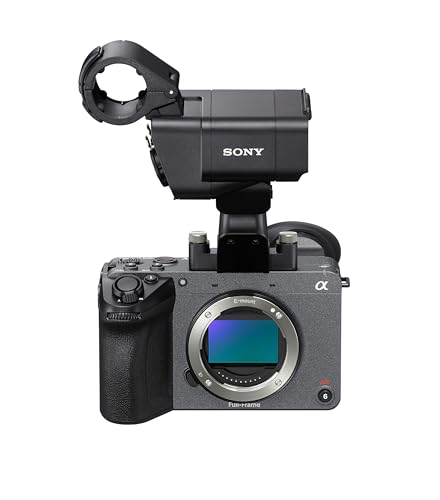
For filmmakers seeking uncompromising image quality, the Sony FX2 Full-Frame Cinema Camera with its XLR handle delivers exceptional performance. Equipped with a 33MP Exmor R CMOS sensor and BIONZ XR engine, it captures stunning visuals. You’ll appreciate the 15+ stops of dynamic range in Log mode, allowing for incredible flexibility in challenging lighting. The Dual base ISO of 800/4000 guarantees clean images in various conditions. Plus, the camera offers versatile Log shooting modes and a user-friendly BIG6 interface. With the angle-adjustable EVF and included XLR handle, it’s designed to elevate your filmmaking experience to new heights.
Best For: The Sony FX2 Full-Frame Cinema Camera is best for professional filmmakers seeking high-quality image capture and versatile shooting options.
Pros:
- Exceptional 33MP Exmor R CMOS sensor for stunning visuals.
- 15+ stops of dynamic range in Log mode for flexibility in various lighting conditions.
- Included XLR handle enhances audio recording capabilities.
Cons:
- Potentially high price point may not be suitable for amateur filmmakers.
- Full-frame sensor may require specific lenses that can increase the overall cost.
- Learning curve associated with advanced features and shooting modes.
Canon EOS R5 C Mirrorless Camera (Body Only)

With its exceptional 45-megapixel CMOS sensor and advanced DIGIC X processor, the Canon EOS R5 C Mirrorless Camera is a powerhouse tailored for professional filmmakers and content creators who demand unparalleled image quality. You’ll appreciate its 8K/60P internal RAW recording and HDR support for vibrant visuals. With exceptional autofocus and high-speed continuous shooting up to 20 fps, capturing fast-moving subjects is effortless. The compact design includes an integrated cooling fan, ensuring uninterrupted recording. Plus, the customizable controls and professional interface let you tailor the experience, making this camera an essential tool for elevating your filmmaking game in 2025.
Best For: Professional filmmakers and content creators seeking high-quality 8K video recording and advanced autofocus capabilities.
Pros:
- Exceptional 45-megapixel CMOS sensor for stunning image quality.
- High-speed continuous shooting up to 20 fps, perfect for capturing fast-moving subjects.
- Compact design with an integrated cooling fan for uninterrupted recording.
Cons:
- Higher price point may not be suitable for amateur photographers or casual users.
- Limited operating temperature range may restrict use in extreme conditions.
- Some users may find the extensive features overwhelming without prior experience in professional cameras.
Sony FX30 Digital Cinema Camera Pro Video Bundle

Packed with advanced technology, the Sony FX30 Digital Cinema Camera Pro Video Bundle is perfect for aspiring filmmakers and content creators who demand high-quality performance in a compact design. With its 26.1MP APS-C BSI CMOS sensor, you can capture stunning UHD 4K footage at up to 120p. The included Sigma 30mm f/1.4 lens guarantees crisp images, while the dual CFexpress Type A/SDXC card slots offer ample storage. Plus, you’ll appreciate the included accessories—a U-Grip, filters, and an LED light—enhancing your shooting experience. Complete with Movavi editing software, this bundle elevates your creative potential to new heights.
Best For: The Sony FX30 Digital Cinema Camera Pro Video Bundle is best for aspiring filmmakers and content creators seeking high-quality performance and advanced features in a compact camera system.
Pros:
- Exceptional UHD 4K video recording capabilities up to 120p for smooth, high-resolution footage.
- Versatile Sigma 30mm f/1.4 lens provides excellent low-light performance and sharp images.
- Comprehensive accessory bundle enhances usability and creativity during shoots.
Cons:
- Compact design may limit heat dissipation during extended recording sessions.
- Dual CFexpress Type A card slots can be more expensive compared to standard SD cards.
- Learning curve may exist for beginners unfamiliar with professional video settings and software.
Sony FX3 Full-Frame Cinema Camera Bundle with 24-70mm Lens

The Sony FX3 Full-Frame Cinema Camera Bundle, featuring the versatile 24-70mm f/2.8 GM II lens, is the ideal choice for professional filmmakers and content creators seeking exceptional performance. With impressive low-light capabilities and an ISO range up to 409600, you’ll capture stunning visuals in any environment. The bundle also includes a Sony Tough 160GB CFexpress Type A Memory Card and a Lexar Professional 128GB Memory Card for ample storage. Enjoy cinematic 4K resolution, precise autofocus, and 15+ stops of dynamic range, all while utilizing 10-bit S-Log and HDR recording for unparalleled creative control. Elevate your filmmaking today!
Best For: Professional filmmakers and content creators seeking high-quality performance and versatility in their cinematic projects.
Pros:
- Exceptional low-light performance with an ISO range up to 409600.
- Includes high-quality lenses and ample storage with dual memory cards.
- Offers advanced features like 10-bit S-Log and HDR recording for enhanced creative control.
Cons:
- The camera may have a steep learning curve for beginners.
- The price point may be higher compared to entry-level options.
- Limited in-body stabilization compared to some other cinema cameras.
Blackmagic Design Pocket Cinema Camera 4K Power Bundle (CINECAMPOCHDMFT4K)

For filmmakers seeking a versatile and affordable option, the Blackmagic Design Pocket Cinema Camera 4K Power Bundle (CINECAMPOCHDMFT4K) stands out with its impressive 13 stops of dynamic range. Featuring a 4/3” image sensor and native resolution of 4096 x 2160, you’ll capture stunning visuals with ease. The active MFT lens mount allows for flexibility, while dual gain ISO up to 25,600 guarantees excellent low-light performance. You can record to SD/UHS-II and CFast 2.0 cards or connect external SSDs via USB-C. With included DaVinci Resolve Studio software and essential accessories, this bundle elevates your filmmaking experience effortlessly.
Best For: Filmmakers looking for a powerful yet budget-friendly camera that delivers excellent image quality and flexibility for various shooting conditions.
Pros:
- Exceptional 13 stops of dynamic range for stunning visuals.
- Versatile recording options with support for SD/UHS-II, CFast 2.0, and external SSDs.
- Lightweight design with a multifunction handgrip and a large 5” LCD display for easy operation.
Cons:
- Limited built-in microphone quality may require external audio equipment for professional sound.
- Battery life may be short during extensive shooting sessions without additional power sources.
- The active MFT lens mount may limit compatibility with certain lenses compared to other systems.
Factors to Consider When Choosing a Professional Cinema Camera
When choosing a professional cinema camera, you need to think about several key factors. Consider the sensor type and size, as they greatly impact image quality and low-light performance. You’ll also want to evaluate dynamic range, video resolution options, audio capabilities, and the camera’s weight for portability on set.
Sensor Type and Size
Choosing the right sensor type and size is essential for achieving the best image quality in professional cinema cameras. Larger sensors, like full-frame ones, provide superior low-light performance and a wider field of view, enhancing depth of field control. This can elevate your cinematic storytelling by allowing for more creative shots. On the other hand, APS-C sensors are smaller but still deliver impressive image quality and can be a great budget-friendly option. Remember that the sensor type directly influences lens compatibility, so consider what mounts work best with your preferred lenses. For professional cinematography, look for sensors that offer 14+ stops of dynamic range, ensuring you capture all those vital details in highlights and shadows.
Dynamic Range Performance
Dynamic range performance is a critical factor that can profoundly impact your filmmaking experience, especially in challenging lighting conditions. It refers to your camera’s ability to capture details in both the brightest and darkest parts of an image. A professional cinema camera typically offers a dynamic range of 14 stops or more, allowing you to achieve visually appealing images with more latitude for post-production color grading. If you choose a camera with a dynamic range of 15 stops or higher, you’ll handle high-contrast scenes better, reducing the risk of blown highlights and lost shadow detail. Overall, a camera’s dynamic range greatly influences color accuracy and detail retention across various lighting scenarios, making it essential for high-quality film production.
Video Resolution Options
Video resolution options are a crucial consideration for filmmakers looking to elevate their projects. Professional cinema cameras typically range from 4K (4096 x 2160) to 8K (7680 x 4320), allowing you to capture stunningly detailed images. With 4K capabilities, you can achieve frame rates up to 120p, perfect for smooth slow-motion effects that enhance storytelling. If you opt for higher resolutions like 6K or 8K, you’ll gain flexibility in post-production, enabling cropping and stabilizing without losing quality. Keep in mind that many cameras use advanced codecs like ProRes and RAW, which preserve image integrity during compression. However, higher resolutions do demand more storage and faster memory cards, so plan your data management accordingly.
Audio Capabilities and Inputs
When selecting a professional cinema camera, it’s essential to evaluate its audio capabilities and inputs, as they play a significant role in the overall production quality. Look for models featuring 32-bit float audio recording, which offers a wider dynamic range and prevents clipping during loud events. Multiple XLR inputs are vital for connecting professional microphones, ensuring high-quality audio capture. While built-in stereo microphones can serve basic needs, external options will elevate your sound quality. Advanced features, like timecode syncing, facilitate seamless integration with other recording devices in multi-camera setups. Additionally, the ability to embed user-defined audio settings and apply filters allows you to tailor your sound recording to fit specific cinematic requirements.
Weight and Portability
Audio quality is just one aspect of a professional cinema camera’s performance; weight and portability are equally important considerations. The weight of your camera can greatly impact how easily you can move it during shoots. You’ll find lightweight models around 1.18 lbs, perfect for dynamic filming environments, while heavier options may need extra support gear. A compact design enhances handling and mobility, making spontaneous shooting much easier. Look for cage-free designs that eliminate bulky rigging, allowing for a sleeker setup. Cameras with in-body cooling systems might balance weight and stability, vital for handheld shooting over long periods. Models with multiple mounting points for accessories are also essential, helping you maintain a manageable overall weight for effortless transport.
Usability and Interface
How easily can you navigate your camera’s features during a shoot? A user-friendly interface with customizable buttons can streamline your workflow, letting you access frequently used settings quickly. Look for cameras with angle-adjustable electronic viewfinders (EVFs) that enhance usability by providing flexible viewing options for various shooting angles. Touchscreen monitors also make it easier to adjust settings and navigate features swiftly. An ergonomic design with well-placed controls and grips guarantees comfortable handling during long shoots, reducing fatigue. If you’re planning a multi-camera setup, support for timecode input/output terminals is vital for synchronization. These usability features will help you stay focused on capturing the perfect shot rather than fumbling with your equipment.
Lens Compatibility and Mounts
Understanding lens compatibility is essential for professional cinema cameras, as it directly impacts your creative options and shooting flexibility. Different cameras support various lens mount types, so knowing this can expand your available lens choices. If you’re working with a full-frame camera, verify your lenses are designed for full-frame sensors to prevent vignetting, while Super 35 cameras offer more versatility with lens options. Some cameras even let you use adapters, broadening your lens compatibility to include older or specialty lenses. Consider how the lens affects depth of field, perspective, and image quality based on your creative goals. Finally, check the availability of native lenses for your chosen mount to influence performance and budget for future projects.