
When it comes to capturing vocals, the right ribbon microphone can elevate your sound with precision and warmth. You might be surprised at how diverse the options are, from the R1 Active MKIII to the Cloud 44-A, each offering unique features tailored for specific recording environments. Understanding what to look for can make all the difference in your recordings. Let’s explore the top contenders and see which one might be the perfect fit for your needs.
R1 Active MKIII Active Ribbon Microphone

The R1 Active MKIII Active Ribbon Microphone is a top choice for vocalists who crave the rich, warm tones that only a ribbon mic can deliver. This active ribbon mic perfectly blends the natural sound of traditional ribbons with modern electronic consistency. Its large, mellow ribbon captures smooth highs and extended lows, making your vocals truly shine. Plus, the low-noise amplifier and transformer-less output stage guarantee clear, isolated sound, free from interference. With features like a -10dB pad and a 100Hz low cut filter, you gain total control. It even comes with a padded case, making it easy to transport and protect.
Best For: Vocalists seeking rich, warm tones and high-quality sound in their recordings.
Pros:
- Natural Sound Quality: Combines the classic characteristics of ribbon microphones with modern electronic reliability.
- Enhanced Control: Features a switchable -10dB pad and a 100Hz low cut filter for tailored audio management.
- Convenient Accessories: Comes with a removable microphone cable and a padded case for protection and portability.
Cons:
- Phantom Power Requirement: Requires 48V phantom power, which may not be available in all settings.
- Fragility: Ribbon microphones can be more delicate than dynamic mics, requiring careful handling.
- Limited Versatility: Primarily suited for vocals, which may not make it the best choice for all recording applications.
SE ELECTRONICS – X1 Series Ribbon Microphone and Clip

For vocalists seeking a warm and accurate sound, the SE Electronics X1 Series Ribbon Microphone stands out as an exceptional choice. With a frequency range of 20 Hz to 16 kHz and a sensitivity of 1.78 mV/Pa, this mic captures your voice with incredible clarity. It’s sturdy and durable, making it perfect for various applications, from vocals to instruments. While it doesn’t require phantom power, using it can enhance performance. Just remember to stay about 3 inches from the mic for ideal depth. With its affordable price and great reviews, it’s a fantastic addition to your recording setup.
Best For: Vocalists and musicians seeking a warm, accurate ribbon microphone at an affordable price.
Pros:
- Excellent sound quality with warmth and clarity for vocals and instruments.
- Sturdy and durable design, resistant to drops and general wear.
- Affordable compared to higher-end ribbon microphones while still delivering impressive performance.
Cons:
- Requires proximity to the audio source (recommended distance of 3 inches) for optimal sound depth.
- Some users may need to make EQ adjustments to achieve their desired sound characteristics.
- Low output levels may necessitate a good mic preamp for the best performance.
MXL R144 HE Heritage Edition Classic Ribbon Microphone

If you’re seeking a budget-friendly ribbon microphone that delivers warmth and detail for vocal recordings, the MXL R144 HE Heritage Edition is a fantastic choice. With a figure-8 polar pattern and a frequency response of 20Hz to 17kHz, it captures smooth, natural tones, particularly for male vocals and acoustic instruments. Though it may require a quality preamp for ideal output, its aesthetic appeal and included accessories enhance the value. While some users experienced ribbon damage upon arrival, many find that with care, this mic offers great sound at an accessible price, making it a solid option for various recording applications.
Best For: The MXL R144 HE Heritage Edition is best for home studio enthusiasts and budget-conscious musicians seeking quality vocal and instrument recordings.
Pros:
- Excellent warmth and detail for male vocals and acoustic instruments.
- Attractive design with included accessories, enhancing overall value.
- Budget-friendly alternative to higher-end ribbon microphones.
Cons:
- Some users report ribbon damage upon arrival, highlighting fragility.
- Requires more gain and a quality preamp for optimal performance.
- Build quality can be inconsistent, with potential issues in delivery.
Cloud 44-A Active Ribbon Microphone for Voice/Music Recording

Designed specifically for professional voice and music recording, the Cloud 44-A Active Ribbon Microphone stands out due to its tailored vocal performance feature, which minimizes proximity effect and enhances clarity. Weighing just one pound and measuring 2.25 x 6.75 x 4.25 inches, it’s compact yet powerful. With a signal-to-noise ratio of 76 dB, your recordings will maintain exceptional sound quality. Customers rave about the build quality and aesthetic appeal, often describing it as “breaking through the digital” and “sounds amazing.” Whether you’re recording vocals or drums, the Cloud 44-A delivers versatile performance that truly shines in any setting.
Best For: Professional musicians and vocalists seeking high-quality recordings with enhanced clarity and minimal proximity effect.
Pros:
- Tailored vocal performance minimizes proximity effect, ensuring clarity in recordings.
- Compact and lightweight design makes it easy to handle and transport for studio or live settings.
- Positive customer feedback highlights exceptional build quality and versatile performance across various instruments.
Cons:
- Corded electric power source may limit mobility compared to battery-operated microphones.
- Single-channel capability might not meet the needs of users requiring multi-channel recording.
- Higher price point compared to some entry-level microphones may not be suitable for budget-conscious users.
R1 MKII Ribbon Microphone

The R1 MKII Ribbon Microphone stands out with its vintage-style design and figure-8 polar pattern, making it an exceptional choice for vocalists and recording enthusiasts alike. Weighing 3.5 pounds, this passive ribbon mic delivers a smooth, velvety sound that excels in capturing vocals and instruments like strings and brass. With a sound pressure level handling of 160dB, it’s perfect for high-gain amps and choral recordings. Just remember to pair it with a good preamp, and avoid 48V phantom power. Overall, its warmth and affordability make the R1 MKII a standout in the ribbon microphone category.
Best For: The R1 MKII Ribbon Microphone is best for vocalists and recording enthusiasts seeking a vintage sound and warmth in their recordings.
Pros:
- Excellent sound quality with a smooth, velvety character ideal for vocals and instruments.
- High SPL handling capability makes it suitable for high-gain applications without distortion.
- Affordable price point for a ribbon microphone, offering good value for quality.
Cons:
- Requires a good preamp due to low output level, which may add to overall setup costs.
- Cannot tolerate 48V phantom power, limiting compatibility with certain audio interfaces.
- Some users reported issues with 60Hz hum and non-standard thread sizes for mic stands.
Warm Audio WA-44 Studio Ribbon Microphone

With its ability to capture warm, vintage tones reminiscent of the iconic RCA 44 ribbon mic, the Warm Audio WA-44 Studio Ribbon Microphone is an excellent choice for vocalists seeking rich, lush sound. This mic excels in delivering robust lows and mids while softening harsh highs, making it perfect for vocals, horns, and acoustic instruments. Its tight figure-8 polar pattern effectively reduces side noise, ensuring clarity. Crafted with boutique-quality components, including a custom Japanese ribbon and USA-made CineMag transformer, the WA-44 not only revives classic sound but also boasts an impressive 5.0-star rating from satisfied users. Experience precision and warmth with the WA-44.
Best For: Vocalists and musicians looking for a vintage-inspired microphone that delivers rich, warm tones with clarity and precision.
Pros:
- Rich Sound Quality: Delivers robust lows and mids while softening harsh highs, ideal for various audio sources.
- Effective Noise Reduction: Tight figure-8 polar pattern minimizes side noise, ensuring clear recordings.
- High-Quality Build: Crafted with boutique components, including a custom Japanese ribbon and USA-made CineMag transformer.
Cons:
- Weight: Weighs over six pounds, which may be cumbersome for some users.
- Limited Availability: As a specialized microphone, it might not be readily available in all music stores.
- Higher Price Point: Compared to standard microphones, its boutique quality may come with a premium price tag.
R2 MKII Ribbon Microphone

For vocalists seeking rich, velvety sound, the R2 MKII Ribbon Microphone stands out as an excellent choice. Weighing in at 3.29 pounds and featuring a striking golden brass finish, this microphone not only looks great but performs exceptionally well. Its figure-8 polar pattern captures vocals with warmth, making it perfect for bright or shrill voices. Users praise it as a “workhorse,” effective for various instruments too, from mandolins to acoustic guitars. With a solid 4.8-star rating, the R2 MKII assures you won’t compromise on quality. Plus, it’s readily available, so you can start enhancing your sound today!
Best For: Vocalists and musicians looking for a versatile microphone that delivers a warm, velvety sound for both vocals and instruments.
Pros:
- Exceptional sound quality with a smooth, rich tone, ideal for bright or shrill vocals.
- Versatile performance across various instruments, including mandolins and acoustic guitars.
- Attractive design with a golden brass finish, adding a professional look to any setup.
Cons:
- May not outperform higher-end ribbon microphones like the R121 in certain situations.
- Limited to a figure-8 polar pattern, which may not suit all recording environments or applications.
- Heavier than some alternative microphone options, which could be a consideration for portability.
Stagg Ribbon Microphone (SRM75S)

Ideal for musicians and vocalists seeking rich, organic sound, the Stagg Ribbon Microphone (SRM75S) delivers exceptional audio quality without distortion. With its large diaphragm design, this microphone captures a wide frequency range and full dynamic response, making it perfect for studio and stage applications. You’ll appreciate the low noise and 75 dB signal-to-noise ratio, ensuring clarity in your recordings. Plus, it comes with an XLR stereo split cable and shock mount for added convenience. While some users report quality control issues, its sound quality rivals high-end models, making it an excellent choice for your vocal and instrument needs.
Best For: Musicians and vocalists seeking high-quality, organic sound for studio and stage recordings.
Pros:
- Excellent sound quality comparable to high-end models.
- Low noise operation with a 75 dB signal-to-noise ratio.
- Includes XLR stereo split cable and shock mount for convenience.
Cons:
- Reports of quality control issues, including dead units.
- May require high-output mic preamps or inline phantom boosters for optimal performance.
- Some users may find it less durable compared to more expensive microphones.
Shure KSM313/NE Dual-Voice Ribbon Microphone

The Shure KSM313/NE Dual-Voice Ribbon Microphone stands out for its unique dual-voice tuning, making it a fantastic choice for vocalists seeking versatility in their sound. With Roswellite ribbon technology, it offers durability and shape memory, enhancing audio quality. The bi-directional polar pattern provides excellent off-axis rejection, ensuring clarity. You can easily switch between warm tones for amplifiers and bright, flattering responses for vocals. Capable of handling 146 dB SPL, it captures everything from subtle nuances to loud performances. This microphone excels in various acoustic environments, making it ideal for both vocal and instrumental applications.
Best For: Vocalists and musicians seeking a versatile microphone that delivers high-quality sound in various acoustic environments.
Pros:
- Exceptional dual-voice tuning for customized sound profiles.
- Durable Roswellite ribbon technology that enhances audio quality and longevity.
- Bi-directional polar pattern ensures clarity with superior off-axis rejection.
Cons:
- May require additional care and handling due to its ribbon design.
- Higher price point compared to some dynamic microphones.
- Not suitable for all recording environments, as it excels in specific acoustic settings.
SE ELECTRONICS VR1 Passive Ribbon Microphone
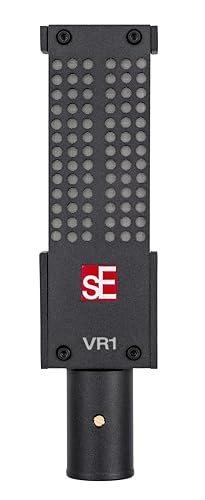
sE Electronics VR1 Passive Ribbon Microphone stands out as an excellent choice for vocalists seeking rich, warm sound without breaking the bank. With a sensitivity of 56 decibels and a signal-to-noise ratio of 74 dB, it delivers impressive audio clarity. Its figure-8 polar pattern captures sound from both front and rear, making it versatile for different recording situations. Weighing just 2.54 pounds and featuring a compact design, it’s easy to handle. Rated 4.3 out of 5 stars, users praise its sound quality and affordability, positioning it as a fantastic introductory option for those venturing into ribbon microphones.
Best For: Vocalists and recording engineers looking for an affordable, high-quality ribbon microphone to enhance their sound.
Pros:
- Impressive audio clarity with a sensitivity of 56 decibels and a signal-to-noise ratio of 74 dB.
- Versatile figure-8 polar pattern captures sound from both front and rear, suitable for various recording scenarios.
- Highly rated by users for its sound quality and affordability, making it a great introductory option for ribbon microphones.
Cons:
- Limited to one channel, which may not suit multi-microphone setups.
- Passive design may require additional gain from preamps or audio interfaces.
- Weight of 2.54 pounds could be slightly cumbersome for some users during extended sessions.
Factors to Consider When Choosing a Ribbon Microphone for Vocals
When choosing a ribbon microphone for vocals, you’ll want to contemplate several key factors. Sound quality characteristics, microphone type options, and frequency response range all play an essential role in your decision. Additionally, pay attention to impedance, sensitivity, and any extra features that might enhance your recording experience.
Sound Quality Characteristics
Choosing a ribbon microphone for vocals can feel overwhelming, but understanding sound quality characteristics can simplify the process. Ribbon mics are known for their natural, warm sound, with a smooth top end that captures vocal nuances beautifully. Their frequency response typically spans from 20 Hz to 20 kHz, ensuring accurate reproduction of a wide range of vocal frequencies. Many feature a figure-8 polar pattern, which picks up sound equally from the front and rear, offering a unique spatial quality to your recordings. You’ll also appreciate their velvety quality and ability to tame harsh high frequencies, enhancing clarity. Just remember, ribbon mics often need a solid preamp to boost their lower output levels, so factor that into your setup for excellent sound quality.
Microphone Type Options
Two main types of ribbon microphones exist: active and passive. Active ribbon microphones include built-in preamps, offering improved sound quality and lower noise levels. However, they typically require phantom power, adding complexity to your setup. On the other hand, passive ribbon microphones don’t need phantom power, making them easier to use in various environments.
Both types feature a figure-8 polar pattern, capturing sound from the front and rear, which is fantastic for vocal recording in studios. While passive models can still deliver great sound, active microphones generally provide a more consistent and extended frequency response. If you’re after rich and warm vocal reproduction, consider how these factors align with your recording needs before making a choice.
Frequency Response Range
Although ribbon microphones are renowned for their warm and natural sound, understanding their frequency response range is essential for achieving the best vocal recordings. Typically, this range spans from 20 Hz to 20 kHz, allowing you to capture both low and high vocal frequencies effectively. A wider frequency response enhances the microphone’s ability to reproduce your voice’s natural tonal qualities, vital for a rich sound. Some microphones emphasize specific characteristics, like warmth in the low mids and clarity in the highs. Additionally, consider how well the microphone handles high sound pressure levels to avoid distortion during loud performances. Keep in mind that proximity effect can boost low frequencies when you place the mic closer, enhancing warmth and presence.
Impedance and Sensitivity
When you’re selecting a ribbon microphone for vocals, understanding impedance and sensitivity is vital for achieving the best sound quality. Ribbon microphones typically have an impedance ranging from 200 to 250 Ohms, which can impact compatibility with your preamps and overall signal strength. Sensitivity levels, usually between 1.78 mV/Pa to 56 dB, determine how well the microphone captures softer vocal nuances. If you choose a mic with lower sensitivity, you may need to crank up the gain on your preamp, so pairing it with a quality preamp is essential. A higher impedance can enhance signal isolation and minimize interference, ensuring clarity in your recordings. Knowing these factors helps you achieve the vocal sound you desire without compromising quality.
Additional Features Included
While selecting a ribbon microphone for vocals, it’s crucial to take into account additional features that can enhance your recording experience. Look for models with switchable -10dB pads to manage loud sound sources and prevent distortion. A low-cut filter, like a 100Hz option, can help reduce unwanted low-frequency noise, improving vocal clarity. Some microphones offer removable cables, making maintenance and replacement easy, which is a great convenience. Accessories such as padded cases and shock mounts are also valuable; they protect your gear during transport and minimize handling noise. Finally, consider microphones designed with low-noise amplifiers, as they improve signal integrity and reduce interference, ensuring you capture your sound with precision and warmth.