
Choosing the right in-ear monitoring setup can improve clarity, reduce stage volume, and make live mixes far easier to control. A good sennheiser in ear monitor system should match your venue size, wireless needs, and budget.
Below, you’ll find the best options for performers, engineers, and bands that want dependable monitoring without guesswork.
Best 10 Sennheiser in Ear Monitor System Picks for 2026
Dual-Reliability Tour Ready
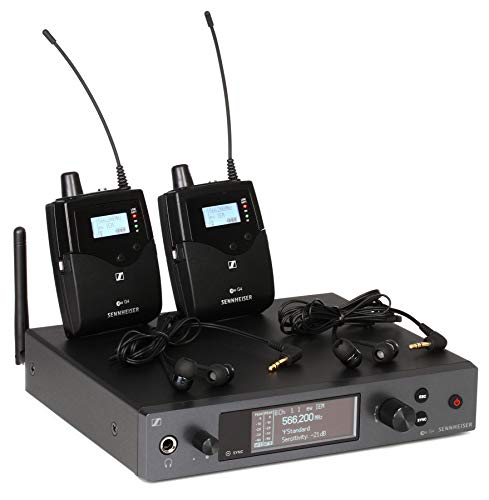
- Dual beltpack wireless monitor system
- 1680 selectable UHF frequencies
- Up to 100 m range and metal transmitter
Best For: Bands and touring stages needing a rugged dual-monitor setup
Compact Stereo Starter

- Stereo receiver with 960 frequencies
- Stereo panning and focus mode
- Includes carrying bag bundle
Best For: Live stage, rehearsal, and house-of-worship monitoring
Pro Single-Channel Workhorse

- 1680 tunable frequencies in UHF
- Up to 100 m transmission range
- Includes receiver, earbuds, and rack kit
Best For: Single-user pro monitoring with a rugged included package
Entry Live Sound Pick
Sennheiser XSW IEM Wireless B Band

- Rackmount transmitter and bodypack receiver
- Sound isolation with lightweight build
- Suited to live music and theater
Best For: Straightforward stage monitoring for live sound and speaking
Dual-Performer Wireless Monitoring

- Two-person wireless in-ear monitoring bundle
- Adaptive diversity technology for added stability
- Includes case, charger, and rechargeable batteries
Best For: Two performers needing a rugged, travel-ready IEM bundle
Single-Receiver Stage Monitoring

- Stereo bodypack receiver with IE 4 earbuds included
- Infrared sync and WSM software compatibility
- Up to 1680 selectable frequencies in UHF
Best For: Users who need a dependable receiver for an existing Sennheiser setup
Multi-Performer Rack System

- Four bodypacks with four separate monitor mixes
- Rack-mountable UHF mono transmitter
- IR sync and included antenna rackmount kit
Best For: Bands and worship teams needing multiple personal monitor mixes
Pro-Grade Starter Pick
Sennheiser XSW-IEM Wireless In-ear monitor System
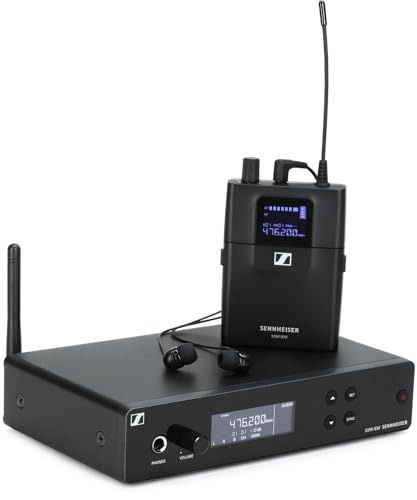
- Complete starter set for wireless in-ear monitoring
- UHF connection with presets and manual control
- Focus mode, EQ, limiter, and IR receiver sync
Best For: Performers who want a dependable, easy-to-manage wireless monitor system
Best Multi-Pack Value
Phenyx Pro PTM-22B Mono IEM System
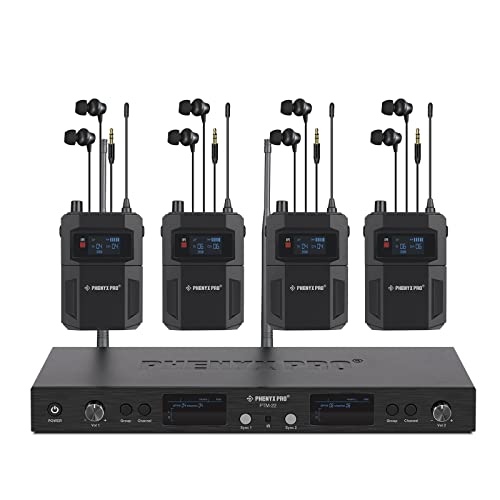
- Includes 4 bodypack receivers for shared use
- Mono design reduces phase issues and simplifies setup
- Rack-mountable metal build with loop outputs and carry case
Best For: Bands, churches, and teams needing multiple wireless receivers
Low-Latency Runner-Up
Xvive U4 Wireless In-Ear Monitor System

- Less than 5ms latency for responsive monitoring
- 2.4GHz uncompressed wireless with up to 6 channels
- Compact metal build with built-in limiter
Best For: Users who want a portable, fast-response wireless IEM system
Dual-Reliability Tour Ready – Sennheiser ew IEM G4 Twin-G
If you’re comparing a sennheiser in ear monitor system for demanding stage use, the ew IEM G4-Twin-G is built for stable UHF monitoring with the flexibility to support complex setups. It offers up to 42 MHz bandwidth, 1680 selectable frequencies, and up to 16 simultaneous channels per frequency range, making it a strong fit when multiple performers need dependable wireless monitoring.
Best For: Bands, touring acts, and professional stages that need a rugged dual-beltpack wireless monitoring setup.
Pros:
- Dual beltpack system for monitoring multiple performers
- Up to 42 MHz bandwidth with 1680 selectable frequencies
- Up to 100 meters / 300 feet transmission range
- Full-metal half-rack transmitter with display for control
Cons:
- Designed for professional use, so it may be more system than casual users need
- Not water resistant
This model makes the most sense when reliability, channel flexibility, and rugged construction matter more than portability or simplicity. The included transmitter, receivers, earphones, rackmount kit, and batteries give it a complete pro-audio starting point.
Compact Stereo Starter – Sennheiser XSW IEM SET
The Sennheiser XSW IEM SET is a practical sennheiser in ear monitor system for live stage, rehearsal, and house-of-worship use. It runs in the A band from 476 to 500 MHz and includes a stereo receiver with 960 frequencies across 8 banks, plus stereo panning and focus mode for shaping what each performer hears.
Best For: Players and vocalists who want an easy-to-manage wireless in-ear setup for smaller live applications.
Pros:
- Stereo receiver with 960 frequencies across 8 banks
- Stereo panning and focus mode for better mix control
- Includes transmitter, receiver, and carrying bag bundle
- Lightweight design for portable use
Cons:
- Battery life is listed at 6 hours
- Not water resistant
This is a straightforward wireless monitoring option when you want essential Sennheiser features without stepping into a more complex pro touring system. The bundled bag also makes transport and storage a little easier.
Pro Single-Channel Workhorse – Sennheiser ew IEM G4-A1
Sennheiser Pro Audio Sennheiser ew IEM G4-A1 In Ear Monitor system Range (470-516Mhz), Single
Check Price On AmazonFor buyers looking for a sennheiser in ear monitor system with pro-level tuning and a more traditional single setup, the ew IEM G4-A1 is a strong candidate. It provides up to 42 MHz bandwidth, 1680 selectable frequencies, and up to 100 meters / 300 feet transmission range, making it a dependable choice for multi-purpose performance monitoring.
Best For: Performers and audio users who want a rugged, tunable wireless monitor system with a complete included package.
Pros:
- Up to 42 MHz bandwidth with 1680 selectable frequencies
- Up to 100 meters / 300 feet transmission range
- Includes transmitter, bodypack receiver, earbuds, and rackmount kit
- Metal housing and sound isolation support pro use
Cons:
- Wireless technology details are mixed in the supplied specs
- Not water resistant
This model is a solid fit when you want Sennheiser’s pro monitoring features in a single-user configuration with the key accessories already included. It is built for stage and production environments where durability and frequency flexibility matter.
Entry Live Sound Pick – Sennheiser XSW IEM Wireless B Band
The Sennheiser XSW IEM Wireless in-Ear Monitoring System – B Band is aimed at live sound applications where simple wireless monitoring is the priority. It includes a rackmountable transmitter, bodypack receiver, IE4 headphones, and rackmount kit, plus sound isolation and Bluetooth 5 support in the supplied specifications.
Best For: Live music, theater, public speaking, and general stage monitoring with a straightforward wireless setup.
Pros:
- Includes transmitter, bodypack receiver, headphones, and rack kit
- Sound isolation and lightweight design
- Wireless connectivity with Bluetooth 5 listed in the specs
- Suitable for live music, theater, and public speaking
Cons:
- Supplied notes list mixed connectivity details
- Not water resistant
This system is best viewed as a practical live-sound option when you want the basics of Sennheiser in-ear monitoring without adding unnecessary complexity. The included components make it easy to build a usable stage monitoring rig.
Dual-Performer Wireless Monitoring – Sennheiser ew IEM G4-Twin Kit
If you need a Sennheiser in ear monitor system for two performers, this ew IEM G4-Twin bundle is built as an all-in-one wireless monitoring setup. It’s geared toward live stage, theater, and house of worship use, with adaptive diversity technology and a rugged package that includes a protective case, charging case, and rechargeable AA NiMH batteries.
Best For: Two-person monitoring setups that need a durable, ready-to-travel wireless IEM kit.
Pros:
- All-in-one bundle for two-person wireless in-ear monitoring
- Adaptive diversity technology for more stable monitoring
- Includes protective case, charging case, and four rechargeable AA NiMH batteries
- Built for live stage, theater, and worship applications
Cons:
- Frequency range is limited to the A band (516 to 558 MHz)
- Designed around Sennheiser-compatible equipment
- May be more system than needed for solo users
For performers who want a dependable two-channel wireless monitor package, this kit covers the essentials without adding extra pieces. The bundled case and charging accessories make it especially practical for mobile use and repeated setups.
Single-Receiver Stage Monitoring – Sennheiser EK IEM G4 Receiver
This Sennheiser in ear monitor system receiver is a practical choice when you need a bodypack that delivers clear stereo monitoring on stage. The EK IEM G4 offers infrared sync, up to 42 MHz of bandwidth, and up to 1680 selectable frequencies, making it a flexible fit for daily performance use.
Best For: Performers who already have a compatible transmitter and want a reliable stereo bodypack receiver.
Pros:
- Stereo bodypack receiver with included IE 4 earbuds
- Infrared sync for easy transmitter-to-receiver setup
- Up to 42 MHz bandwidth with 1680 selectable frequencies
- Up to 100 meters / 300 feet transmission range
Cons:
- Receiver-only unit, so it requires a compatible Sennheiser transmitter
- Limited to the A band frequency range listed in the notes
- Best suited to users already invested in the same system
For straightforward stage monitoring, this receiver focuses on flexibility and reliable bodypack performance. It’s a solid fit for users who want a proven wireless receiver without buying a full system again.
Multi-Performer Rack System – Phenyx Pro PTM-33-4B
If you’re shopping for a Sennheiser in ear monitor system alternative for a full band, this Phenyx Pro PTM-33-4B is built around four bodypacks and four independent mixes. It offers a rack-mountable transmitter, UHF mono monitoring, and IR sync, making it well suited to live stage, worship, and rehearsal environments where multiple performers need simple personal monitoring.
Best For: Bands, church teams, and stage crews that need multiple wireless monitor mixes in one system.
Pros:
- Supports four bodypacks with four separate left/right input groups
- UHF mono monitoring with 4 x 25 selectable frequencies
- Rack-mountable transmitter with included antenna kit
- Designed for singers, musicians, drummers, and worship teams
Cons:
- Mono-only monitoring, not stereo
- Works best in clearer line-of-sight conditions
- Thick walls, glass, and metal can reduce practical range
This system is appealing when you need to monitor several performers at once without taking up much rack space. It emphasizes convenience and flexibility over stereo monitoring, which makes it a practical fit for group-stage workflows.
Pro-Grade Starter Pick – Sennheiser XSW-IEM Wireless In-ear monitor System
If you want a Sennheiser in ear monitor system that feels straightforward but still professional, the XSW-IEM is built as a complete starter set for wireless monitoring. It uses the UHF range for a reliable connection, gives you flexible audio modes, and includes easy presets plus manual control for dialing in the mix.
Best For: Musicians and performers who want a simple, dependable wireless IEM setup with room to fine-tune their personal mix.
Pros:
- Complete starter set for in-ear monitoring
- Reliable UHF wireless connection
- Flexible audio modes with easy presets or manual control
- Focus mode, EQ, limiter, and infrared syncing for multiple receivers
Cons:
- Single-system format may be less scalable than larger multi-receiver packages
- Not water resistant
- Wireless range and band are fixed to the listed A-band frequency range
Overall, this is a practical Sennheiser in ear monitor system for users who want pro features without a complicated learning curve. The built-in focus mode and receiver sync tools make it easier to manage a personal monitor mix on stage.
Best Multi-Pack Value – Phenyx Pro PTM-22B Mono IEM System
For buyers comparing a Sennheiser in ear monitor system against a more expanded stage-ready package, the Phenyx Pro PTM-22B stands out with four bodypacks and mono monitoring. It uses a UHF 900MHz setup with 2×50 selectable frequencies, supports daisy-chain loop outputs, and is designed for clean monitoring across band, church, conference, or broadcast use.
Best For: Groups that need multiple wireless bodypacks and a simple mono monitor setup for shared stage use.
Pros:
- Includes 4 bodypack receivers in the box
- Mono monitoring helps avoid phase issues and keeps audio focused
- Dual-channel transmitter with left/right loop outputs for daisy chaining
- Rack-mountable metal design with carry case included
Cons:
- Mono-only monitoring may not suit users who prefer stereo IEM mixes
- Uses AA batteries for the bodypacks
- Best suited to fixed stage or rack-based setups rather than ultra-compact travel rigs
In practical terms, this is a flexible monitor solution when you need more receivers and easier distribution than a basic single-user system. The mono design and loop outputs make it especially useful for teams that want clarity and simple setup.
Low-Latency Runner-Up – Xvive U4 Wireless In-Ear Monitor System
If low-latency monitoring is the priority, the Xvive U4 is a compact wireless IEM option that keeps the setup simple. This Sennheiser in ear monitor system alternative works in the 2.4GHz band, offers uncompressed transmission, and is built for quick use in studio, rehearsal, and live performance settings.
Best For: Players and engineers who want a compact, easy-to-use wireless monitor system with very low latency.
Pros:
- 2.4GHz wireless system with uncompressed signal transmission
- Less than 5ms latency for responsive monitoring
- Up to 6 simultaneous channels with no interference
- Built-in limiter and metal housing for added durability
Cons:
- Battery life is listed at about 5 hours
- Uses a 3.5 mm headphone jack, which may not match every setup
- 2.4GHz operation can be less ideal than UHF for some crowded wireless environments
The U4 is a strong choice when fast response and portability matter more than a larger feature set. It packs the core essentials into a simple bodypack-and-transmitter format that is easy to carry and fast to deploy.
How We Picked the Best Sennheiser in Ear Monitor System
We focused on systems that fit real-world use on stage and in rehearsal rooms. Key factors included wireless band options, receiver and transmitter flexibility, stereo or mono operation, user-friendly setup, and overall reliability for live performance. We also considered whether each Sennheiser in Ear Monitor System suits solo performers, small bands, or more demanding touring environments.
Quick Comparison
If you want a fast way to narrow the field, start with your band size and monitoring style. Single-channel systems are usually best for one performer or a simple mix, while dual-beltpack and multi-channel setups make more sense for bands that need separate mixes or shared stage infrastructure. UHF systems are often preferred for broader compatibility and stronger long-range performance, while entry-level wireless options can be a smart choice for smaller stages and tighter budgets.
Key Buying Factors for a Sennheiser In-Ear Monitor System
Frequency Band and Local Compliance
Make sure the frequency range is legal and usable in your area. This matters especially for touring acts and venues in crowded RF environments. A system with the wrong band can limit setup options or create interference headaches.
Stereo Vs. Mono
Stereo monitoring gives more separation and detail, which many vocalists and musicians prefer. Mono can be simpler, more stable, and easier to manage when you just need a clear wedge-like mix in your ears.
Number of Bodypacks and Channels
Count how many performers need independent monitoring. A single receiver may be enough for one user, but bands often benefit from twin or multi-user systems that can support more complex stage mixes.
Range and RF Stability
Check expected operating distance and how well the system handles crowded wireless environments. The best Sennheiser in Ear Monitor System for you should maintain a solid signal across the whole stage without dropouts or noise.
Portability and Accessories
Cases, chargers, batteries, and rack-friendly layouts can save time during load-in and teardown. For touring or frequent gigging, these details matter as much as audio performance.
Who Should Buy Which Sennheiser in Ear Monitor System?
Solo vocalists and small acts should prioritize simple, reliable systems with straightforward setup. Bands with multiple performers should look for dual or multi-bodypack options that support more than one user. If you’re on a tighter budget or need a backup rig, entry-level wireless in-ear systems can still deliver useful performance. For professional touring, choose the most stable band, the best receiver quality, and the accessory package that keeps the system protected and ready to go.
In short, the right choice depends on your stage size, signal environment, and how many people need monitoring—not just brand name alone.